 Sudden Valley Siding
 Fairhaven's Marine Climate and What It Does to Siding
Fairhaven sits close to Bellingham Bay, and that proximity to salt water shapes everything about how exterior materials hold up here. Homes in this part of Whatcom County face a steady combination of salt-laden air, wind-driven rain off the water, and a wet season that stretches long and gray. That combination is harder on siding than most homeowners realize until they're standing in front of a wall that's failing from the inside out.
Salt air is corrosive to exposed metal fasteners and trim, and it accelerates the breakdown of coatings that aren't built to resist it. Driving rain doesn't just wet a wall's surface — wind pushes moisture sideways and up under laps, trim, and butt joints, finding any gap in the water-management details. And Whatcom County's long moss season, often running from fall through spring, keeps north- and west-facing walls damp for weeks at a stretch, especially where trees or neighboring structures block sun and airflow.
None of this means a home in Fairhaven is doomed to constant repairs. It means the exterior has to be built and installed with those specific stresses in mind, not treated the same way you'd treat a house in a dry inland climate.
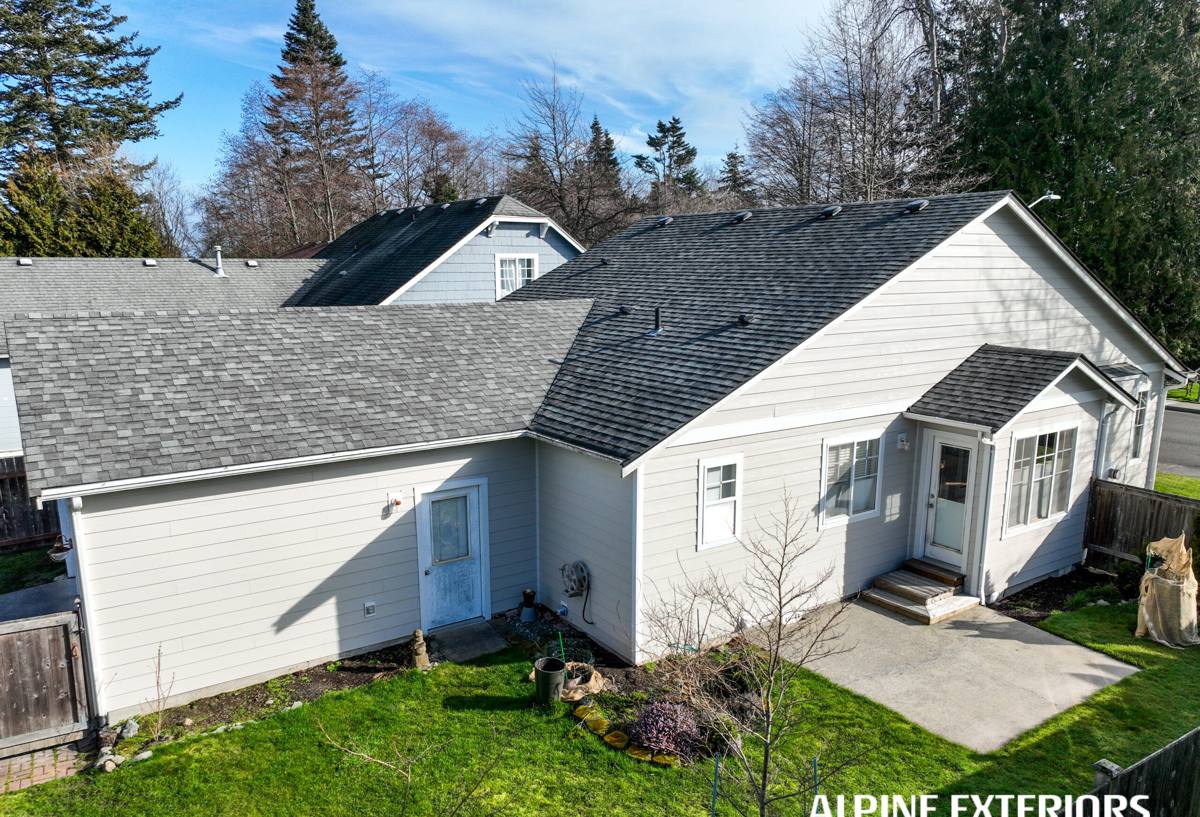
Common Siding Problems We See in Fairhaven Homes
Every coastal Whatcom County neighborhood has its own failure patterns, and Fairhaven is no exception. The issues we run into most often trace back to moisture that had nowhere to go and time to do its damage.
- Soft or delaminating wood siding — cedar and other wood products absorb moisture at end grain and butt joints, and repeated wet-dry cycling breaks down the fibers over years.
- Paint failure and chalking — salt air and UV exposure wear through paint film faster than inland conditions, leaving bare wood or substrate exposed to weather.
- Moss and algae staining — shaded, north-facing walls hold moisture long enough for moss to take hold, and once established it traps even more water against the siding.
- Corroded or failing fasteners — nails and trim screws not rated for coastal exposure can rust, staining the siding and losing their grip over time.
- Warped or swollen panels on engineered wood products that weren't detailed with enough clearance or flashing to shed water properly.
Individually, these look like cosmetic problems. Left alone, they're often early signs that water has already reached the sheathing or framing behind the siding — which is a much more expensive repair than the siding itself.
Why We Install James Hardie Fiber Cement — and Nothing Else
We made a deliberate decision to install only James Hardie fiber cement siding on the homes we work on, including here in Fairhaven. We don't install vinyl, LP SmartSide, Cemplank, Allura, or primed spruce and cedar. That's not a marketing position — it's a standard we hold because of what we've seen coastal climates do to alternatives over time.
Fiber cement is a mix of cement, sand, and cellulose fibers, and it simply doesn't behave like wood or wood-composite products in wet conditions. It doesn't absorb water the way wood does, it doesn't support rot, and it's non-combustible. James Hardie's HardieZone system also matters here — their HZ5 product line is engineered specifically for the wetter, more humid conditions found in the Pacific Northwest, with formulations meant to hold up to extended moisture exposure rather than just resist it in short bursts.
The factory-applied ColorPlus finish is another piece of why we trust it in a salt-air environment. Because the color coat is baked on in a controlled factory setting rather than field-applied, it resists fading, chipping, and the chalking we see on painted wood siding within a few years of coastal exposure. It also carries a longer finish warranty than most homeowners get from repainting a wood exterior every several years.
We're not going to tell you every other siding product is worthless — vinyl and engineered wood have their place, and plenty of houses wear them fine in drier climates. But for a neighborhood dealing with the salt air, driving rain, and moss season Fairhaven gets, we'd rather put a material on your home that's built for exactly that fight, backed by a strong transferable warranty, than something that asks for more maintenance and more luck.
What Correct Installation Looks Like
Fiber cement only performs as well as its installation. In this climate, that means:
- Proper flashing at every window, door, and roofline intersection so water is directed out, not behind the siding.
- Correct clearance between siding and grade, decks, and roof surfaces to avoid wicking moisture up from below.
- Manufacturer-specified nailing patterns and fastener types rated for coastal exposure.
- Rain-screen or drainage-plane detailing where the wall assembly calls for it, so any incidental moisture has a path to escape.
A great product installed to a lower standard will still fail early. That's why installation quality gets as much attention from us as the material choice itself.
Repair or Full Replacement? How We Help You Decide
Not every problem on a Fairhaven exterior means a full re-side. Sometimes a section of damaged siding, a few compromised trim boards, or a moss-heavy wall can be repaired without touching the rest of the house. Other times, what looks like a small issue is a sign the whole assembly is past the point of spot repair.
| Sign | Usually Repair | Usually Replacement |
|---|---|---|
| Isolated soft spot or crack | Yes, if surrounding siding is sound | No |
| Widespread paint failure across multiple walls | Possibly, short-term | Yes, long-term |
| Warping or swelling on several panels | Rarely enough | Yes |
| Moss recurring yearly despite cleaning | Cleaning helps short-term | Consider if underlying rot is found |
| Soft sheathing found behind siding | No | Yes |
| House is 20+ years old with original siding | Case by case | Often makes sense |
We'll walk the exterior with you, probe any suspect areas, and give you a straight answer about which category your home falls into — including telling you when repair is genuinely the smarter, less expensive call.
Beyond Siding: Roofing, Windows, and Decks
Siding doesn't work in isolation. On a lot of Fairhaven homes, the same moisture and salt exposure that wears down siding is also aging the roof, window seals, and any exterior decking. We handle all four because they're connected — a roof leak can be the real source of a "siding" problem, and failing window flashing can undermine even a brand-new siding install if it's not addressed at the same time.
When we're on-site for a siding estimate, we'll flag anything we notice on the roof, windows, or deck that's contributing to moisture problems, even if it's outside the scope of what you called us for. It's a more useful estimate than one that only looks at the wall in front of it.
What Affects the Cost of a Fairhaven Siding Project
| Factor | Why It Matters |
|---|---|
| Extent of existing damage | Rotted sheathing or framing found during tear-off adds repair scope beyond the siding itself |
| Home size and wall complexity | More corners, dormers, and trim details mean more labor and material |
| Siding profile and color | Lap width, ColorPlus color selection, and accessory trim affect material cost |
| Access and site conditions | Slopes, tight lot lines, or limited staging area affect crew efficiency |
| Existing water-management details | Homes needing new flashing or drainage-plane work take more prep time |
We won't quote a number without seeing the house — anyone who does is guessing. What we can tell you is that the estimate will break down where the cost is coming from, so you're not left wondering.
Why a Local Crew Matters
A neighborhood like Fairhaven has its own microclimate quirks — which walls stay shaded and damp longest, how exposed a given lot is to wind off the bay, what moss pressure looks like block to block. A crew that works across Whatcom County regularly sees those patterns repeat and knows what to check for before problems show up on the surface. That's different from a crew unfamiliar with coastal Pacific Northwest conditions applying a generic installation approach.
Local also means accountability. We're not driving in from out of the area for one job and gone — warranty work, follow-up questions, and being reachable if something needs attention down the road are part of doing business in the community we work in.
A Practical Checklist Before You Decide
- Walk your exterior after a hard rain and note any walls that stay wet longest.
- Check for moss buildup, especially on north- and west-facing siding.
- Look at trim and butt joints for soft spots, cracking, or gaps.
- Ask any contractor you're considering exactly which siding brands and products they install — and why.
- Get a written scope that separates siding work from any roofing, window, or deck issues found along the way.
- Confirm what warranty covers the material versus the installation labor.
If your Fairhaven home is showing any of the wear this climate causes, we're happy to take a look and give you an honest read on what it needs. Reach out for a free, no-pressure estimate using the form below.