 Sudden Valley Siding
 Silver Beach Sits in a Tough Spot for Exteriors
Homes around Silver Beach and the broader Sudden Valley area deal with a specific combination of weather that's harder on exterior building materials than most homeowners realize. Marine-influenced air moving through Whatcom County keeps humidity elevated for long stretches of the year. Add in driving, wind-blown rain off the water and heavy tree cover on many lots, and you get a climate that rarely gives siding, trim, or roofing a chance to fully dry out between storms. That's the environment every exterior product on your home has to survive, year after year, and it's the lens we use when we recommend what to install and what to avoid.
None of this is exotic weather. It's simply persistent. A single hard rain isn't what wears out a house — it's months of damp air, shaded siding that never quite dries, and a moss season that can stretch from fall through spring. Materials that look fine in a showroom or in a drier part of the state don't always hold up the same way here.
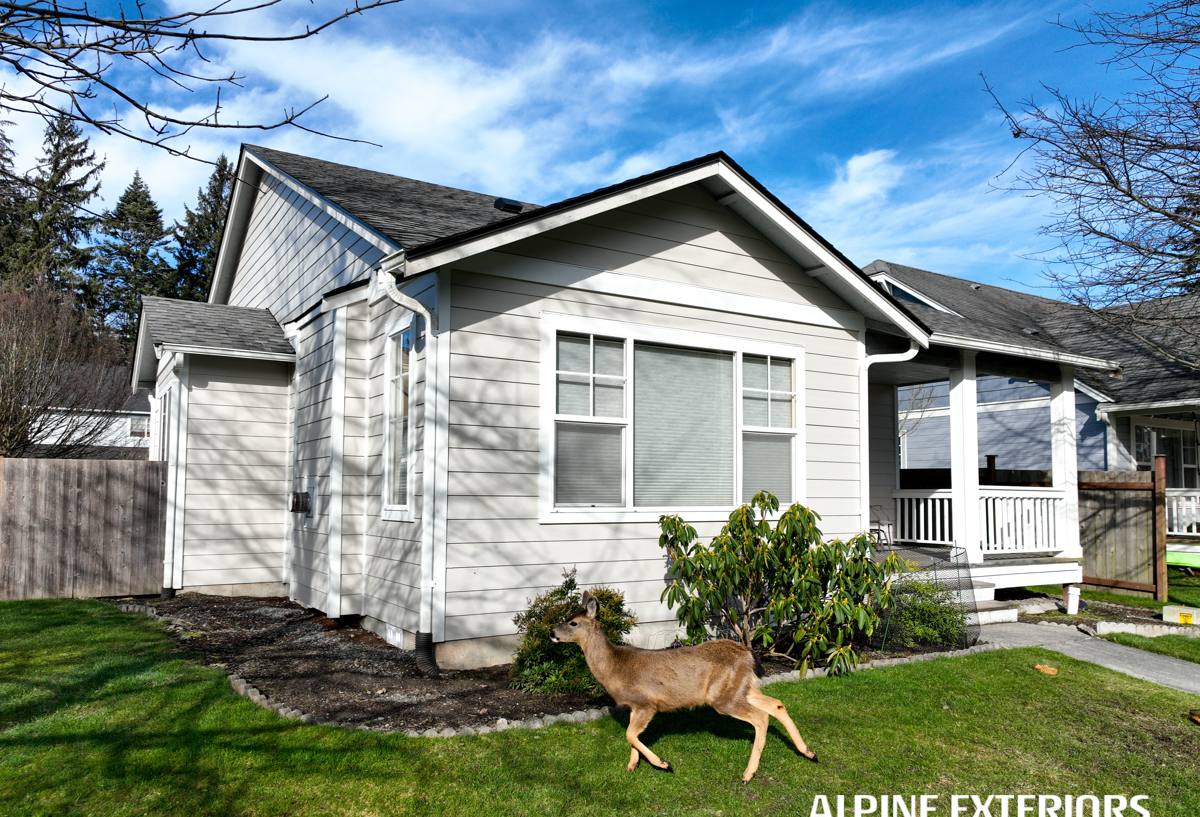
What Marine Air, Rain, and Moss Actually Do to a House
Moisture Intrusion
Wind-driven rain doesn't just fall straight down — it gets pushed sideways into seams, laps, and butt joints. Any siding product with weak edge sealing, poor overlap, or joints that rely on caulk alone is going to take on water eventually. Once moisture gets behind the cladding, it doesn't leave quickly in a humid climate, and that's when rot, mold, and fastener corrosion start.
Moss and Organic Growth
Shaded north- and west-facing walls, especially under tree canopy common around Sudden Valley, stay damp long enough for moss, algae, and lichen to take hold on roofing and siding surfaces. Organic growth isn't just cosmetic — it holds moisture against the material surface, which accelerates whatever deterioration process that material is already prone to.
UV and Temperature Swings
Summers bring real sun exposure on south-facing elevations, which means paint films and factory finishes still have to hold color and flexibility even in a generally wet climate. A product that only performs well in constant moisture, or only in constant sun, isn't the right fit for a place that delivers both.
Why We Install Only James Hardie Fiber Cement Siding
We get asked why we don't offer vinyl, LP SmartSide, cedar, or primed spruce siding as options. The honest answer is that we've seen how each of those products performs in exactly this kind of climate, and we'd rather install one product correctly than offer five and have some of them fail early on homes we put our name on.
| Material | Common Trade-Off in This Climate |
|---|---|
| Vinyl siding | Can warp or distort with temperature swings; seams and J-channels are common water entry points; color is embedded but the material itself has a shorter realistic service life |
| LP SmartSide (engineered wood) | Wood-strand core is vulnerable if the factory edge seal or field-cut edges aren't treated correctly; moisture intrusion at cuts and joints is the main failure mode |
| Cedar / primed spruce | Beautiful when new, but requires ongoing painting, caulking, and moisture management; natural wood is the most labor-intensive to maintain in a wet, mossy climate |
| James Hardie fiber cement | Non-combustible, dimensionally stable in humidity swings, factory-cured ColorPlus finish resists fade and doesn't require repainting on the same cycle as wood |
James Hardie's HZ product lines are engineered specifically for climate zones like ours, with moisture and freeze-thaw performance built into the product spec rather than left to site conditions. The ColorPlus factory finish is baked on under controlled conditions, which gives it a more consistent, longer-lasting bond than field-applied paint on wood or trim board. And because it's fiber cement, it doesn't feed moss and algae growth the way wood fiber can, and it won't warp or buckle in swinging humidity the way vinyl can. That combination — durability, a real factory finish, and a manufacturer warranty structure that's transferable to a future buyer — is why it's the only siding system we put on homes.
How a Siding Replacement Works, Start to Finish
Every project starts with an honest look at what's actually happening behind the existing siding, not just what's visible on the surface.
- Inspection and diagnosis — we check for hidden moisture damage, rot at trim and penetrations, and how the current siding has been performing on shaded versus sun-exposed walls.
- Weather-resistive barrier and flashing — this is the layer that does the real water-management work; correct lap sequencing and flashing at windows, doors, and penetrations matters more than the siding itself.
- Hardie panel or lap installation — installed to manufacturer fastening and clearance specs, including proper ground clearance and gaps at trim to allow for drainage and drying.
- Trim, caulking, and touch-up — sealed at the joints that matter, not over-caulked in ways that trap moisture instead of shedding it.
- Final walkthrough — we go over what was done and what maintenance, if any, the new siding actually needs going forward.
Correct installation is what makes the difference between a siding system that lives up to its warranty and one that doesn't. Fiber cement is only as good as the flashing and clearances behind it, which is why we treat the water-management details as seriously as the visible finish.
Roofing, Windows, and Decks Face the Same Climate
Siding doesn't work in isolation — it's one part of the building envelope, and the same marine air, rain, and moss pressure hits your roof, windows, and any exterior deck.
Roofing
Moss on a roof isn't just an eyesore. Left unchecked, it lifts shingle edges, holds moisture against the roof deck, and shortens the life of the roofing material. Roofs in shaded, tree-covered areas around Sudden Valley need attention to ventilation and moisture shedding, not just shingle selection.
Windows
Window flashing and the seal between the window unit and the siding is one of the most common places water finds its way into a wall assembly. Any siding replacement is a good opportunity to check window flashing and address it before new siding goes back over a problem.
Decks
Decks take the weather head-on with no wall cavity to buffer moisture, so ledger board flashing, proper drainage, and material choice matter even more. In a climate with a long wet season, a deck built without attention to water shedding will show problems faster than one built with it in mind.
Because we handle siding, roofing, windows, and decks, we can look at a home's whole exterior at once instead of treating each component as a separate problem — which matters when the failure points (flashing, moisture paths, shaded surfaces) tend to be shared across all of them.
Choosing a Contractor for a Silver Beach Home
Not every exterior contractor treats climate-specific detailing as a priority, and it shows up years later as callbacks and premature failures. A few things worth checking before you hire anyone:
- Ask specifically how they handle flashing at windows, doors, and penetrations — not just what siding brand they use
- Confirm they're a factory-trained or certified installer for whatever product they're proposing
- Ask how they sequence work around weather, since installing over damp sheathing causes problems that don't show up until later
- Get clarity on what warranty applies to labor versus what the manufacturer covers on materials
- Ask how they handle existing moisture damage if it's found once old siding comes off
- Check that they're licensed and insured to work in Washington, and ask for references from projects of a similar scope
A local crew that works this specific area regularly has already seen how homes here hold up over time — which walls stay damp longest, which roof lines collect moss fastest, and where past installations have failed. That's knowledge you can't get from a contractor who mostly works in a drier part of the state.
Living With a Moss-Prone, Marine Climate After the Work Is Done
Even the right materials benefit from a little ongoing attention. Fiber cement siding doesn't need repainting on a wood-siding schedule, but a periodic rinse to clear pollen, dust, and early moss growth keeps it looking good and keeps organic material from building up in trim joints. Roofs benefit from moss treatment before growth gets established rather than after it's visibly taken hold. Gutters and downspouts should stay clear, since a clogged gutter is one of the most common causes of water finding its way behind siding and trim at the roofline.
None of this is heavy maintenance — it's the kind of light, occasional upkeep that keeps a well-installed exterior performing the way it's supposed to for decades instead of years.
What Affects the Cost of a Siding Project
| Factor | Why It Matters |
|---|---|
| Home size and elevation complexity | More corners, gables, and roof lines mean more trim, flashing, and cutting |
| Condition of existing sheathing | Hidden rot or moisture damage found during tear-off adds repair work before new siding can go on |
| Siding profile and finish | Lap versus panel, and standard versus premium ColorPlus finishes, affect material cost |
| Access and site conditions | Tree cover, slope, and staging space around the home affect labor time |
| Scope beyond siding | Bundling roofing, window, or deck work can be more efficient than tackling each separately over time |
Every home is different, and the only way to give you real numbers is to look at the actual house — which is exactly what a free estimate is for.
Let's Take a Look at Your Home
If you're weighing a siding replacement, or you've noticed moss buildup, moisture staining, or aging trim on a home in the Silver Beach or Sudden Valley area, we're glad to come take a look. There's no pressure and no obligation — just an honest assessment of where things stand and what your options actually are. Use the form below to request a free estimate.