 Sudden Valley Siding
 Why Two "Similar" Siding Quotes Can Be Thousands Apart
If you've collected a few estimates for siding replacement in Sudden Valley and they don't seem to line up, you're not imagining it. Two contractors can look at the same house and come back with numbers that differ by thousands of dollars — not because one is padding the price, but because they're pricing different scopes, different materials, and different assumptions about what's hiding behind your existing siding. Understanding what actually drives the number helps you compare quotes apples-to-apples instead of just picking the lowest one and hoping.
This page walks through the real cost factors for a siding replacement project on a Whatcom County home — house size and shape, material choice, what's underneath the old siding, labor complexity, and the climate conditions that make this a different job here than it would be somewhere dry and inland.
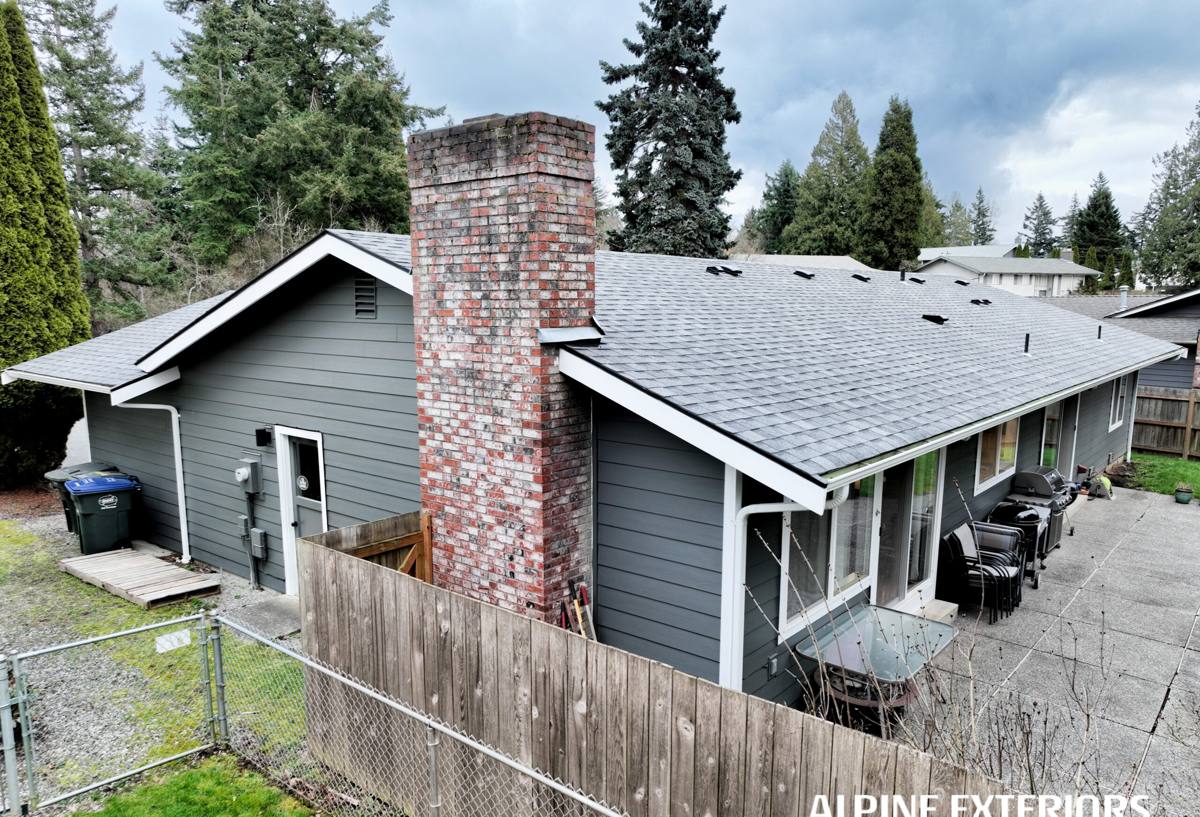
The Core Cost Drivers, at a Glance
Before getting into detail, here's how the major factors generally stack up in terms of impact on your final price:
| Factor | Why It Matters | Typical Impact |
|---|---|---|
| House size & wall area | More square footage means more material and labor hours | High |
| Home complexity | Dormers, gables, bump-outs, and multiple stories add cutting, staging, and trim work | High |
| Siding material | Fiber cement, vinyl, wood, and engineered wood have very different material and labor costs | High |
| Condition underneath | Rot, moisture damage, or failed house wrap can add repair scope no one sees until tear-off | Variable, sometimes large |
| Trim, fascia & accessories | Corner boards, window trim, soffit, and frieze boards are often priced separately from field siding | Moderate |
| Access & site conditions | Steep lots, tree cover, and tight setbacks near the lake affect staging and scaffolding | Moderate |
| Disposal & permits | Tear-off debris hauling and local permitting are real line items, not afterthoughts | Low to moderate |
House Size, Shape, and Story Count
Square footage is the obvious starting point — more wall area means more board, more fasteners, more labor hours. But shape matters just as much as size. A simple rectangular one-story home with few windows is dramatically faster to side than a home of the same square footage with multiple gables, dormers, bump-outs, and a mix of roof pitches. Every inside corner, outside corner, and transition requires cutting, coping, and flashing work that a flat wall simply doesn't.
Two-story and split-level homes — common throughout Sudden Valley's hillside lots — also add cost through staging and access. Working safely at height means more scaffolding or lift time, and that labor gets built into the estimate whether or not it shows up as its own line item.
What This Means for Your Quote
When comparing estimates, ask whether the contractor measured your actual wall area (including waste factor for cuts) or used a rough square-footage-of-the-house estimate. The two can produce very different numbers, and a contractor who never measured your home closely is guessing.
Material Choice: The Single Biggest Lever
Material is usually the largest swing factor in a siding budget, and it's also the decision with the longest-lasting consequences. Here's the honest picture of where the common options land:
- Vinyl siding — lowest material cost and fast installation, but it's a thin plastic product that can crack in impact, fade under UV exposure over time, and has limited ability to handle moisture that gets behind it.
- Engineered wood (LP SmartSide and similar) — mid-range cost, easier to install than fiber cement in some respects, but it's a wood-strand product with an engineered resin coating — meaning its long-term performance depends heavily on caulking, paint maintenance, and keeping cut edges sealed, especially in a wet climate.
- Cedar and primed wood — attractive, but high-maintenance. Expect a repaint or restain cycle every few years and vigilant caulk maintenance to keep water out of end grain and joints.
- Fiber cement (James Hardie) — higher material cost than vinyl, comparable to or less than quality wood, but it's a cement-based composite that doesn't rot, doesn't feed pests, and holds a factory-baked ColorPlus finish that isn't dependent on the homeowner repainting on schedule.
We install exclusively James Hardie fiber cement siding, and that's a deliberate standard, not a default. We used to install and repair a broader range of products, and the pattern we kept seeing on call-backs — moisture intrusion behind vinyl, edge swelling on engineered wood in wet-climate applications, ongoing maintenance burden on wood — pushed us toward a single product line we can install to spec and stand behind. It costs more upfront than vinyl. It's a decision we think pays off over the life of the siding, particularly in a climate that doesn't give any product a break.
What's Underneath the Old Siding Matters More Than You'd Think
This is the cost factor that catches homeowners off guard most often. Until the old siding actually comes off, no contractor can tell you with certainty what condition the sheathing, house wrap, and framing are in underneath. In a region with as much year-round moisture exposure as Whatcom County, it's common to find:
- Soft or delaminated sheathing around window and door openings where flashing failed
- Moisture staining or minor rot at the base of walls near grade
- Failed or missing house wrap that let bulk water reach the wall assembly
- Rust-stained or degraded fasteners on older installations
A responsible contractor prices the visible scope up front and clearly explains how repair work discovered during tear-off will be handled — ideally with a per-unit rate for sheathing replacement agreed on before the project starts, not sprung on you mid-job. Be wary of a quote that seems unusually low; sometimes it's simply not accounting for the likelihood of hidden repairs on an older home.
Labor and Installation Complexity
Material only performs as well as its installation. Fiber cement siding in particular is installation-sensitive — correct fastener placement, proper clearances from grade and roof lines, correctly lapped and caulked joints, and following the manufacturer's climate-specific installation instructions all affect both appearance and long-term moisture performance. Rushed or under-priced labor is one of the most common reasons a siding job underperforms its expected lifespan, regardless of which material was chosen.
James Hardie's HZ10 product line is engineered for the wetter, more humid climate zones that include Western Washington, with formulations designed to resist moisture-related damage better than the standard HZ5 line used in drier regions. Installing the correct climate-zone product, to the manufacturer's actual specifications, is part of what separates a durable installation from one that looks fine on day one.
Regional Climate: Why Whatcom County Siding Isn't a Generic Job
Sudden Valley sits in a part of Whatcom County that sees a genuine combination of stressors on exterior building materials: salt-laden marine air moving in off the Sound, long stretches of driving rain through fall and winter, and shaded, moisture-holding conditions that support a long moss and algae season on north-facing walls and roofs. Materials that perform fine in a dry inland climate can struggle here — swelling at cut edges, holding moisture against the wall assembly, or developing surface growth that requires ongoing cleaning and treatment.
This is part of why material selection isn't purely a budget decision. A cheaper product that needs more frequent maintenance, recaulking, or repainting to keep water out doesn't necessarily save money once you account for the years of upkeep ahead of it in this climate.
Warranty Structure and Its Effect on Long-Term Cost
A siding warranty is only worth what it actually covers, and warranty terms vary significantly by product and manufacturer. When comparing options, look closely at whether the warranty is transferable to a future homeowner (which matters for resale value), whether it covers the factory finish separately from the substrate, and how long it actually runs. James Hardie's ColorPlus finish warranty and product warranty are a meaningful part of the value proposition — a factory-cured finish that isn't dependent on the homeowner maintaining a paint schedule is one less recurring cost over the life of the siding.
Getting an Accurate Estimate: What to Ask For
Whoever you hire, an estimate that's actually useful to compare should include the following:
- A written scope covering field siding, trim, corner boards, and soffit/fascia if included
- The specific product line and climate-zone rating being quoted (not just "fiber cement" or "engineered wood")
- A clear per-unit rate for sheathing or framing repair discovered during tear-off
- Whether disposal and permit costs are included or billed separately
- The manufacturer's warranty terms and whether the installer is a certified/preferred installer for that product
- A realistic project timeline, including how weather delays are handled
A quote missing most of these isn't necessarily dishonest, but it's incomplete, and incomplete quotes are where surprise costs come from later.
If you'd like a clear, itemized look at what a siding replacement would actually cost for your home in Sudden Valley, we're happy to walk the property, explain what we find, and put together a free, no-pressure estimate — no obligation, no pressure to sign anything on the spot.