 Sudden Valley Siding
 Sehome's Exterior Climate: What Makes This Neighborhood Different
Sehome sits on the hill above downtown Bellingham, close enough to Bellingham Bay that homes here live with a real marine climate year-round. That means three things working against your siding at the same time: salt-laden air drifting up off the water, long stretches of driving, wind-pushed rain, and a shade-and-moisture combination that keeps moss and algae active for most of the year. None of these on their own is unusual for Whatcom County, but together they put more strain on an exterior than homeowners moving here from drier climates tend to expect.
Older homes on the hill were often built or re-sided decades ago with whatever the standard product of the time was — cedar lap, primed wood, or later, vinyl. Many of those exteriors are now showing their age faster than the house itself, because the siding, not the framing, is what's been absorbing the weather.
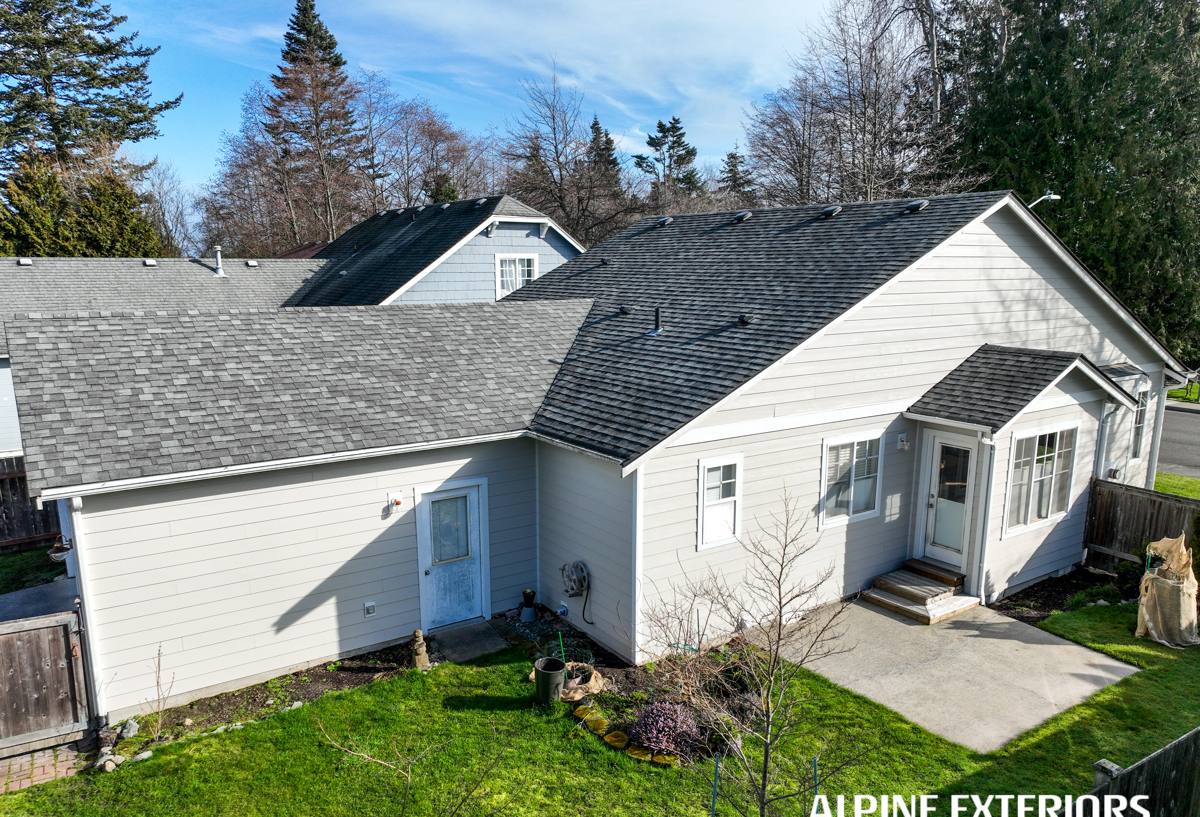
What Salt Air Actually Does to a House
Salt air doesn't just sit on a wall — it's corrosive to exposed metal and it holds moisture against surfaces longer than plain humid air does. On a home in Sehome, that shows up as:
- Faster corrosion on fasteners, flashing, gutters, and any exposed metal trim
- Paint and caulk that fail earlier than the manufacturer's stated lifespan
- A film on siding and glass that holds grime and moisture film longer between rains
- Accelerated fading on lower-grade factory finishes and field-applied paint
This is a big part of why we care about the fastener and flashing details as much as the siding panel itself. A great siding product installed with the wrong fasteners or unprotected metal transitions will still show corrosion streaks and early caulk failure within a few years on a bay-adjacent lot.
Driving Rain and Moss: The Other Half of the Equation
Whatcom County gets a lot of rain, but it's the direction it arrives from that matters more than the total volume. Wind-driven rain off the water pushes moisture sideways into wall assemblies, seams, and butt joints — areas that stay mostly dry on a home in a calmer, drier climate. Add the tree cover and shaded north and west walls common on Sehome's hillside lots, and you get long moss and algae seasons that can run eight months or more out of the year.
Moss and algae aren't just cosmetic. Left to grow on siding, they hold moisture against the surface, work into seams and lap joints, and accelerate whatever decay process is already underway. On wood-based sidings — cedar, primed spruce, or engineered wood products — that moisture exposure is the single biggest factor in how long the material actually lasts versus its rated lifespan.
Why We Standardized on James Hardie Fiber Cement
We install James Hardie fiber cement siding exclusively — not vinyl, not LP SmartSide, not Cemplank or Allura, not primed spruce or cedar. That's a deliberate call, and it's rooted in exactly the conditions Sehome deals with:
- It's not wood-based. Fiber cement doesn't feed rot the way wood fiber does, which matters directly on shaded, moisture-prone walls.
- Non-combustible. Hardie board carries a noncombustible rating, which is a genuine advantage regardless of climate and a real difference from vinyl and engineered wood products.
- ColorPlus factory finish. The baked-on finish resists fading and holds up to UV and salt exposure far better than field-applied paint, and it comes with its own finish warranty.
- Climate-engineered product lines. Hardie's HZ5 formulation is built for wetter, colder Pacific Northwest conditions specifically, not a one-size-fits-all national spec.
- Strong, transferable warranty. That matters to resale in a neighborhood like Sehome, close to WWU, where rental and turnover activity is higher than average.
We're not saying every other product is worthless — vinyl is inexpensive and cedar has real appeal, and we'll say so honestly if you ask. But we've made a professional decision not to install products whose real-world trade-offs — moisture sensitivity, maintenance burden, or finish longevity — don't hold up well against a salt-air, high-rain climate like this one. Fiber cement, installed correctly, is the product we're willing to stand behind here.
What "Installed Correctly" Means in This Climate
Fiber cement's reputation depends heavily on installation quality, and that's especially true on a marine-exposed lot. The details that matter most in Sehome's conditions:
- Proper rainscreen or drainage gap behind the siding so incidental moisture can drain and dry instead of sitting against the wall sheathing
- Correct fastener spacing and type — stainless or coated fasteners rated for coastal exposure, not standard interior-grade hardware
- Flashing at every window, door, and roof-to-wall transition, lapped correctly so wind-driven rain can't work its way behind the siding
- Proper caulk joints and gaps at butt seams, sized to the manufacturer's spec rather than pulled tight
- Panel and trim clearance off grade and off roof lines, so splashback and snow-melt runoff don't sit against the bottom course
Skipping any one of these doesn't usually cause an obvious problem in year one. It shows up in year five or six as a stain line, a soft spot, or a section of trim that's failed while the rest of the wall is fine — and by then it's a repair job instead of a five-minute install detail.
Beyond Siding: The Whole Exterior Envelope
Siding doesn't work in isolation. On a Sehome home, roofing, windows, siding, and decks all interact with the same salt air and rain, and a weak point in one usually shows up as damage in another — a failing roof valance that dumps water onto a wall, a window that's not flashed correctly and lets moisture behind the siding, a deck ledger board that traps water against the house.
| Exterior Component | Main Climate Stress in Sehome | What We Check |
|---|---|---|
| Siding | Salt exposure, driving rain, moss | Drainage gap, fastener corrosion, finish condition |
| Roofing | Moss growth, wind-driven rain under shingles | Flashing, valleys, moss treatment, ventilation |
| Windows | Wind-driven rain intrusion, condensation | Flashing integration with siding, seal condition |
| Decks | Standing moisture, ledger board rot, moss | Ledger flashing, board spacing, structural fasteners |
Because we handle siding, roofing, windows, and decks, we can look at a home's exterior as one connected system rather than four separate trades pointing fingers at each other when something leaks.
Cost Factors for a Sehome Siding Project
Every project is different, and we'd rather give you a real number after walking your home than a generic estimate that doesn't hold up. In broad terms, the things that move the price most on a Sehome job are:
| Factor | Why It Matters |
|---|---|
| Wall complexity | Steep hillside lots and multi-story facades take more labor and staging than a simple ranch elevation |
| Existing siding removal | Tear-off of old cedar, vinyl, or damaged wood adds time versus a straightforward re-side |
| Moisture or rot repair | Sheathing or framing damage found once old siding comes off needs to be repaired before new siding goes on |
| Trim and detail work | Corner boards, window trim, and fascia detail add material and labor beyond flat wall coverage |
| Product line and color | Hardie's ColorPlus finishes and specialty profiles cost more than base primed panel |
Why a Local Crew Matters Here
A crew that mostly works drier, inland jobs will often underbuild for this climate — lighter flashing details, standard fasteners, no real plan for the moss and shade on a north-facing wall. Working across Whatcom County day in and day out means we see how homes on the hill actually age, not just how they look on installation day. That includes knowing which wall orientations in Sehome need the most attention, how local permitting works, and what the weather window realistically looks like for exterior work through the wetter months.
It also means we're not disappearing after the job is done. If a warranty question comes up two years down the road, we're still a local business working in the same neighborhoods, not a crew that moved on to the next region.
A Simple Pre-Project Checklist
- Walk the exterior and note any soft spots, staining, or bubbling paint, especially on shaded or bay-facing walls
- Check trim and window flashing for gaps or cracked caulk
- Look at the roof edges and valleys for moss buildup that could be trapping moisture against the wall line
- Ask any contractor you're considering for their fastener and flashing spec in writing, not just the siding brand
- Confirm what warranty covers labor versus material, and who honors it if something needs attention later
If you're seeing early wear on your home's exterior, or you're simply due for a replacement and want it done right for this climate, we're happy to take a look. Reach out for a free, no-pressure estimate — we'll walk the exterior with you, tell you honestly what we find, and explain what your options actually are before you decide anything.