 Sudden Valley Siding
 Two Very Different Products, One Big Decision
If you're re-siding a home in Sudden Valley, you've probably narrowed your options down to two finalists: vinyl siding and fiber cement siding. Both are legitimate, widely-used products. Both show up on siding company brochures with confident marketing language. But they are not the same kind of product, and the differences matter more here than they do in a lot of the country. Whatcom County sits right up against Bellingham Bay and the Salish Sea, which means salt-laden air, long stretches of driving rain off the water, and a moss season that can run from October well into May on shaded, north-facing walls. That combination is genuinely tough on exterior materials, and it exposes weaknesses in some products faster than a drier, calmer climate would.
We install James Hardie fiber cement siding exclusively. We do not install vinyl. This page isn't here to trash vinyl siding — it's a legitimate, budget-friendly product that millions of homes wear just fine. Our job is to walk you through the honest trade-offs so you understand exactly what you're choosing between, not just what a sales flyer tells you.
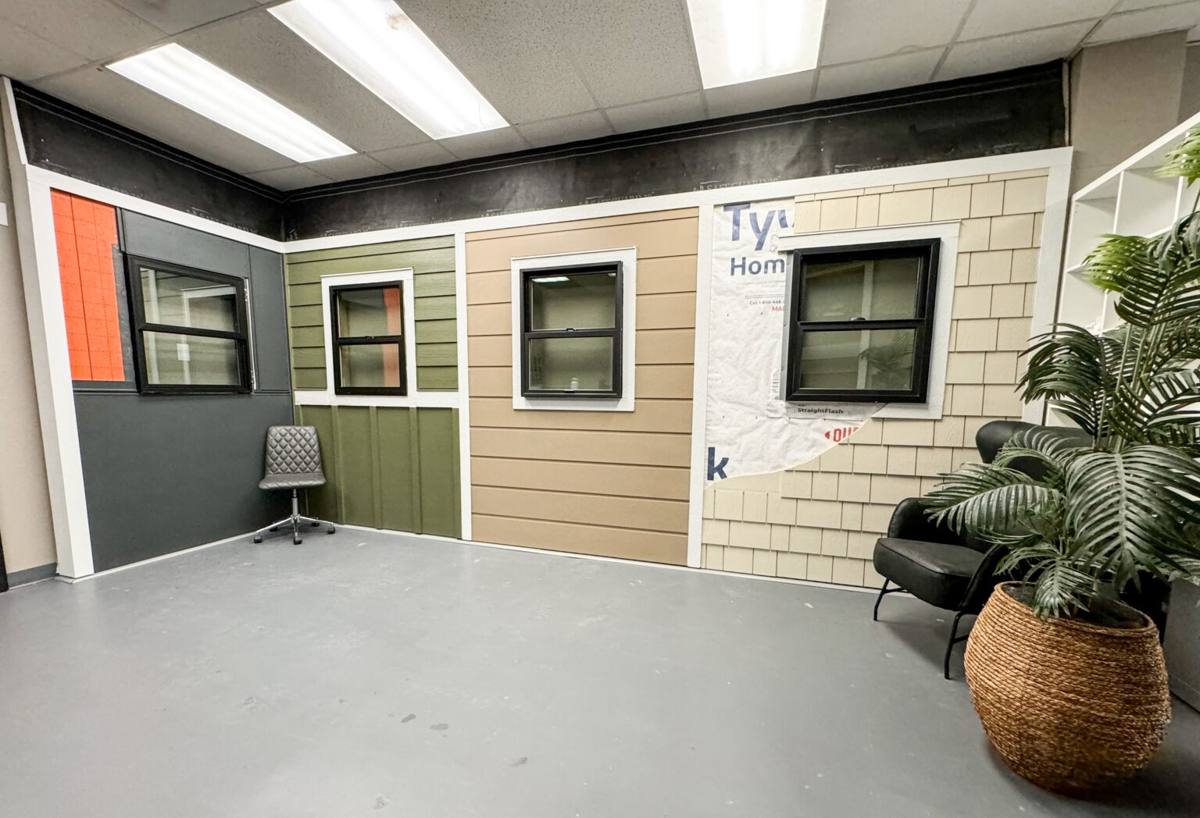
What Each Product Actually Is
Vinyl Siding
Vinyl siding is an extruded PVC (polyvinyl chloride) plastic panel, formed into overlapping planks and usually embossed with a wood-grain texture. Color is mixed into the plastic itself rather than painted on top, which is genuinely one of vinyl's better features — there's no separate paint layer to peel. Panels are hung on a wall using a "hang and lock" method that leaves them loosely fastened by design, because vinyl expands and contracts significantly with temperature.
Fiber Cement Siding
Fiber cement is a composite of Portland cement, sand, and cellulose fiber, cured under pressure and heat. It's dense, rigid, and dimensionally stable — meaning it doesn't expand and contract nearly as much as plastic or wood when temperatures swing. James Hardie's boards come factory-primed or factory-finished with their ColorPlus baked-on finish system, and they're engineered in regional formulations, including an HZ5 line built specifically for cold, wet climates like ours.
How Each One Handles Whatcom County Weather
This is where the comparison stops being theoretical. A few climate realities specific to this area matter a lot:
- Salt air off the bay accelerates corrosion of fasteners and can degrade certain plastics and coatings over time, particularly on homes with direct water exposure or frequent onshore wind.
- Driving, wind-blown rain tests every seam, corner, and butt joint on a home. Water that gets behind siding and can't dry out is the single biggest cause of long-term exterior damage in this region.
- Moss and algae growth on shaded walls and north-facing elevations is a near-guarantee somewhere on most Sudden Valley homes, given the tree cover and moisture levels.
Vinyl's loose-hung installation method is meant to let panels slide as they expand and contract, but that same looseness can allow wind-driven rain to work its way behind panels at seams and corners over time, especially on wall faces that catch prevailing weather. Fiber cement, installed correctly with proper flashing, house wrap, and sealed joints, sheds water at the surface rather than relying on drainage behind a loose panel system. It also won't buckle, warp, or ripple from heat and cold cycling the way vinyl can, which matters on south and west-facing walls that see real temperature swings between summer sun and winter cold snaps.
Impact Resistance and Physical Durability
Vinyl is a plastic, and plastic gets brittle in cold weather. A vinyl panel that flexes fine in July can crack from a stray baseball, a ladder bump, or hail impact in January. It also dents — a firmly thrown object or an errant weed-trimmer can leave a permanent dish in a panel that then has to be replaced.
Fiber cement is dense and rigid. It resists denting, and while it can crack or chip under a hard enough impact, it doesn't have vinyl's cold-weather brittleness problem. It also stands up to woodpeckers and pests far better than wood-based sidings, since it has no organic food value.
Fire Performance
This one is worth being direct about. Vinyl siding is a petroleum-based plastic. It will soften, melt, and burn under enough heat, and manufacturers are upfront that it's not a fire-rated product. Fiber cement is manufactured largely from cement and sand — it is non-combustible. That's not a knock on vinyl as a product; it's simply a structural fact about the two materials, and it's a real consideration for homeowners thinking about wildfire exposure, neighboring structures, or insurance underwriting.
Color and Finish: What Actually Fades
Vinyl's color runs through the plastic, so scratches don't reveal a different color underneath the way painted wood does. But vinyl does fade — UV exposure breaks down the pigment over years, and darker colors fade faster and more noticeably than light ones. Once it fades, there's no repainting your way back to the original shade without specialty vinyl-safe paints that many manufacturers don't recommend.
James Hardie's ColorPlus finish is a factory-baked, multi-coat finish applied under controlled conditions, backed by its own separate finish warranty. It resists fading, chipping, and cracking far better than field-applied paint, and because it's cured at the factory rather than brushed on a scaffold in variable weather, the finish quality is consistent from board to board.
Side-by-Side Comparison
| Factor | Vinyl Siding | Fiber Cement (James Hardie) |
|---|---|---|
| Material | Extruded PVC plastic | Cement, sand, cellulose fiber |
| Fire rating | Combustible | Non-combustible |
| Cold-weather brittleness | Cracks more easily below freezing | Rigid, stable across temperature swings |
| Expansion/contraction | Significant — requires loose-hang installation | Minimal — installs fastened tight |
| Color method | Pigment mixed into plastic; fades with UV | Factory-baked ColorPlus finish; fade-resistant |
| Impact resistance | Can dent or crack | Resists denting; dense, rigid board |
| Typical lifespan (correctly installed) | 20-30 years | 30-50+ years |
| Upfront cost | Lower | Moderate to higher |
| Moisture behavior | Relies on drainage plane behind loose panels | Sheds water at a rigid, sealed, flashed surface |
Installation Sensitivity: Where Products Succeed or Fail
Almost every siding failure we get called out to inspect — vinyl or fiber cement — traces back to installation, not the product itself. Vinyl is genuinely more forgiving to install badly and still look fine for a few years, because problems tend to show up as moisture damage behind the panels rather than something visible from the curb. That delay is part of what makes vinyl installation mistakes expensive: by the time you notice bowing, staining, or soft sheathing, the damage has often been building for years.
Fiber cement is less forgiving of sloppy installation up front — it requires correct fastening patterns, proper clearances, and manufacturer-specified flashing and joint treatment — but done correctly, it holds that quality for decades. This is exactly why installer training and manufacturer certification matter more with fiber cement than with vinyl. A product engineered this well only performs to spec when it's installed to spec.
Maintenance: What You'll Actually Be Doing
Vinyl's maintenance reputation ("just hose it off") is mostly true for surface dirt, but it undersells two real issues in this climate. Moss and algae on shaded vinyl walls need regular washing to prevent staining and slow material degradation, and any panel that cracks or fades unevenly needs full replacement since color-matching an aged panel to new stock rarely works.
Fiber cement also needs periodic washing to keep moss and mildew from taking hold on shaded elevations, which is unavoidable given our tree cover and rainfall. But its rigid, sealed surface doesn't have the same fade-and-crack maintenance spiral, and the ColorPlus finish is warranted separately from the substrate, giving you a documented remedy if the finish underperforms.
Warranty Structure: Read the Fine Print
Vinyl warranties are often prorated, meaning the coverage value declines every year you own the siding — a panel that fails in year 18 of a "lifetime" warranty may only be covered for a fraction of replacement cost, and often only material cost, not labor. James Hardie backs its fiber cement products with a non-prorated limited warranty on the substrate and a separate finish warranty on ColorPlus color, and both are transferable to a new owner if you sell the home — something worth mentioning to a future buyer, and something an appraiser or inspector will note.
Cost: The Honest Picture
Vinyl is the lower upfront cost option, no argument there — it's lighter, faster to install, and the material itself costs less per square foot. Fiber cement costs more upfront, both in material and in installation labor, because it's heavier, requires more precise fastening and cutting, and takes longer to install correctly.
Where the math shifts is over the ownership period. Vinyl's shorter realistic lifespan in a wet, salt-air climate, its prorated warranty, and the likelihood of a full replacement rather than a repair when panels fail, all add up over 20-30 years. Fiber cement's higher upfront number is spread over a longer service life with a stronger warranty backing it. We won't tell you which number matters more to your specific budget and timeline — that's your call — but we want you comparing the real total, not just the estimate on day one.
What to Ask Before You Choose
- Ask any contractor for their manufacturer certification and how many fiber cement or vinyl installations they've completed in this specific climate.
- Ask what fastening pattern and clearances they'll use, and whether they follow the manufacturer's written installation manual to the letter.
- Ask how the product's warranty handles labor costs, not just material replacement, if something fails.
- Ask how the quoted product performs specifically against salt air, driving rain, and moss — not just a generic sales pitch.
- Get everything — product line, color, warranty terms, and installation scope — in writing before signing anything.
Where We Land, and Why
We made a business decision years ago to install James Hardie fiber cement exclusively and stop installing vinyl, wood, and other alternatives. It's not because vinyl can't be a reasonable product for the right homeowner and budget — it's because we didn't want to keep telling customers in Sudden Valley "it should hold up fine" about a product we'd watched underperform against salt air, wind-driven rain, and a moss season most parts of the country don't deal with at all. Standardizing on one product line lets our crews get genuinely expert at installing it correctly, and lets us stand behind a warranty that means something when a homeowner calls us in year 15.
If you're weighing this decision for your own home, we're glad to walk your specific house, point out the wall faces that catch the worst weather, and give you a straight answer about what we'd actually recommend and why. There's no pressure and no obligation — just an honest look and a free estimate.