 Sudden Valley Siding
 Why Bellingham Homes Wear Out Siding Faster Than the Brochure Photos Suggest
Bellingham sits where the Salish Sea, Lake Whatcom, and the foothills of the North Cascades all meet, and that geography is exactly what makes exterior siding such a demanding job here. Homes near Bellingham Bay deal with salt-laden air rolling in off the water. Homes tucked closer to Sudden Valley and Lake Whatcom deal with shade, standing humidity, and slower drying times. Almost everyone in Whatcom County deals with a wet season that can stretch from October well into May. Siding that performs fine in a drier climate often struggles here within a decade, and it usually shows up first as color fade, soft spots at the bottom courses, or a green-black film that keeps coming back no matter how many times it gets pressure washed.
We work on homes throughout the Bellingham area and understand that "siding replacement" here isn't a cosmetic upgrade so much as a defense against a specific, predictable set of conditions. This page covers what those conditions actually do to a house, and how we approach siding, roofing, windows, and decks differently because of it.
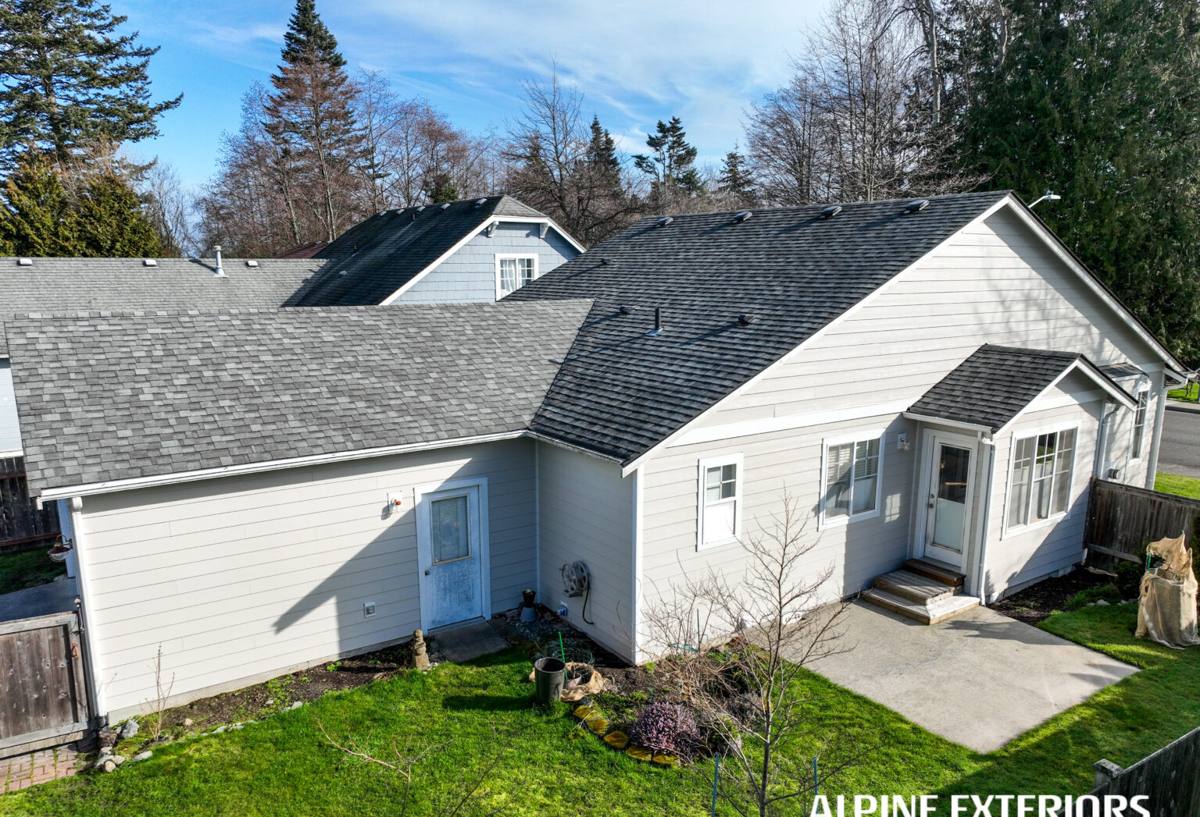
Salt Air and Coastal Exposure
Properties closer to Bellingham Bay and the broader Puget Sound shoreline are exposed to airborne salt that settles on exterior surfaces year-round, not just during storms. Salt is corrosive to fasteners, trim flashing, and any coating that isn't formulated to resist it. Over time it can also accelerate the breakdown of paint films, which is part of why repainting cycles on coastal homes tend to run shorter than what a paint can label promises.
This is one of the reasons factory-applied finishes matter more here than in drier inland markets. A coating baked onto the material at the factory, under controlled conditions, holds up to salt exposure differently than a field-applied coat of paint that's fighting damp air the whole time it's curing.
Driving Rain and Wind-Driven Moisture
Whatcom County storms frequently come in sideways off the water, which means rain doesn't just fall on a house, it gets pushed into every seam, lap joint, and butt seam that isn't detailed correctly. Wind-driven rain is a different problem than ordinary rainfall because it tests the water-resistive barrier, the flashing details, and the caulking joints, not just the surface material itself.
This is where installation quality matters as much as the product choice. We've seen premium siding materials fail early because of gaps at inside corners, missing kick-out flashing above decks and porch roofs, or caulk used as a substitute for proper flashing instead of a backup to it. A siding material can only perform as well as the water management system installed behind it.
Common Wind-Driven Moisture Entry Points
- Butt joints between siding panels without proper flashing or sealant backup
- Window and door trim where the barrier isn't lapped correctly
- Deck ledger boards and roof-to-wall transitions
- Inside and outside corners where two planes of siding meet
- Bottom starter courses close to grade, splashback, or planting beds
The Long Moss and Algae Season
Anyone who's owned a home near Lake Whatcom or in the shaded, tree-covered lots around Sudden Valley knows the moss problem doesn't stop at the roof. North-facing walls, siding shaded by mature evergreens, and any surface that stays damp for days at a stretch will eventually pick up algae streaking or moss growth if the material and finish don't resist it. This is a slow, cosmetic problem more than a structural one for most siding materials, but it's a real maintenance burden, and it's one of the more visible signs of a house that's losing the fight against the local climate.
Roofing sees this even more directly. A shaded roof in this part of Whatcom County can develop moss within a couple of wet seasons if it isn't treated or maintained, which is part of why we look at roof and siding condition together rather than as separate problems.
Why We Install Only James Hardie Fiber Cement Siding
We made a deliberate decision to standardize on James Hardie fiber cement and not install vinyl, LP SmartSide, or other engineered wood and fiber cement alternatives. That's not a marketing position, it's a response to what we've consistently seen hold up in this specific climate versus what struggles.
Fiber cement is non-combustible, which matters given Whatcom County's wildfire smoke seasons and general fire-code trends, and it doesn't have the moisture-related failure modes that engineered wood products can develop if a seam or cut edge is left unsealed. Hardie's ColorPlus finish is baked on and warranted separately from the substrate, which is a meaningfully different proposition than field-applied paint fighting our humidity while it cures. Hardie also engineers regional product lines (HZ5 for our climate zone) specifically for wet, temperature-swinging conditions rather than selling one general-purpose panel everywhere.
None of that means other products are without merit — vinyl is inexpensive and low-maintenance in the right application, and engineered wood siding has genuine fans. But we install exterior siding for a living in this exact climate, and Hardie fiber cement is what we're willing to put our name behind and back with installation workmanship we stand by.
What We Do Beyond Siding
Most of the calls we get start with siding, but the roof, windows, and deck on a house all take the same weather the walls do, and they all interact with each other. A poorly flashed deck ledger can rot the wall siding behind it. A roof shedding water onto a wall instead of away from it will accelerate siding wear regardless of what material is installed. We handle all four so the water management on a house is treated as one connected system instead of four separate contractors pointing fingers at each other.
| Service | What We Address |
|---|---|
| Siding | James Hardie fiber cement replacement, trim, and water-resistive barrier detailing |
| Roofing | Roof replacement and repair, including flashing at wall and deck transitions |
| Windows | Replacement windows and correct flashing integration with new siding |
| Decks | Deck rebuilds and ledger flashing to keep moisture out of the wall assembly |
What Drives the Cost of a Siding Project Here
Every house is different, but the same handful of factors move the price up or down on most Whatcom County siding jobs. We're not going to quote a number on a page like this since it depends entirely on the house, but here's what actually matters when you're comparing bids.
| Factor | Why It Matters |
|---|---|
| Existing siding removal | Tear-off and disposal, plus any hidden sheathing repair found underneath |
| Moisture or rot damage | Sheathing, framing, or trim replacement discovered once old siding comes off |
| Home shape and trim detail | Corners, dormers, and multiple rooflines mean more cutting and flashing work |
| Product line and profile | Lap width, texture, and color program affect material cost |
| Access and site conditions | Steep lots, tree cover, and setback from the water can affect staging and scaffolding |
What to Expect From the Process
A siding replacement on a Bellingham-area home generally starts with a walk-around inspection, not just of the siding but of the roof edges, deck attachment points, and window trim, since those are the areas most likely to be hiding water damage behind good-looking siding. From there we talk through product options, review the water-resistive barrier and flashing plan for the specific trouble spots on that house, and give a written scope before any work starts.
During installation, the details that don't show up in a photo are the ones that determine how the house performs in year eight or year fifteen: proper fastener placement, correct clearances at grade and roof lines, flashing at every penetration, and gaps left for expansion where the manufacturer specifies them. We don't cut those corners to save a day of labor, because in this climate they're the first things that fail.
Choosing a Contractor in Whatcom County
Marine climates are unforgiving of shortcuts, so who installs your siding matters as much as what you install. A few things worth checking before you hire anyone for exterior work in this region:
- Washington contractor license and current insurance, verifiable through the state's contractor lookup
- Manufacturer training or certification for the specific siding product being installed
- A written scope that names the water-resistive barrier and flashing details, not just "siding replacement"
- Local references or completed projects in coastal or lake-adjacent neighborhoods, where conditions match yours
- A clear, transferable warranty on both material and labor
Local experience matters here specifically because a crew that's only worked in drier inland climates may not instinctively over-build the flashing details that this kind of driving rain demands.
Let's Look at Your House
If you're in Bellingham, Sudden Valley, or elsewhere in Whatcom County and your siding is showing fade, staining, soft spots, or recurring moss, we're happy to take a look and give you an honest read on what's going on and what it would take to fix it. There's no pressure and no obligation — just fill out the form below to get started.