 Sudden Valley Siding
 One Product Line, One Reason
Walk into most siding companies and you'll get a menu: vinyl, LP SmartSide, fiber cement, maybe primed wood if you ask. We don't do that. Sudden Valley Siding Replacement installs James Hardie fiber cement siding and nothing else. Not because we have a vendor relationship we're protecting, but because after years of tear-offs and warranty calls on other products in this specific climate, one material kept holding up the way homeowners expect it to and the others didn't.
Sudden Valley sits against Lake Whatcom, which means homes here deal with a combination most siding products were never engineered for: near-constant humidity, long stretches of low-angle rain that drives sideways into south and west walls, and a moss and algae season that can run eight or nine months a year in shaded lots. Add the salt-tinged marine air that rolls in off Bellingham Bay and up through the county, and you've got a punishing environment for anything that isn't dimensionally stable and rot-proof at its core.
This page explains what James Hardie siding actually is, why it's built differently than the alternatives, and why we stopped installing anything else.
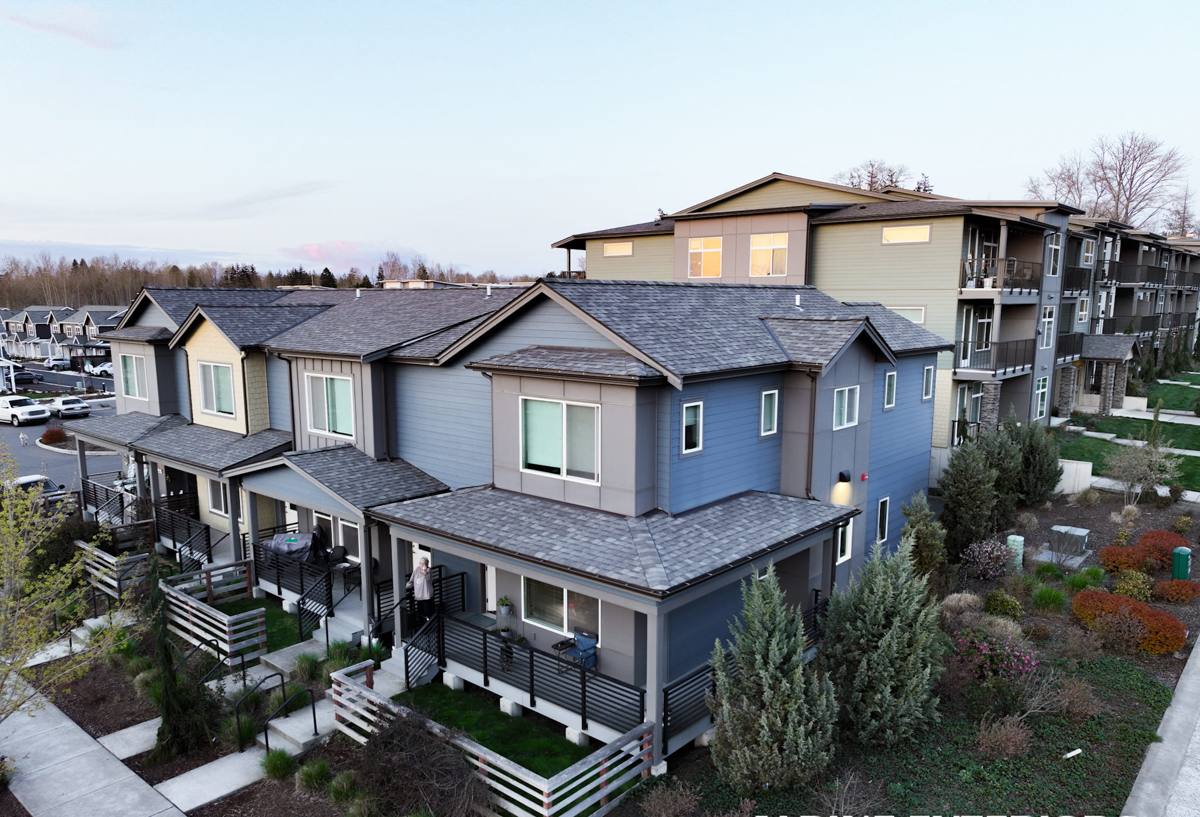
What James Hardie Siding Actually Is
James Hardie makes fiber cement siding — a blend of Portland cement, sand, cellulose fiber, and water, cured and formed into planks, panels, and shingles. It is not plastic, and it is not wood. That distinction matters more than it sounds like it should, because it's the reason fiber cement doesn't share the two biggest failure modes we see on Whatcom County homes: moisture-driven rot and heat-driven warping.
The Core Material Advantages
- Non-combustible. Fiber cement carries a Class A fire rating, unlike vinyl or wood-based products.
- Dimensionally stable. It doesn't expand and contract with temperature swings the way vinyl does, so seams and reveals stay tight for decades.
- Moisture-resistant by composition. There's no wood fiber core to absorb water and swell, delaminate, or rot from the inside out.
- Pest-proof. Carpenter ants and woodpeckers, both common around Lake Whatcom's tree line, have nothing to chew into.
- Factory-applied finish. ColorPlus finish is baked on at the plant under controlled conditions, not brushed on a jobsite in variable weather.
Why the Alternatives Lose That Battle Here
We're not going to tell you vinyl siding or LP SmartSide are bad products everywhere. In a dry inland climate with moderate humidity, either can perform reasonably well for a long time. Whatcom County isn't that climate, and Sudden Valley — tucked against the lake with heavy tree cover on many lots — is one of the tougher micro-climates in the county for siding.
Vinyl Siding
Vinyl is inexpensive and easy to install, which is exactly why it's everywhere. But it's a petroleum-based product that expands and contracts significantly with temperature, which opens seams over time and lets wind-driven rain work behind panels. In the marine air and driving rain typical of this area, that gap behind the panel becomes a moisture trap against the house wrap. Vinyl also chalks and fades under UV exposure, and it becomes brittle and prone to cracking in cold snaps — something Whatcom County gets a handful of times most winters.
LP SmartSide and Other Engineered Wood
Engineered wood siding (strand board treated with resins and zinc borate) has a real fan base because it looks and installs like traditional wood lap siding. The problem is the core is still wood fiber. Once a cut edge, nail hole, or caulk joint fails and lets moisture in — which happens on every siding job eventually, no matter how careful the crew — that wood core can swell, and swelling shows up as bubbling, buckling, or soft spots. In a climate with Sudden Valley's rain totals and humidity, the margin for a maintenance lapse is thin.
Cemplank, Allura, and Other Fiber Cement Brands
These are legitimate fiber cement competitors to Hardie, and the base chemistry is similar. Where we see the gap is in product engineering for specific climates, factory finish consistency, and the depth of the installer network and warranty backing in this region. James Hardie builds region-specific HZ5 product formulated for exactly the freeze-thaw and moisture cycling the Pacific Northwest sees, and it's the fiber cement brand with the most established supply chain and trained-installer support in Whatcom County.
Primed Spruce and Cedar
Real wood siding, primed or not, is the most maintenance-intensive option there is. It needs repainting or restaining on a cycle, and any gap in that maintenance in a climate this wet invites rot, moss growth, and insect damage. We install a lot of wood trim and accent work, but not as a primary siding material — the upkeep burden doesn't match what most homeowners actually want to sign up for.
How the Products Compare
| Factor | James Hardie Fiber Cement | Vinyl | Engineered Wood (LP SmartSide) | Cedar / Primed Wood |
|---|---|---|---|---|
| Moisture tolerance | High — cement core doesn't rot | Moderate — traps moisture behind panels | Low-moderate — wood core can swell | Low without diligent maintenance |
| Fire rating | Class A, non-combustible | Combustible, melts | Combustible | Combustible |
| Dimensional stability | High | Low — expands/contracts | Moderate | Moderate |
| Factory finish | ColorPlus, baked-on, 15-year finish warranty | Color molded through, fades/chalks | Factory primed or prefinished, varies | Usually field-applied |
| Typical lifespan installed to spec | 30-50+ years | 20-30 years | 20-30 years | 15-25 years with upkeep |
| Maintenance | Occasional wash, repaint on your schedule if desired | Low but limited repair options | Caulk/paint upkeep is critical | Regular repainting/restaining |
The Hardie Product Lines We Install
James Hardie isn't one product — it's a system with lines engineered for different looks and different climate demands.
HardiePlank Lap Siding
The most common choice for full siding replacement — horizontal lap boards in several textures (smooth, cedarmill, beaded) and widths. This is what most Sudden Valley homes end up with.
HardiePanel Vertical Siding
Used for board-and-batten looks or as an accent on gables and dormers, common on the more contemporary homes going up around the lake.
HardieShingle
Staggered or straight-edge shingle panels for a cottage or craftsman look, without the maintenance burden of real cedar shingles.
HardieTrim
Fiber cement trim boards for corners, fascia, and window/door surrounds — keeps the whole exterior in one moisture-stable material system instead of mixing fiber cement field siding with wood trim that will fail on a different timeline.
HZ5 Engineered for This Region
James Hardie engineers its plank products by climate zone. HZ5 is formulated for regions with significant moisture and freeze-thaw cycling — which describes Whatcom County well. It's the version we spec on essentially every job here.
ColorPlus Technology and Why Factory Finish Matters
A big share of siding failures we get called out to inspect aren't material failures — they're finish failures. Field-applied paint on any siding material is only as good as the weather conditions, prep, and coats it got on installation day. ColorPlus finish is applied and cured in a factory environment through multiple coats, which gives more consistent coverage and adhesion than anything achievable on a ladder in Whatcom County drizzle. It comes with its own multi-year finish warranty separate from the substrate warranty, and it holds color and resists the fading that flat-painted or unfinished siding shows within a few years in this much UV and moisture cycling.
The Warranty Difference
James Hardie backs its siding with a transferable limited warranty — meaningful if you sell the home within the warranty period, which is common in a desirable area like Sudden Valley. Warranty terms vary by product line and whether ColorPlus finish is used, so we walk through the specific coverage for your project rather than quoting a blanket number. What we can say plainly: the warranty structure and the manufacturer's track record of honoring it are part of why we standardized on this brand over competing fiber cement products.
What Correct Installation Actually Involves
Fiber cement is only as good as the install behind it. A huge share of the "fiber cement failed" stories in this region trace back to installation shortcuts, not the material.
- Proper water-resistive barrier and flashing at every window, door, and penetration — this is where most leaks actually originate, not through the siding field itself.
- Correct nailing pattern and fastener type — over-driven or under-driven nails void warranty coverage and invite moisture entry.
- Manufacturer-specified clearances at grade, roof lines, and decks so the bottom edge of the siding never sits in standing water or snow pack.
- Caulked and sealed joints at butt seams, corners, and trim intersections, using the sealants Hardie specifies.
- Field-cut edges primed or sealed before installation, since factory finish doesn't cover a fresh cut.
- Correct panel and board overlap so wind-driven rain off the lake can't work its way behind a course.
We install to these specs on every job, which is also the basis for the manufacturer's installer-backed warranty coverage — cutting corners on any of the above is the single biggest reason fiber cement siding underperforms its reputation.
What This Means for Your Sudden Valley Home
If you're planning a siding replacement, you're going to hear pitches for cheaper materials. Vinyl will always win on sticker price, and engineered wood can look close to real cedar for less. Both are legitimate products in the right climate. Our position, after years of working exclusively in Whatcom County's marine, moss-heavy, high-rainfall environment, is that James Hardie fiber cement is the material that consistently goes the distance here without surprises five or ten years in.
That's the whole reason we narrowed down to one product line instead of offering a menu. It's easier for us to stand behind a warranty and a workmanship guarantee when we're not installing five different materials with five different failure modes across the same neighborhood.
If you'd like to talk through what a James Hardie siding replacement would look like for your home — product line, color, and a straightforward estimate — we're happy to come take a look. The estimate is free, and there's no pressure attached to it.