 Sudden Valley Siding
 Geneva and the Lake Whatcom Microclimate
Geneva sits along the northern edge of Lake Whatcom, tucked into the timbered hills that separate the lake from Bellingham Bay. It's a quieter corner of Whatcom County, but the exterior of a house here works just as hard as anything closer to open water. The lake holds moisture in the air even on dry-looking days, the surrounding evergreen canopy keeps yards and rooflines shaded and damp, and the marine influence off Puget Sound pushes wet weather through the region for a good chunk of the year. Add in a long, low-angle rainy season and a moss season that can stretch from fall through spring, and you've got siding conditions that punish anything not built for sustained moisture exposure.
We're a Sudden Valley-based crew, and Geneva is inside our regular service area — not a stretch job we drive an hour for once a year. That matters more than most homeowners realize when it comes to exterior work, and we'll get into why below.
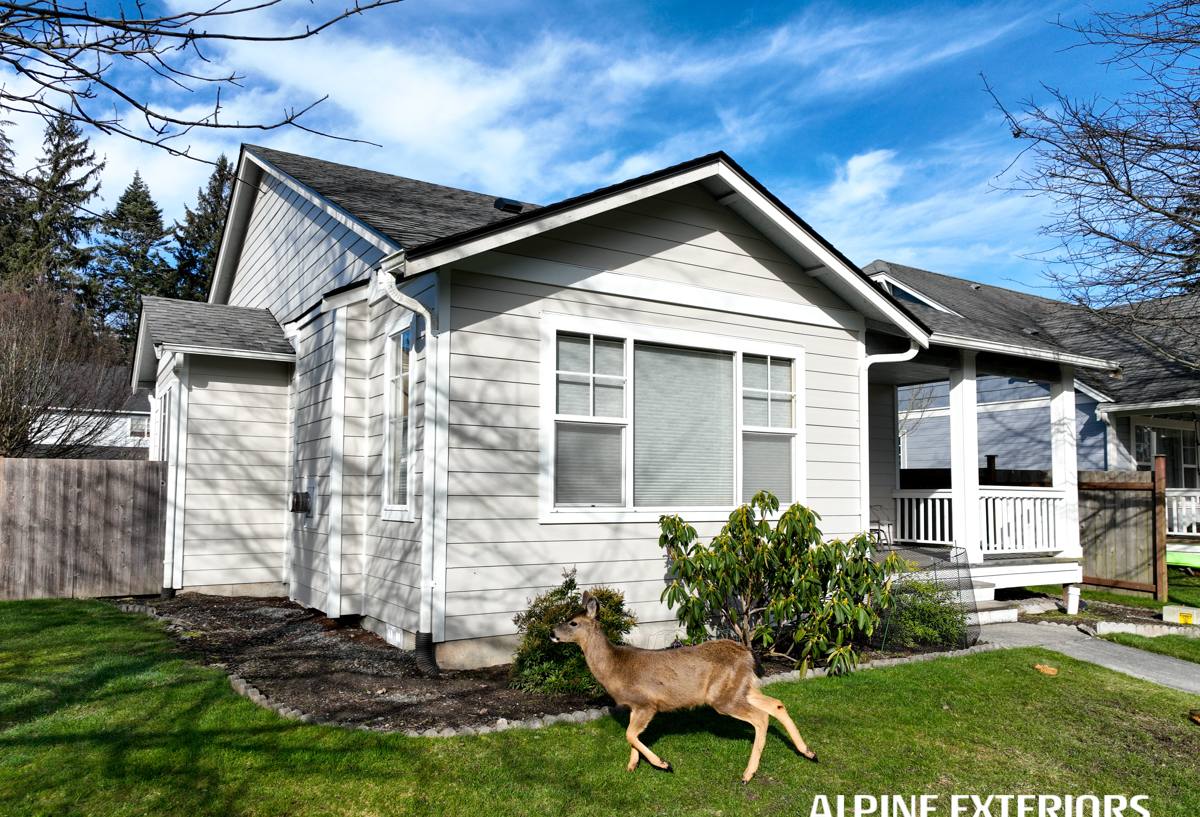
What This Climate Actually Does to a House
It's worth being specific about the mechanisms, because "wet climate" undersells what's happening at the wall surface over years, not days.
Driving rain and wind-driven moisture
Rain here rarely falls straight down. Wind off the lake and the surrounding terrain pushes it sideways, which means it hits vertical wall surfaces directly instead of sheeting off a roof. Siding materials and installation details that work fine in calmer regions can let water track behind panels or wick into edges when rain is consistently wind-driven.
Moss, algae, and constant shade
Trees are one of the best things about living near the lake, and also one of the harder things for exterior surfaces. Shaded, moisture-retentive siding grows moss and algae faster than siding that gets regular sun. Once organic growth takes hold, it holds moisture against the wall surface even longer, and untreated or poorly finished materials can start to degrade underneath it.
Freeze-thaw cycling
Whatcom County doesn't get brutal winters, but it does get repeated freeze-thaw swings — wet siding that freezes, expands, thaws, and repeats. Materials that absorb water are the ones that suffer most from this cycle over a couple of decades.
Humidity without much drying time
Even in months without heavy rain, relative humidity near the lake stays high. Surfaces don't get long uninterrupted dry stretches, which is exactly the condition that lets wood-based products and lower-grade composites hold moisture longest.
Why We Install Only James Hardie Fiber Cement Siding
We made a deliberate call as a company: we install James Hardie fiber cement siding, and we don't install vinyl, LP SmartSide, primed spruce, cedar, or other fiber cement brands like Cemplank or Allura. That's not a marketing line — it's a standard we hold to because of what we see on wet-climate homes over time.
Vinyl is affordable and low-maintenance in a general sense, but it's a thin material that expands and contracts with temperature swings, and it can warp or crack under impact in colder snaps. Wood-based composite siding and primed spruce look good going up, but they're organic materials at their core — if moisture gets past the finish, especially at cut edges or fastener points, they can swell and deteriorate, and that risk goes up in a climate that doesn't give surfaces much time to dry out. Cedar is a genuinely beautiful traditional choice, but it requires ongoing sealing, staining, and vigilance against rot and insects that most homeowners underestimate when they choose it. Other fiber cement brands aren't bad products, but we've standardized on one manufacturer so we can guarantee installation specs, warranty coverage, and finish consistency across every job we do — instead of juggling different technical requirements for every brand a homeowner might ask about.
James Hardie fiber cement is non-combustible, dimensionally stable, and manufactured with regional climate zones in mind — their HZ5 product line is engineered specifically for the freeze-thaw and wet-winter conditions the Pacific Northwest deals with. The factory-applied ColorPlus finish is baked on under controlled conditions, which holds color and resists the moss and mildew staining that plagues field-painted surfaces near the lake. It comes with a strong transferable limited warranty, which matters both to current owners and to resale value down the road.
How a Siding Replacement Works, Start to Finish
- Walkthrough and assessment. We look at existing siding condition, moisture damage, trim and flashing details, and anything hidden behind the current material.
- Tear-off and inspection of the wall sheathing. This is the step that catches problems before they become expensive surprises — rot, inadequate house wrap, or old flashing that needs correcting.
- Weather barrier and flashing correction. In a driving-rain climate, the water-resistive barrier and flashing details around windows, doors, and rooflines matter as much as the siding itself. We fix what needs fixing here, not just cover it up.
- Hardie panel or plank installation to manufacturer spec. Correct fastener placement, gapping, and clearances aren't optional details — they're what the warranty depends on and what keeps water from finding a way in.
- Trim, caulking, and final detailing. The small stuff — corner boards, joints, penetrations — is where most premature siding failures actually start.
- Walkthrough and cleanup. We go over the finished work with the homeowner before we call it done.
Beyond Siding: Roofing, Windows, and Decks
Most exterior problems on a Lake Whatcom-area home don't stay isolated to one component. A roof that's shedding granules or holding moss can send water down behind siding at the roofline. Old windows with failed seals let moisture into the wall cavity right next to new siding. A deck built without the lake's moisture load in mind rots from the underside first. Because we handle siding, roofing, windows, and decks, we can look at a Geneva property as one connected exterior system instead of patching one piece and leaving the rest to fail on its own timeline. That's especially useful during a siding project, since tear-off is often the best — and cheapest — time to address flashing, trim, or window issues that are already exposed.
Matching the Hardie Product Line to This Property
James Hardie makes several distinct product lines, and the right one depends on the home's style, sun exposure, and how much of that lake-driven moss and moisture it's likely to face.
| Hardie Product | Best Fit For | Why It Suits This Climate |
|---|---|---|
| HardiePlank Lap Siding | Traditional and craftsman-style homes | Widely used regional standard; strong moisture and impact resistance |
| HardiePanel Vertical Siding | Modern builds, accent walls, gables | Clean lines with the same fiber cement durability |
| HardieShingle | Homes wanting a cedar-shake look | Gets the shingle aesthetic without cedar's ongoing maintenance |
| HardieTrim | Corner boards, window and door trim | Matches siding durability at the joints most prone to water intrusion |
What Drives the Cost of a Siding Project Here
No two homes near the lake cost the same to re-side, and it's worth understanding why before getting quotes.
| Factor | Impact on Project |
|---|---|
| Home size and wall complexity | More corners, gables, and dormers mean more labor and trim work |
| Condition of existing sheathing | Hidden rot found during tear-off can add repair scope |
| Access and site terrain | Sloped, wooded, or tight lake-area lots can affect staging and equipment |
| Product line and finish selection | Plank vs. panel vs. shingle profiles and ColorPlus color options vary in cost |
| Trim and flashing scope | Correcting old flashing details adds time but prevents future callbacks |
We give straightforward, honest estimates after actually looking at the property — not a generic per-square-foot number pulled out of thin air.
Why It Matters That We're a Local Crew
A crew based in Sudden Valley knows what Lake Whatcom weather does to a house across seasons, not just what it looks like on the day of a bid. We've seen how moss builds on north-facing walls shaded by second-growth timber, how driving rain off the lake finds weak trim joints, and how humidity here just doesn't let surfaces dry out the way it might twenty miles inland. That local knowledge shapes real decisions — where we pay extra attention to flashing, which product lines we recommend for a shaded lot versus an open one, and how we sequence a job around the region's rain patterns. It also means we're around after the job is done. Warranty service, a question a year later, a follow-up on a trim detail — that's a short drive for us, not a special trip.
A Simple Maintenance Checklist for Geneva Homeowners
- Rinse siding annually to clear moss and algae buildup before it takes hold, especially on shaded, north-facing walls
- Keep gutters clear so overflow doesn't run down the siding face during heavy rain
- Trim back branches and vegetation that keep wall sections in constant shade
- Inspect caulking around windows, doors, and trim joints every year or two
- Check for soft spots, discoloration, or bubbling paint, which can signal moisture getting behind the surface
- Have flashing and trim checked whenever roofing or gutter work is done nearby
Getting Started
If your Geneva home is due for new siding — or you're just not sure whether what's on the walls now still has years left in it — we're glad to take a look. If you'd like a straightforward, no-pressure estimate on siding, roofing, windows, or decks, use the form below and we'll get in touch.