 Sudden Valley Siding
 Siding That Has to Work Year-Round in Geneva
Homes in the Geneva area of Sudden Valley sit in one of the wetter, greener corners of Whatcom County, and the siding on those homes earns its keep. Long stretches of overcast, damp weather, driving rain off and on for months at a time, and a marine-influenced air mass that carries salt and moisture inland all combine to create a tough environment for exterior materials. Add in a shaded, tree-heavy landscape typical of the area and you get a long moss and algae season that can start early and run late.
None of that is a problem for siding that's built and installed correctly. It becomes a problem fast when the wrong product goes up, or when the right product goes up the wrong way. This page is about what fiber cement siding specifically needs to deliver for a Geneva home, and how we approach that job.
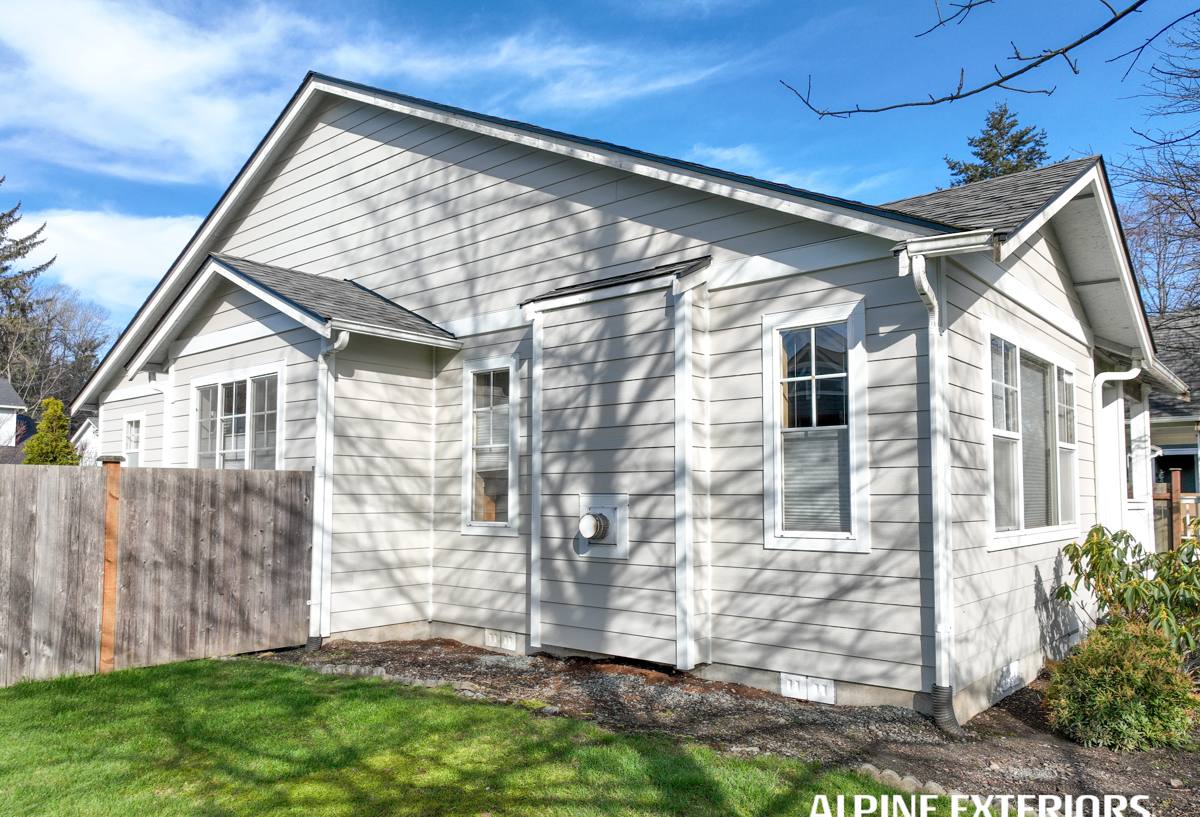
What Constant Moisture and Moss Actually Do to Siding
Moisture
Repeated wetting and drying cycles are harder on siding than a single heavy storm. Materials that absorb water — or that trap water behind them because of poor flashing and gapping — swell, warp, or start to rot from the inside out long before the surface looks bad. On a shaded Geneva lot, siding can stay damp for days after a rain event instead of drying out in an afternoon.
Moss and Algae
Moss and algae need shade and moisture to establish, and Geneva has both in abundance for a good chunk of the year. Left alone, growth holds moisture against the siding surface, stains the finish, and on porous or wood-based products can start to break down the material itself. It's cosmetic at first and structural later if it's ignored.
Salt-Influenced Air
The marine air common to this part of Whatcom County carries fine salt content that accelerates corrosion of exposed metal fasteners and trim, and it can degrade some paint and coating systems faster than a drier inland climate would. Siding and fastening hardware both need to be chosen with that in mind.
Why We Install Only James Hardie Fiber Cement in Geneva
We standardized on James Hardie fiber cement siding and don't install vinyl, LP SmartSide, Cemplank, Allura, or primed wood species like spruce or cedar. That's not a marketing position — it's a decision based on what holds up in exactly the conditions Geneva homes deal with every year.
- Non-combustible core: fiber cement doesn't feed a fire the way wood-based products can.
- Engineered for wet climates: Hardie's HZ5 formulation is built specifically for the moisture and moisture-cycling conditions of the Pacific Northwest, not a generic national product.
- Factory-applied ColorPlus finish: the color and protective coating are baked on at the factory under controlled conditions, which holds up to UV, moisture, and cleaning far better than field-applied paint.
- Dimensionally stable: fiber cement doesn't swell and shrink with moisture the way wood and some engineered wood products do, so joints, caulk lines, and paint stay intact longer.
- Backed by a real transferable warranty: Hardie's warranty structure is well established and transfers to a new owner if the home sells, which matters for resale.
Vinyl is cheap and low-maintenance in dry climates but it can warp in heat, become brittle in cold, and it doesn't hold paint if a homeowner wants to change color down the road. Engineered wood products like LP SmartSide use a wood-strand core that, however well treated, is still wood at the core — in a climate with Geneva's moisture load, edge and cut-end sealing becomes critical and unforgiving of any installation shortcuts. Primed cedar and spruce look great new but need ongoing refinishing and are the most vulnerable to the rot and moss issues described above. We'd rather tell a homeowner honestly why we don't install those products than sell something we don't think will perform here.
The Hardie Product Lines That Fit This Area
Most Geneva installs we do use HardiePlank lap siding in the HZ5 climate configuration, which is engineered for regions like ours with sustained moisture exposure. Depending on the home's architecture, HardiePanel vertical siding or HardieShingle accent siding may come into play for gables, accent walls, or a mixed-material look. All of it comes with the factory ColorPlus finish in a range of standard colors, so the color coat isn't something applied on-site and left to weather unevenly.
What a Correct Fiber Cement Installation Involves
Fiber cement is only as good as the installation behind it. Most of the siding failures we get called out to inspect aren't a product problem — they're a water-management or fastening problem that shows up years later. A correct job includes:
- Proper weather-resistive barrier and flashing at every window, door, and penetration before a single course goes up
- Correct minimum clearance from the siding bottom edge to grade, decks, patios, and roof lines
- Rain screen or drainage gap detailing where the wall assembly calls for it, so moisture that does get behind the siding can drain and dry
- Manufacturer-specified fastener type, spacing, and penetration depth — corrosion-resistant fasteners matter more here given the marine air
- Correct joint treatment and gapping at butt joints and corners, sized for the material's expansion and contraction
- Factory-cut edges kept intact wherever possible, with any field cuts properly sealed
- Caulking only where Hardie's install specs call for it — over-caulking traps moisture as often as it keeps it out
Skip any one of those steps and the siding can still look fine for a year or two before the real problems — trapped moisture, rot in the substrate, premature paint failure — start showing up.
Signs Existing Siding in Geneva Is Struggling
If a Geneva home currently has vinyl, wood, or engineered wood siding, a few signs suggest it's time to look seriously at a fiber cement replacement rather than another round of patching:
- Persistent moss or algae staining that returns within a season of cleaning
- Soft spots, bubbling, or visible warping, especially on north- and west-facing walls
- Paint that's peeling or chalking faster than it should for its age
- Visible gaps or separation at joints and corners
- Rust streaking from fasteners or trim hardware
Our Process, From Estimate to Finished Siding
- On-site walk-through: we look at the whole exterior, not just the wall a homeowner is worried about, and check for moisture or substrate issues hiding behind the current siding.
- Honest scope and product recommendation: we tell you what we'd actually put on the house and why, including which Hardie line and profile fits the home.
- Written estimate: clear on materials, labor, and what's included — no vague allowances.
- Prep and tear-off: old siding comes off, the sheathing and framing underneath get inspected and repaired as needed before anything new goes up.
- Weather barrier and flashing installed to spec: this is the step that determines whether the siding performs for twenty years or five.
- Hardie installation: installed to manufacturer specifications for fastening, clearance, and joint treatment.
- Final walk-through: we go over the finished work with the homeowner before calling the job done.
Comparing Siding Options for a Geneva Home
| Material | Moisture Performance in This Climate | Maintenance | Typical Lifespan |
|---|---|---|---|
| James Hardie Fiber Cement (HZ5) | Engineered for wet, moss-prone climates; dimensionally stable | Occasional wash; factory finish resists fading | Multiple decades with correct install |
| Vinyl | Doesn't absorb water but can warp with heat/cold cycling; seams can let moisture behind panels | Low, but can't be repainted if color fades | Moderate; varies widely with quality |
| Engineered Wood (e.g. LP SmartSide) | Wood-strand core requires diligent edge/cut sealing to resist this climate's moisture load | Periodic inspection of cut ends and caulk lines | Shorter if sealing is neglected |
| Primed Cedar/Spruce | Most vulnerable to rot and moss without frequent upkeep | Highest — regular refinishing needed | Shortest without diligent maintenance |
What Affects the Cost of a Fiber Cement Siding Job
| Factor | Why It Matters |
|---|---|
| Home size and wall complexity | More corners, gables, and trim detail mean more labor and material cuts |
| Condition of the sheathing underneath | Rot or damage found during tear-off adds repair scope before new siding can go on |
| Siding profile and accent choices | Lap siding, panel siding, and shingle accents carry different material and labor costs |
| Trim and accessory scope | New trim boards, corner posts, and soffit work add to the total |
| Site access | Steep lots, tree cover, and tight setbacks common around Sudden Valley can affect staging and labor time |
We don't quote a job without seeing it — every Geneva home's exposure, existing condition, and layout is different enough that a real number only comes from a real walk-through.
Why Hiring a Crew That Already Works Geneva Matters
A siding installer who already works in Sudden Valley and the surrounding Whatcom County neighborhoods knows what this specific climate does to a wall assembly over time — not just in theory, but from tear-offs we've done on homes that had the wrong product or a rushed install. That experience shapes decisions on flashing details, fastener choice, and where to add drainage capacity that a crew unfamiliar with this moisture load might skip. It also means realistic scheduling around the region's wetter months, since fiber cement installation has weather windows worth respecting for a clean result.
If you're weighing a siding replacement for a Geneva home, we're happy to walk the property, look at what's there now, and give you a straight answer on what it needs. Reach out for a free, no-pressure estimate — there's a form below to get started.