 Sudden Valley Siding
 Deck Repair in Barkley: Why Local Conditions Change the Job
Barkley sits close enough to open water and the surrounding tree cover that decks here age differently than decks fifty miles inland. Salt-laden air off the water, long stretches of driving rain through the fall and winter, and a moss season that can run six months or more all work on wood, fasteners, and coatings in ways that generic deck advice doesn't account for. A repair that would hold up fine in a dry inland climate can fail within a season or two out here if it doesn't account for how Whatcom County weather actually behaves.
We work on decks in and around Sudden Valley regularly, and Barkley's mix of tree canopy, elevation changes, and proximity to the lake means we see the same failure patterns over and over. That repetition is useful — it means we're not guessing at what's wrong or how to fix it correctly the first time.
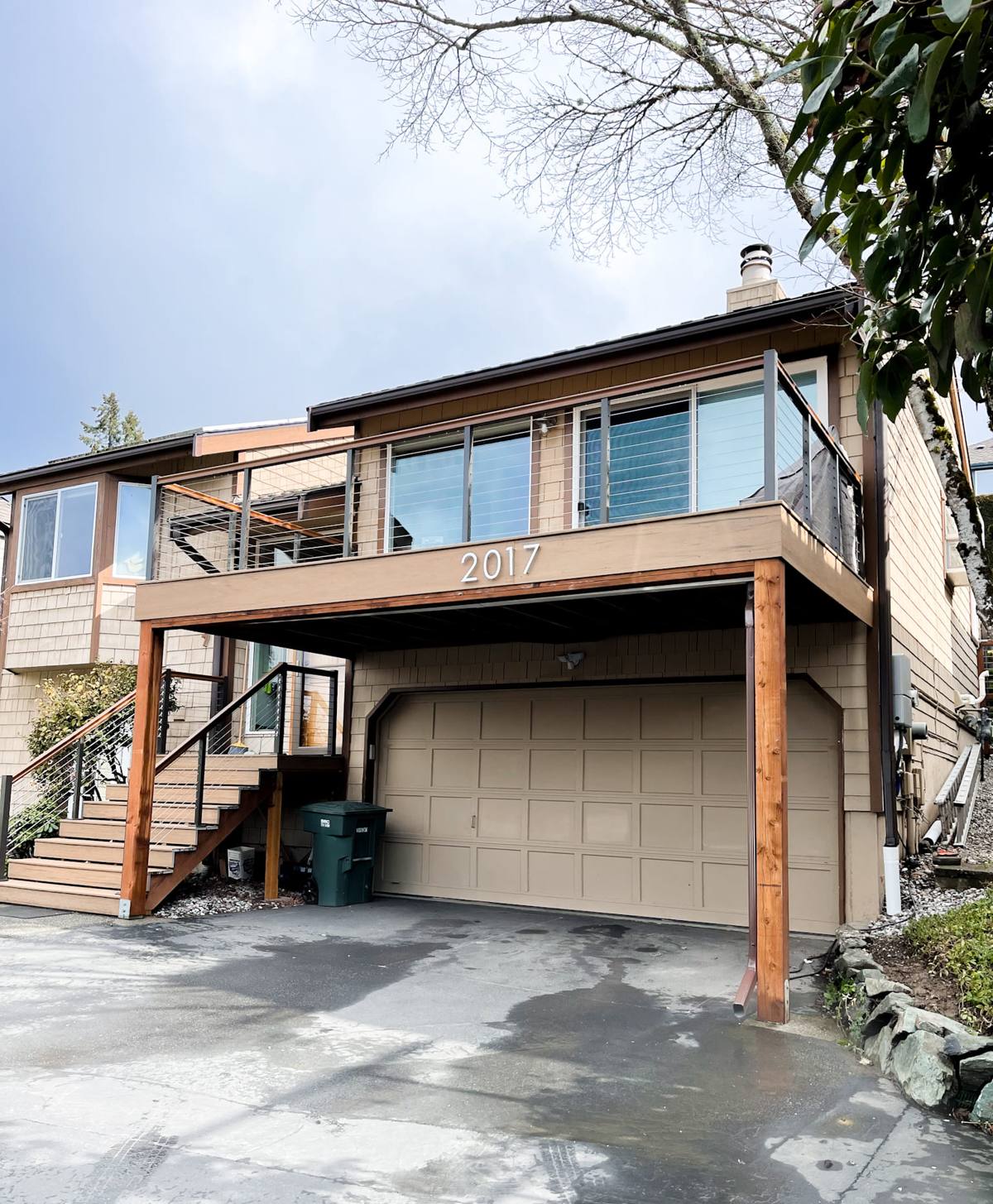
What This Climate Does to a Deck Over Time
Salt Air and Metal Fasteners
Salt air accelerates corrosion in nails, screws, and structural hardware — joist hangers, post bases, and ledger bolts included. Once a fastener starts to corrode, it loses holding strength long before the corrosion is visible from the surface. On an older deck, this is often the real reason boards feel spongy or railings feel loose, even when the wood itself looks fine.
Driving Rain and Water Intrusion
Rain that comes in sideways, which is common here through the wetter months, gets under flashing, into end grain, and behind ledger boards in ways that straight-down rain doesn't. Water that gets trapped against the house or pools on horizontal surfaces is what turns a cosmetic problem into a structural one.
Moss, Algae, and Trapped Moisture
A long moss season means organic growth has months to establish itself on decking, especially in shaded areas or spots that don't get much sun exposure. Moss and algae hold moisture against the wood surface, which softens fibers, degrades finishes faster, and makes boards more slippery and more prone to rot underneath the growth where you can't see it.
Signs a Barkley Deck Needs Repair
Most deck problems don't show up as one obvious failure — they show up as a handful of small signs that add up. Before scheduling anything, walk your deck and check for these:
- Boards that flex, bounce, or feel soft underfoot, especially near the house or stair landings
- Visible gaps opening up between boards or where the deck meets the house
- Railings or posts that wobble when pushed
- Rust streaks below fasteners or hardware
- Dark staining or persistent moss growth in the same spots season after season
- A ledger board area that stays damp long after the rest of the deck has dried
- Stairs that feel uneven or have visibly sagging stringers
- Any spot where a screwdriver or awl sinks into the wood with light pressure
Any one of these on its own might be minor. Several together usually mean it's time for a proper inspection rather than a patch job.
What a Correct Deck Repair Actually Involves
A repair that just replaces the boards you can see is often a repair that misses the actual problem. The parts of a deck that fail first in this climate — the ledger connection, the joists, the flashing, and the fasteners — are mostly hidden from view. A repair worth doing addresses those first.
The Ledger and House Connection
This is where most structural failures start, because it's the point where the deck meets the house and where water is most likely to get trapped. We check for proper flashing, look for soft wood behind the ledger, and confirm the connection is still rated to carry the load it was built for.
Joists and Framing
Surface boards can look fine while the framing underneath has already started to rot, especially where moss or debris has been trapping moisture against a joist for a season or two. We inspect framing wherever decking is pulled up, not just where a homeowner points us to.
Fasteners and Hardware
Given how salt air treats metal here, we replace corroded fasteners and hardware as a matter of course rather than reusing anything questionable, and we use fasteners and connectors rated for coastal or high-moisture exposure.
Surface Boards and Finish
Once the structure underneath is sound, replacing damaged boards and refinishing or resealing exposed wood protects the repair going forward and keeps moss and algae from re-establishing as quickly.
Repair or Replace? How We Make That Call
Not every deck problem calls for a full rebuild, and not every deck is worth patching. The honest answer depends on where the damage is and how much of the structure is affected.
| Factor | Leans Toward Repair | Leans Toward Replacement |
|---|---|---|
| Framing condition | Joists and ledger are sound, damage is isolated | Rot or corrosion found in multiple structural members |
| Age of deck | Under 15-20 years, built to a reasonable standard | Older deck nearing or past typical structural lifespan |
| Extent of damage | Limited to a few boards, railing sections, or stairs | Widespread soft spots, sagging, or repeated past patch jobs |
| Code compliance | Original construction meets current standards | Railings, footings, or spacing don't meet current code |
| Cost relative to rebuild | Repair cost is a fraction of full replacement | Repair cost approaches what a rebuild would run |
We'll always tell you honestly which side of this table your deck falls on. There's no benefit to us in talking you into a bigger job than you need, and there's no benefit to you in patching a deck that's structurally past the point of repair.
Material Choices for This Climate
What we use to repair or replace decking depends on your existing deck, your budget, and how much upkeep you want to take on going forward. Every option involves trade-offs — none of them is maintenance-free in a climate with this much moisture and shade.
Pressure-Treated Lumber
Still the most common choice for framing and often for decking itself. It's affordable and widely available, but it needs regular sealing or staining to hold up against driving rain and moss, and it will eventually need board replacement even with good maintenance.
Cedar
Naturally more rot- and insect-resistant than most softwoods and a good look for the area, but it's a softer wood that still needs consistent finish maintenance to perform well through wet winters.
Composite Decking
Lower ongoing maintenance and generally better moisture resistance than wood, which matters in a long moss season. The trade-off is a higher upfront cost and the fact that composite still needs regular cleaning — moss and algae will grow on any decking surface that stays shaded and damp, composite included.
We'll walk through what makes sense for your specific deck rather than pushing one material across the board. The right call often depends as much on how much sun and shade your deck gets as it does on budget.
Our Deck Repair Process
- Inspection. We check the ledger, framing, fasteners, and surface boards, not just the areas that look obviously damaged.
- Honest assessment. You get a clear explanation of what's actually wrong, what's optional, and what shouldn't wait.
- Scope and estimate. A written estimate that separates structural work from cosmetic work so you know what you're paying for.
- Repair work. Structural issues are addressed first — ledger, framing, hardware — before any surface work begins.
- Surface restoration. Damaged boards replaced, remaining boards cleaned, and finish reapplied where needed.
- Final walkthrough. We show you what was done and what to watch for going forward.
Maintenance After the Repair
A good repair buys you years, but this climate doesn't let any deck run on autopilot. A few habits go a long way toward protecting the work:
- Sweep debris and standing water off the deck surface regularly, especially in shaded corners
- Clean moss and algae off before it has a chance to establish for the season
- Check and reseal or restain exposed wood on the schedule appropriate to the product used
- Keep gutters and downspouts clear so water isn't draining directly onto or under the deck
- Look at fasteners and hardware once a year for early signs of corrosion
Why Hire a Crew That Already Works Barkley
A deck repair done by someone unfamiliar with this specific stretch of Whatcom County often misses the details that matter here — how much shade a particular lot gets, how exposed a deck is to driving rain off the water, or how fast moss re-establishes on a north-facing surface. We work on homes throughout Sudden Valley and the surrounding area regularly, which means we're not learning the local conditions on your job. We know what tends to fail first, what materials actually hold up, and what a repair needs to include to last through another wet season rather than needing revisiting in a year or two.
If your deck has soft spots, loose railings, or just feels like it's not what it used to be, we're happy to take a look and give you a straight answer about what it needs. Reach out for a free, no-pressure estimate using the form below.