 Sudden Valley Siding
 Windows Built for South Hill's Weather, Not Just the Opening
South Hill sits close enough to the water that homes here take a different kind of beating than houses ten miles inland. Salt-laden air moves through on a regular basis, wind-driven rain comes in sideways more often than straight down, and Whatcom County's long gray stretch from fall through spring means moss and standing moisture are a fact of life, not an occasional nuisance. Windows are one of the first things on a house to show that wear — sashes that swell and stick, hardware that pits and corrodes, glass that fogs between the panes, and trim that stays damp long after the rain has stopped.
A "custom window" job in this neighborhood isn't about fancy shapes or oversized glass, though we do plenty of that too. It's about sizing, flashing, and sealing a window correctly for an opening that's rarely a perfect rectangle, and choosing materials that will actually hold up to salt air and driving rain instead of just looking good on install day.
What "Custom" Actually Means Here
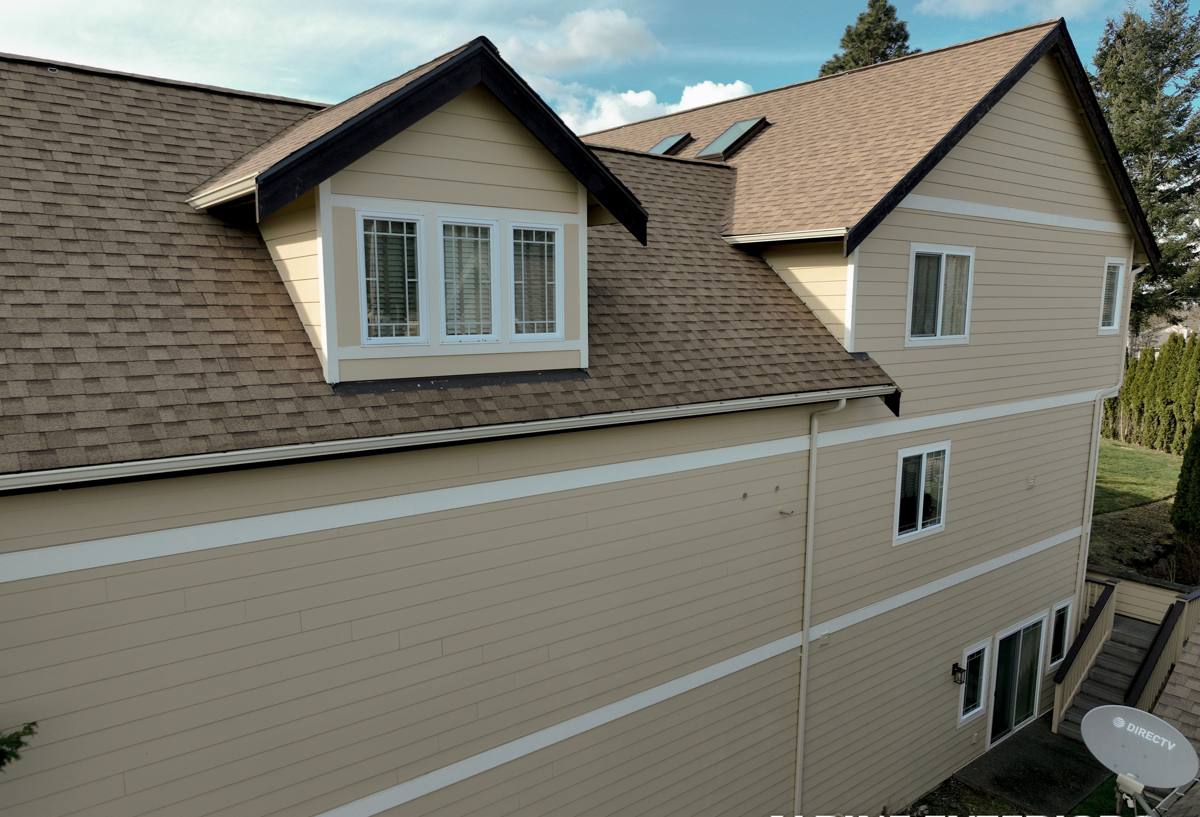
Most homes in South Hill and around Sudden Valley weren't built with a catalog of standard window sizes in mind — additions, remodels, and decades of settling mean openings are often slightly out of square or a non-standard size. "Custom" simply means the window is built or ordered to match the actual opening, rather than the opening being reframed to fit a stock size. That distinction matters for cost, for how long the job takes, and for how well the finished window performs.
Retrofit vs. Full-Frame Replacement
There are two honest paths for replacing a window, and the right one depends on the condition of what's already there — not on which one is faster for us to install.
- Retrofit (insert) replacement: the new window is built to fit inside the existing frame. Faster, less disruptive to interior trim and exterior siding, and appropriate when the existing frame is still structurally sound and dry.
- Full-frame replacement: the old window and its frame come out entirely, down to the rough opening. This is the right call when there's rot, soft wood, or evidence that water has been getting behind the frame — which we see more often in coastal-exposed homes than in sheltered ones.
We won't recommend a retrofit just because it's the cheaper, quicker option if the frame underneath is already compromised. Covering up wet or rotting wood with a new window is a short-term fix that costs more to undo later.
Why Salt Air and Driving Rain Change the Math
Corrosion at the Hardware Level
Locks, hinges, balance systems, and screen frames are usually the first parts of a window to fail in a salt-exposed environment. Cheaper hardware finishes pit and seize within a few years; better-finished hardware and stainless or coated components hold up considerably longer. This is a detail that's invisible on a showroom sample but obvious after a few Whatcom County winters.
Wind-Driven Rain Needs a Real Drainage Path
A window that performs fine in a light, straight-down rain can still leak in a sideways storm if the sill pan, flashing, and weep system aren't built to handle water pushed sideways and upward by wind pressure. South Hill's exposure to weather coming off the water means we treat sill flashing and weep holes as non-negotiable, not optional upgrades.
Moss and Trapped Moisture
Long wet seasons mean moss and algae growth on north- and shade-facing walls, and that growth holds moisture against trim and siding longer than direct rain alone would. Window trim in these areas needs either a material that doesn't feed moss growth or a maintenance routine that keeps it clear — otherwise trim rot follows within a few seasons.
Frame Material Comparison for This Climate
| Material | How It Handles Salt Air & Moisture | Maintenance | Typical Trade-Offs |
|---|---|---|---|
| Vinyl | Won't rust or corrode; performs well in salt exposure | Low — occasional cleaning | Limited color/finish options; can look utilitarian on higher-end homes |
| Fiberglass | Very stable in temperature swings and moisture; strong long-term performer near the coast | Low | Higher upfront cost than vinyl |
| Wood-clad | Good performance if the cladding and seals stay intact; failure point is usually where cladding meets frame | Higher — seams need periodic inspection | Best appearance for traditional or historic-style homes; more sensitive to installation quality |
| Aluminum | Conducts cold and can condense/corrode faster in salt air unless thermally broken | Moderate | Usually only makes sense for specific architectural styles |
None of these is universally "right" — the honest answer depends on your home's style, your budget, and how much upkeep you want to do. We'll walk through the real trade-offs for your specific house rather than pushing one material across the board.
What Actually Determines Whether a Window Leaks in 10 Years
The glass and frame get the attention, but the parts that decide whether a window stays dry are mostly hidden once the job is done.
- Sill pan flashing: a proper sloped pan under the window directs any water that gets past the sash out and away from the framing, instead of letting it pool and soak in.
- Flashing integration with the water-resistive barrier: the window's flashing has to be lapped correctly with the house wrap or building paper — done backwards, water runs behind the barrier instead of over it.
- Sealant placement and type: sealant belongs at specific joints, not smeared everywhere. Over-sealing can trap moisture inside the wall just as easily as under-sealing lets it in.
- Fastening and shimming: a window that's not shimmed square will operate poorly and stress the seals prematurely, even if the flashing is perfect.
- Interior and exterior trim tie-in: trim needs to shed water away from the window unit, especially on walls exposed to wind-driven rain.
Any one of these done wrong is invisible on install day and shows up as a leak, stain, or soft trim two to five years later. It's also why the installer matters at least as much as the window brand.
Our Process for South Hill Window Jobs
1. On-Site Assessment
We look at each opening individually — checking the condition of the existing frame, sill, and surrounding siding for rot or moisture staining before recommending retrofit vs. full-frame replacement.
2. Accurate Measurement and Material Selection
Custom openings get measured precisely, and we go over frame material, glass package, and hardware options against your budget and how exposed that particular wall is to weather.
3. Installation with Proper Flashing and Sealing
This is where the job is actually won or lost. Sill pans, flashing laps, and sealant get done in the correct order and integrated with the existing siding and weather barrier — not just caulked around the edges.
4. Siding and Trim Integration
Because we're a siding crew first, we make sure the window ties back into the surrounding siding cleanly, so there's no gap or mismatched flashing detail where the two trades usually hand off to each other.
5. Walkthrough and Cleanup
We check operation on every window, clean up the work area, and walk you through anything you should watch for during the first few rain events.
Signs Your Current Windows Are Already Failing
- Sashes that stick, or take real effort to open and close
- Visible fogging or moisture between panes of double-glazed glass
- Soft or discolored trim and sill wood on the exterior
- Drafts you can feel near the frame on a windy day
- Hardware (locks, cranks, hinges) that's pitted, corroded, or seized
- Condensation on the interior glass in cold weather that wasn't there before
- Visible gaps between the window frame and siding or trim
Any one of these on its own isn't an emergency, but if you're seeing two or three together, water is likely already getting past the window in ways that aren't obvious yet.
Cost Factors for South Hill Window Projects
| Factor | Why It Moves the Price |
|---|---|
| Retrofit vs. full-frame | Full-frame involves more labor, disposal, and often exterior siding repair around the opening |
| Number and size of openings | Larger custom sizes and non-standard shapes cost more to fabricate and install |
| Frame material | Vinyl is typically the lowest upfront cost; fiberglass and wood-clad run higher |
| Existing damage found during install | Rot or moisture damage discovered once the old window is out adds repair scope |
| Glass package | Upgraded glass (extra panes, coatings) adds cost but can matter more on exposed, weather-facing walls |
We'll give you a written estimate that separates the window cost from any framing or siding repair, so you know exactly what you're paying for and why.
Why a Crew That Already Works South Hill Matters
A window installer who mainly works inland or in drier parts of the state doesn't run into salt-air hardware corrosion or wind-driven rain patterns often enough to build habits around them. Working regularly in Sudden Valley and South Hill means we already know which walls take the worst of the weather, which older homes tend to have marginal flashing from a prior remodel, and how the local moss season affects window trim and siding over time. That's not a marketing point — it changes which details we double-check on every job, before a problem shows up down the road.
We're also a siding contractor, not a window-only installer, which means we look at the window and the surrounding wall as one system rather than treating the window opening as somebody else's problem once the unit is in.
If your windows in South Hill are drafty, fogging, sticking, or just original to a home that's due for an upgrade, we're glad to come take a look. Estimates are free, there's no pressure, and we'll tell you honestly whether a retrofit or full-frame replacement makes more sense for your house — just fill out the form below to get started.