 Sudden Valley Siding
 New-Construction Windows for Happy Valley Homes
When a home in Happy Valley is framed and ready for glass, the window package you choose and how it gets installed will shape how that house performs for the next 20-30 years. New-construction windows are different from replacement units — they install with a nailing fin directly into the rough opening before siding and trim go on, which means the window and the wall's water management system get built together as one system. Get that sequencing right and the house stays dry. Get it wrong, and you're chasing leaks behind the siding years later, in a location that gives you very little margin for error.
Sudden Valley Siding Replacement works new-construction window installs for builders, remodelers, and homeowners building in and around Happy Valley. We know what this stretch of Whatcom County throws at a building envelope, and we frame our window work around it rather than treating it as a generic install.
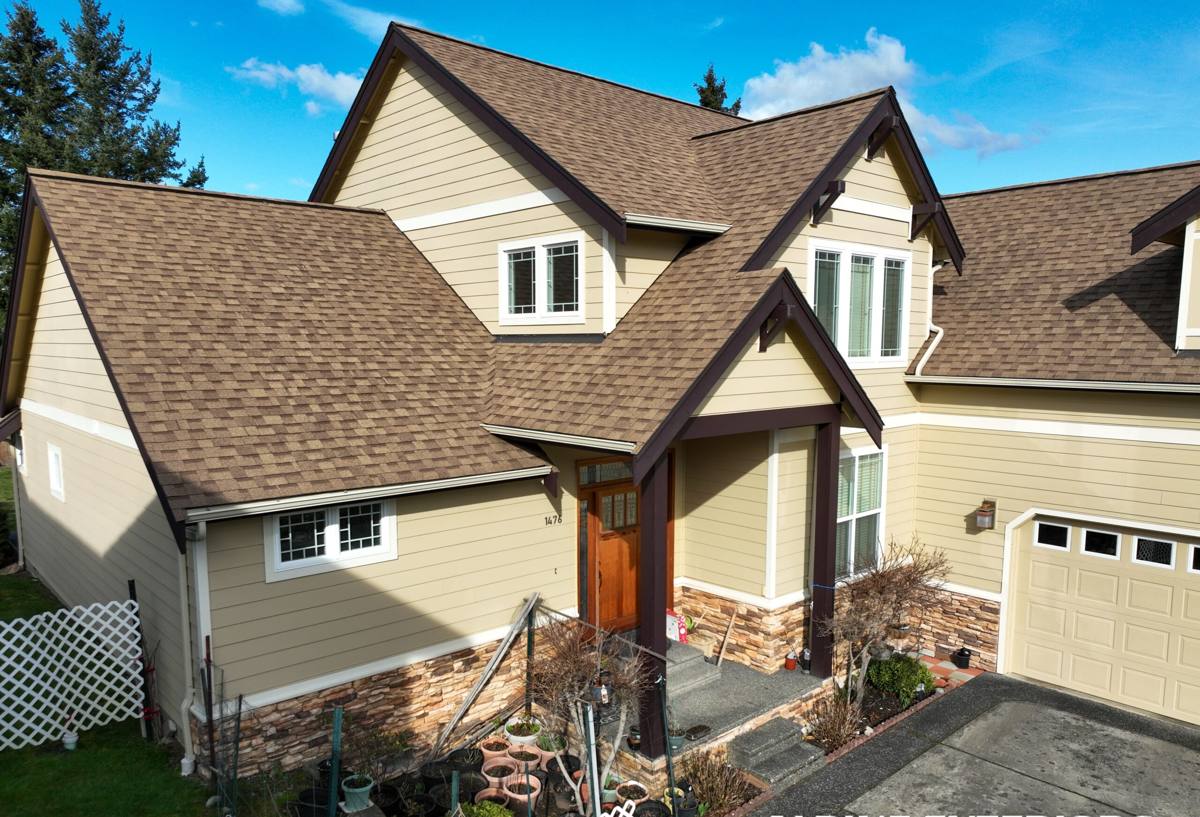
What Happy Valley's Climate Demands from a Window Install
Three conditions matter most for new-construction windows here:
- Salt air: Proximity to Puget Sound and Lake Whatcom-area moisture means metal components — flashing, fasteners, hardware — see more corrosion pressure than they would inland. Cheap or mismatched metals fail faster.
- Driving rain: Wind-driven rain doesn't just fall on a window, it pushes sideways into the gap between the window frame and the rough opening. If flashing and sealant details aren't layered correctly (shingle-fashion, working with gravity), water finds its way in.
- Long moss season: Extended damp, low-sun months mean any spot where water can pool or wood can stay wet for days at a time becomes a growth site for moss and rot organisms. Sills, bottom flanges, and any horizontal trim above windows are the usual first casualties.
None of this means new-construction windows are riskier here than elsewhere — it means the installation details that are "nice to have" in a drier climate are non-negotiable in Whatcom County.
Why This Matters More at New Construction Than at Replacement
With a replacement window, you're working with an existing wall that's already proven itself (or already leaking, which is why you're replacing). With new construction, there's no track record yet — the window opening, the weather-resistive barrier, and the flashing are all going in for the first time, together. That's actually an advantage: done correctly, a new-construction install gives you the cleanest possible water management, better than almost any retrofit can achieve. But it also means there's no forgiveness for skipped steps. The house's future dry-rot history gets written during this one install.
What a Correct New-Construction Window Install Involves
A proper install isn't just "set the window and nail the fin." The sequence matters as much as the window itself:
- Rough opening check: Confirm the opening is square, level, and sized correctly with the manufacturer's tolerance — too tight and the window can bind or bow; too loose and you lose structural support and shim gaps become leak paths.
- Weather-resistive barrier prep: The house wrap or building paper gets cut and folded into the opening (often with a self-adhered sill pan first) so water that does get past the window has a path back out, not in.
- Sill pan flashing: A sloped or flat sill pan under the window is one of the most-skipped steps on lower-budget jobs and one of the most important in a driving-rain climate. It catches any water that works past the window and directs it back outside instead of into the framing.
- Setting the window: Shimmed plumb, level, and square, fastened per manufacturer spec — not just "close enough."
- Flashing tape and integration: Side flanges taped, then the top flange integrated last so everything overlaps shingle-style — water always sheds outward and downward, never into a seam.
- Sealant at the interior, not just the exterior: A continuous interior air seal keeps conditioned indoor air from reaching the cold flashing zone and condensing.
Skip or shortcut any one of these and the window itself can be perfectly good while the wall around it fails.
Choosing a Window Package for This Area
We don't push one brand as the only acceptable option — the right choice depends on budget, the home's design, and how exposed the elevation is to weather. What we do insist on:
- Frame material and hardware rated for coastal/marine-adjacent exposure, given the salt air moving off the Sound.
- Glass packages (low-E coatings, appropriate U-factor) suited to Western Washington's mix of cool, wet winters and mild summers — not a spec built for a drier, more extreme climate.
- Manufacturer-approved flashing and installation instructions followed exactly, since deviating from them can void the window's own warranty even if our installation is otherwise sound.
Vinyl, Fiberglass, and Wood-Clad: Honest Trade-Offs
| Frame Type | Strength Here | Watch-Out in This Climate |
|---|---|---|
| Vinyl | Cost-effective, low maintenance, no corrosion risk from salt air | Lower-end vinyl can warp with big temperature swings on south/west exposures; hardware quality varies a lot by brand |
| Fiberglass | Very stable dimensionally, holds paint well, strong long-term performer in wet climates | Higher upfront cost than vinyl |
| Wood-clad | Traditional look, good insulator | Any breach in the exterior cladding exposes wood to our moss-season moisture; needs disciplined flashing and maintenance to avoid rot at joints |
We'll walk you through what fits your project rather than defaulting to whatever's easiest to install.
Our Process for New-Construction Window Jobs in Happy Valley
We coordinate with builders and general contractors so window installation lands at the right point in the build sequence — after the weather-resistive barrier is up, before siding closes everything in.
- Walkthrough and measure: We confirm rough openings against the window schedule before units are ordered, catching sizing conflicts early rather than on install day.
- Material staging: Sill pans, flashing tape, and sealants are matched to be chemically compatible with the specific house wrap and window frame material being used — mismatched products can fail to bond or degrade each other over time.
- Install and document: Each opening is flashed and sealed in sequence, with attention paid to corners and the sill, since that's where failures start.
- Coordination with siding: Because we also do siding, we make sure the window's trim and flashing integrate cleanly with what goes on around it — no gaps between two trades' scopes of work.
Why a Crew That Already Works Happy Valley Matters
New-construction window installation isn't exotic work, but installing it correctly for this specific stretch of Whatcom County means understanding a few local realities: how far a given lot sits from prevailing wind and rain exposure, how much shade and dampness a site holds onto through the moss season, and which material choices hold up under sustained salt-air exposure versus which ones are better suited to a drier region. A crew that's done this work in Sudden Valley and surrounding Happy Valley isn't guessing at those answers — they're applying what they've already seen hold up and what they've seen fail.
It also means fewer surprises during the build. We know how to sequence with local builders, what inspection expectations look like in the county, and how to keep a project moving instead of stalling out waiting on materials or clarifications.
Quick Checklist: What to Confirm Before Windows Go In
- Rough openings match the final window schedule, not just the original plan set
- Sill pan flashing is specified for every window opening, not just ground-floor or high-exposure units
- Flashing tape and sealant are confirmed compatible with your specific house wrap
- Window frame material is appropriate for a salt-air, high-rainfall exposure
- Installer follows the manufacturer's written instructions, not just "how we usually do it"
- Interior air sealing is part of the scope, not an afterthought
Maintenance After Move-In
A correctly installed new-construction window needs relatively little upkeep, but Whatcom County's moss season rewards a bit of attention:
- Keep weep holes and sill areas clear of debris and moss buildup so water can drain as designed.
- Inspect exterior caulking at trim joints annually — sealant is a maintenance item, not a permanent fix, and driving rain will find any gap that opens up over time.
- Watch for soft spots in wood trim or cladding near window corners, which is where hidden moisture problems tend to show up first.
Get an Estimate for Your Happy Valley Build
If you're framing a new home or addition in Happy Valley and need a window package installed right the first time, we're glad to walk the site, review your window schedule, and give you a straightforward estimate. There's no pressure and no obligation — just a clear look at what your project needs given the site, the exposure, and the materials you're considering. Use the form below to get started.