 Sudden Valley Siding
 Exterior Work Built for Barkley's Climate
Homes around Barkley sit in a stretch of Whatcom County where the weather doesn't do anything in half measures. You get moisture off the water, wind-driven rain that finds every gap in a wall system, and long gray stretches where nothing on the north or shaded side of a house really dries out. If you've owned a home here for more than a few years, you've probably already noticed how it shows up: streaking on the siding, moss creeping across roof edges and fence lines, caulk lines that crack and open up faster than they should, and paint that needs touching up more often than the can promised.
None of that is unusual for this part of Washington. It's just what the coastal Pacific Northwest does to a house. The difference is in how a home is built and maintained to handle it. Sudden Valley Siding Replacement works throughout the Sudden Valley and greater Whatcom County area, including Barkley, and we've built our whole approach around materials and installation practices that hold up to exactly this kind of weather — not a generic climate, this one.
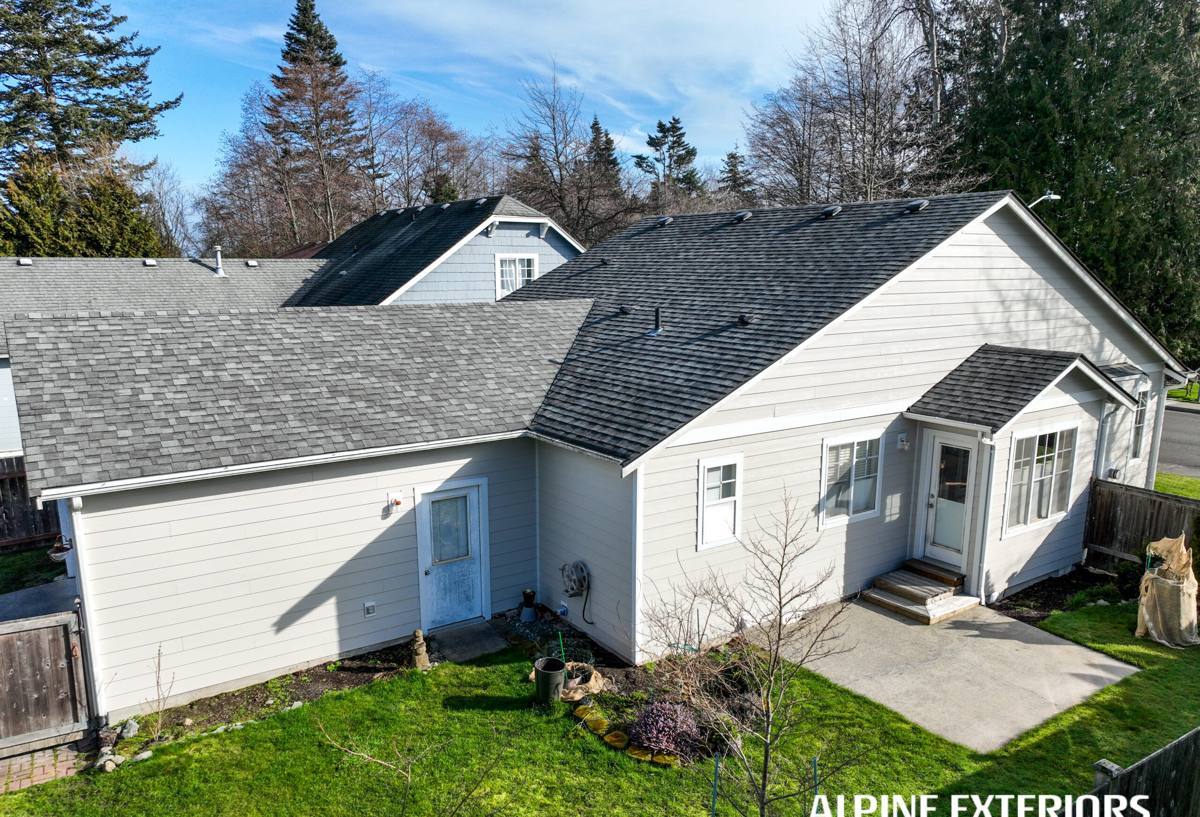
What Salt Air, Rain, and Moss Actually Do to a House
Salt and Moisture in the Air
Proximity to open water means a steady low-level exposure to salt-laden, moisture-heavy air. It's not the same as a beachfront property getting direct spray, but it's a constant, quiet factor that accelerates corrosion on fasteners, hardware, and any exposed metal trim, and it keeps humidity levels around the exterior walls higher than you'd get further inland.
Driving Rain
Rain here rarely falls straight down. Wind pushes it sideways into walls, especially on gable ends and any wall that faces open exposure. That matters because a lot of siding failures aren't about the material getting wet on the surface — they're about water finding a way behind the siding through a bad seam, an unsealed penetration, or a butt joint that was never meant to shed water in the first place. Once moisture gets behind a wall assembly in this climate, it doesn't get much chance to dry out before the next system rolls through.
The Long Moss Season
Moss and algae need shade, moisture, and time — and this region hands them all three for a good chunk of the year. It's not just a roof problem. Moss and green staining show up on north-facing siding, under eaves, and anywhere airflow and sun exposure are limited. Beyond the cosmetic issue, moss holds moisture against the surface it's growing on, which is exactly the kind of sustained dampness that wears down paint, primer, and lower-grade siding materials over time.
Why This Climate Is Hard on the Wrong Siding Choice
A lot of siding problems we get called out to look at aren't installation failures — they're material failures. Some products are simply more sensitive to sustained moisture exposure than others, and in a climate like Whatcom County's, that sensitivity gets tested every single year, not occasionally.
- Wood-based composite and engineered wood products can swell, delaminate, or take on moisture at cut edges and panel seams if caulking and paint maintenance ever fall behind.
- Vinyl siding can warp or become brittle over time with temperature swings, and its seams and J-channels give wind-driven rain more opportunities to work moisture behind the panel.
- Natural cedar and primed spruce look great on day one but demand an ongoing paint and sealing schedule to keep moisture out — skip a cycle or two in this climate and you're playing catch-up.
None of these are "bad" products in every climate. They're just not the products we're willing to stand behind on a home that's going to spend the next 20-plus years absorbing driving rain, salt-laden air, and months of shaded, damp conditions every year.
Why We Install James Hardie Fiber Cement and Nothing Else
Sudden Valley Siding Replacement installs James Hardie fiber cement siding exclusively. We don't offer LP SmartSide, vinyl, Cemplank, Allura, primed spruce, or cedar as alternatives, and that's a deliberate professional standard, not a limitation in what we're capable of installing. We made that call because fiber cement performs differently in this climate than the alternatives, in ways that matter over the life of a home.
Non-Combustible and Dimensionally Stable
Fiber cement is manufactured from cement, sand, and cellulose fibers, which makes it non-combustible and much less reactive to moisture swelling and drying than wood-based products. It doesn't absorb water the way wood fiber does, and it holds its shape through the wet winters and drier summers this region cycles through every year.
ColorPlus Factory Finish
James Hardie's ColorPlus finish is baked on in a controlled factory environment rather than field-applied, which gives it more consistent coverage and better adhesion than a job-site paint job. In a climate where UV exposure and moisture cycle a finish hard, that factory-cured finish is a meaningful advantage — and it comes backed by its own finish warranty separate from the substrate warranty.
Climate-Engineered HZ Product Lines
Hardie's HZ5 product formulation is engineered specifically for colder, wetter climates like the Pacific Northwest, as opposed to their HZ10 line built for hot, humid regions. That distinction isn't marketing — it reflects real differences in how the product is formulated to perform in freeze-thaw cycles and sustained damp conditions, which is exactly what a Barkley-area home deals with most winters.
A Warranty Structure Built to Transfer
James Hardie backs its siding with a long, transferable limited warranty. If you sell the home, that coverage moves to the next owner, which is a real selling point in a market where buyers are increasingly asking what the exterior is made of and how it's backed.
Your Exterior Is a System — Siding, Roofing, Windows, and Decks
Siding doesn't work in isolation. Water management around a home depends on how siding, roofing, window flashing, and any attached deck or porch structure all tie together. We handle all four because a siding job done without attention to the roof line above it, the window flashing it butts against, or the deck ledger board cutting into the wall assembly is a siding job with a built-in weak point.
- Roofing: proper roof edge and valley work keeps water from concentrating exactly where it can do the most damage to siding and trim below.
- Windows: correct flashing integration at every window opening is one of the most common places we find hidden moisture intrusion during a re-side.
- Decks: ledger connections and any siding that meets a deck surface need to be detailed so water sheds away from the house, not into it.
When we quote a siding project, we're looking at the whole exterior envelope, not just the wall panels.
Why a Local Crew Matters in Whatcom County
A crew that works this specific region day in and day out knows what this climate does to a house because they see it on job after job — not because they read it in a manual. That shows up in small decisions: how much rainscreen gap to leave behind the siding, how aggressively to flash a valley or a window head, which details on an older Whatcom County home tend to be the ones that fail first. A contractor based elsewhere, working from a generalized install guide, doesn't carry that same accumulated read on the area.
It also matters for accountability. A local company is easy to reach if a warranty question comes up five years down the road, and we're not disappearing after the final walkthrough.
What Affects the Scope and Cost of a Siding Project
Every home is different, and we don't quote sight-unseen. But these are the main factors that shape scope on most Barkley-area siding projects:
| Factor | Why It Matters |
|---|---|
| Existing siding removal | Tear-off and disposal of the old material adds labor and haul-away costs versus a bare wall |
| Underlying sheathing condition | Rot or moisture damage found once old siding is off may need repair before new siding goes on |
| Home size and stories | More wall area and taller walls mean more material, staging, and labor time |
| Trim and detail complexity | Dormers, gables, and multiple roof lines multiply the number of flashing and trim transitions |
| Siding profile chosen | Lap, shingle, and panel styles vary in material and installation time |
| Window and door count | Each opening needs flashing integration, which adds detail work per unit |
Signs It's Time to Have Your Siding Looked At
A lot of homeowners wait until damage is visible from the street, but there are earlier warning signs worth having a professional check out:
- Soft or spongy spots when you press on the siding, especially near the bottom courses
- Persistent green or black staining that comes back soon after cleaning
- Paint that's peeling or bubbling rather than just fading
- Visible gaps, warping, or buckling in panels or lap boards
- Rising energy bills that might point to a compromised wall assembly
- Caulk joints that are cracked, shrunk, or pulling away from trim
Catching these early usually means a smaller repair scope. Waiting usually means more of the wall assembly needs attention by the time we get there.
Get a Free, No-Pressure Estimate
If you're noticing any of these signs on a home in Barkley or elsewhere around Sudden Valley and Whatcom County, we're happy to come take a look. There's no obligation and no sales pressure — just an honest read on what your siding needs and what it would take to do it right with James Hardie fiber cement. Use the form below to request your free estimate.