 Sudden Valley Siding
 Windows That Actually Hold Up in Barkley
Barkley sits close enough to Sudden Valley and the rest of Whatcom County that homes here deal with the same weather story every year: long stretches of driving rain, marine air moving in off the water, and moss and algae that get a head start every fall and don't let go until late spring. Windows take more of that abuse than almost any other part of a house, because every seam, sill, and joint is a place water can get in if the install wasn't done right the first time.
This page is about one thing: custom window installation and replacement for homes in the Barkley area. Not a general overview of every siding or roofing service we offer — just what local homeowners need to know about getting windows that are sized, sealed, and installed correctly for this specific climate.
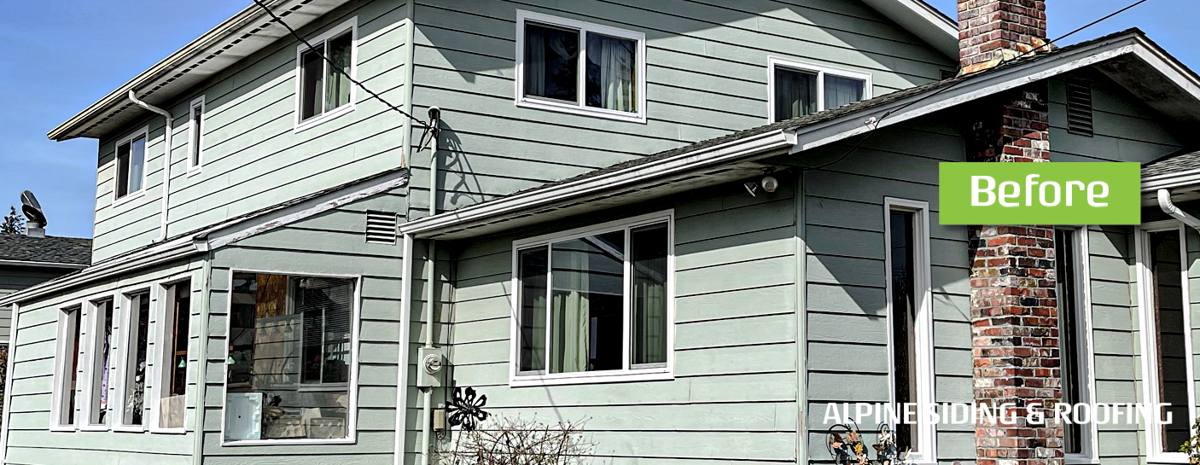
What This Climate Does to Windows Over Time
Moisture Intrusion
Whatcom County gets a lot of sustained, low-intensity rain rather than short heavy downpours. That matters for windows because it's not the volume of water that causes damage — it's how long water sits against a window frame or sill before it dries out. Wood trim and poorly flashed frames stay damp for days at a time during the wet season, and that's when rot starts, usually invisibly, behind the trim.
Moss and Algae Growth
Shaded sills, north-facing walls, and anywhere airflow is limited will grow moss and green algae film faster here than in drier parts of the state. On windows, that growth tends to collect at the bottom corners and in the weep channels — the small drainage paths built into most modern window frames. When those channels get clogged with moss or debris, water that's supposed to drain back out instead backs up into the frame.
Temperature Swings and Condensation
Cool, damp nights followed by daytime warming create a lot of condensation on and around windows, especially older single-pane or poorly sealed units. Persistent condensation on interior sills is often the first visible sign that a window's seal or insulation has failed.
What a Correct Window Installation Actually Involves
A window that leaks or fails early almost never fails because the window itself was bad — it fails because of how it was installed. In a climate like this, a handful of details separate a job that lasts decades from one that causes problems within a few years.
- Proper flashing integration with the existing weather-resistive barrier, layered so water sheds outward and downward, never trapped behind the siding
- A sloped sill pan under every window opening, so any water that does get past the frame drains back out instead of pooling
- Correct use of sealant at the right joints only — over-sealing can trap moisture inside the wall assembly just as badly as under-sealing lets it in
- Weep holes and drainage channels left clear and functional, not caulked shut
- Fasteners and nailing fins set to the manufacturer's exact specification, since under- or over-driven fasteners compromise the seal
- Proper shimming so the window is square and doesn't rack, which keeps the seal intact as the house settles over time
Any one of these done wrong can look fine on install day and still cause a leak two or three winters later. That's the risk with window work — mistakes are usually hidden behind trim and siding until they've already caused damage.
Choosing the Right Window for a Barkley Home
There's no single "best" window material — the right choice depends on the home's exposure, your maintenance tolerance, and budget. Here's an honest comparison of the options we install most often in this area.
| Frame Material | How It Handles This Climate | Maintenance |
|---|---|---|
| Vinyl | Won't rot or corrode; performs well against sustained moisture; slight expansion/contraction with temperature swings | Low — occasional cleaning |
| Fiberglass | Very stable dimensionally, holds paint well, strong resistance to moisture over the long term | Low |
| Aluminum | Durable but conducts cold and can condensate heavily in this climate unless thermally broken | Moderate |
| Wood (clad exterior) | Attractive interior finish, but exposed wood surfaces need vigilant sealing and are more vulnerable to our wet season if any gaps develop | High |
For most homes in the Barkley area, we lean toward vinyl or fiberglass frames for anything exposed to weather, and reserve solid wood interiors for spaces where the exterior face is well protected. We'll walk through your home's specific exposure and tell you honestly which option fits — we're not going to push a premium product where it doesn't add real value, or a cheap one where it'll cost you in five years.
Signs a Window Replacement Is Overdue
Homeowners often wait longer than they should because window problems don't announce themselves loudly. Watch for these:
- Soft or discolored trim or sill wood around the window frame
- Visible moss or dark staining collecting at the bottom corners
- Fogging or moisture between panes on double-glazed units — a sign the seal has failed
- Drafts you can feel even when the window is fully latched
- Difficulty opening, closing, or latching that wasn't there before
- A noticeable jump in heating costs with no other explanation
Our Process, Start to Finish
1. On-Site Assessment
We look at each window opening individually — sun and rain exposure, existing framing condition, and how the window ties into your siding and trim. Not every window on a house has the same problem, so we don't treat them the same.
2. Honest Recommendation
You get a clear explanation of what's actually needed: full replacement, frame repair, or just improved flashing and sealant. We'll tell you if a window doesn't need replacing yet.
3. Precise Measurement and Ordering
Custom sizing matters — a window that's slightly undersized for its opening forces extra caulk and shim work that becomes a weak point later. We measure for a proper fit, not a workaround.
4. Removal and Inspection of the Opening
Once the old window is out, we inspect the framing and sheathing underneath. This is where hidden moisture damage from a previous poor install often shows up, and it needs to be addressed before the new window goes in — not covered over.
5. Installation with Full Flashing and Drainage Detail
Sill pan, flashing tape, weep paths, and sealant applied in the correct sequence and location, matched to this region's rain and drainage demands.
6. Final Walkthrough
We check operation, seal, and finish work with you before we consider the job done.
Cost Factors Worth Understanding
Window replacement pricing varies a lot from home to home, and anyone who quotes a flat number without seeing your windows is guessing. These are the factors that actually move the price:
| Factor | Why It Matters |
|---|---|
| Window size and style | Larger, custom-shaped, or multi-pane units cost more in both materials and labor |
| Frame material | Vinyl is generally the most budget-friendly; fiberglass and clad-wood cost more upfront |
| Condition of the existing opening | Hidden rot or framing damage found during removal adds repair time before the new window can go in |
| Number of windows | Doing a full-home replacement at once is usually more efficient per window than one-off jobs over time |
| Access and story height | Second-story or hard-to-reach windows take longer and may need additional equipment |
We give straightforward, itemized estimates so you know exactly what you're paying for and why — no vague lump sums.
Why It Matters That We Already Work This Area
A crew that regularly works in and around Sudden Valley and the Barkley area already knows how this climate treats window installations, because we've seen the failures firsthand — moss-clogged weep channels, sills that were never sloped correctly, trim that rotted from the inside out. That experience shapes how we install every window now: we build in the drainage and flashing detail this specific climate demands, not a generic install that might be fine somewhere drier.
We also know what county permitting and inspection expects for window replacement work here, which keeps the job moving without surprises partway through.
Keeping New Windows Performing Long-Term
A correctly installed window still benefits from basic upkeep, especially in a climate this wet:
- Clear weep holes and drainage channels of moss and debris a couple of times a year
- Rinse pollen, algae film, and grit off glass and frames periodically
- Check exterior caulk lines annually for cracking or separation and touch up as needed
- Wipe down interior sills during the wet season to prevent condensation buildup
- Test operation and latching each season — sticking is often the first sign of a shifting frame
If your windows in the Barkley area are showing rot, drafts, fogged glass, or you're planning ahead for a replacement, we're happy to take a look and give you a straightforward, no-pressure estimate. Use the form below to get started.