 Sudden Valley Siding
 Asphalt Shingle Roofing Built for Acme's Weather
Acme sits in the Nooksack River valley east of Bellingham, tucked against timber and hillside that hold moisture close to every roofline in the area. Homes here deal with a long, wet stretch of the year, heavy tree cover that shades roofs from drying sun, and the kind of driving, sideways rain that Whatcom County is known for. Add in the marine air that moves inland off the Sound and Whatcom County's coastline, and you get a climate that's genuinely tough on roofing — not because any one storm is severe, but because the wet season simply doesn't let up for months at a time.
Asphalt shingle roofing remains one of the most practical choices for homes in this area when it's installed correctly, with the underlayment, ventilation, and flashing details matched to what this specific climate actually does to a roof. A shingle roof that's installed the way it would be in a dry climate — corners cut on ice-and-water membrane, ventilation, or valley flashing — will show problems here years before it should.
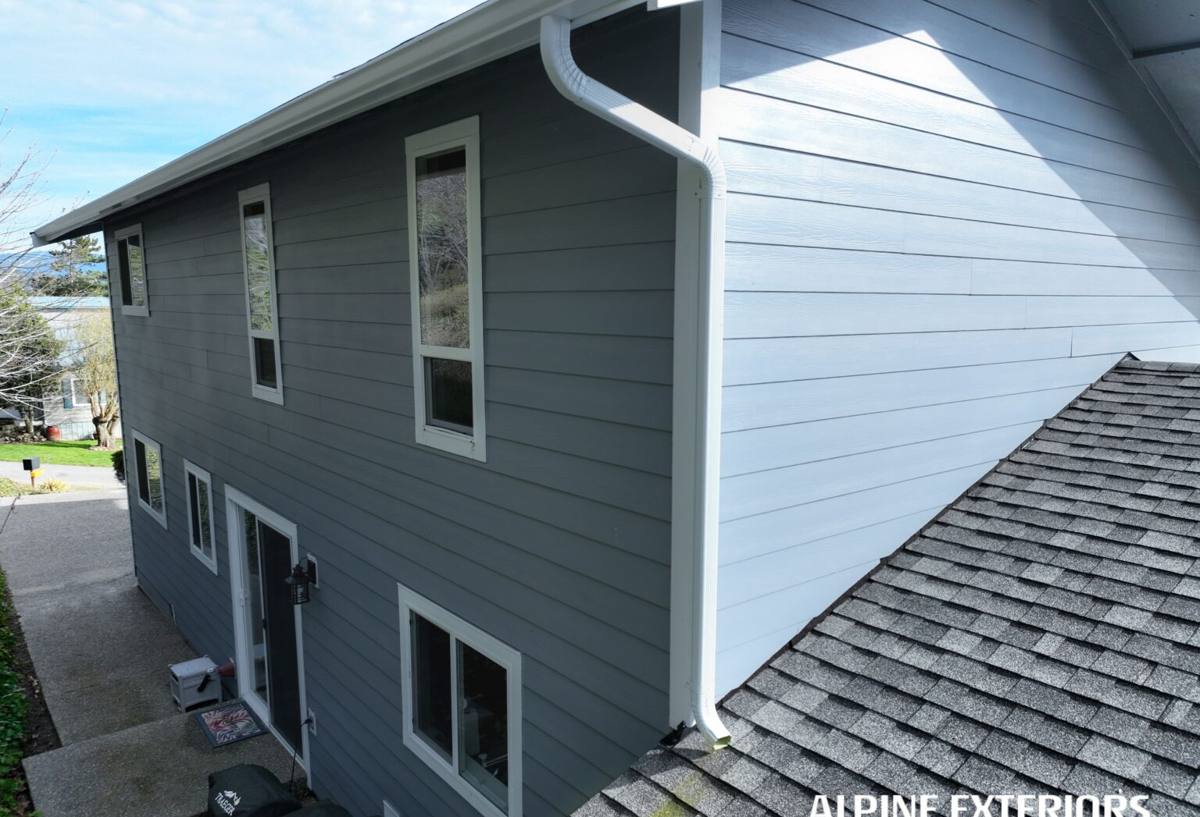
Why Moss and Trapped Moisture Are the Real Enemy
Most roofing failures we see in and around Acme aren't caused by a single bad storm. They're caused by moisture that never fully dries out between rain events, sitting under moss, needles, and organic debris that collects in shaded valleys and along north-facing slopes. Moss holds water against the shingle surface, and over months that moisture works its way under shingle tabs, softens the mat, and starts to lift edges. Once edges lift, wind-driven rain gets a path underneath, and that's when small problems become deck rot and interior leaks.
A long moss season here isn't a cosmetic issue — it's a structural one if it's left unmanaged. Roofs under heavy tree canopy, which describes a lot of properties around Acme, need shingle products and installation details that account for that reality from day one, not just periodic cleaning after the fact.
What Contributes to Moss and Moisture Buildup
- Heavy tree cover that keeps roof sections shaded and slow to dry
- North-facing slopes and valleys that see less direct sun year-round
- Gutters and valleys clogged with needles and leaf litter
- Older shingles with worn-off granules, which give moss and algae more surface to grip
- Poor attic ventilation, which keeps roof decks warmer and damper than they should be
What a Correct Asphalt Shingle Installation Involves
A shingle roof is a system, not just a layer of shingles nailed to plywood. In a climate like Whatcom County's, every layer underneath the visible shingle matters as much as the shingle itself.
The Layers That Actually Keep Water Out
Underneath every properly installed shingle roof in this region should be a deck in sound condition, a self-adhering ice-and-water membrane at eaves, valleys, and any wall-to-roof transitions, and a synthetic underlayment across the rest of the field. Valleys — which see concentrated water flow during heavy rain — need either a properly woven or open metal valley detail, not just underlayment alone. Flashing at chimneys, skylights, and any roof-to-wall intersections has to be step-flashed and counter-flashed correctly, since these transitions are where the overwhelming majority of roof leaks actually originate, not the open shingle field.
Ventilation Is Not Optional
Balanced intake and exhaust ventilation keeps the attic space closer to outdoor temperature and humidity, which does two things: it extends shingle life by reducing heat cycling from underneath, and it reduces the condensation that can rot a deck from the inside even when the roofing above is doing its job. A lot of older homes in this area were built with minimal or mismatched ventilation, and simply replacing shingles without addressing that leaves the same underlying problem in place.
Choosing the Right Shingle for This Climate
Not every asphalt shingle product handles a wet, shaded, moss-prone climate the same way. The table below covers the main factors worth weighing for a home in the Acme area, rather than just comparing sticker price.
| Factor | What It Means Locally |
|---|---|
| Algae-resistant granules | Copper- or zinc-infused granules slow algae and moss growth on shaded, damp roof sections — a real advantage under tree cover |
| Shingle weight/class | Heavier laminate or architectural shingles resist wind-driven rain intrusion better than lightweight 3-tab in exposed or storm-prone spots |
| Wind rating | Look for ratings that match or exceed what this region sees in fall and winter wind events, not just a manufacturer minimum |
| Warranty structure | Understand what's prorated, what requires proper ventilation to stay valid, and what's excluded for algae/moss staining |
| Color and reflectivity | Lighter colors show algae staining differently than darker colors; darker shingles can mask early staining but don't prevent it |
We don't push a single brand as the answer for every roof. The right shingle depends on how much shade and moss exposure a specific roof section gets, the pitch, and what the homeowner wants to spend on both installation and long-term maintenance.
Our Process, Start to Finish
1. On-Site Roof Evaluation
We walk the roof, not just look at it from the ground. That means checking deck condition at vulnerable points, current ventilation, flashing condition around penetrations, and how much moss or organic buildup is already present, so the estimate reflects the actual roof rather than a generic assumption.
2. Scope and Materials Review
We walk homeowners through shingle options, underlayment upgrades, and any ventilation or flashing work the roof needs — in plain terms, with the reasoning behind each recommendation, not just a materials list.
3. Tear-Off and Deck Inspection
Old roofing comes off down to the deck so we can actually see what's there. Any soft or rotted decking gets identified and replaced before new underlayment goes down — installing new shingles over a compromised deck just hides the problem for a few more years.
4. Underlayment, Flashing, and Shingle Installation
Ice-and-water membrane at vulnerable areas, correct underlayment across the field, proper valley and flashing details, then shingles installed to manufacturer spec for nailing pattern and exposure — details that directly affect both wind performance and warranty validity.
5. Final Walkthrough
We review the completed roof with the homeowner, cover basic maintenance expectations, and make sure any questions about warranty coverage are answered before we consider the job done.
Signs an Acme Home May Need a New Roof
Shingle roofs don't usually fail all at once — they show warning signs first. Worth checking for, especially on shaded or north-facing roof sections:
- Shingles that are cupping, curling at the edges, or missing granules in patches
- Moss or dark streaking concentrated in certain sections rather than spread evenly
- Soft spots or noticeable sagging when walking the roof or viewing from a ladder
- Daylight visible through the roof deck from inside the attic
- Water stains on interior ceilings, especially near valleys, chimneys, or skylights
- Granules collecting in gutters in noticeable amounts, a sign shingles are wearing thin
- Roof age approaching or past the manufacturer's expected service life for the product installed
Any one of these on its own isn't necessarily an emergency, but several together — particularly interior staining combined with visible shingle wear — usually means it's time for a real inspection rather than a patch.
Maintenance Between Roof Replacements
A well-installed shingle roof in this climate still needs periodic attention to reach its full service life. Keeping gutters and valleys clear of needles and debris reduces the standing moisture that feeds moss growth. Trimming back overhanging branches improves airflow and sun exposure on shaded roof sections. Moss should be treated and gently removed rather than scraped or pressure-washed, which can strip granules and shorten shingle life faster than the moss itself would. None of this replaces a proper inspection every few years, especially after a rough winter.
Why Local Experience in Acme Matters
A crew that regularly works roofs in and around Acme already understands which roof sections in this area tend to hold moisture, how far up the valley the heaviest rain events reach, and which installation shortcuts simply don't hold up under a Whatcom County winter. That's different from a crew that installs the same roof the same way regardless of region. Local experience shows up in the details — where extra ice-and-water membrane goes, how ventilation gets balanced for a home under heavy tree cover, and what maintenance advice actually applies to this specific setting rather than generic guidance that doesn't account for the moss season or the marine air moving through the county.
Get a Straightforward Roofing Estimate
If your roof in Acme is showing wear, dealing with moss buildup, or simply due for replacement, we're happy to take a look and give you an honest assessment — no pressure, no inflated scope. Use the form below to request a free estimate and we'll get back to you to schedule a time to walk the roof together.