 Sudden Valley Siding
 Why Deming Roofs Wear Differently Than Roofs Elsewhere
Deming sits in a part of Whatcom County where the weather doesn't do anything in half measures. Homes here deal with long stretches of driving rain, moisture-laden air moving in off the Sound, and tree canopy that keeps roofs shaded and damp for most of the year. That combination is exactly what breaks down roofing materials faster than they're rated for. A roof that would last three decades in a dry climate can show real problems in half that time here if it wasn't built for these conditions in the first place.
Asphalt shingles are the most common roofing material in this area, and for good reason — they're inexpensive and easy to install. But shingles have granules that wash away under sustained rain, and their surface texture gives moss spores something to grip onto. Once moss establishes itself on a shingle roof near Deming, it holds moisture against the roof deck almost year-round, which is where rot and premature failure start. Metal roofing takes a different approach to the same problem, and that's why we get asked about it so often out here.
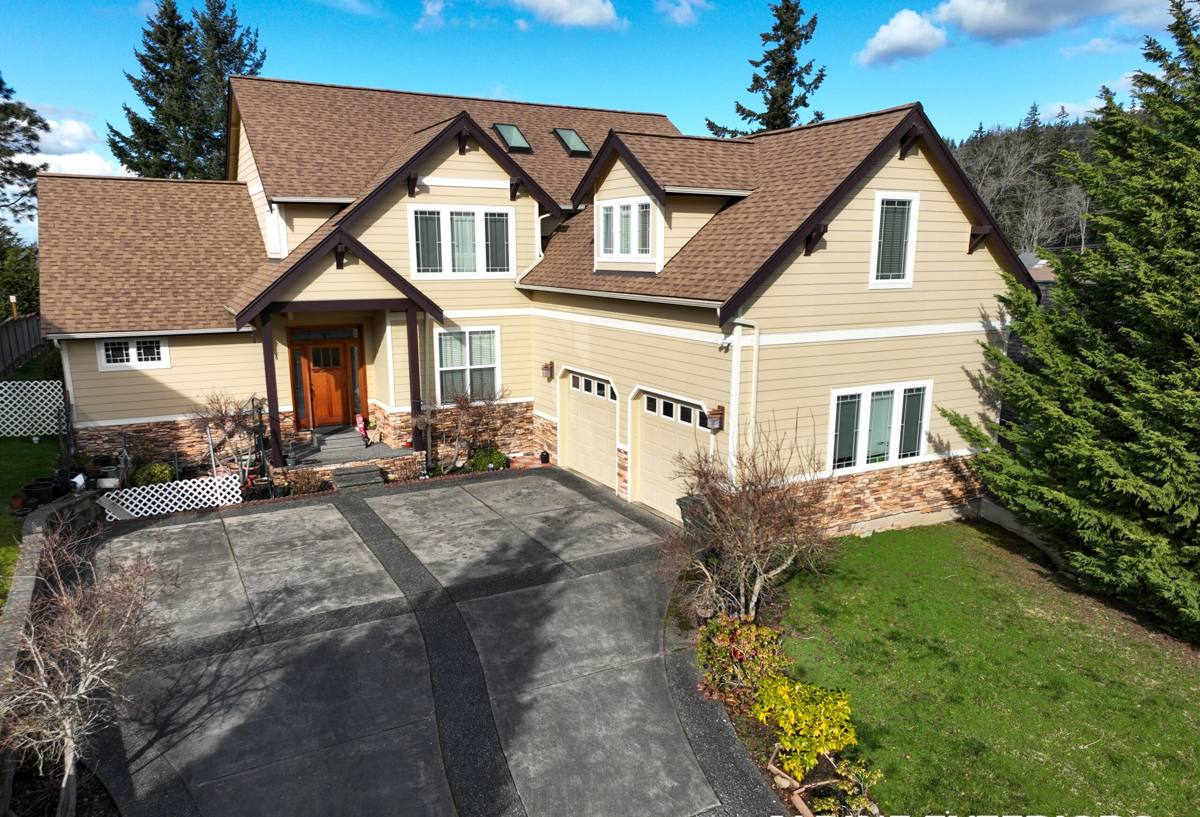
What Metal Roofing Actually Solves in This Climate
Metal isn't a fad upgrade — it's a material choice that directly answers the three things that beat up roofs in this region:
- Driving rain: Standing seam and properly lapped panel systems shed water fast, with no exposed seams for wind-driven rain to work into.
- Moss and moisture retention: Metal has a smooth, non-porous surface. Moss and algae can still land on it, but they have almost nothing to root into, which means far less buildup and far less trapped moisture compared to shingles.
- Salt-tinged coastal air: Modern coated steel and aluminum panels are engineered to resist corrosion from moist, salt-influenced air — but only if the coating system and fasteners are matched correctly, which is where a lot of installs go wrong.
None of this means metal is maintenance-free. It means the maintenance burden shifts from constant granule loss and moss scraping to occasional cleaning and periodic fastener checks — a trade-off most Deming homeowners are glad to make once they understand it.
Choosing the Right Metal Roofing System
"Metal roofing" isn't one product — it's a category, and the differences matter more in a wet, tree-covered area than almost anywhere else. Here's how the common options compare for a Deming property:
| System | Best For | Moss/Moisture Behavior | Trade-Offs |
|---|---|---|---|
| Standing seam (concealed fastener) | Most roof shapes, long-term low maintenance | Excellent — no exposed fasteners for water to find | Higher upfront cost, requires experienced installers |
| Exposed-fastener panels (R-panel/ribbed) | Budget-conscious projects, simple roof shapes | Good, but fastener washers age and need periodic checks | Lower cost, but more maintenance over the roof's life |
| Stone-coated steel shingles/shakes | Homeowners wanting a traditional look with metal's durability | Very good — textured but non-absorbent coating | Mid-to-upper cost, heavier than plain steel panels |
For most homes in and around Deming, we lean toward standing seam or stone-coated steel because both minimize the exposed-fastener points that a long, wet season will eventually test. Exposed-fastener panels aren't a bad choice — they're a legitimate, cost-effective system — but we're upfront that they ask more of the homeowner over time.
Steel vs. Aluminum
Steel panels are the more common choice and, with the right factory coating, hold up well to this region's moisture. Aluminum won't rust even if a coating is scratched, which appeals to homeowners closer to open water or with heavy salt exposure, but it typically costs more and can dent more easily under falling branches — a real consideration on tree-lined Deming lots.
What a Correct Installation Actually Involves
Metal roofing fails early almost exclusively because of installation mistakes, not because the material itself gave out. A correct job on a home in this climate includes:
- A synthetic, high-temperature underlayment rated for the panel type — not a generic felt that wasn't designed for metal's thermal movement.
- Ice-and-water shield at eaves, valleys, and any low-slope transitions, since these are where wind-driven rain backs up first.
- Fasteners and flashing metal matched to the panel's metal type, so two dissimilar metals aren't left to corrode against each other.
- Proper panel overlap and seam direction relative to prevailing wind and water flow off the roof.
- Ridge and soffit ventilation sized correctly, so trapped attic moisture doesn't condense against the underside of the panels.
- Clean, correctly flashed penetrations at every vent pipe, chimney, and skylight — the single most common source of leaks we find on other contractors' metal roofs.
Skipping any one of these doesn't usually cause an immediate problem. It causes a problem in year four or five, after the first few wet seasons have had time to find the weak point.
Our Process for Deming Metal Roofing Projects
1. On-Site Assessment
We walk the roof and attic space, not just the exterior. Roof pitch, existing decking condition, ventilation, and how much tree cover the property has all factor into what system and detailing we recommend.
2. Straightforward Proposal
You get a written scope covering panel type, underlayment, flashing details, and ventilation changes if needed — no vague line items. We'll walk through the standing seam vs. exposed-fastener vs. stone-coated comparison in person if it's a close call for your roof.
3. Tear-Off and Deck Inspection
We remove the old roofing down to the deck and check for soft spots or moisture damage before anything new goes down. Wet decking gets addressed before a single panel is installed — covering it up just moves the problem underground.
4. Installation
Underlayment, flashing, and panels go in following manufacturer specs for the specific coating and fastener system chosen, with extra attention at valleys, penetrations, and any north-facing slopes that stay damp longest.
5. Final Walkthrough
We review the finished roof with you, including basic care expectations, before we consider the job done.
Moss, Debris, and Living Under Tree Cover
A lot of Deming properties sit close to trees, and that shapes how any roof should be cared for — metal included. Overhanging branches drop needles and leaf litter into valleys and against any snow-retention or trim details, and that debris holds moisture even on a surface that doesn't feed moss the way shingles do. Keeping branches trimmed back from the roofline and clearing valleys once or twice a year does more to protect a metal roof here than any coating upgrade. It's a small task compared to what shingle roofs require, but it's not zero.
What Metal Roofing Costs and What Drives the Price
| Factor | Why It Matters |
|---|---|
| Panel system | Standing seam runs higher than exposed-fastener panels due to labor and material |
| Roof complexity | Valleys, dormers, and multiple pitches add flashing work and labor time |
| Tear-off scope | Removing old shingles and repairing damaged decking adds cost versus a clean deck |
| Metal type and coating | Aluminum and premium coatings cost more upfront but ask less of you long-term |
| Ventilation upgrades | Adding or correcting ridge/soffit venting protects the investment but adds scope |
Metal roofing costs more upfront than asphalt shingles — that's a fair trade-off to weigh, not something we'll talk around. What it buys is a roof that isn't fighting moss and moisture retention the way a shingle roof does in this climate, and a service life that's meaningfully longer when the install is done right.
Simple Maintenance Checklist for a Deming Metal Roof
- Clear valleys and gutters of needles and leaf debris once or twice a year, especially after fall drop
- Trim back branches that overhang or brush against the roof surface
- Check exposed fasteners (if that system was used) for loose or worn washers every few years
- Rinse off heavy moss or algae growth with a soft wash rather than pressure washing, which can damage coatings
- Have flashing around penetrations and valleys checked after any major windstorm
Why It Matters That We Already Work in This Area
A crew that only occasionally works in Whatcom County will detail a metal roof the same way they would in a drier climate — because that's the only way they know. We work this region regularly, which means we've seen firsthand where roofs in and around Deming and Sudden Valley actually fail: the valleys that never fully dry out, the north slopes that hold moss longest, the fastener lines that corrode first under salt-tinged air. That local pattern recognition shapes how we detail every roof, not just this one.
If you're weighing metal roofing for a home in Deming, we're glad to come take a look and give you a straightforward read on what your specific roof needs — no pressure, no inflated recommendations. Reach out for a free estimate using the form below.