 Sudden Valley Siding
 Ferndale's Climate Is Harder on Siding Than It Looks
Ferndale sits close enough to Bellingham Bay and the Strait of Georgia that salt-laden air is a regular part of the weather, and far enough into Whatcom County's rain belt that moisture is a year-round concern rather than a seasonal one. Add in wind-driven rain off the water, cool damp air that lingers into late spring, and long stretches where surfaces simply don't fully dry out, and you get a climate that is quietly rough on exterior building materials. It's not dramatic weather — no hurricanes, no hail the size of golf balls — but it is relentless, and relentless is what wears siding down over the years.
Homes in and around Ferndale, whether close to the water or set back toward the farmland and river bottoms along the Nooksack, deal with some combination of salt exposure, high humidity, and moss growth on north-facing walls and anything shaded by trees or eaves. Siding that isn't engineered for this combination tends to show it early: swelling at seams, discoloration, soft spots near the ground, and moss or algae staining that keeps coming back no matter how many times it's washed off.
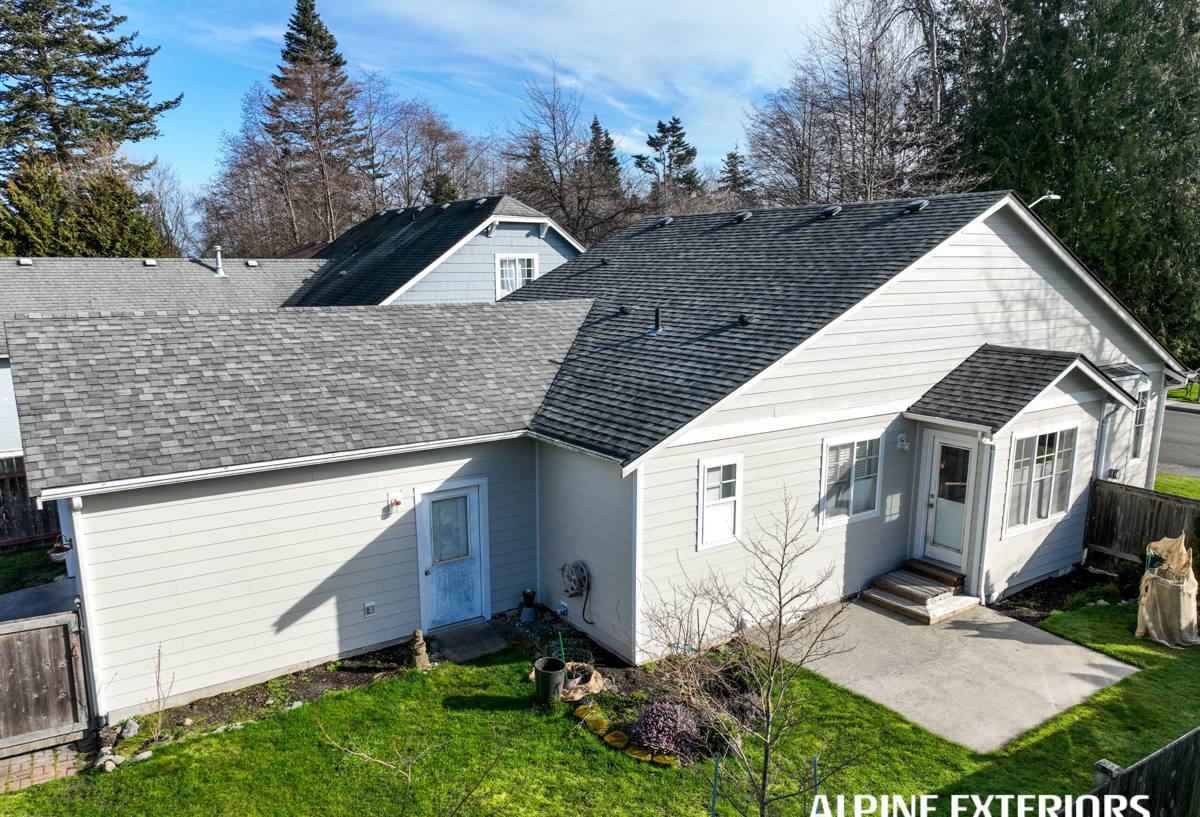
What Salt Air and Driving Rain Actually Do to a Home's Exterior
Salt Air
Salt in the air isn't just a coastal-town talking point — it's a corrosive, hygroscopic substance that pulls moisture toward itself. On a home's exterior, that means fasteners, trim, and any wood-based siding product absorb more ambient moisture than they would further inland. Over years, that constant low-grade dampness accelerates rot in wood siding and trim, corrodes exposed metal fasteners, and breaks down paint and factory finishes faster than the manufacturer's warranty assumes.
Driving Rain
Wind off the water doesn't just drop rain straight down — it pushes it sideways, into seams, laps, and butt joints that were designed for rain falling vertically. Siding systems with weak water-shedding details (poor overlap, caulked seams instead of engineered laps, or panel products that rely on paint alone to stay sealed) let water track behind the cladding. Once water gets behind siding, it doesn't matter how good the surface looks — the sheathing, framing, and insulation behind it are taking on damage you won't see until it's expensive.
Moss and Algae
Whatcom County's long damp season is close to ideal for moss and algae growth on shaded and north-facing walls. Beyond the cosmetic issue, moss holds moisture against the siding surface for extended periods, which is exactly the condition that accelerates rot in wood-based products and breaks down cheaper factory finishes.
Why We Standardized on James Hardie Fiber Cement
We install James Hardie fiber cement siding exclusively. We don't offer vinyl, LP SmartSide, primed spruce, cedar, or other fiber cement brands like Cemplank or Allura — not because those products don't have a place in the market, but because after years of doing exterior work in this specific climate, Hardie is the product we're willing to put our name behind.
- Non-combustible core: Fiber cement doesn't burn, feed a fire, or contribute fuel the way wood-based siding can.
- Engineered for Pacific Northwest moisture: Hardie's HZ5 product line is formulated specifically for climates like ours — freeze-thaw cycles, sustained dampness, and coastal exposure.
- ColorPlus factory finish: A baked-on finish applied under controlled conditions holds color and resists fading and moisture intrusion far better than field-applied paint.
- Dimensional stability: Fiber cement doesn't swell, warp, or cup the way wood and some composite products can when they take on moisture repeatedly.
- Warranty structure: A strong, transferable warranty backs both the substrate and the ColorPlus finish, which matters when you eventually sell the home.
None of this means other products are junk — it means that once you weigh maintenance burden, moisture behavior, and long-term cost against upfront price, Hardie is the product that keeps making sense for homes in this part of Washington.
How Siding Failure Shows Up on Ferndale Homes
We see a fairly consistent pattern on older or poorly-sided homes in this area, and it's worth knowing what to look for before it becomes a structural issue rather than a cosmetic one.
| Warning Sign | What's Usually Happening |
|---|---|
| Soft or spongy siding near the ground | Moisture wicking up from grade, often trapped behind wood or composite panels |
| Persistent moss or dark staining on north walls | Shade plus sustained dampness — a maintenance cycle that never really ends |
| Peeling or chalking paint | Field-applied finishes breaking down faster than expected under coastal humidity |
| Visible gaps at seams or corners | Caulk failure allowing wind-driven rain behind the cladding |
| Rusty streaks below fasteners | Corroding fasteners, often accelerated by salt air exposure |
Any one of these on its own might just mean routine maintenance. Several at once, especially on a home that's fifteen-plus years old, usually means it's time to have someone actually get behind the siding and look at the sheathing.
Roofing, Windows, and Decks Face the Same Climate
Siding doesn't fail in isolation, and neither do the other systems on a home's exterior. We handle roofing, windows, and decks in addition to siding because they're all exposed to the same salt air, driving rain, and moss cycle, and because problems in one system often show up as damage in another. A failing roof edge or gutter can dump water directly onto a wall section and accelerate siding rot in one localized spot. Old, poorly sealed windows are a common entry point for wind-driven rain, and the staining or soft trim you see below a window is frequently a window problem being misdiagnosed as a siding problem. Deck ledger boards and fascia, being horizontal and often shaded, are some of the first places moss takes hold on a property.
Looking at the whole exterior together, rather than treating siding as an isolated repair, is how we catch the actual source of a problem instead of just replacing the symptom.
What a Siding Replacement Project Involves
Assessment
We start by looking at the existing siding, the condition of the sheathing behind it where accessible, window and door flashing, and any areas showing moisture damage, moss buildup, or fastener corrosion. This tells us whether it's a straightforward re-side or whether there's underlying repair work needed first.
Water Management Details
The siding material itself is only part of the system. Proper installation includes weather-resistive barriers, correctly lapped flashing at windows and doors, rainscreen or drainage detailing where appropriate, and fastener patterns that match Hardie's specifications for our exposure category. This is where a lot of siding failures actually originate — not from the panel material, but from shortcuts in the details behind it.
Installation
Hardie panels, lap siding, or shingle-style products are installed to manufacturer spec, with attention to clearances from grade, deck surfaces, and roof lines — all areas where trapped moisture does the most damage over time.
Finish and Trim
Corner boards, trim, and caulking are finished to shed water rather than rely on caulk as the primary defense, since caulk is a maintenance item, not a permanent seal.
Cost Factors for a Ferndale Siding Project
Every home is different, but the following factors tend to move the price of a siding project up or down more than anything else:
| Factor | Why It Matters |
|---|---|
| Home size and wall complexity | More corners, dormers, and roof lines mean more cutting, flashing, and labor time |
| Condition of existing sheathing | Rot repair behind old siding adds cost but is far cheaper to fix now than after new siding goes on top |
| Siding profile chosen | Lap, shingle, and panel styles differ in material and labor cost |
| Number of stories | Multi-story homes require more scaffolding, staging, and safety setup |
| Trim and detail work | Extensive trim, window casings, and architectural details add labor time |
Why a Local Crew Matters Here
Whatcom County's coastal-influenced, high-moisture climate isn't the same as siding a home in eastern Washington or even a drier stretch of the I-5 corridor further south. A crew that installs here regularly knows to pay extra attention to flashing details at windows facing prevailing weather, to plan clearances knowing how long surfaces stay damp after a storm, and to expect moss and algae exposure on shaded elevations. That familiarity shows up in the small decisions made on-site — fastener spacing, flashing laps, drainage gaps — that don't show up on a spec sheet but determine whether a siding job lasts fifteen years or forty.
A homeowner in Ferndale evaluating contractors should ask directly about experience with this specific climate, not just siding experience in general.
Questions to Ask Before You Hire
- Are you a certified James Hardie installer, and can you explain the HZ5 product designation?
- How do you handle flashing at windows and doors, and can you walk me through it?
- What's your approach to clearance from grade, decks, and roof lines?
- Do you inspect and repair sheathing before installing new siding, or install over existing damage?
- What does your warranty cover, and is it transferable if I sell the home?
- Can you provide references from other Whatcom County projects?
A contractor who answers these clearly and specifically, without vague reassurances, is one worth trusting with a job that's supposed to protect your home for decades.
Get a Free, No-Pressure Estimate
If your Ferndale home is showing signs of moss buildup, soft trim, fading paint, or you're simply planning ahead for a re-side, we're happy to take a look and walk you through what we're seeing. There's no obligation and no pressure — just a straightforward assessment from a crew that works in this climate every day. Use the form below to request your free estimate.