 Sudden Valley Siding
 Siding in Edgemoor: A Different Kind of Exposure
Edgemoor sits close to the water, and that changes what a house has to deal with year-round. Homes here aren't just fighting Whatcom County's wet winters — they're dealing with salt-laden air coming off the bay, driving rain that gets pushed sideways by wind off the water, and long stretches of shade under mature trees that keep siding damp far longer than homes just a few miles inland. It's a combination that's tough on most exterior products, and it's a big part of why we standardized on one material for every siding job we do: James Hardie fiber cement.
This page covers what Edgemoor homeowners should know about siding, roofing, windows, and decks — the full exterior envelope — and why the products we choose to install (and the ones we don't) matter more here than in a drier, more sheltered part of the county.
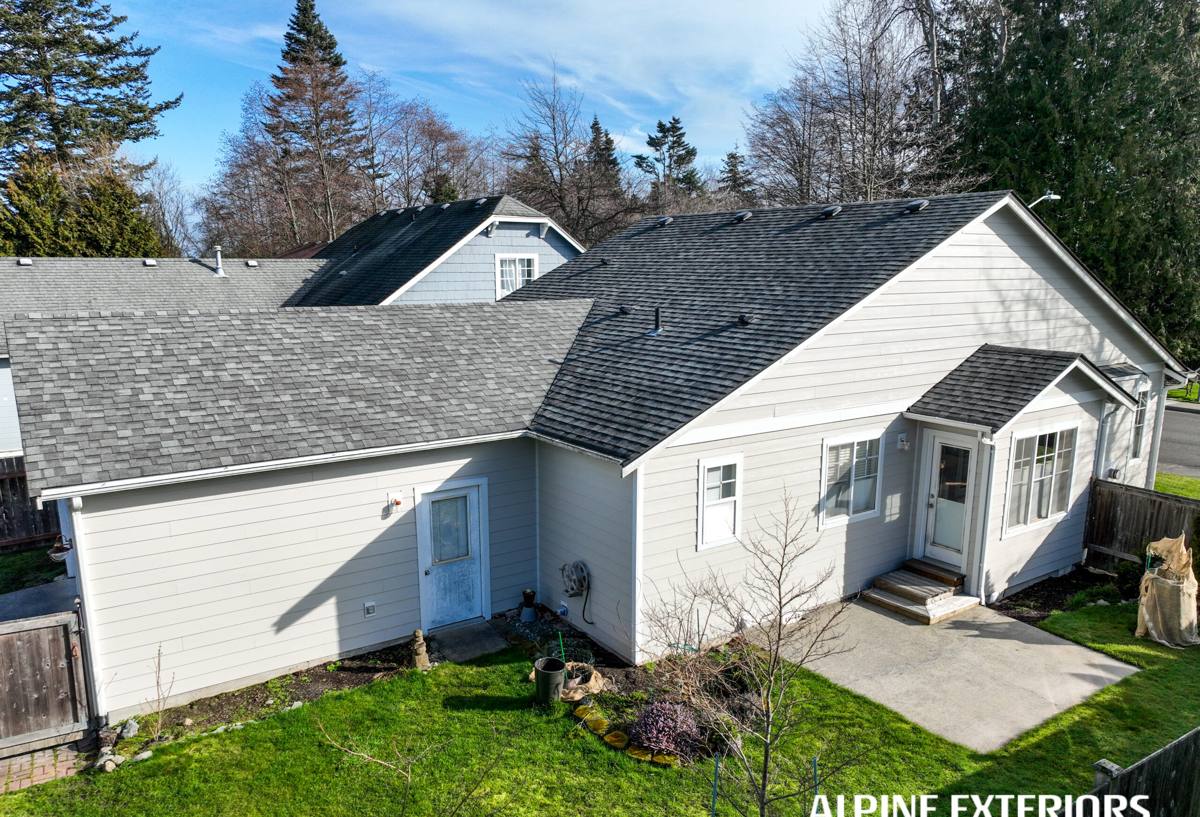
What Edgemoor's Climate Actually Does to a House
Salt Air and Slow Corrosion
Proximity to saltwater means airborne salt settles on exterior surfaces, fasteners, and trim. It's a slow process, but over years it accelerates corrosion on unprotected metal fasteners and can degrade certain paint films faster than they'd wear inland. Materials and fastening details that work fine in Sudden Valley or further inland don't always hold up the same way a few hundred yards from the bay.
Driving Rain and Wind-Driven Moisture
Water off the Salish Sea doesn't just fall straight down here — wind pushes it sideways into wall assemblies, especially on west- and south-facing elevations. Siding systems with weak seams, poorly lapped joints, or materials that wick moisture at the edges are the first to show trouble: staining, soft spots, or paint failure along butt joints and corners.
Shade and Moss Season
Tree cover that makes Edgemoor lots attractive also keeps siding and roofing damp longer after every rain. Moss and algae growth on north-facing walls and roof planes is a near-constant maintenance issue for anything but the most weather-resistant materials. Wood-based products — including primed spruce and engineered wood siding — are particularly vulnerable to sustained moisture exposure in these shaded pockets.
Why We Only Install James Hardie Fiber Cement
We get asked regularly why we don't offer vinyl, LP SmartSide, or cedar as options. The honest answer is that after years of exterior work in this climate, we saw a consistent pattern: the homes holding up best in wet, coastal-adjacent conditions were sided with fiber cement, and the ones needing repairs or full replacement after 10-15 years were almost always wood-based or vinyl.
- Non-combustible: Fiber cement doesn't burn, which matters for insurance conversations and long-term risk, even in a region without heavy wildfire exposure.
- Moisture-resistant core: Hardie's fiber cement doesn't swell, rot, or delaminate the way engineered wood products can when they take on sustained moisture.
- Factory-applied ColorPlus finish: A baked-on finish holds color and resists fading and chipping far better than field-applied paint, which matters when salt air is already working against the finish.
- Climate-engineered HZ product lines: Hardie manufactures HZ5 formulations specifically for the Pacific Northwest's wet, moderate climate — it's not a one-size-fits-all product.
- Transferable warranty: A strong, transferable product warranty adds real value if the home sells, which is common in a desirable neighborhood like Edgemoor.
We're not saying every other product is unusable everywhere — plenty of manufacturers make a reasonable product for the right application. We're saying that for the specific conditions Edgemoor homes face, fiber cement has consistently outperformed the alternatives we used to install, and that's why we made it our standard rather than one option among several.
What We Don't Install, and Why That's a Deliberate Choice
| Product | Where it struggles in this climate |
|---|---|
| Vinyl siding | Can warp or become brittle with wind exposure and temperature swings; seams are a common entry point for wind-driven rain |
| LP SmartSide (engineered wood) | Wood-strand core is sensitive to sustained moisture exposure; edge sealing and caulking maintenance is critical and easy to fall behind on |
| Cedar / primed spruce | Natural wood requires ongoing refinishing, is prone to moss and mildew in shaded, damp areas, and is more vulnerable to rot at joints and fastener penetrations |
| Cemplank / Allura (other fiber cement brands) | Not necessarily poor products, but we standardized on one manufacturer's system, warranty structure, and installation specs so every job we do is consistent and fully warrantable |
Choosing one product line also means our crews install it constantly — the same fastening patterns, the same flashing details, the same joint treatment on every job. That consistency is worth more in practice than having a shelf of options.
Roofing, Windows, and Decks: The Rest of the Envelope
Siding is only part of what keeps a home dry in Edgemoor's conditions. We handle the full exterior envelope because these systems work together:
Roofing
A roof that's shedding water properly protects the siding below it. Moss growth on roof planes near mature tree cover is one of the most common issues we see locally, and neglected moss can eventually work its way into shingle layers and gutters, sending water where it doesn't belong.
Windows
Window flashing and integration with the siding plane is one of the most common failure points on older homes. When we replace siding, we check window flashing details closely — a lot of moisture problems that get blamed on siding actually start at a poorly flashed window.
Decks
Decks facing the water take the same wind-driven rain exposure as the siding above them, plus standing water and UV. Proper decking material choice and drainage detailing matter as much here as anywhere in the county.
What a Siding Replacement Project Looks Like
Assessment and Tear-Off
We start by evaluating the existing siding, sheathing, and any moisture damage underneath — this is often where hidden problems from a previous wood or vinyl installation show up. Old siding comes off, and we inspect the wall assembly before anything new goes up.
Weather Barrier and Flashing
Given the wind-driven rain this area sees, correct house wrap installation and flashing at every window, door, and penetration is non-negotiable. This is the layer that actually keeps water out — the siding is the second line of defense, not the only one.
Installation to Manufacturer Spec
James Hardie's warranty depends on installation matching their specifications — proper fastener spacing, clearances from grade and roof lines, and joint treatment. We install to that spec on every job, which is what keeps the warranty intact if it's ever needed.
Finish Details
Trim, caulking at transitions, and paint touch-up at any field-cut edges finish the job. With ColorPlus finishes, most of the surface never needs field painting at all.
What Drives Cost
| Factor | Why it matters |
|---|---|
| Home size and wall complexity | More corners, dormers, and roof lines mean more cutting, flashing, and labor time |
| Existing siding removal | Tear-off of old wood or vinyl, plus any sheathing repair from hidden moisture damage, adds time and cost |
| Siding profile and trim | Lap width, panel vs. plank systems, and trim board complexity affect material and labor costs |
| Access and site conditions | Steep lots, limited access, or heavy tree cover near the water can add setup and safety considerations |
| Color and finish selection | Factory ColorPlus finishes vary in cost by color family compared to primed material painted on site |
Why a Local Crew Matters Here
Whatcom County's exterior conditions aren't uniform — a crew that mostly works drier, inland jobs won't necessarily flash a west-facing wall near the water the same way we would. Knowing which elevations take the worst of the wind-driven rain, where moss builds up fastest under tree cover, and how salt air affects fastener choices comes from working these conditions repeatedly, not from a general contracting background. A local crew also means faster response if something needs a look after a storm, and someone who actually knows the neighborhood when you have questions during the project.
A Simple Checklist Before You Replace Siding
- Check for soft spots, staining, or bubbling paint, especially on west- and south-facing walls
- Look for moss or algae buildup that stays damp for days after rain
- Inspect around window and door trim for gaps, cracking caulk, or water staining
- Note any areas where siding meets the roofline or deck ledger board — common leak points
- Ask any contractor you're considering which specific product and manufacturer they install, and why
- Confirm whether the warranty is manufacturer-backed and transferable if you sell the home
If you're in Edgemoor and noticing wear on your siding, roofing, windows, or deck, we're happy to take a look and give you a straightforward, no-pressure estimate — no obligation, just an honest read on what your home actually needs.