 Sudden Valley Siding
 Exterior Work in South Hill: What the Terrain Demands
South Hill sits in the hillside terrain around Sudden Valley, and homes here face a different combination of stresses than a flat subdivision a few miles away. Elevation changes mean some homes catch more wind and driving rain on exposed faces, while others sit tucked under mature fir and cedar canopy that keeps siding shaded and damp for days after a storm passes. Add in the salt-tinged air that moves through Whatcom County off the Sound, and you get an exterior environment that punishes the wrong siding choice faster than homeowners expect.
We've worked on enough homes in this area to know that "one size fits all" siding advice doesn't hold up here. A south-facing wall with full sun exposure ages differently than a north-facing wall buried in shade half the year. Any contractor quoting your South Hill home without walking the property and looking at sun exposure, tree cover, and drainage patterns is guessing.
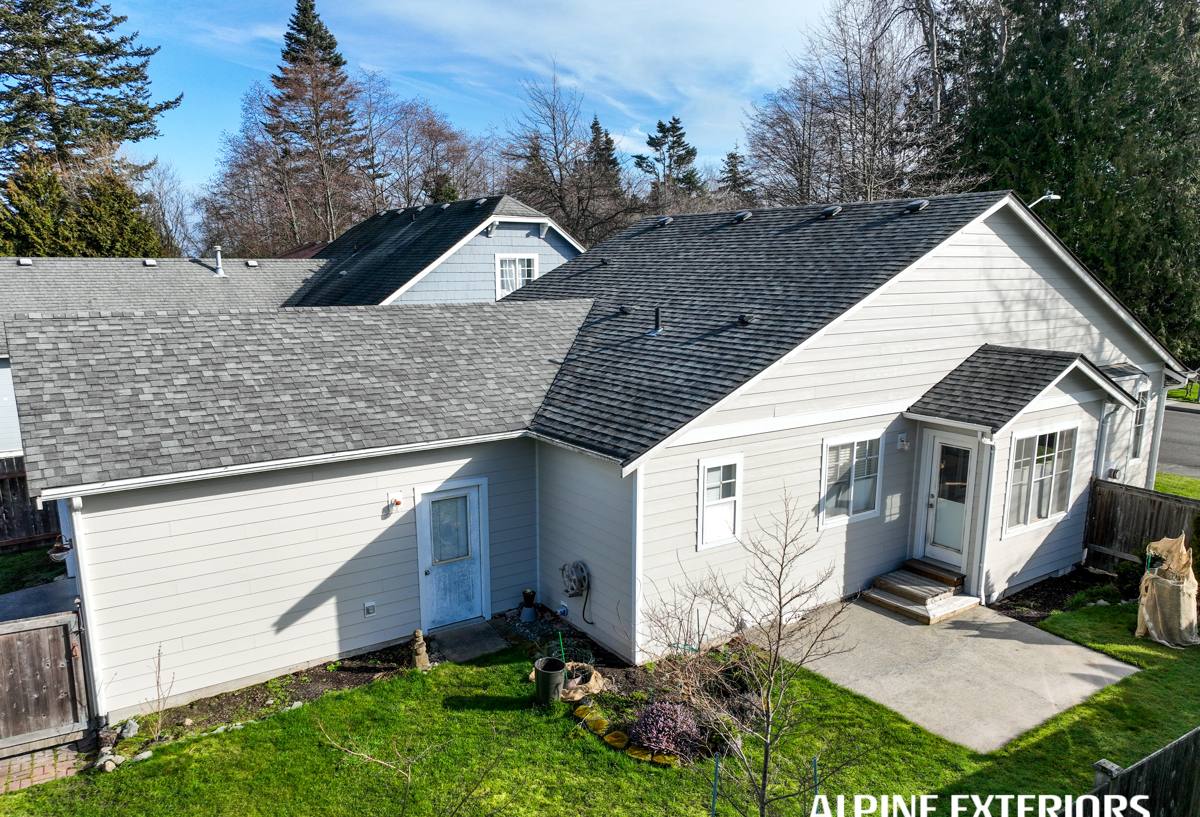
The Climate Factors That Actually Matter
Driving Rain and Wind-Driven Moisture
Pacific Northwest rain isn't always gentle. Storms moving through this part of Whatcom County frequently bring wind-driven rain that hits siding at an angle, forcing water into laps, seams, and fastener points that a straight-down rain would never reach. Over years, that repeated wind-driven moisture is what separates siding systems that hold up from ones that quietly fail behind the surface.
A Long Moss Season
Shaded, north-facing, and tree-covered walls in this region get a moss and algae season that runs long — often eight months or more where sun exposure is limited. Moss doesn't just look bad; it holds moisture against the siding surface, and on materials that aren't dimensionally stable or properly sealed, that constant dampness accelerates rot, swelling, and finish failure.
Salt Air Exposure
Even homes set back from the water pick up salt-laden air carried inland on weather systems moving through Whatcom County. Salt air accelerates corrosion on fasteners and trim hardware, and it breaks down lower-grade paint finishes faster than manufacturers' published fade timelines suggest. It's a slow, cumulative effect — which is exactly why it gets overlooked until siding is already showing damage.
Why We Install Only James Hardie Fiber Cement
We made a deliberate decision to install James Hardie fiber cement exclusively — not vinyl, not LP SmartSide, not Cemplank, Allura, or primed wood products. That's not a marketing position; it's a response to what we've seen play out on homes in this climate over time.
Fiber cement is non-combustible and dimensionally stable, meaning it doesn't swell, cup, or warp the way engineered wood products can when moisture gets into a seam and stays there through a long moss season. James Hardie's HZ5 product line is specifically engineered for the kind of cold, wet, high-moisture cycling that Whatcom County sees, and the ColorPlus factory finish is baked on under controlled conditions rather than field-applied — which matters directly for how a finish holds up against sustained salt air and UV exposure.
That doesn't mean every other product is without merit. Vinyl is inexpensive and low-maintenance in mild climates. Engineered wood siding can look good and install quickly. But the trade-offs — moisture sensitivity at cut edges, field-applied finishes that fade unevenly, warranty terms that get complicated once moisture damage is involved — are exactly the trade-offs that show up worst in a climate like this one. We'd rather install one product correctly and stand behind it than offer five options and let a homeowner absorb that risk.
Siding Is Only Part of the Envelope
We work on more than siding, and in South Hill that matters because siding failure is rarely an isolated problem. Roofing, windows, and decks all interact with how water moves around a home, and a weak point in one system often shows up as damage in another.
Roofing
A roof with failing flashing or clogged valleys sends water down exterior walls in places it was never designed to go, which shows up first as staining or soft spots at the top courses of siding.
Windows
Poorly flashed window openings are one of the most common sources of hidden moisture intrusion behind siding — a problem that often isn't visible until the siding itself is removed.
Decks
Decks attached directly to the house create a ledger-board connection that, if not properly flashed, funnels water straight into the wall assembly behind it.
Because we handle all four trades, we look at a South Hill home as one connected system rather than four separate quotes, which is often how problems get caught before they turn into bigger repairs.
What a Siding Replacement Project Involves
- An on-site walk-through evaluating current siding condition, moisture points, sun exposure, and drainage around the foundation
- Removal of existing siding and inspection of the sheathing underneath for hidden rot or water damage
- Repair of any compromised sheathing or framing before new material goes on — never siding over a problem
- Installation of a code-compliant weather-resistive barrier and proper flashing details at every window, door, and penetration
- Installation of James Hardie fiber cement panels or lap siding per manufacturer fastening and clearance specifications
- Final trim, caulking, and touch-up work, followed by a walk-through with the homeowner
The step homeowners most often skip when getting quotes elsewhere is the sheathing inspection. Installing new siding over damaged sheathing just seals a moisture problem back into the wall — it's one of the most common corners cut in this trade.
Cost Factors to Understand Before You Get Quotes
| Factor | Why It Matters |
|---|---|
| Home size and wall complexity | More corners, gables, and dormers mean more cutting, flashing, and labor time |
| Existing sheathing condition | Hidden rot found during tear-off adds repair cost but prevents sealing a problem behind new siding |
| Siding profile chosen | Lap, panel, and shingle-style James Hardie products differ in material and labor cost |
| Trim and accessory work | Window and door trim, corner boards, and fascia detailing add material and labor beyond the flat wall area |
| Access and site conditions | Hillside lots, steep driveways, or limited staging area in South Hill can affect equipment and labor logistics |
Any quote that doesn't account for sheathing condition and site access specific to your property is an incomplete quote. We walk every property before pricing it.
Why a Local Crew Matters Here
Hiring for exterior work in South Hill isn't the same as hiring for a flat, sun-exposed neighborhood across town. A crew that hasn't worked hillside terrain, tree-shaded lots, or homes exposed to prevailing storm winds in this specific area is more likely to miss the details that cause callbacks — improper clearances near grade, missed flashing at a ledger board, or fastening patterns that don't account for wind exposure.
When vetting any contractor for siding, roofing, window, or deck work, homeowners should look for:
- A physical walk-through of the property before any quote is finalized
- Manufacturer training or certification specific to the siding product being installed
- A written scope that includes sheathing inspection and repair, not just material installation
- Clear warranty terms — both manufacturer material warranty and installer workmanship warranty
- Local references or project history in Whatcom County, not just general regional claims
- Straight answers about why they use the products they use, and what alternatives they turned down
Maintenance and Warning Signs Between Projects
Even correctly installed fiber cement siding benefits from periodic attention in a climate this wet. Homeowners in South Hill should periodically check for:
- Moss or algae buildup on shaded walls, especially under tree canopy
- Caulking that has cracked or pulled away around windows, doors, and trim joints
- Staining or discoloration at the base of walls, which can indicate splashback or drainage issues
- Soft spots or visible gaps where siding meets trim, roofline, or deck ledger connections
- Fastener corrosion or staining, particularly on homes with more direct exposure to salt-laden air
None of these are emergencies on their own, but left unaddressed through another wet season, they compound. Catching them early is far cheaper than the repair that follows a full winter of neglect.
Getting Started
If you're weighing a siding replacement — or want a second opinion on roofing, windows, or a deck connection that's been bothering you — we're happy to walk the property and give you a straight, no-pressure assessment. There's a form below to request a free estimate; we'll take a look at your specific home in South Hill and tell you honestly what it needs.