 Sudden Valley Siding
 What Alger and Sudden Valley Homes Are Up Against
If you own a home near Alger or out around Sudden Valley, you already know this part of Whatcom County doesn't go easy on exterior building materials. Homes here sit under a heavy tree canopy for much of the year, catch salt-laden air drifting in off the Sound and Lake Whatcom, and take on driving, wind-pushed rain for months at a stretch. Add in a moss season that can run from early fall through late spring, and you've got a climate that's quietly hard on siding, trim, roofing, and anything else exposed to the weather.
None of that is dramatic on its own. It's the accumulation that gets homeowners — moisture that never fully dries between storms, moss and algae that hold dampness against a wall, and salt air that speeds up corrosion on fasteners and finishes. Siding that looks fine from the street can be quietly failing underneath if it wasn't built, or installed, for this specific environment.
Why Moisture Is the Real Enemy Here
Most of the exterior damage we see on homes in this area doesn't come from a single storm — it comes from siding that absorbs a little moisture, doesn't fully dry out before the next rain, and slowly swells, delaminates, or lets rot start at seams and butt joints. Wood-based products are especially vulnerable to this cycle. Over enough seasons, that slow moisture cycling is what turns into soft trim, peeling paint, and eventually siding that needs to be replaced years before it should.
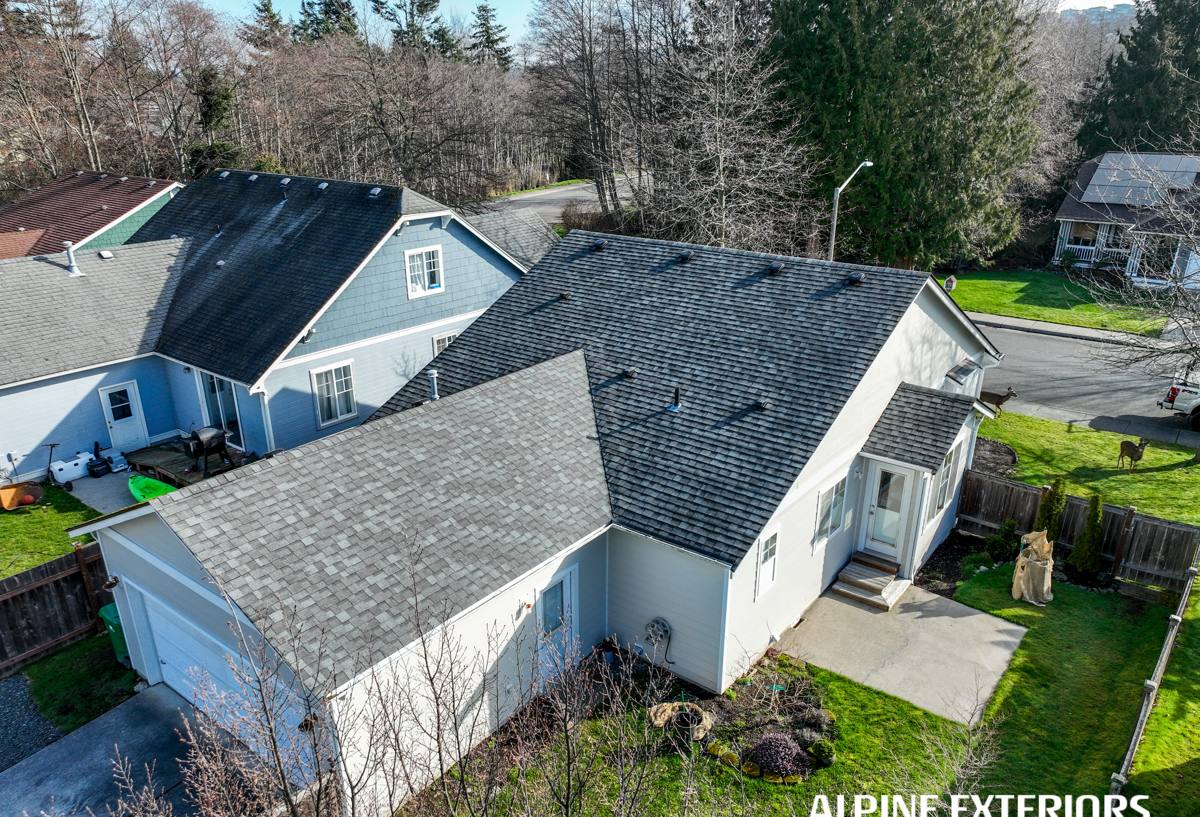
Why We Install Only James Hardie Fiber Cement Siding
We made a deliberate decision as a company: we install James Hardie fiber cement siding, and nothing else. We don't install vinyl, LP SmartSide, Cemplank, Allura, primed spruce, or cedar. That's not a marketing line — it's a standard we hold to because of what we've seen these products do over time in exactly this climate.
Vinyl is inexpensive and easy to install, and in dry, mild climates it can perform reasonably well. In a wet, wind-exposed area like this one, though, it flexes, gaps at the seams over time, and can warp under sustained temperature swings — problems that get worse, not better, with age. Wood and wood-composite products like primed spruce and cedar offer a natural look that a lot of homeowners want, but they need real maintenance discipline: recoating, caulking, and vigilant moisture management. Miss a maintenance cycle in a climate with this much rain and moss pressure, and the consequences show up fast. Other fiber cement brands make reasonable products, but we've standardized on one manufacturer so our crews install one system, to one spec, every time — no guessing at a different product's quirks on every job.
James Hardie fiber cement is non-combustible, engineered specifically for wet Pacific Northwest climates through its HZ5 product line, and finished at the factory with ColorPlus technology — a baked-on finish that resists fading and chipping far better than field-applied paint. It doesn't rot, it holds up to moss and algae exposure better than wood, and it comes with a strong transferable warranty when installed to Hardie's specifications. That combination — durability, a factory finish built for this exact climate, and a manufacturer warranty that means something — is why it's the only siding we put on homes.
How Our Siding Work Fits This Area
Every home we look at in the Alger and Sudden Valley area gets treated a little differently depending on its exposure. A house tucked under trees with heavy shade needs different moss and moisture management than one that catches open wind off the lake. Before we talk about siding at all, we look at the whole exterior picture:
- How much direct sun and airflow the walls actually get, since shaded, damp walls hold moisture longer and grow moss faster
- The condition of the water-resistive barrier and flashing underneath the existing siding, not just the siding itself
- Trim, window, and door transitions, which are where most real-world leaks actually start
- Roof condition and gutter performance, since siding failures are often downstream of a roof or drainage problem
- Existing moss and algae growth patterns, which tell us a lot about how water is moving across the exterior
From there, installation follows James Hardie's published specifications — correct fastener spacing and type, proper clearance at grade and hard surfaces, correctly lapped and caulked joints, and flashing details that actually shed water instead of trapping it behind the cladding. Fiber cement siding is only as good as the installation behind it, and in a climate that punishes shortcuts, we don't take them.
Roofing, Windows, and Decks: The Rest of the Exterior
Siding doesn't work in isolation. A new Hardie exterior on a home with a failing roof, leaking window flashing, or a rotting deck ledger just moves the water problem somewhere else. That's why we handle siding, roofing, windows, and decks as one connected system rather than as separate trades that happen to work on the same house.
Roofing
Your roof is the first line of defense against the driving rain and moss buildup common in this area. When we're on-site for siding work, we'll flag obvious roofing issues — failing flashing, moss accumulation, or drainage problems — because those directly affect how well new siding performs.
Windows
Window flashing and integration with the siding plane is one of the most common failure points on homes we inspect. When windows are replaced or siding is removed around them, that's the moment to get the flashing detail right, not patch around a problem that's already there.
Decks
Decks in this area take the same relentless moisture exposure as siding, often with less protection. Ledger boards and structural connections that stay damp for months at a time are a real concern, and we build and repair decks with that reality in mind rather than treating them as a cosmetic add-on.
What Siding Replacement Typically Involves
Every home is different, but most siding replacement projects in this area follow a similar shape. Here's a general look at the cost factors that tend to move the number up or down, not a quote — every home gets its own assessment.
| Factor | Why It Matters Here |
|---|---|
| Home size and wall complexity | More corners, gables, and trim details mean more cutting, flashing, and labor time |
| Existing sheathing and moisture damage | Rot or damaged sheathing found during tear-off has to be repaired before new siding goes on |
| Siding profile and finish | Lap, shingle, and panel profiles vary in material and labor cost; factory-finished ColorPlus avoids a separate paint step |
| Trim and accessory work | Window and door trim, corner boards, and fascia are often replaced alongside siding for a consistent, weathertight result |
| Site access and exposure | Steep lots, tree cover, and limited access around homes near the lake or wooded lots can affect scheduling and setup time |
Why a Local Crew Matters in This Area
A siding job done by a crew that doesn't know this climate tends to show its weaknesses within a few years — flashing details that work fine in a drier region but fail here, or a maintenance plan that doesn't account for how fast moss can take hold under tree cover. We work in Whatcom County and the surrounding area regularly enough to know how differently a home tucked into the trees near Alger behaves compared to one sitting more open along Lake Whatcom, and we plan the work accordingly.
That local familiarity also matters for something less visible: knowing which details actually cause callbacks in this climate, and building the job to avoid them the first time, rather than treating every house the same regardless of where it sits.
Caring for James Hardie Siding in a Moss-Prone Climate
One advantage of fiber cement over wood-based siding is how little ongoing maintenance it demands — but "little" isn't "none," especially in an area with a long moss season. A simple annual routine goes a long way:
- Rinse siding gently once or twice a year to clear pollen, dust, and early moss or algae growth before it takes hold
- Keep gutters clear so water isn't overflowing down the wall behind or below them
- Trim back vegetation and tree limbs that keep walls in constant shade and dampness
- Check caulking at trim, window, and door joints periodically, since caulk is the one component that does wear over time
- Address any moss or algae buildup promptly rather than letting it sit against the siding for a full season
Because ColorPlus finishes are baked on at the factory rather than field-applied, you're not on a repainting schedule the way you would be with wood siding — but a little seasonal attention keeps a Hardie exterior looking and performing the way it's supposed to for decades.
Get a Straight Answer for Your Home
If you're weighing a siding replacement, or dealing with a roof, window, or deck issue on a home in the Alger or Sudden Valley area, we're happy to take a look and give you an honest assessment — no pressure, no inflated quote to negotiate down from. Reach out for a free estimate using the form below.