 Sudden Valley Siding
 Why Sehome Decks Take More Punishment Than the Plans Show
A deck in Sehome doesn't fail because someone used the wrong screws. It fails slowly, from the ground up and from the top down, because Whatcom County weather never really lets a deck dry out. Long stretches of driving rain push moisture sideways into ledger connections and railing posts. Tree cover and hillside shade in and around Sehome mean sections of many decks stay damp long after the rest of the yard has dried. Add a moss season that can run from fall through spring, and you have a structure that's under constant low-grade attack even when nothing looks obviously wrong.
None of that means a deck can't last decades here. It means the build has to account for water that lingers instead of water that runs off in an afternoon. That's the difference between a deck that needs board replacement in eight years and one that's still solid in twenty-five.
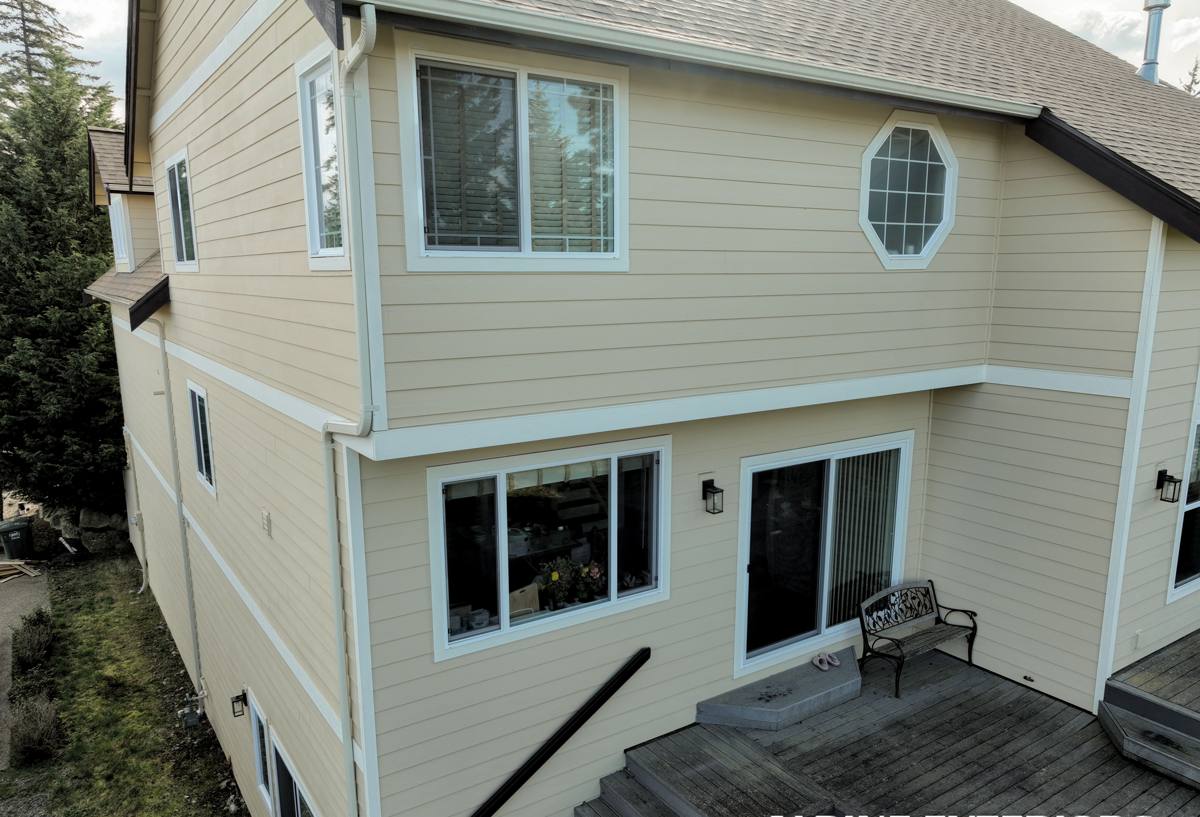
What a Correctly Built Deck Looks Like in This Climate
The parts of a deck you can see — the decking boards, the railing style — get most of the attention from homeowners. The parts that actually determine how long the deck lasts are mostly hidden.
Ledger board and flashing
Where the deck attaches to the house is the single most common failure point we find on older decks in this region. A ledger board bolted to the rim joist without proper flashing lets water track behind the siding and into the framing every time it rains — which, in this climate, is often. A correct installation uses metal flashing that directs water out and away from the house, a water-resistant barrier behind it, and structural fasteners rated for the load, not just deck screws.
Joist protection
Untreated or unprotected joist tops absorb water that pools under the decking, especially in shaded sections. Joist tape or a comparable flashing membrane over the top of every joist keeps that moisture from soaking into the wood at the exact spot where screws penetrate — which is also the exact spot most rot starts.
Fasteners and hardware
Coastal and marine-influenced air in Whatcom County accelerates corrosion on standard hardware. Structural connectors, joist hangers, and fasteners rated for exterior and coastal exposure cost more than the standard version, but they're the difference between hardware that's still tight in fifteen years and hardware that's rusting through in five.
Choosing a Decking Material for a Damp Climate
There's no single "right" decking material — the right choice depends on how much maintenance you want to do, your budget, and how shaded the deck location is. Here's how the common options actually perform under Whatcom County conditions.
| Material | Moisture Behavior | Maintenance | Typical Lifespan Here |
|---|---|---|---|
| Pressure-treated wood | Absorbs and releases moisture; prone to cupping/splitting if not sealed regularly | Annual cleaning, re-sealing every 1-2 years | 10-15 years before major boards need replacing |
| Cedar | Naturally rot-resistant but still needs sealing in shaded, damp spots | Cleaning and sealing every 1-2 years | 15-20 years with upkeep |
| Composite decking | Doesn't absorb water like wood; some early-generation composites held surface moisture and grew mold | Periodic washing; no sealing or staining | 25+ years, varies by brand and product line |
| PVC/capped composite | Fully moisture-resistant surface; best resistance to mold staining in shaded areas | Occasional washing | 25-30+ years |
In shaded or heavily wooded parts of Sehome where moss and algae growth is the main concern, capped composite or PVC decking generally holds up with the least fuss. Where a homeowner wants a natural wood look and is willing to do annual maintenance, cedar performs well if it's detailed and sealed correctly from the start.
Footings, Framing, and Ground Moisture
Whatcom County's frost depth and drainage conditions matter more on hillside and wooded lots than on flat, open ground. Footings need to be sized and set to local code depth, and on a sloped or partially shaded lot, water management around the footings deserves real attention — standing water at the base of a post is a slow but reliable way to compromise a foundation.
We also pay attention to airflow underneath the deck. A low deck with poor ventilation traps moisture against the framing from below, which works against everything done to protect it from above. Where clearance allows, proper spacing and grading under the deck keeps that area drying out between rain events instead of staying wet.
Railings, Stairs, and Code Requirements
Railing height, baluster spacing, and stair geometry are governed by building code, and inspectors check these details closely on permitted deck work. Beyond meeting code, railing posts are another common water-entry point — a post that isn't properly flashed where it attaches to the frame can trap moisture inside the post itself, which is hard to spot until the wood is already compromised.
Composite and metal railing systems have become popular in this climate specifically because they sidestep the wood-rot issue at a high-touch, highly exposed part of the structure. Wood railings can still be the right call for a specific look, but they need the same fastener and flashing discipline as the rest of the deck.
Moss, Algae, and Long-Term Deck Maintenance
Moss doesn't just grow on roofs in this region — it establishes on decking, especially on north-facing or heavily shaded sections that don't get much direct sun. Left alone, moss holds moisture against the board surface and, on wood decking, accelerates rot underneath the growth. On composite decking, moss and algae are mostly a surface and slip-hazard issue rather than a structural one, which is part of why composite has become the default choice for shadier lots.
- Sweep debris and leaf litter off the deck regularly, especially in fall — trapped organic matter holds moisture and feeds moss growth
- Rinse or wash the deck surface at least once or twice a year, more often in shaded sections
- Keep gutters and downspouts clear so runoff isn't dumping extra water directly onto or near the deck
- Trim back overhanging branches where practical to let more light and airflow reach the deck surface
- Check railing posts and the ledger connection annually for soft spots, rust staining, or gaps in flashing
- Re-seal wood decking on the schedule the product calls for — don't wait until it visibly needs it
Our Process for a Sehome Deck Project
We start with an on-site look at the specific lot — sun exposure, shade pattern, slope, and how water currently moves across the yard. That tells us more about which materials and detailing make sense than any general climate discussion. From there we walk through material options and give an honest read on trade-offs between upfront cost and long-term maintenance, rather than steering toward whatever has the best margin.
Permitting and code compliance are handled as part of the job, not an afterthought — ledger attachment, footing depth, and railing specs all need to pass inspection, and getting them right the first time avoids delays. During construction, the flashing, joist protection, and fastener choices described above are standard on every deck we build, not an upgrade option.
Why a Crew That Already Works in Sehome Makes a Difference
A contractor who mainly works elsewhere in the county, or outside it, doesn't necessarily know how a specific lot's shade pattern, slope, and drainage behave through a full wet season. A crew that regularly works in and around Sehome and the broader Sudden Valley area has already seen how decks in similar conditions hold up — or don't — over time, and builds accordingly instead of applying a generic spec sheet. That local pattern recognition shows up in small decisions: where extra flashing gets added, which sections get composite instead of wood, how footings get positioned relative to drainage.
Questions Worth Asking Before You Sign a Deck Contract
- Does the ledger board attachment include proper flashing, or just fasteners?
- Is joist tape or equivalent protection included over the framing, or is it an add-on?
- What fastener and hardware grade is being used, and is it rated for coastal/exterior exposure?
- Will the footing depth and framing plan meet current Whatcom County permit requirements?
- What's the maintenance schedule for the specific decking material being proposed?
- Is the quote itemized enough to see what's driving the cost — material, labor, permitting?
If you're planning a new deck or replacing one that's showing its age in Sehome, we're happy to take a look and walk the site with you. There's no pressure and no obligation — just a straight assessment of what your lot needs and what it would take to do it right. The form below gets you a free estimate.