 Sudden Valley Siding
 Composite Decking Built for Silver Beach's Weather
Silver Beach sits close to the water, and that proximity shapes everything about how a deck ages here. Homes in this part of Sudden Valley deal with driving rain off the water, heavy shade from mature evergreens, and a moss season that can stretch from late fall through spring. A deck built without that reality in mind will show it within a couple of seasons — soft spots, algae streaking, fasteners that back out, and boards that cup or crown. Composite decking, installed correctly, handles this environment far better than untreated wood, but "composite" is not a single product with one set of rules. The board brand, the substructure underneath it, and the way it's fastened all determine whether a deck stays solid for twenty-plus years or turns into a maintenance headache by year five.
We work this side of Whatcom County regularly, which means we're not guessing at how a deck here holds up over time — we've seen what the local moisture cycle does to decks that were built for a drier climate, and we build accordingly.
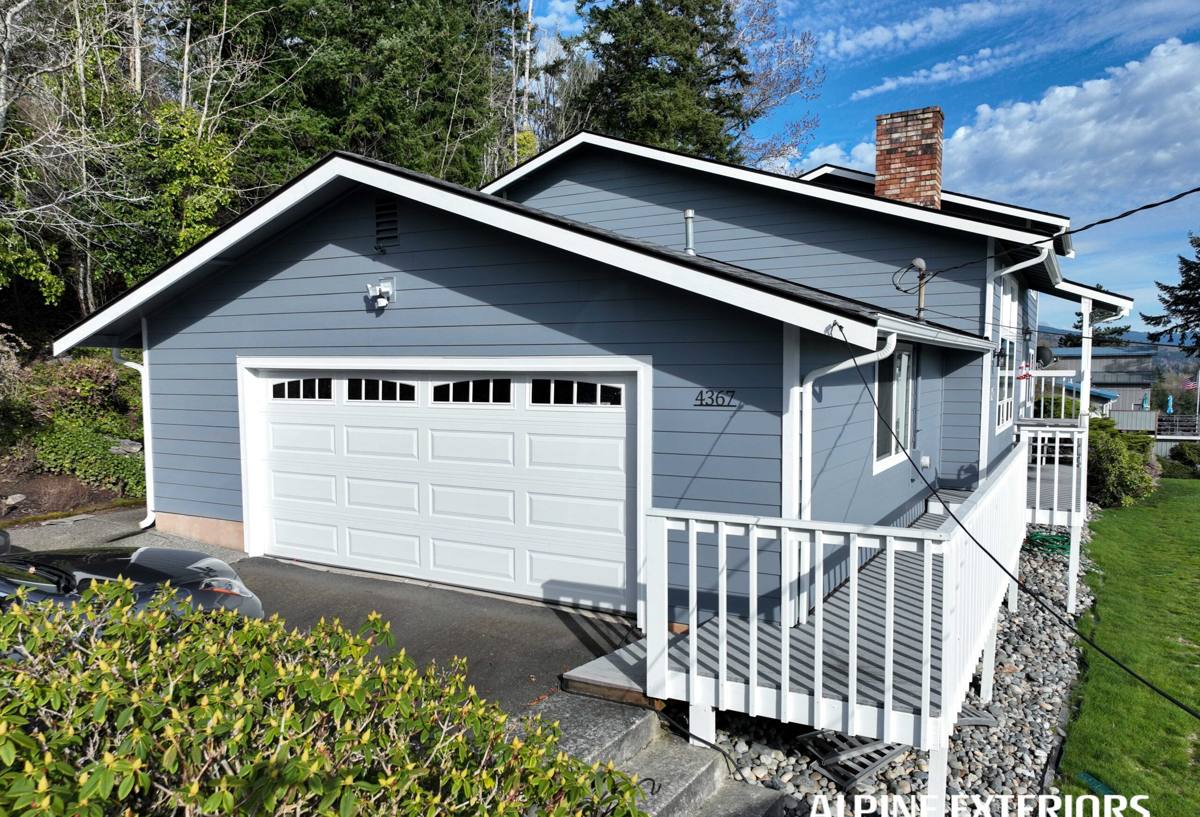
What Silver Beach's Climate Actually Does to a Deck
Moisture That Doesn't Let Up
Between the rain coming off the water and the shade thrown by tall firs and cedars, a lot of decks in this neighborhood stay damp far longer after a storm than decks in more open, sun-exposed yards. That extended dry-time is the single biggest factor in how fast moss, algae, and mildew take hold on a deck surface.
A Long Moss Season
Moss doesn't need standing water to get started — it just needs consistent dampness and shade, which Silver Beach has for most of the year. On wood decking, moss holds moisture against the board and accelerates rot underneath the surface long before it's visible. On composite, moss is mostly a slip hazard and a cosmetic issue rather than a structural one, but only if the board's surface texture and the gaps between boards are designed to shed water instead of trap it.
Salt-Laden, Corrosive Air
Air carrying salt and moisture accelerates corrosion on any exposed metal — screws, joist hangers, flashing, railing brackets. A deck built with standard hardware in this environment will show rust streaks and weakened fasteners well before the decking material itself fails. This is one of the most common shortcuts we see on decks that were built cheap: composite boards on top, but hardware underneath that wasn't rated for the exposure.
What a Correct Composite Deck Job Involves Here
A composite deck is only as good as what's underneath and around it. The board itself is usually the least of the problems we find on failing decks — the substructure, fastening, and drainage details are where jobs go wrong.
- Corrosion-resistant hardware throughout — stainless or coated fasteners, hangers, and brackets rated for wet, corrosive exposure, not standard galvanized hardware.
- Proper joist spacing for the board — composite boards have manufacturer-specified span limits that are tighter than wood in many cases, especially on angled or picture-frame layouts.
- Ventilation underneath the deck — airflow beneath the framing keeps the underside dry and slows mold and mildew growth, which matters more in a shaded, damp yard than in an open one.
- Correct board gapping — spacing that accounts for seasonal expansion and lets water drain through rather than pool on the surface.
- Flashing where the deck meets the house — a ledger board without proper flashing is one of the most common points of hidden water damage on decks in this climate.
- Grooved-edge or surface-textured boards near shaded areas — added surface grip matters where moss and algae are more likely to take hold.
Choosing the Right Composite Board for a Shaded, Wet Lot
Not every composite product performs the same way in a damp, low-sun yard. We factor in a few things specifically because of where the deck sits.
| Factor | Why It Matters in Silver Beach |
|---|---|
| Capped composite vs. uncapped | A full polymer cap sheds moisture and resists mold better than uncapped composite, which can absorb water at the surface over time in a shaded, wet spot. |
| Surface texture | A textured or grooved surface gives better footing when boards stay damp longer than average, and it hides early algae staining better than a smooth finish. |
| Color | Lighter colors show moss and algae staining faster; darker, variegated colors tend to hide the early stages of growth between cleanings. |
| Board profile | Grooved-edge boards with hidden fasteners reduce the number of exposed screw heads, which is one less spot for corrosion streaking to show up. |
| Warranty structure | Warranties vary on staining, fading, and structural defects — worth reading closely since a shaded, damp lot is exactly the condition some warranties treat differently. |
Why We Don't Cut Corners on Substructure or Hardware
It would be cheaper and faster to frame a deck with standard treated lumber and off-the-shelf fasteners, then lay composite boards on top. That's a real shortcut we see on decks that come to us for repair. The problem isn't the composite decking — it's that the frame and hardware underneath weren't built for the moisture and corrosion this area sees year-round. Our standard is to match the substructure and hardware to the actual exposure, not to the minimum code requirement, because the minimum wasn't written with a shaded, waterfront-adjacent lot in mind. It costs more upfront and it's worth it — a frame failure or corroded hanger under a beautiful composite deck means tearing the whole thing apart to fix what should have been done right the first time.
How Our Process Works
1. On-Site Assessment
We walk the site, look at drainage, sun exposure, existing structure (if there's a deck to replace), and how the yard sheds water after a storm. This tells us what substructure and board choice actually make sense for that specific spot.
2. Honest Estimate
We give a written estimate that separates material cost from labor, and we explain any upgrades we're recommending — like upgraded hardware or added ventilation — and why, rather than bundling everything into one number with no explanation.
3. Demo and Structural Prep
If there's an existing deck, we assess ledger boards, posts, and footings before deciding what can be reused versus what needs to be replaced. Hidden rot at the ledger connection is common on older decks here and gets caught at this stage.
4. Framing and Flashing
Framing is built to the board manufacturer's span specs, not stretched to save lumber, with flashing installed at every point where the deck meets the house.
5. Decking Installation
Boards are laid with correct gapping and fastened per manufacturer spec, with attention to drainage flow across the whole surface, not just individual boards.
6. Final Walkthrough
We walk the finished deck with the homeowner, point out any maintenance basics specific to that board and site, and answer questions before we consider the job done.
Maintenance Realities for This Neighborhood
Composite decking is lower-maintenance than wood, but "low-maintenance" doesn't mean "no maintenance," especially in a shaded, damp yard. A few honest points:
- Plan on cleaning the deck surface at least once or twice a year to stay ahead of moss and algae buildup — waiting until it's visibly green makes it harder to remove without scrubbing damage.
- Keep gutters and downspouts near the deck clear so runoff isn't dumping extra water directly onto or under the structure.
- Trim back overhanging branches where practical — more sun exposure, even a little, meaningfully slows moss growth.
- Check railing hardware and fastener heads annually for early rust staining, which is easier to address early than after it's spread.
- Keep the gap between deck boards clear of debris so water keeps draining through as designed.
Why a Crew That Already Works Silver Beach Matters
A deck built in Silver Beach needs different decisions than one built on a dry, open lot elsewhere in Whatcom County — different hardware grade, different attention to shade and drainage, different board choices in some cases. A crew that hasn't worked this specific kind of site before is more likely to default to generic specs that don't account for the moisture load this neighborhood actually sees. We've built and repaired decks in this area enough to know where the common failure points are before they show up, and we build to avoid them from the start rather than fixing them later.
Get a Straightforward Estimate
If you're planning a new composite deck or replacing one that's showing its age in Silver Beach, we're happy to walk the site, talk through what your specific lot needs, and give you a clear, no-pressure estimate. There's no obligation — just an honest look at what the job actually involves. Use the form below to get started.