 Sudden Valley Siding
 Roofing in Alger Isn't the Same Job as Roofing Inland
If you own a home in or around Alger, you already know your roof works harder than a roof forty miles inland. This part of Washington sits close enough to open water that salt-laden air reaches rooftops year-round, and the rain here doesn't fall straight down politely — it comes sideways, driven by wind off the water, finding every gap a roof might have. Add the long, damp, low-sun stretch of fall through spring, and you've got a near-perfect environment for moss, algae, and slow moisture intrusion that a roof in a drier climate never has to deal with.
A new roof installed here needs to be specified and built differently than a generic install. That's not a sales pitch — it's just what the local conditions demand. This page walks through what that actually means for your home, what a correct installation looks like, and how we approach the job when we're putting a new roof on an Alger home.
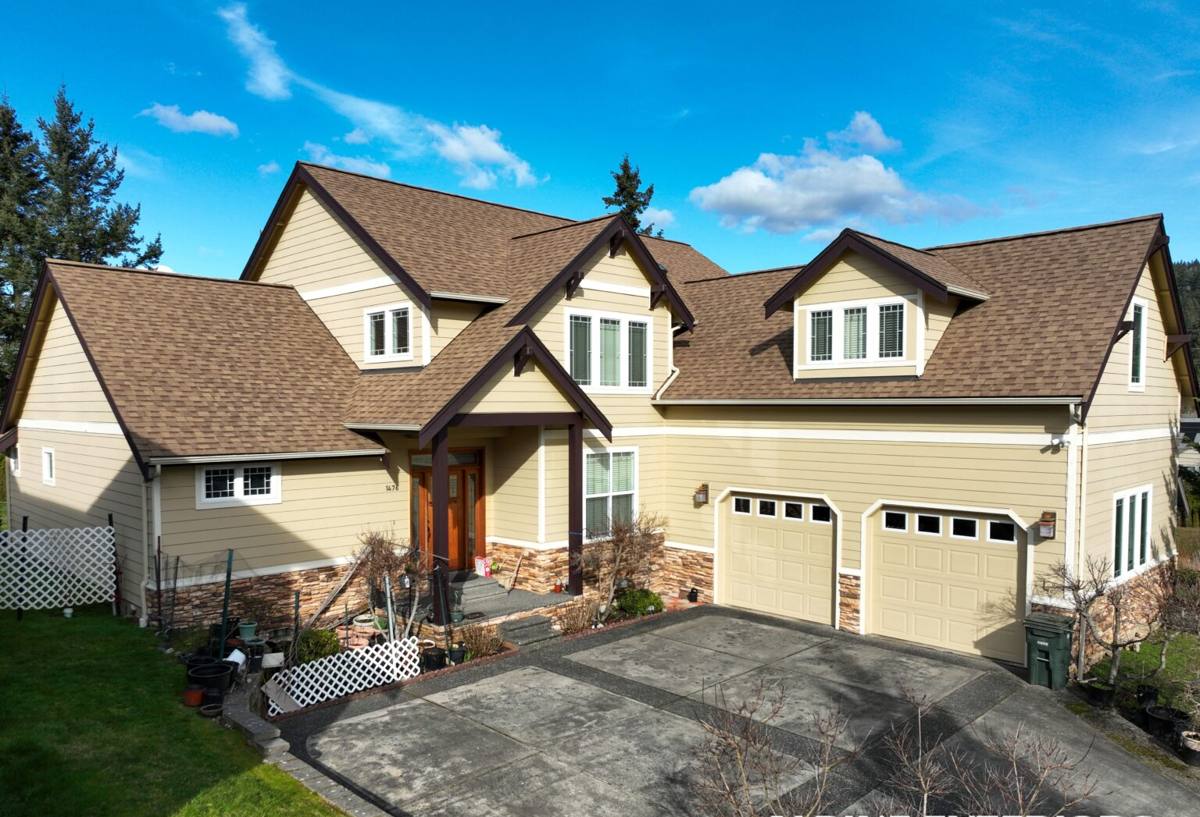
What Salt Air, Driving Rain, and Moss Season Do to a Roof
Salt Air
Airborne salt accelerates corrosion on any exposed metal — flashing, fasteners, vent caps, and gutter hardware. Over years, cheap or mismatched metal components pit and weaken faster here than they would even fifty miles further inland. It's a slow process, which is exactly why it gets overlooked until a leak shows up at a flashing seam that's quietly failed.
Driving Rain
Wind-driven rain doesn't just test how watertight your shingles are — it tests every transition point on the roof: valleys, hip lines, chimney flashing, skylight curbs, and the edges where the roof meets siding or trim. A roof that would perform fine in a calm, straight-down rain climate can still leak here if those transitions aren't detailed correctly.
Moss Season
Moss needs shade, moisture, and organic debris to establish itself, and this region hands it all three for a large part of the year. Once moss gets a foothold, it holds moisture against the roofing material, lifts shingle edges, and works its way under the surface — turning a cosmetic issue into a structural one if it's left alone long enough.
Signs an Alger Home Needs a New Roof, Not Another Repair
- Shingles that are cupping, cracking, or losing granules in patches rather than just at the ridge
- Moss or algae staining that comes back within a season or two of cleaning
- Soft spots or sagging when walked on, especially near valleys or old repair patches
- Daylight visible through the roof deck from the attic, or damp insulation after storms
- A roof that's had more than two or three patch repairs in the last several years
- Flashing around chimneys, vents, or skylights that's rusted, lifted, or was never properly stepped in
- A roof nearing or past the manufacturer's expected service life for its material
One or two of these on their own might mean a repair is enough. Several together, especially on a roof already past mid-life, usually means repairs are just delaying the inevitable at increasing cost.
What a Correct Roof Installation Actually Involves
A new roof is more than shingles nailed to plywood. In this climate especially, the parts you don't see matter as much as the parts you do.
Tear-Off and Deck Inspection
We remove the old roofing down to the deck rather than layering over it, which lets us actually inspect the sheathing for rot, soft spots, or delamination — common where old roofs have been quietly leaking at valleys or penetrations. Damaged decking gets replaced before anything new goes down; installing over a compromised deck just hides the problem.
Underlayment
Given how much wind-driven rain this area sees, underlayment choice matters more here than in calmer climates. Self-adhered ice-and-water membrane at eaves, valleys, and around penetrations gives a second line of defense if wind pushes water up under the shingle edge — which it will, eventually, on any roof.
Flashing
All flashing — step flashing along walls, valley flashing, chimney and skylight flashing, vent boots — should be new, correctly lapped, and made of metal that holds up to salt air rather than the thinnest option available. This is the single most common source of leaks on otherwise sound roofs, and it's the detail that separates a careful installation from a rushed one.
Ventilation
Proper intake and exhaust ventilation keeps the attic close to outdoor temperature, which reduces condensation, extends shingle life, and slows moss regrowth by keeping the roof deck drier. We size and balance ventilation as part of the install, not as an afterthought.
Fastening and Wind Rating
Correct nail placement and count, matched to the manufacturer's wind-rated installation instructions, is what keeps a roof intact during the region's wind-driven storms. Under-nailing is common on rushed jobs and rarely shows up as a problem until the first real windstorm.
Choosing a Roofing Material for This Climate
There's no single "best" roofing material — the right choice depends on your budget, your roof's pitch and exposure, and how much maintenance you're willing to do. Here's how the common options stack up for a home like yours in the Alger area.
| Material | Moss/Algae Resistance | Wind & Rain Performance | Typical Lifespan | Maintenance |
|---|---|---|---|---|
| Architectural Asphalt Shingle (with algae-resistant granules) | Good, if AR-rated | Strong when properly nailed and flashed | 25–35 years | Periodic moss treatment recommended |
| Standard 3-Tab Asphalt | Fair | Adequate, lower wind rating | 15–20 years | More frequent moss/algae attention |
| Standing Seam Metal | Excellent — moss struggles to hold | Excellent | 40–60 years | Low |
| Cedar Shake | Poor without regular treatment | Moderate; sensitive to installation quality | 20–30 years with upkeep | High — regular treatment needed |
We're straightforward about trade-offs. Cedar shake looks great and has real appeal, but in a climate this damp it demands ongoing maintenance to keep moss and rot at bay — that's simply the nature of a natural wood product absorbing moisture, not a knock on the material itself. Metal costs more up front but asks the least of you afterward. Quality architectural asphalt with algae-resistant granules is the common middle ground for good reason: solid performance, reasonable cost, and it's forgiving if maintenance slips for a season.
Our Installation Process, Step by Step
- On-site inspection and estimate — we look at your current roof, attic ventilation, and any problem areas, and give you a written estimate with no pressure to sign on the spot.
- Material selection — we walk through options that fit your budget and your roof's exposure to wind and rain.
- Scheduling around weather — we plan the tear-off window carefully; an open roof deck and a sudden squall off the water don't mix, so we don't start a job we can't reasonably finish or dry-in before weather turns.
- Tear-off and deck repair — old roofing removed, deck inspected, any rot or soft spots replaced.
- Underlayment and flashing installed — ice-and-water membrane at vulnerable areas, new flashing throughout.
- Roofing material installed — per manufacturer specifications, including nailing pattern and wind-rated methods.
- Ventilation check and final walkthrough — we confirm intake/exhaust balance and walk the finished roof with you before calling the job done.
- Cleanup — magnetic sweep for stray fasteners and full debris removal from the property.
Ventilation and Moss Prevention: The Half of the Job Most Homeowners Never See
A brand-new roof with poor attic ventilation will still trap moisture, run warmer and more unevenly than it should, and give moss the damp conditions it needs to return faster than it would on a well-ventilated roof. This is the piece that gets skipped on rushed or budget installs because it doesn't show up in a driveway photo — but it's directly tied to how long your new roof actually lasts and how often you'll be dealing with moss.
We also talk with homeowners about simple habits that extend a new roof's life in this climate: keeping gutters clear so water doesn't back up under the eaves, trimming back overhanging branches that shade the roof and drop debris, and scheduling a gentle moss treatment (not pressure washing, which can strip granules) every year or two depending on how shaded your roof is.
What a New Roof Costs — and What Drives the Price
Every roof is different, so we won't quote a number here that doesn't apply to your home. What we can do is explain what actually moves the price up or down.
| Factor | Effect on Cost |
|---|---|
| Roof size and number of stories | More material and labor; multi-story adds access complexity |
| Roof pitch and complexity (valleys, dormers, chimneys) | Steeper and more cut-up roofs take more time and flashing detail |
| Material choice | Standard asphalt costs less up front than metal or cedar |
| Deck condition | Rot or soft decking found at tear-off adds repair cost, usually minor relative to the whole job |
| Tear-off vs. layover | Full tear-off costs more than layover but is the only way to properly inspect and prep the deck |
| Access and staging | Steep sites or limited driveway/yard access can add setup time |
We give a firm written estimate after seeing the roof in person — not a phone-quoted number — so you know what you're actually paying for before work starts.
Why a Crew That Already Works Alger Matters
Roofing crews that mostly work drier, calmer inland areas sometimes bring inland habits with them — lighter underlayment, standard nailing patterns instead of wind-rated ones, flashing details that would be fine somewhere else but aren't built for this climate. A crew that regularly works homes near Sudden Valley and the surrounding Whatcom County area already knows to spec for salt air, driving rain, and moss, because they see what happens to roofs that weren't built for it.
That familiarity also means knowing which parts of a roof in this area tend to be problem spots — north-facing slopes that stay shaded and mossy longer, valleys that catch the brunt of wind-driven rain, older homes with ventilation that was never adequate to begin with. It's the difference between a roof that's technically installed to code and one that's actually built for where it sits.
A Few Things to Ask Before Committing to a New Roof
- Will the deck be fully torn off and inspected, or is this a layover?
- What underlayment is being used at eaves, valleys, and penetrations?
- Is the shingle or metal product algae-resistant or coated for this climate?
- How will attic ventilation be assessed and addressed, not just the roofing surface?
- What's the manufacturer's warranty, and does it require a certified installer to stay valid?
- Is the estimate written, itemized, and based on an in-person inspection?
If a contractor can't answer these plainly, that's worth noting before you sign anything.
If your roof is showing its age or you just want an honest opinion on whether repair or replacement makes more sense for your Alger home, we're happy to take a look. Fill out the form below for a free, no-pressure estimate — we'll tell you what we actually see, not just what sells a job.