 Sudden Valley Siding
 Composite Decking Built for the Barkley Area
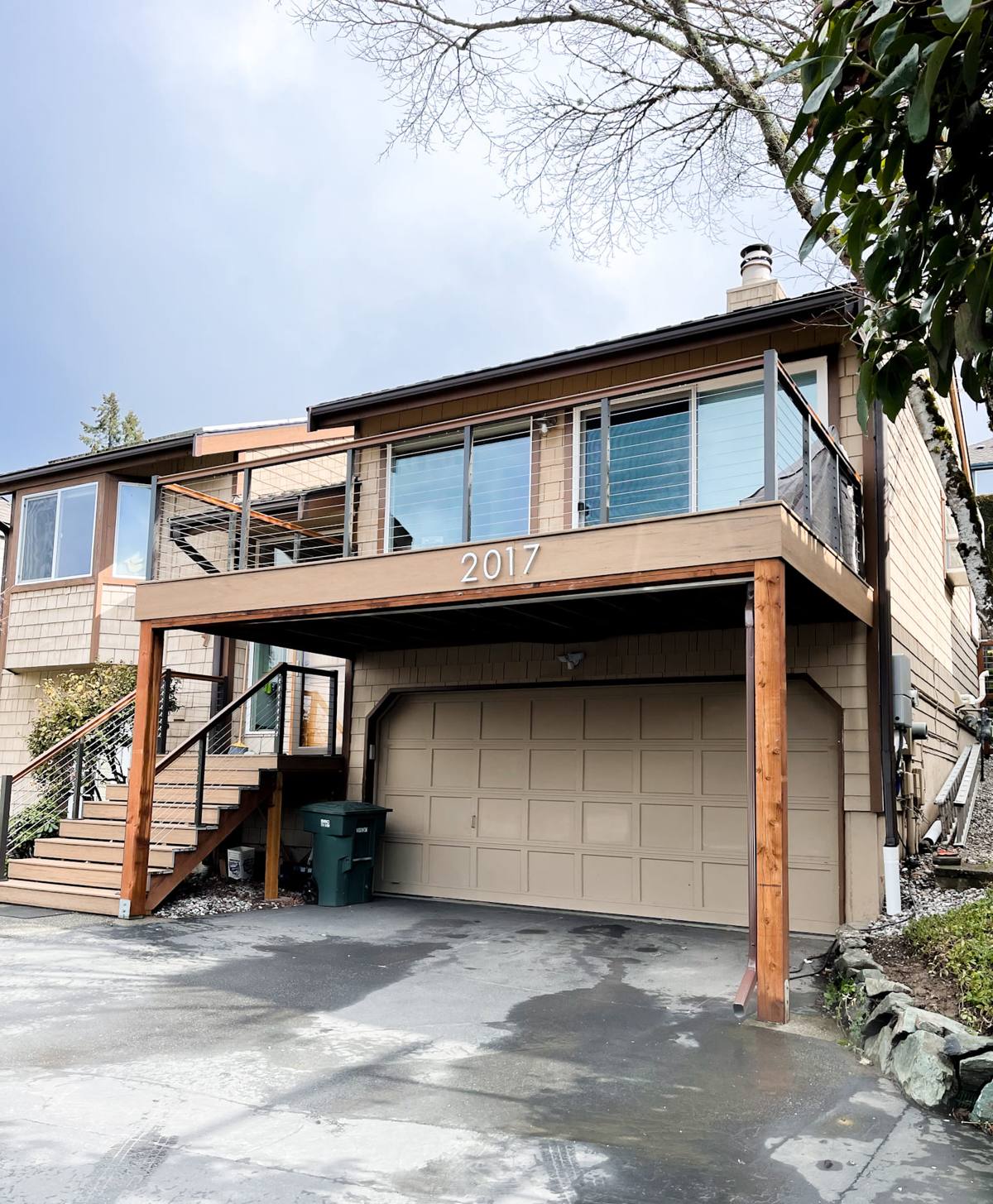
Homes in the Barkley area sit in one of the wetter corners of Washington, and a deck here has to earn its keep for most of the year, not just a few dry summer months. Composite decking has become the default choice for a lot of Barkley homeowners for good reason: it doesn't need annual staining, it doesn't splinter, and it holds up to the freeze-thaw swings and long damp stretches that wear down a wood deck fast. But "composite" isn't one product — it's a category with real differences in how boards are made, how they're fastened, and how well they actually shed water and resist moss over a Whatcom County winter. We install composite decking as a system, not just a set of boards screwed to joists, because in this climate the parts you don't see — framing, flashing, airflow — decide whether the deck still looks good in year eight.
What Local Weather Does to a Deck
Driving rain, long stretches of overcast damp, and a moss season that can run from fall through spring all put stress on a deck surface and substructure. None of that is unique to Barkley, but it's more persistent here than in drier parts of the state, and it shows up in predictable ways:
Moss and Algae
Composite surfaces are more moss-resistant than bare wood, but they're not moss-proof. Moss and algae need moisture and low light to take hold, and a deck that's shaded by trees, walled in by fencing, or built without gaps for airflow will grow moss regardless of the decking brand. The board matters less here than the layout — proper spacing, drainage, and sun exposure do more work than any additive in the plastic.
Driving Rain and Standing Water
Wind-driven rain gets up under railings, into fastener holes, and along any spot where two boards butt together without a proper gap. Composite boards don't rot the way wood does, but water that can't drain still finds the substructure underneath, and that's where problems actually start.
Freeze-Thaw and Seasonal Movement
Whatcom County doesn't see brutal winters, but it does see repeated freeze-thaw cycles through the colder months. Composite boards expand and contract with temperature and moisture more than people expect. Gaps that are cut too tight in July can buckle in January; gaps cut too wide leave a sloppy-looking deck. Getting the spacing right for our climate, not a manufacturer's generic chart, is part of doing the job correctly.
What a Correctly Installed Composite Deck Involves
A lot of deck failures aren't decking failures — they're framing and moisture-management failures underneath a perfectly good board. Here's what we treat as non-negotiable on every install:
- Pressure-treated or rated framing sized and spaced to the composite manufacturer's span requirements, which are often tighter than typical wood-deck spacing.
- Joist tape over every top edge of the framing, so fastener penetrations don't become entry points for water into untreated wood fibers.
- Proper ventilation underneath the deck — skirting and low clearance without airflow is one of the most common causes of trapped moisture and premature substructure rot in this climate.
- Hidden fastener systems or manufacturer-approved screws, installed at the specified spacing so boards can move slightly with temperature without cracking or popping loose.
- Consistent board gapping calculated for the install season and expected moisture range, not just eyeballed.
- Ledger board flashing where the deck attaches to the house, since this is the single most common source of hidden water damage on any deck, composite or wood.
- Railing posts through-bolted to solid blocking, not just toe-screwed into rim joists.
Skip any one of these and the deck can still look fine on install day. The problems show up two, four, six years later — and by then they're usually hidden under the boards.
Composite Board Types: What's Actually Different
Homeowners often assume all composite decking is basically the same product at different price points. It isn't. The core material and cap technology change how the board performs in a wet, low-light climate like ours.
| Board Type | How It's Made | Moisture Behavior | Best Fit For |
|---|---|---|---|
| Uncapped wood-plastic composite | Wood fiber blended with plastic, no protective outer layer | Can absorb moisture at the surface over time, more prone to fading and mold in shaded, damp areas | Budget-conscious projects with good sun exposure and airflow |
| Capped composite | Wood-plastic core with a plastic cap layer bonded around most or all sides | Much better moisture and stain resistance; cap resists mold better than bare composite | Most Barkley-area decks, especially shaded or partially covered ones |
| Cellular PVC | All-plastic board, no wood fiber content | Essentially immune to moisture absorption and rot; lighter weight | Decks near heavy shade, moss-prone yards, or homes wanting the lowest possible maintenance |
We don't push one brand over another — we walk each homeowner through which board class fits their site conditions, their budget, and how much sun the deck actually gets, since that's the biggest single factor in how much moss and algae maintenance a deck will need down the road.
Our Process on a Barkley Composite Deck
- Site walk and layout. We look at sun exposure, drainage slope, tree cover, and how the deck ties into the house before recommending a board type or layout.
- Framing assessment or rebuild. If it's a replacement, we evaluate whether the existing substructure is sound enough to keep or needs to come out. Reusing bad framing under new composite boards is a shortcut we don't take.
- Moisture management first. Joist tape, ledger flashing, and drainage details go in before a single composite board is cut.
- Board install with climate-adjusted spacing. Gaps are set for our seasonal moisture swings, not a one-size-fits-all spec sheet.
- Railing and fastening. Through-bolted posts, manufacturer-approved fastener systems, and a final check for squeak points or movement.
- Walkthrough. We show the homeowner the finished deck, explain what routine care actually looks like, and answer questions before we consider the job done.
Keeping a Composite Deck Looking Good Through Moss Season
Composite decking cuts maintenance dramatically compared to wood, but "low-maintenance" isn't "no-maintenance" in this climate. A short seasonal routine keeps moss and mildew from getting a foothold:
- Sweep leaves and debris off the deck regularly in fall — trapped organic matter is what moss actually feeds on.
- Rinse the surface with a garden hose every few weeks during the wet season; avoid pressure washers on composite unless it's a wide-fan, low-pressure setting.
- Use a mild soap-and-water scrub (or a composite-safe deck cleaner) on shaded areas once or twice a year where moss tends to start.
- Keep nearby shrubs and tree limbs trimmed back so more light and airflow reach the deck surface.
- Check railing posts and fasteners annually for movement, especially after a hard winter.
- Clear debris from gaps between boards so water keeps draining the way it's designed to.
What Affects the Cost of a Composite Deck
| Factor | Why It Matters |
|---|---|
| Board type (capped vs. PVC vs. uncapped) | Material cost varies significantly, and it's the biggest line item on most jobs |
| Framing condition | A full substructure rebuild costs more than decking over sound existing framing, but it's often the right call on an older deck |
| Deck size and shape | Cutouts, angles, and multiple levels add labor time beyond simple square footage |
| Railing style | Composite or metal railing systems cost more than basic wood but need far less upkeep |
| Site access and elevation | Second-story decks, steep lots, and tight access all add labor |
| Drainage and flashing needs | Ledger flashing, under-deck drainage, or grading corrections add cost but prevent bigger repairs later |
We give honest, itemized estimates so homeowners can see exactly where the money goes rather than a single lump number.
Why a Crew That Already Works in Barkley Matters
Deck framing and spacing specs that work in a dry climate can fail here. A crew that already builds and repairs decks around Whatcom County knows to gap boards for our humidity swings, vent framing for our damp season, and flash ledgers for driving rain that comes from the water side more than straight down. That local pattern recognition — knowing which corners of a yard hold moisture, which framing details actually matter in this climate, and how a deck ages here versus somewhere drier — comes from doing this work in these conditions repeatedly, not from a generic install manual.
Get a Free Estimate
If you're planning a new composite deck or replacing an aging one in Barkley, we're happy to walk the site, look at drainage and sun exposure, and give you a straightforward, no-pressure estimate. Fill out the form below and we'll get back to you to schedule a time.