 Sudden Valley Siding
 Siding Repair That Actually Fixes the Problem
A lot of siding repair calls in Bellingham start the same way: a homeowner notices one bad spot — a soft panel near a downspout, a stained section under a window, a corner that's started to swell — and wants it patched. That's a reasonable instinct, and sometimes a clean, well-matched patch is exactly the right call. But siding damage in this part of Whatcom County rarely shows up in isolation. Salt-tinged marine air, wind-driven rain off the bay, and a moss season that runs most of the year on shaded walls all work on a house continuously, and by the time damage is visible on the surface, it's usually been developing underneath for a while. Repairing the visible spot without understanding why it failed there just buys time before the next spot shows up nearby.
We install and repair James Hardie fiber cement siding exclusively, and our repair process is built around that same standard: figure out what actually caused the failure, fix that, and only then repair or replace the affected boards. That's a different approach than a quick patch-and-paint, and it's the reason repairs we do tend to stay fixed.
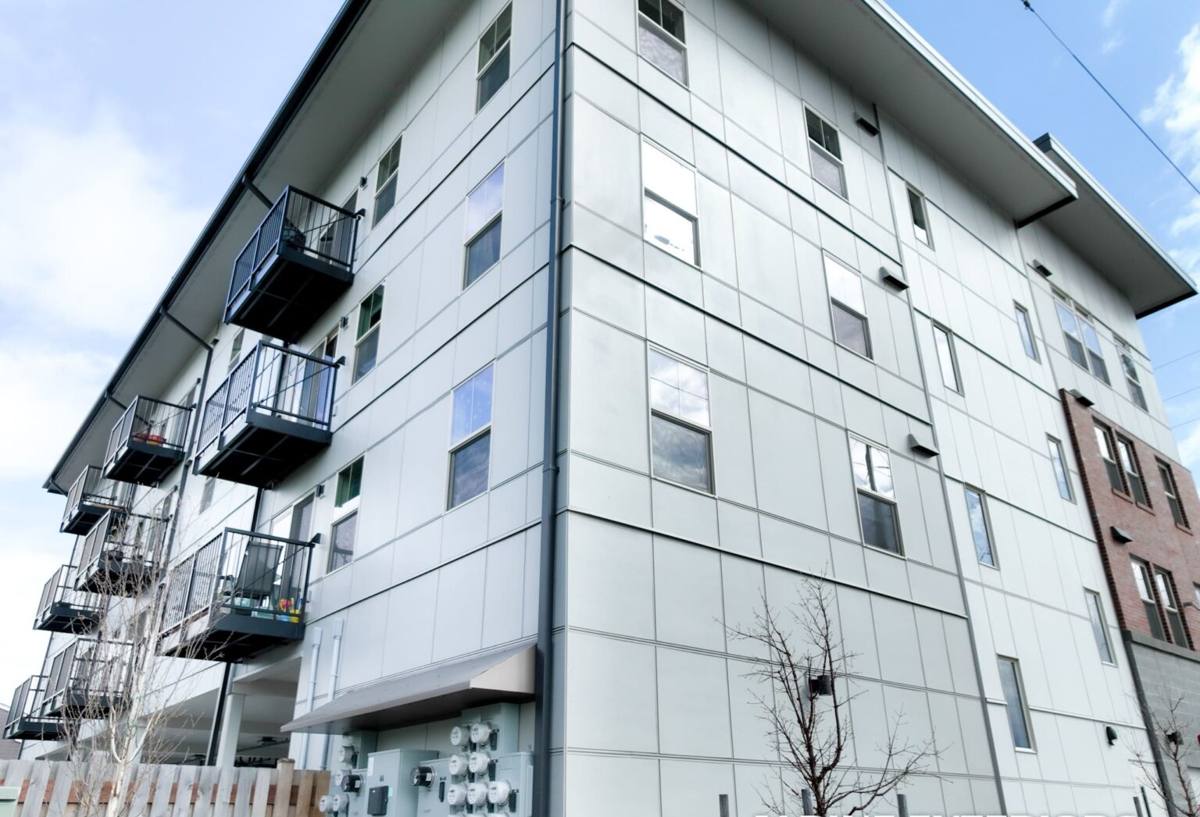
Why Bellingham Homes Need a Different Repair Approach
Salt Air and Slow Corrosion
Homes closer to Bellingham Bay and the Salish Sea deal with a steady low-level salt exposure that most siding repair guides written for drier inland climates don't account for. Salt accelerates corrosion on exposed fasteners, flashing, and trim metal, and a repair that reuses corroded fasteners or skips corrosion-resistant hardware is a repair that's already counting down to its next failure.
Wind-Driven Rain, Not Just Rain
Bellingham's rain doesn't fall straight down most of the year — wind off the water pushes it sideways and up under laps, trim, and joints that were only ever detailed to shed water falling vertically. A siding failure caused by wind-driven rain often shows up several feet from where the water actually got in, which is why tracing the real entry point matters more here than in calmer inland areas.
A Long, Heavy Moss Season
Shaded walls, north-facing exposures, and tree cover common around Bellingham keep siding damp longer than sun-exposed walls, and that extended dampness is exactly what moss, algae, and mildew need to take hold. Moss isn't just cosmetic — it holds moisture against the surface and, on the wrong material, that trapped moisture is what turns a maintenance issue into a structural one.
Common Siding Repair Issues We See in Bellingham
| Issue | Typical Cause | What Happens If Ignored |
|---|---|---|
| Soft or spongy panels | Moisture trapped behind siding, often from failed flashing or caulk | Spreads to sheathing and framing, turning a siding repair into a structural repair |
| Staining or streaking at seams | Water tracking along a lap or joint that isn't shedding correctly | Paint or finish failure, then moisture intrusion at the same spot |
| Cracked or chipped boards | Impact damage, or material that's become brittle with age and moisture cycling | Water entry point that worsens with every wet season |
| Moss and algae growth | Prolonged dampness on shaded or poorly ventilated walls | Holds moisture against the surface and accelerates finish failure underneath |
| Gaps at trim, corners, or window returns | Original installation shortcuts or material movement over time | Direct path for wind-driven rain to get behind the wall |
| Fastener corrosion or popping | Wrong fastener spec for a salt-air, high-moisture climate | Loose boards, wider gaps, and accelerated water entry at every popped fastener |
Why We Only Repair With James Hardie Fiber Cement
We don't install or repair with LP SmartSide, vinyl, Cemplank, Allura, primed spruce, or cedar. Those are legitimate products, and plenty of contractors work with them competently — but repair work is where the real-world differences between siding materials show up most clearly, and we made a professional decision to standardize on one system we trust completely.
Wood-based and engineered-wood products absorb moisture at cut edges and fastener holes, which means a damaged section often indicates moisture has already spread past what's visible. Vinyl can hide moisture problems behind an intact-looking surface, since the material itself doesn't show water damage the way a painted surface does — by the time it's visible, the sheathing underneath may already be compromised. Cedar needs a consistent sealing and repainting cycle to resist Bellingham's moisture, and a repair on a section that's fallen behind on that cycle often reveals more decay than expected once you open it up.
James Hardie's fiber cement core is dimensionally stable — it doesn't swell, cup, or absorb water at cut edges the way wood-based siding does, and the factory-applied ColorPlus finish means a correctly done repair can match the existing wall's color and sheen instead of leaving an obvious painted patch. That combination is a big part of why repairs on Hardie siding tend to be genuinely contained, rather than the first visible sign of a bigger problem.
What a Correct Siding Repair Actually Involves
A repair that only replaces the damaged board and caulks the edges looks finished, but it hasn't addressed why that board failed. A correct repair works through the whole assembly, not just the visible surface:
- Removing enough surrounding material to see the actual extent of moisture damage, not just the visible spot
- Checking the house wrap or weather-resistive barrier behind the damaged area for tears, gaps, or improper lapping
- Inspecting sheathing and framing underneath for softness or rot before any new siding goes back on
- Correcting the flashing, caulking, or drainage detail that let water in, not just replacing the board it damaged
- Matching replacement boards to the existing ColorPlus finish so the repair doesn't stand out as a patch
- Using corrosion-resistant fasteners at correct spacing, especially important on homes closer to the water
- Re-checking the surrounding area once repairs are complete to confirm water is shedding correctly, not just that the hole is covered
Skipping the diagnostic step is the single most common reason a siding repair doesn't hold. A board can be replaced perfectly and still fail again in two years if the flashing detail or drainage gap that caused the original damage was never corrected.
Our Bellingham Siding Repair Process
Inspection and Diagnosis
We start by looking at the damaged area and its surroundings — not just the spot you called about. Because Bellingham's climate pushes water sideways and holds moisture longest on shaded walls, damage often traces back to a cause that isn't directly above or below where it's visible. We check nearby flashing, trim, window and door transitions, and any orientation that gets heavier weather exposure.
Determining Repair vs. Replacement
Some damage is isolated and a targeted repair is the right, cost-effective call. Other times, what looks like a single bad spot is one visible symptom of a wall assembly problem that's affecting a wider area, and patching it would just mean doing the same work again in a year or two. We'll tell you honestly which situation you're in and why, before any work starts.
Correcting the Underlying Cause
Before any new siding goes back up, we fix what let water in — that might be a flashing detail, a caulk joint that was never sealed correctly, a drainage gap that got closed off, or a fastener issue. This step is the difference between a repair that lasts and one that's a temporary cover-up.
Matched Replacement and Finish
Where boards need to be replaced, we match them to your existing Hardie ColorPlus finish as closely as the product line allows, so the repaired section blends into the wall rather than reading as an obvious patch.
Final Check
We walk the repaired area with you, explain what caused the original damage and what we did to correct it, and point out anything else on the wall worth keeping an eye on going forward.
When to Repair vs. When to Consider Replacement
Not every damaged wall needs full replacement, and not every siding job should be treated as a simple patch. A few honest guidelines:
- Isolated damage on siding that's otherwise sound and well-installed is usually a good candidate for a targeted, matched repair
- Damage that shows up in multiple spots across the same wall or orientation often points to a systemic issue — a drainage or flashing problem — that repair alone won't solve for good
- Siding that's failing due to the underlying material itself (chronic moisture absorption in aging wood-based or primed products, for example) may cost more to keep patching over time than to replace with a material suited to this climate
- Age matters: older siding nearing the end of its realistic service life is a different conversation than a newer wall with one localized issue
We'll give you a straightforward assessment of which category your home falls into rather than defaulting to the answer that's better for us.
Cost Factors for Siding Repair in the Bellingham Area
Repair costs vary more than replacement costs, because so much depends on what's found once the damaged area is opened up. A few things that move the price on a given repair:
| Factor | Why It Matters |
|---|---|
| Extent of hidden moisture damage | Sheathing or framing repair adds real cost beyond siding replacement |
| Number and location of affected areas | Multiple spots, especially on hard-to-access walls, add labor time |
| Color and product matching | Matching an older Hardie installation's finish can require sourcing a specific ColorPlus match |
| Underlying cause correction | Fixing flashing or drainage issues is part of a correct repair, not an optional add-on |
| Wall access and height | Second-story or hard-to-reach areas add labor and equipment time |
We'll give you real numbers after seeing the actual damage, not a rough estimate based on square footage — a small patch and a hidden moisture problem behind a similar-looking spot can cost very differently.
Why Hire a Crew That Already Works Bellingham
Siding repair rewards local, climate-specific experience more than almost any other exterior trade, because the causes of damage in Bellingham aren't generic — they're specific to salt air, wind-driven rain direction, and moss patterns tied to this area's shade and moisture cycles. A crew that's diagnosed siding failures across Bellingham through multiple wet seasons already knows which orientations tend to hide moisture problems, which flashing details are most commonly missed on homes built to older or looser standards, and what a correctly repaired wall should look and perform like five and ten years out — not just on the day the work is finished.
Maintaining Repaired Siding Going Forward
Once a repair is done correctly, keeping it that way doesn't take much, but a few habits go a long way in this climate:
- Rinse moss and algae growth off shaded walls periodically rather than letting it build up over multiple seasons
- Keep gutters and downspouts clear so water isn't overflowing directly onto siding below
- Trim back vegetation that's shading walls or holding moisture against the siding
- Have a quick visual check done after major storms, especially on walls that face prevailing wind and rain
- Address small issues — a hairline crack, a spot of staining — before they've had a chance to sit through a wet season
If you're dealing with damaged siding on a Bellingham home, we're happy to take a look, explain honestly what we find and why it happened, and give you a straightforward, no-pressure estimate for fixing it right. There's a form below — reach out and we'll set up a time to come take a look.