 Sudden Valley Siding
 Building a Deck That Actually Holds Up in Sunnyland
Sunnyland sits close enough to the water that salt air is a daily fact of life, not an occasional nuisance. Add Whatcom County's long stretch of driving rain and the moss season that follows it, and you've got a climate that's hard on any exterior structure — decks included. A deck built with methods and materials suited to a drier climate will show problems here faster than most homeowners expect: soft spots in the framing, fastener corrosion, slick green film on the boards by November, and railings that start to wobble within a few seasons. Building correctly for this specific environment isn't an upsell — it's the difference between a deck that needs real repair work in five years and one that's still solid in twenty.
This page covers what a deck actually needs to hold up in Sunnyland, what a correct build involves from the ground up, and how we approach the work when we're out on your property.
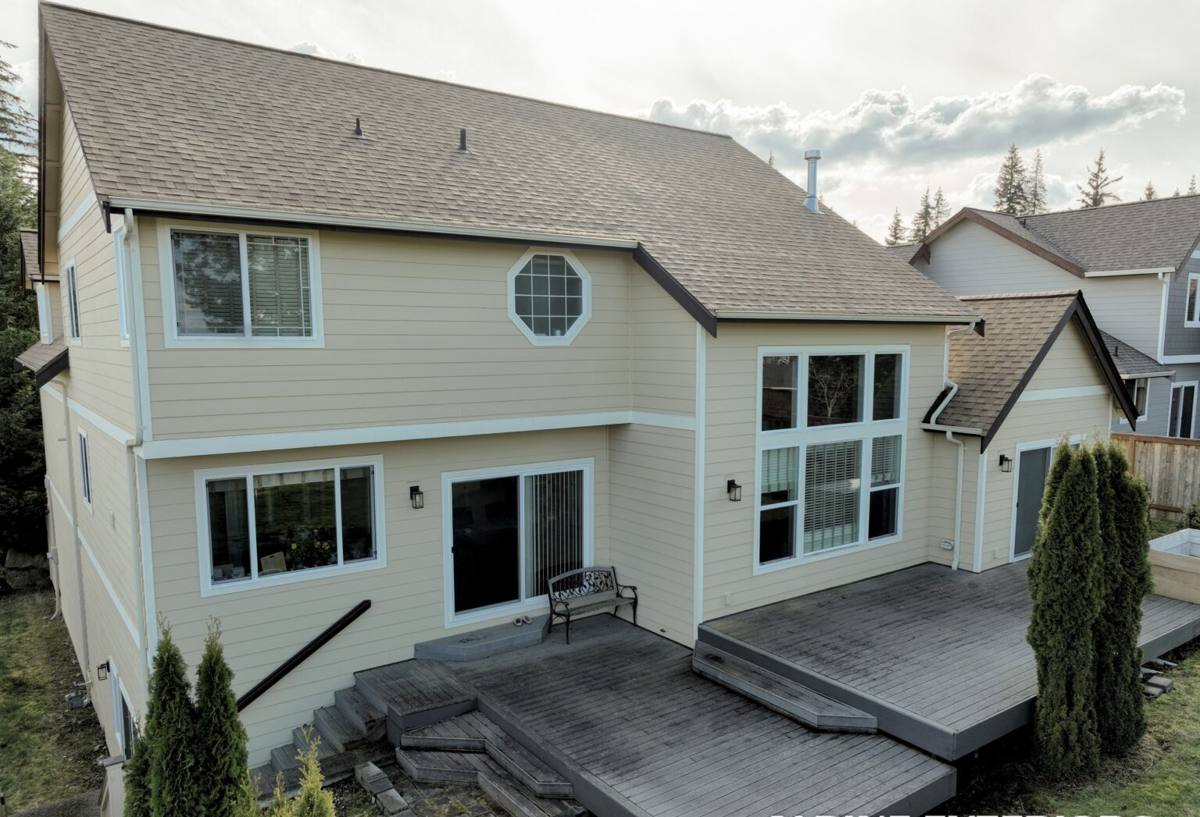
What Sunnyland's Climate Does to an Ordinary Deck
Salt Air and Metal Fatigue
Proximity to the water means airborne salt settles on everything outdoors, including your deck's hardware. Standard fasteners and connectors corrode faster near the coast than they would inland, and corrosion in structural hardware is one of the least visible, most serious problems a deck can develop — you often can't see it until a joist hanger or post base has already lost most of its strength.
Driving Rain and Water Intrusion
Rain that comes in sideways, which is common through fall and winter in this part of Whatcom County, finds its way into gaps that would stay dry in a calmer climate. That means ledger board connections, stair stringers, and any spot where the deck meets the house siding need real attention to flashing and water diversion — not just caulk.
Moss, Algae, and Surface Decay
Long stretches of damp, shaded weather give moss and algae months to establish themselves on deck boards, especially in spots that don't get much direct sun. Beyond being a slip hazard, moss holds moisture against the wood surface, which accelerates rot in real wood decking and can dull or discolor even low-maintenance composite boards if they're not designed to shed water well.
What a Correctly Built Deck Needs Here
None of this means a deck can't hold up in Sunnyland — it means the build has to account for these conditions from the first footing to the last railing baluster. A correctly built deck for this area typically includes:
- Stainless steel or heavy hot-dip galvanized fasteners and structural connectors rated for coastal/high-moisture exposure, not standard interior-grade hardware
- Proper ledger board flashing that diverts water away from the house band joist, with a moisture barrier between the ledger and the wall
- Joist spacing and blocking sized to the actual decking material being used, not just code minimums
- Footings set below frost depth and sized for the region's soil conditions
- Gaps and airflow beneath the decking surface so boards can dry out between rain events instead of staying saturated
- Decking material chosen with moss and algae resistance in mind, not just appearance
- Stair and railing hardware that won't loosen as wood expands and contracts with seasonal moisture swings
Skip any one of these and the deck will likely still look fine for a year or two — the problems that show up in this climate are usually structural and hidden before they're cosmetic and obvious.
Choosing Decking Material for This Climate
There's no single "best" decking material for every homeowner — it depends on budget, maintenance tolerance, and how much sun or shade the deck gets. Here's how the common options actually perform in a wet, moss-prone environment like Sunnyland's:
| Material | Moss/Algae Resistance | Maintenance | Typical Lifespan Here |
|---|---|---|---|
| Pressure-treated wood | Low — needs regular cleaning and sealing | Annual cleaning, re-sealing every 1–2 years | 10–15 years with upkeep |
| Cedar | Moderate — natural oils help but fade over time | Cleaning and oiling every 1–2 years | 15–20 years with upkeep |
| Composite decking | Good to very good, depending on the product's cap layer | Periodic washing, no sealing or staining | 25+ years |
| PVC decking | Very good — sheds water and resists organic growth well | Occasional washing | 25–30+ years |
We'll walk through the tradeoffs honestly during your estimate rather than steering you toward whatever's easiest to install. Real wood costs less upfront but asks for consistent maintenance in a climate that doesn't make maintenance easy to keep up with. Composite and PVC cost more initially but hold up with far less ongoing work — a meaningful factor when moss season comes around every single year.
Structural Details That Get Skipped on Rushed Jobs
A lot of deck problems we get called out to inspect trace back to shortcuts taken at the framing stage — the parts that are invisible once the decking boards go down. A few of the details that matter most:
Ledger Board Attachment
This is where the deck attaches to your house, and it's also the single most common source of water damage on older decks. Proper flashing, correct fastener spacing, and a gap or barrier that keeps water from tracking behind the siding are non-negotiable in a climate with this much rainfall.
Post Bases and Footings
Posts that sit directly on concrete or in standing water rot from the bottom up. Post bases that hold the wood above grade, combined with footings poured to the correct depth, keep moisture from wicking up into the structural posts.
Joist Hangers and Hardware Grade
Standard electro-galvanized hardware can start showing corrosion within a few years this close to the water. We use hardware rated for the exposure the deck will actually see, which costs more up front but avoids replacing connectors — and potentially rebuilding sections of the deck — down the line.
Our Process for Sunnyland Deck Projects
- Site visit and assessment. We look at sun/shade exposure, drainage patterns, existing structure if it's a rebuild, and how the deck will tie into your home.
- Honest material and design conversation. We walk through decking options, railing styles, and layout based on your budget and how you actually plan to use the space — not a one-size pitch.
- Permitting. Deck projects above certain heights or attached to the house typically require a permit through the county or applicable jurisdiction. We handle that process rather than leaving it to you to figure out.
- Framing built to the exposure. Footings, ledger flashing, joists, and hardware selected for coastal moisture and rain exposure, not generic minimums.
- Decking, railing, and finish work. Boards, railings, stairs, and any built-in features installed with attention to drainage and airflow underneath.
- Final walkthrough. We go over the finished deck with you, including what maintenance (if any) the material you chose will need going forward.
Permits and Local Code Considerations
Most attached decks and any deck built above a certain height off grade require a building permit in Whatcom County, and inspections typically happen at the footing and framing stages before the decking goes on. Requirements can vary depending on your specific property and whether Sudden Valley Community Association or another local review applies, so we confirm the exact requirements for your address before work starts rather than assuming. Skipping permits on a structural project like a deck isn't worth the risk — it can complicate a home sale later and, more immediately, means no third-party check that the footings and framing were actually done correctly.
Maintaining a Deck Through Moss Season
Whatever material you choose, a little seasonal attention goes a long way in this climate. A simple maintenance routine for Sunnyland conditions:
- Clear leaves and debris from between boards and off the surface before fall rains set in
- Rinse or wash the deck surface at least once before winter and once in spring to knock back moss and algae before it establishes
- Check that gaps between boards haven't closed up with debris, which traps moisture against the wood
- Inspect railings and stair connections annually for looseness — seasonal wood movement can work fasteners loose over time
- For wood decking, plan on cleaning and re-sealing on a 1–2 year cycle rather than waiting until it visibly needs it
- Keep gutters and downspouts near the deck clear so runoff isn't dumping extra water directly onto or under the structure
Cost Factors to Expect
Every deck project is different, but the main cost drivers are fairly consistent. Rough, honest ranges depend heavily on size, material, and site conditions — this table is meant to help you think through the variables, not to serve as a quote.
| Factor | Why It Affects Cost |
|---|---|
| Decking material | Pressure-treated wood costs least upfront; composite and PVC cost more but need less upkeep |
| Height and footing depth | Taller decks and deeper footings mean more structural work and material |
| Railing style | Basic wood railing costs less than metal, cable, or glass systems |
| Site access and grading | Sloped or hard-to-access sites take longer to frame and pour footings |
| Attached vs. freestanding | Attached decks need ledger flashing work and typically a permit; freestanding decks skip the ledger connection |
Why Local Experience on This Job Matters
A deck builder who hasn't worked in this specific stretch of Whatcom County can still frame a deck that's technically up to code — but "up to code" and "built for the actual conditions here" aren't always the same thing. Knowing how far salt air travels inland in Sunnyland, how much shade a given lot typically holds through the wet months, and which hardware grades hold up rather than corrode within a few years all comes from doing this work locally, repeatedly. That local pattern recognition is what keeps a deck from turning into a five-year repair project instead of a twenty-year investment.
If you're planning a new deck or replacing one that's showing its age, we're happy to take a look and give you a straightforward, no-pressure estimate — fill out the form below to get started.