 Sudden Valley Siding
 Why Roofs Around Geneva Wear Differently
Geneva sits in the wooded, lake-adjacent terrain near Sudden Valley, and that setting is exactly why roofs here don't age the way they do in a dry, open subdivision. Tree cover keeps roof surfaces shaded and damp for hours after everything else has dried out. Whatcom County's marine climate adds its own pressure on top of that: moisture-laden air moving in off the Sound carries salt and humidity that settles on shingles, flashing, and fasteners year-round, and it doesn't take a beachfront lot to feel the effect. Add a long, wet moss season that can run from fall through spring, and you've got a roof that's under more sustained biological and moisture stress than most manufacturers' warranty testing ever accounts for.
None of that means a roof in Geneva is doomed to fail early. It means the installation has to be done with those specific conditions in mind — the right underlayment, the right ventilation, and attention to details that a roof in a drier part of the state could get away without. That's the difference between a new roof that looks good for two years and one that actually performs for its full service life.
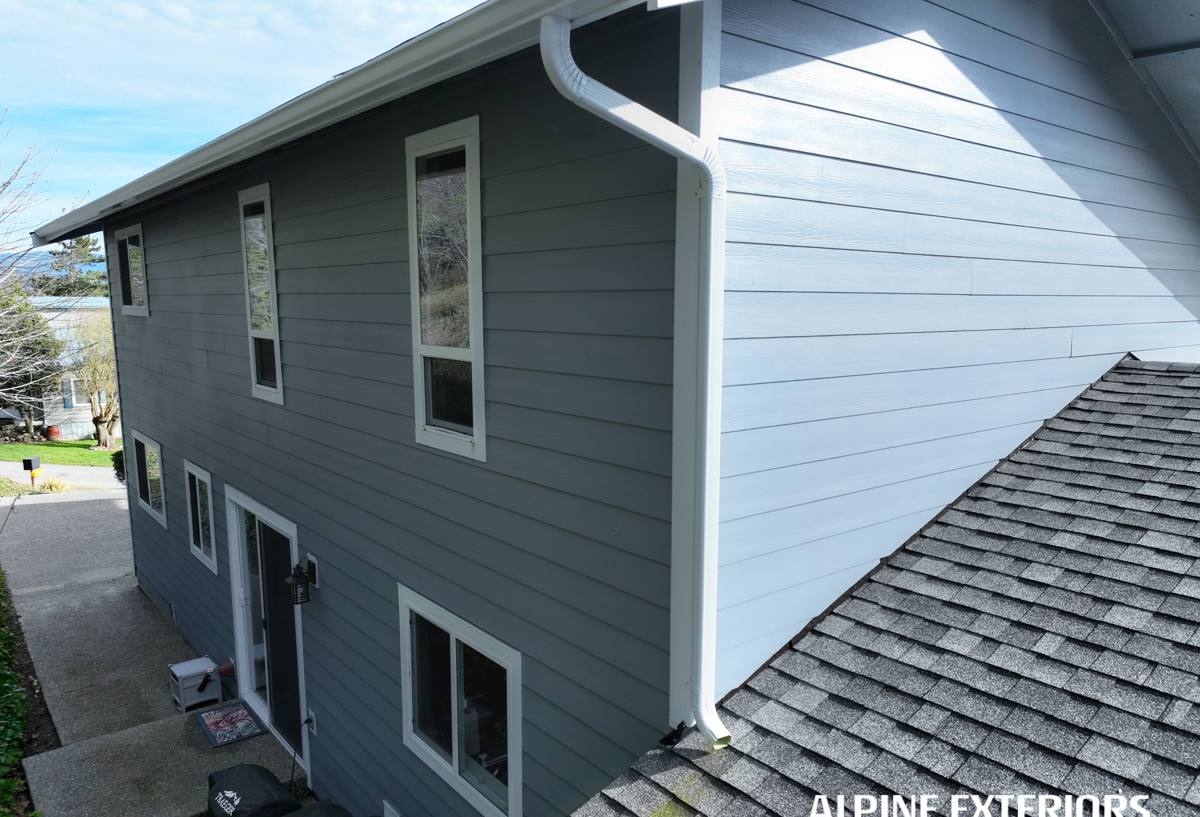
Signs Your Geneva Home Needs a New Roof
Most homeowners don't think about their roof until something goes wrong inside the house. By then, the roof itself has usually been telling you for a while. Before you commit to a full replacement, it's worth knowing what we actually look for during an inspection:
- Shingles that are cupping, curling at the edges, or missing granules in patches
- Moss or algae buildup that keeps returning within months of cleaning
- Soft, spongy spots on the roof deck when walked, or visible sagging between rafters
- Daylight visible through the attic sheathing, or damp insulation after a storm
- Rusted, lifted, or missing flashing around chimneys, skylights, and roof-to-wall transitions
- Granules collecting in gutters and downspouts, especially after wind or heavy rain
- A roof that's simply reached the back half of its expected lifespan for its material
Any one of these on its own might just mean a repair. Several at once, or a roof that's already 18-25 years old, usually means the cost math favors a full new install over chasing patches.
What a Correct New Roof Installation Actually Involves
Tear-Off and Deck Inspection
We don't install new roofing over old material, and we don't recommend it — trapped moisture between layers is one of the most common causes of premature failure in this climate. A full tear-off lets us inspect the deck itself, which is where a lot of hidden moss-season and rain damage actually lives. Soft or delaminated sheathing gets replaced before anything new goes down, not covered up.
Underlayment and Ice-and-Water Protection
Given how much rain and shade a Geneva roof deals with, we don't treat underlayment as an afterthought. A synthetic, moisture-resistant underlayment goes down across the full deck, with self-adhering ice-and-water membrane at eaves, valleys, and any low-slope transitions — the spots where wind-driven rain and standing moisture cause the most trouble.
Flashing Details
Flashing failures, not shingle failures, are behind most of the leaks we get called out to fix. Chimneys, skylights, dormers, and wall intersections all get new flashing as part of a proper install, formed and sealed to actually shed water rather than just cosmetically covering the joint.
Ventilation
A roof that can't breathe traps heat and moisture in the attic, which accelerates both shingle aging and moss growth on the roof surface above it. We balance intake and exhaust ventilation as part of every installation — it's not an upsell, it's a condition of the material warranties actually holding up.
Roofing Material Options for Whatcom County Homes
There's no single "best" roofing material — the right choice depends on your home's exposure, roof pitch, budget, and how much maintenance you're willing to keep up with. Here's how the common options actually compare for a home in this region:
| Material | Typical Lifespan | Moss/Moisture Behavior | Maintenance |
|---|---|---|---|
| Architectural (dimensional) asphalt shingle | 25-30 years | Good with algae-resistant granules; needs periodic moss treatment in shaded areas | Low to moderate |
| Standard three-tab asphalt shingle | 15-20 years | More prone to curling and granule loss under prolonged moisture | Moderate |
| Standing-seam metal | 40-50+ years | Sheds moss and standing water very well; minimal organic growth | Low |
| Cedar shake | 20-30 years with upkeep | Attractive but requires diligent moisture and moss management in shaded, wet settings | High |
For a shaded, lake-influenced lot like many around Geneva, we generally steer homeowners toward architectural asphalt or standing-seam metal unless there's a strong aesthetic reason to consider cedar. It's not that cedar can't perform here — it's that the maintenance burden in a shaded, wet microclimate is real, and we'd rather set that expectation upfront than sell a product that needs more upkeep than most owners want to commit to.
What Actually Drives the Cost of a New Roof
Every roof is priced individually, but the same handful of factors move the number up or down on nearly every job we quote:
| Factor | Why It Matters |
|---|---|
| Roof size and number of planes | More square footage and more complex geometry mean more material and labor |
| Pitch and accessibility | Steep roofs and limited driveway/equipment access slow the job and add safety measures |
| Number of layers to remove | Tearing off two or three old layers costs more than a single-layer tear-off |
| Deck condition | Rotted or soft sheathing found during tear-off requires replacement before install |
| Material choice | Standard asphalt, architectural shingle, and metal sit at different price points |
| Flashing and penetrations | Chimneys, skylights, and multiple roof valleys add detail work and material |
We won't quote a price over the phone without seeing the roof — anyone who will is guessing, and that guess tends to grow once the crew is already on the roof. A proper estimate means someone walks your roof, measures it, and gives you a written scope tied to an actual number.
Our Installation Process, Start to Finish
- On-site inspection and measurement — we walk the roof, check the deck where accessible, and note flashing, ventilation, and drainage issues before quoting anything.
- Written estimate and material selection — you get a clear scope of work and a straightforward walkthrough of material options that fit your roof and budget.
- Scheduling around the weather — Whatcom County's wet season means we plan installs with realistic weather windows, not just a calendar date.
- Full tear-off and deck inspection — old material comes off, the deck gets inspected, and any damaged sheathing is replaced before we move forward.
- Underlayment, flashing, and ventilation installation — the parts of the job that don't show but determine whether the roof actually performs.
- New roofing material installed to manufacturer specification — proper nailing patterns, exposure, and sealing, not shortcuts that void the warranty.
- Cleanup and final walkthrough — site cleared of debris and nails, and we go over the finished roof with you before calling the job done.
Why a Crew That Already Works Geneva Matters
A roofing crew that regularly works the Geneva and Sudden Valley area already knows things that save time and prevent mistakes: how tree cover and roof orientation on lake-adjacent lots affect moss return, which underlayment and ventilation setups actually hold up through a full Whatcom County wet season, and how tight driveways and wooded lots affect equipment staging and material delivery. That local familiarity also extends to permitting — most full tear-off replacements in unincorporated Whatcom County require a building permit, and if your property falls under a community association, there may be additional guidelines on materials or roof color to check before work starts. We handle that process rather than leaving it for you to sort out mid-project.
It also means accountability. A crew that plans to keep working in this neighborhood for years has every reason to install the roof correctly the first time and to stand behind it if something comes up — not to disappear once the final payment clears.
Keeping Your New Roof Performing After Installation
A correctly installed roof still benefits from basic upkeep, especially in a moss-prone, shaded setting like much of the area around Geneva. Keep gutters clear so water isn't backing up under the roof edge. Have moss growth treated before it gets thick enough to hold moisture against the shingles rather than letting it shed. And have the roof looked at after any major windstorm — catching a lifted shingle or a dented flashing early is a five-minute fix; ignoring it through another wet season usually isn't.
If you're weighing repair versus replacement, or you just want a straight answer on what your roof actually needs, we're glad to take a look. Use the form below to request a free, no-pressure estimate.