 Sudden Valley Siding
 Why South Hill Siding Has to Work Harder
Homes in South Hill sit in one of the more demanding stretches of climate that Whatcom County throws at an exterior. Salt-laden air moves through the area, driving rain comes in sideways during fall and winter storms, and the tree cover that makes Sudden Valley such a nice place to live also means shaded, damp siding for long stretches of the year. That combination is what we mean when we talk about a "long moss season" — it isn't a two-month problem, it's closer to eight or nine months where conditions favor moss, algae, and slow moisture intrusion on anything that isn't built and installed to resist it.
Most siding failures we get called out to inspect in South Hill aren't dramatic. They're slow: a caulk joint that opened up two summers ago, a butt seam that was never flashed, paint that couldn't keep up with the moisture cycling through a shaded north wall. By the time a homeowner notices soft trim or peeling paint, the damage has usually been building for a while. That's the real argument for James Hardie fiber cement done correctly — not a marketing point, just what holds up here.
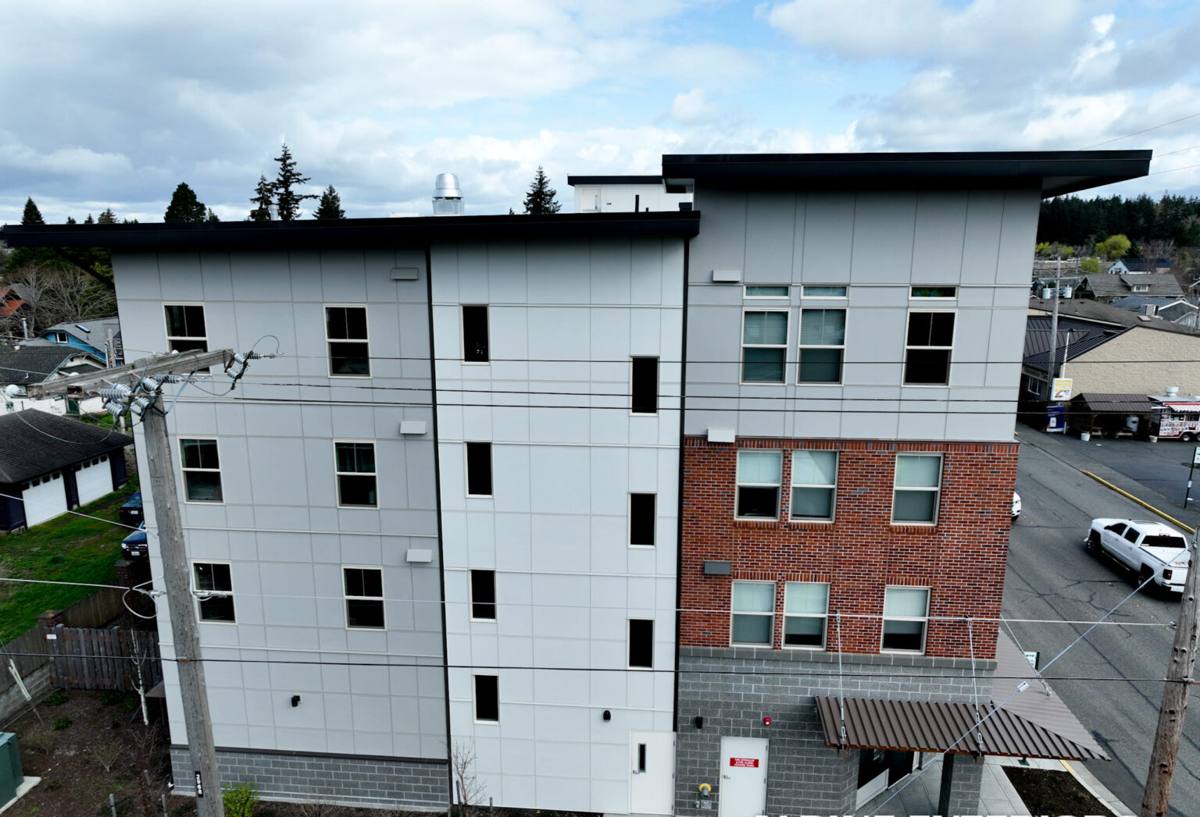
What James Hardie Fiber Cement Is Built to Handle
James Hardie siding is cement, sand, and cellulose fiber, cured into a dense, stable board. It doesn't absorb water the way wood-based products do, it doesn't warp or cup with humidity swings, and it's non-combustible. For a climate like ours — wet winters, damp shoulder seasons, salt air moving in off the water — dimensional stability matters more than most homeowners realize. A board that swells and shrinks with every wet-dry cycle is a board that eventually pulls fasteners loose and opens up joints, and every open joint is a place for moisture to get behind the cladding.
ColorPlus Finish vs. Field-Applied Paint
Most of what we install in South Hill uses Hardie's ColorPlus factory finish rather than primed board that gets painted on site. The finish is baked on in a controlled environment, adheres more consistently than a field-applied coat, and holds color and sheen longer under UV and moisture exposure. That matters directly for moss and mildew resistance — a tighter, more consistent finish gives organic growth less to grab onto and makes routine washing more effective, since you're cleaning a sealed surface instead of a porous one.
Product Line: Why HZ5 Matters Here
Hardie engineers its siding by climate zone. HZ5 is the line built for wetter, freeze-prone regions, with formulation and testing aimed at moisture exposure and impact resistance rather than just heat and dryness. For a South Hill property, that's the correct starting point — not because it's the premium option, but because it's the one actually engineered for the conditions the house sits in.
What a Correct Installation Actually Involves
Fiber cement is only as good as the install behind it. Hardie's own installation manual is detailed for a reason — this is a product that performs well when the details are followed and performs poorly when they're skipped, same as any cladding system.
Moisture Barrier and Sheathing Prep
Before any siding goes up, the weather-resistive barrier underneath has to be continuous and properly lapped, and any sheathing damage found during tear-off needs to be addressed, not covered over. In a climate that sees as much sustained rain as Whatcom County, this layer is doing more work than the siding itself — it's the actual water management system.
Flashing and Clearances
Every window, door, and roofline intersection needs proper flashing, and the siding needs correct clearance from grade, roofing, and decks — generally an inch or more where wood-adjacent materials would demand even more. Skipping clearance is one of the most common shortcuts we see on older installs, and it's a direct path to wicking moisture at the bottom edge of the board.
Fastening and Joints
Hardie specifies fastener type, spacing, and placement relative to board edges, and butt joints need to be treated correctly — either flashed or sealed per spec, not just butted and caulked as an afterthought. Caulk is a maintenance item, not a substitute for correct flashing; we install it as a backup, not a primary defense.
Our Process for a South Hill Job
- On-site assessment: we look at existing siding, trim, flashing, and any signs of trapped moisture before quoting anything.
- Scope and product selection: HZ5 board profile, exposure, and ColorPlus color are decided based on the specific elevations and exposure of the house.
- Tear-off and sheathing check: old cladding comes off and we inspect the sheathing underneath before anything new goes up.
- Weather barrier and flashing: continuous barrier installed or repaired, with flashing detailed at every penetration and transition.
- Siding installation: fastened and spaced to Hardie spec, with attention to clearances at grade, roof lines, and trim.
- Final walkthrough: a punch list review with the homeowner before we consider the job finished.
How Hardie Compares to Other Siding in This Climate
We only install James Hardie, but homeowners comparing options should understand where the real trade-offs sit. This isn't about any one product being bad — it's about what performs with the least maintenance burden in a wet, shaded, salt-touched climate like South Hill's.
| Material | Moisture Behavior | Moss/Algae Resistance | Maintenance | Typical Lifespan |
|---|---|---|---|---|
| James Hardie (HZ5, ColorPlus) | Dimensionally stable, doesn't absorb and swell | Sealed factory finish resists growth better than porous surfaces | Periodic washing, no repainting for years | Decades when installed to spec |
| Vinyl | Doesn't rot, but can warp or crack with temperature swings and impact | Grows moss/algae readily in shaded, damp areas | Regular washing; panels can't be spot-repainted | Variable, shorter in harsh exposure |
| LP SmartSide (engineered wood) | Wood-based; vulnerable at cut edges and joints if not perfectly sealed | Moderate; depends heavily on coating upkeep | Coating maintenance is ongoing | Shorter than fiber cement if maintenance lapses |
| Cedar | Absorbs moisture, needs consistent sealing/staining | Prone to moss and mildew without regular treatment | High — refinishing on a recurring cycle | Shorter without disciplined upkeep |
That maintenance column is the real story. Every material on that list can look good on install day. The difference shows up five and ten years later, in how much upkeep it takes to keep a shaded, rain-heavy South Hill elevation looking the way it did when it went up.
What Drives the Cost of a South Hill Hardie Project
| Factor | Why It Matters |
|---|---|
| Tear-off and sheathing condition | Rot or moisture damage found underneath the old siding adds repair scope before new siding can go up |
| Board profile and exposure | Lap width and reveal affect both material quantity and labor time |
| Trim and detail complexity | Multiple gables, dormers, or window trim mean more cutting, flashing, and finish work |
| Story height and access | Two-story walls and difficult site access add scaffolding or lift time |
| Color and finish | Factory ColorPlus colors vs. field-painted options affect material cost and long-term maintenance |
We give a straight number after seeing the house — not a phone estimate — because tear-off and sheathing condition alone can shift a project significantly, and we'd rather quote it accurately once than revise it later.
Keeping Your Siding Looking Right Through Moss Season
Even the right product needs basic upkeep. None of this is heavy lifting, but skipping it is how a good installation starts looking tired early.
- Rinse siding annually, focusing on shaded north- and west-facing walls where moss and algae take hold first
- Keep gutters clear so overflow isn't running down the siding face during heavy rain
- Trim back vegetation and tree cover that keeps a wall shaded and damp longer than it needs to be
- Check caulk joints at trim and penetrations every year or two, and re-caulk before gaps open up
- Walk the exterior after major storms and note anything that looks loose, cracked, or discolored
Why a Crew That Already Works in South Hill Matters
Installing Hardie correctly isn't unique to any one neighborhood, but knowing how a specific area behaves is worth something. A crew that's already worked houses in South Hill and around Sudden Valley knows which elevations tend to hold moisture longest, how the local permitting process runs in Whatcom County, and what tear-offs in this area typically turn up under the old siding. That's the difference between a generic install and one that accounts for how this particular stretch of climate actually treats a house over time.
We only install James Hardie. That's a deliberate standard, not a limitation — after years of tear-offs and repair calls on other materials, fiber cement done to spec is what we're willing to put our name behind in this climate.
If you're weighing a siding replacement in South Hill, we're glad to come take a look at your home, walk you through what we'd recommend and why, and give you a straight estimate — no pressure, no obligation. The form below is the easiest way to get that started.