 Sudden Valley Siding
 Siding in Columbia Has to Work Harder Than It Does Inland
Homes in the Columbia area of Sudden Valley sit in a stretch of Whatcom County where the siding on a house does more than look good — it stands between the framing and a climate that stays damp for most of the year. Salt-tinged air moving in off the water, wind-driven rain that doesn't fall straight down, and a moss season that can stretch from fall through spring all put steady pressure on exterior walls. A siding product that performs fine in a drier climate can fail quietly here, and by the time it shows on the surface, there's often already moisture damage behind it.
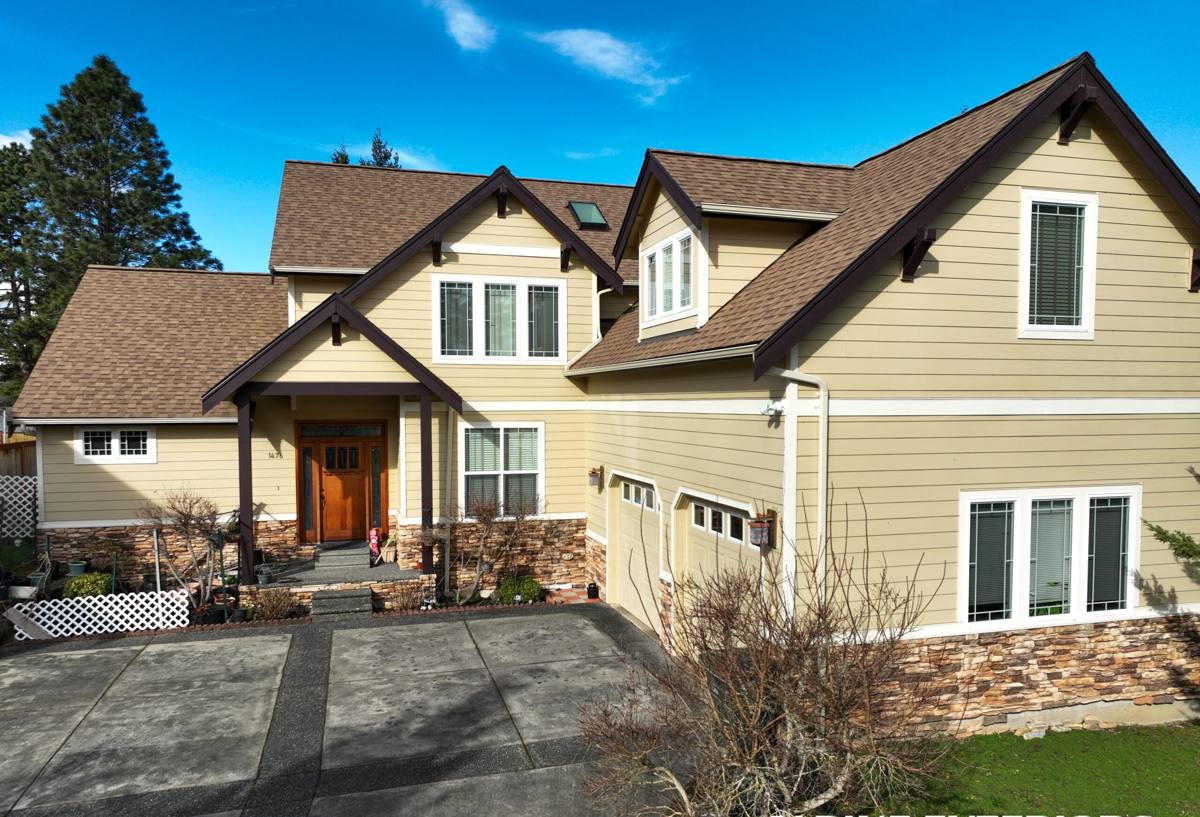
This page is about one thing: fiber cement siding done right, for homes in Columbia specifically. Not a general product overview — the actual conditions this neighborhood deals with, what a correct installation looks like in response, and why the crew doing the work matters as much as the material itself.
What This Climate Actually Does to a Wall System
Salt-Laden and Moisture-Heavy Air
Whatcom County's proximity to coastal and marine air means siding, trim, and fasteners are exposed to airborne moisture and mineral content that accelerates corrosion in the wrong materials. Bare or poorly coated metal fasteners and trim pieces can start showing rust streaks years before they should. Wood-based products absorb ambient moisture even when it never rains, which keeps them perpetually closer to the point where rot organisms can take hold.
Driving, Wind-Driven Rain
Rain here rarely falls straight down. Wind pushes it sideways into wall assemblies, forcing water into laps, seams, and penetrations that would stay dry in a calmer climate. This is why lap spacing, flashing details, and caulking choices matter more in Sudden Valley than they would in a low-wind, low-rain region — a siding job that's "close enough" somewhere else isn't close enough here.
A Moss Season That Doesn't Really End
Shaded, north-facing, and tree-covered elevations — common throughout Columbia's wooded lots — stay damp long after a storm passes. That prolonged dampness is exactly what moss, algae, and mildew need to establish on a wall surface. Once organic growth takes hold on a porous or poorly finished material, it holds moisture against the substrate around the clock, which is a slow but real path to rot, regardless of what's under the surface layer.
Why We Only Install James Hardie Fiber Cement Here
We standardized on James Hardie fiber cement siding and don't install vinyl, LP SmartSide, Cemplank, Allura, primed spruce, or cedar. That's not a marketing position — it's a response to what this specific climate does to alternative products over time. Fiber cement is a cement, sand, and cellulose fiber composite. It doesn't feed organic growth the way wood-based products can, it doesn't soften or swell when it stays wet, and it's non-combustible, which matters given the wooded lots common throughout Sudden Valley.
James Hardie specifically engineers products by climate zone — their HZ5 line is built for regions with significant moisture exposure, which fits Whatcom County. The factory-applied ColorPlus finish is baked on under controlled conditions rather than field-applied, which gives it far better resistance to fading, peeling, and moisture intrusion at the finish layer than a job-site paint job ever will. Hardie backs the product with a long, transferable non-prorated limited warranty — worth something specifically because the material and finish are engineered to actually hold up for that duration in a climate like this one.
None of this means other products are junk. Vinyl is inexpensive and low-maintenance in mild climates but can crack in cold snaps and fade unevenly under UV over years. LP SmartSide and other engineered wood products perform well when installed and maintained exactly to spec, but they're wood-based, which means edge sealing and caulking maintenance are non-negotiable in a wet climate — skip that upkeep here and moisture finds the seams fast. Cedar is a beautiful, genuinely traditional material, but it needs re-staining or re-sealing on a real schedule to keep performing, and Sudden Valley's moss and moisture load shortens that maintenance window. We made a professional call: for the way this region behaves, fiber cement gives homeowners the best balance of low maintenance, moisture resistance, and long-term performance, so it's the only product we put our name behind.
What a Correct Fiber Cement Installation Involves
Water Management Comes First
Fiber cement is only as good as what's behind it. A correct install starts with a weather-resistant barrier, properly lapped and taped, with flashing integrated at every window, door, and penetration so water is directed out and down rather than trapped against the sheathing. Skipping or rushing this layer is the single most common reason siding jobs fail years later — the siding itself can look flawless while the wall behind it is quietly rotting.
Fastening and Clearances
Hardie's installation specifications call for specific fastener types, spacing, and penetration depth, along with minimum clearances from grade, roof lines, and decks so water has somewhere to go instead of wicking up into the plank ends. In a driving-rain climate, these clearances aren't a formality — they're the difference between water shedding off the wall and water finding its way behind it.
Joints, Caulking, and Finish
Butt joints, corners, and trim intersections need to be treated with the right sealant and, where called for, factory-finished trim rather than field-cut and painted pieces. Because ColorPlus finish is factory-applied, field touch-ups should be limited and done with Hardie's matched touch-up products — painting over it with standard exterior paint defeats part of what makes the finish durable in the first place.
Installation Checklist for a Correct Fiber Cement Job
- Weather-resistant barrier installed and properly lapped, shingle-style, top over bottom
- Flashing integrated at every window, door, and wall penetration
- Correct fastener type and spacing per Hardie's published specifications
- Minimum clearance maintained from grade, roofs, decks, and patios
- Joints and corners sealed with an appropriate, compatible sealant
- Factory ColorPlus finish protected — no unnecessary field painting
- Rainscreen or furring strategy considered on shaded, moisture-prone elevations
How We Approach a Columbia Job, Start to Finish
- Site walk and moisture assessment. We look at existing siding, trim, and sheathing for signs of past water intrusion before quoting anything, since Columbia's shaded and lakeside-adjacent lots often show damage patterns tied to sun exposure and drainage.
- Product and color selection. We walk through Hardie's HZ5 panel and lap options and ColorPlus palette, factoring in which elevations get the most weather exposure.
- Tear-off and substrate check. Old siding comes off and sheathing gets inspected — any soft or damaged sections are addressed before anything new goes up.
- Water barrier and flashing installation. This is the layer that determines whether the job lasts, and it gets done before a single piece of siding is hung.
- Siding installation to Hardie spec. Fastening, spacing, and clearances follow manufacturer requirements, not shortcuts.
- Final detailing and walkthrough. Caulking, trim, touch-ups, and a walkthrough so the homeowner understands what was done and how to maintain it.
Fiber Cement vs. Other Siding Materials in This Climate
| Material | Moisture Behavior Here | Maintenance Load | Fire Resistance |
|---|---|---|---|
| James Hardie Fiber Cement | Doesn't swell, rot, or feed organic growth | Low — occasional wash, minimal repainting | Non-combustible |
| Vinyl | Won't rot, but can warp or crack in temperature swings | Low, but color fades unevenly over years | Combustible, can soften in high heat |
| LP SmartSide / Engineered Wood | Performs well if edges stay sealed; vulnerable if maintenance lapses | Moderate — caulking and inspection needed | Combustible |
| Cedar | Attractive but absorbs moisture; needs consistent sealing | High — regular staining/sealing required | Combustible |
What Drives the Cost of a Siding Job in Columbia
Every home is different, but the same handful of factors move the price up or down on most jobs in this area:
| Cost Factor | Why It Matters Here |
|---|---|
| House size and elevation count | More wall area and more corners/trim details mean more labor and material |
| Condition of existing sheathing | Shaded and moisture-exposed lots occasionally reveal hidden rot that needs repair before siding goes on |
| Panel vs. lap profile chosen | Different Hardie profiles have different material and labor costs |
| Trim and detail complexity | Homes with more windows, dormers, or architectural detail take more time to flash and finish correctly |
| Access and site conditions | Sloped, wooded, or tight-access lots common around Sudden Valley can add setup time |
We give straightforward, honest estimates after actually looking at the house — not a phone-quoted number based on square footage alone.
Maintaining Fiber Cement Siding in a Wet, Mossy Climate
Fiber cement is genuinely low-maintenance compared to wood or engineered wood alternatives, but "low-maintenance" doesn't mean "no maintenance," especially in Columbia's damp, shaded pockets.
- Rinse siding annually, especially on north-facing and tree-shaded walls where moss and algae take hold first
- Keep gutters clear so overflow doesn't run down the wall face repeatedly
- Trim back vegetation and branches that keep a wall section shaded and damp
- Check caulking at joints and trim every year or two and re-seal if it's cracked or pulling away
- Watch for any staining at the base of walls near grade, which can signal a drainage or clearance issue
- Use manufacturer-approved touch-up products only — avoid standard exterior paint over ColorPlus finish
Why a Crew That Already Works Sudden Valley Matters
A siding crew that only shows up in Columbia occasionally has to relearn the same lessons every job — which elevations stay damp longest, how the wind pushes rain into a wall, what the moss pattern on a given lot tells you about drainage before you even open the walls up. A crew that already works this community brings that pattern recognition to the first site visit instead of the third callback. That matters here specifically because the margin for error on water management is thinner than it is in a drier region — a detail that's a minor oversight elsewhere can become a real moisture problem in Sudden Valley within a couple of wet seasons.
Local familiarity also means fewer surprises on permitting, typical lot conditions, and what an honest timeline looks like given the weather windows this area actually gets for exterior work. We'd rather set realistic expectations up front than promise a schedule the climate won't cooperate with.
If you're considering new siding for a home in Columbia or elsewhere in Sudden Valley, we're glad to come take a look and give you a straight, no-pressure estimate — just fill out the form below.