 Sudden Valley Siding
 Siding Built for Geneva's Specific Climate Load
Geneva sits close enough to Lake Whatcom and the broader Whatcom County weather pattern that homes here take on a combination of stresses most siding products were never engineered to handle at once: salt-tinged air moving in off Bellingham Bay, long stretches of driving rain that hits walls sideways rather than falling straight down, and a moss season that can run eight months or more in shaded, north-facing exposures. Any one of those factors is manageable. Together, they wear through paint film, swell wood-based products, and feed moss and algae growth faster than most manufacturers' warranty language assumes.
We install James Hardie fiber cement siding exclusively, and Geneva is a good example of why. Hardie's HZ5 product line is engineered specifically for climate zones that see freeze-thaw cycling combined with sustained moisture exposure — which describes this part of Whatcom County accurately. It's not a marketing claim; it's a formulation and engineering choice that changes how the board performs over 20 or 30 years of Pacific Northwest weather.
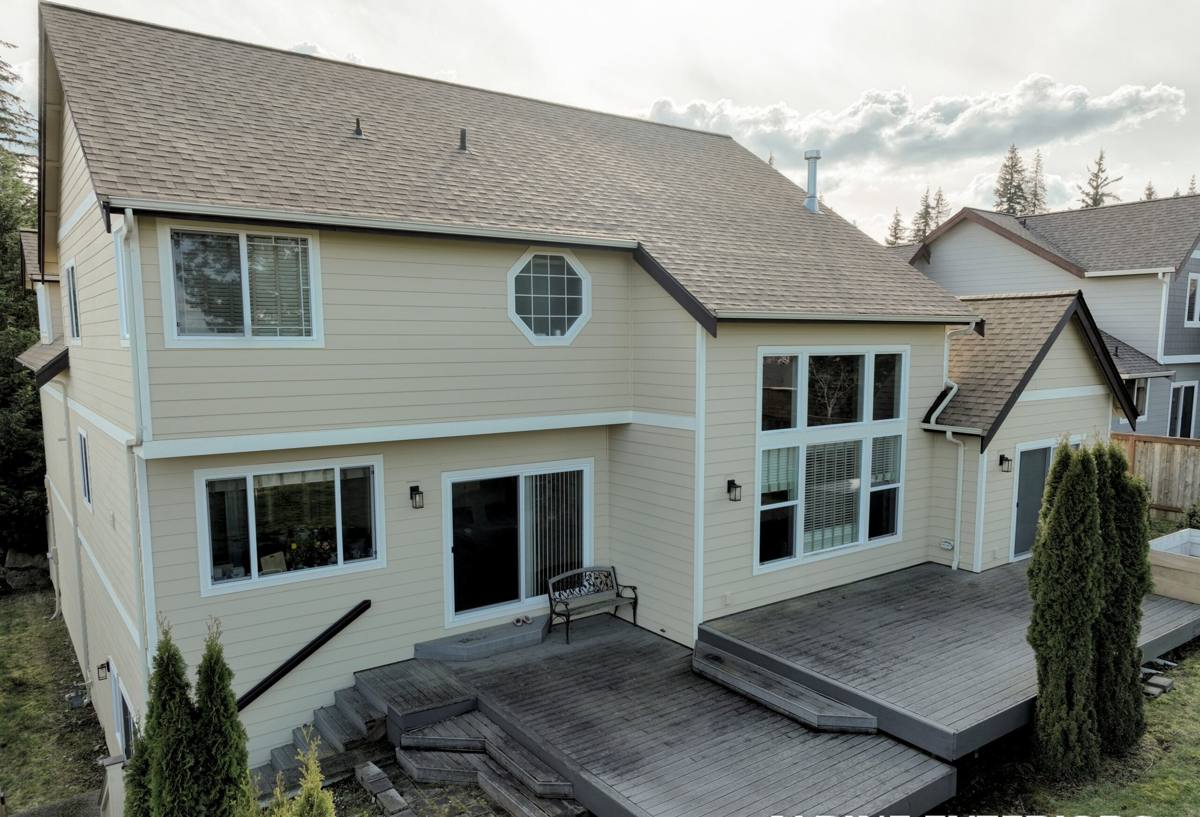
What Local Homes Actually Need From Their Siding
Before we talk about the product, it's worth being specific about what a Geneva home's siding is being asked to do year-round:
- Resist moisture intrusion at seams, laps, and penetrations during weeks of continuous rain, not just isolated storms
- Hold paint and color without chalking, fading, or peeling under UV exposure combined with salt-air humidity
- Shed or resist moss and algae growth on shaded elevations without constant power-washing
- Stay dimensionally stable through freeze-thaw swings so caulk joints and fastener lines don't open up
- Survive contact with irrigation overspray, landscaping mulch, and ground moisture at the lower courses without wicking
Wood-based and some engineered wood siding products can meet one or two of these demands reasonably well. Very few meet all five without an aggressive, ongoing maintenance schedule — and that maintenance burden is exactly what drives most siding replacement calls we get in this area.
Why We Don't Install the Alternatives Here
We get asked regularly about vinyl, LP SmartSide, and cedar for Geneva homes. Each has real strengths — vinyl is inexpensive up front, engineered wood is lighter to install, cedar looks great new. But in this specific climate, vinyl can warp and fade faster under the salt-air and sun-exposure combination, engineered wood products rely on an intact factory coating that field cuts and fastener penetrations can compromise, and cedar demands a refinishing cycle most owners don't keep up with once the shine of a new install wears off. We standardized on James Hardie because it's non-combustible, dimensionally stable, and backed by a factory finish system that's designed to go the distance without that maintenance treadmill.
James Hardie Product Lines That Fit Geneva Homes
Not every Hardie product is the right call for every home. Part of doing this correctly is matching the product line to the house's exposure, architecture, and the owner's maintenance preference.
| Product | Best Use in Geneva | Why It Fits |
|---|---|---|
| HardiePlank lap siding | Most homes, all elevations | Classic profile, strong wind and moisture resistance, wide color range |
| HardiePanel vertical siding | Accent walls, gables, modern designs | Clean lines, pairs well with board-and-batten detailing |
| HardieShingle siding | Accent gables, transitional-style homes | Textured look without the moisture retention of real cedar shingle |
| HardieTrim boards | Corners, window/door surrounds, fascia | Matches the fiber cement performance at the trim, avoiding mismatched failure points |
For most Geneva properties we recommend HZ5-engineered HardiePlank as the primary field material, with ColorPlus factory-applied finish rather than field paint. The factory finish is baked on under controlled conditions and carries its own finish warranty — a meaningful upgrade over job-site painting, which is far more exposed to the moisture and temperature swings that cause early paint failure here.
What a Correct Installation Actually Involves
The siding board itself is only part of the performance equation. Most siding failures we're called out to inspect in this area trace back to installation shortcuts, not the product. A correct James Hardie install on a Geneva home includes:
Water Management Behind the Siding
A drainable weather-resistive barrier and properly integrated flashing at every window, door, and penetration — installed so water that gets behind the cladding has somewhere to go besides your sheathing. This matters more here than in drier climates because the volume and duration of rain events give any gap more time to do damage.
Fastening and Clearances to Spec
Hardie publishes exact fastener spacing, penetration depth, and minimum clearance requirements from grade, roofing, and decking. Following these to the letter — not "close enough" — is what keeps warranty coverage intact and keeps the lower courses from wicking moisture out of ground contact or splashback.
Joint and Seam Treatment
Butt joints, corners, and penetrations get treated with the caulking and flashing details Hardie specifies for HZ5 zones, not a generic caulk-and-hope approach. In a climate with this much sustained rain, seam quality is often the difference between a 30-year installation and a 10-year callback.
Color and Finish Consistency
With ColorPlus finishes, factory-matched caulk and touch-up products are used at cut ends and seams so the finish performs and looks uniform across the whole elevation, not just on the flat faces of the boards.
Our Process for a Geneva Siding Replacement
- On-site assessment — we walk the exterior, check for moisture damage, rot, and existing water management issues before ever pricing the job
- Tear-off and sheathing inspection — old siding comes off and we inspect the sheathing underneath for hidden damage, which is common on north- and west-facing walls in this area
- Weather barrier and flashing install — a drainable house wrap and full flashing package go on before a single piece of Hardie touches the wall
- Hardie installation to manufacturer spec — correct fastener pattern, clearances, and joint treatment throughout
- Trim, caulking, and finish detailing — corners, window surrounds, and seams finished with matched products
- Final walkthrough — we go over the completed job with you before calling it done
Moss, Algae, and the Realistic Maintenance Picture
No siding product is maintenance-free in Whatcom County's moss season, but the maintenance James Hardie actually requires is minimal compared to the alternatives. An annual rinse-down on shaded and north-facing walls, keeping gutters clear so water isn't sheeting down the siding face, and trimming back vegetation that holds moisture against the wall covers most of what a Geneva home needs. Because the ColorPlus finish is baked on rather than field-applied, it holds up to that occasional pressure-wash far better than a field-painted surface would, which matters a lot in a climate where you'll actually be doing that rinse-down more than once a decade.
Cost Factors Specific to This Area
| Factor | Why It Affects Your Job |
|---|---|
| Sheathing condition under old siding | Homes near Sudden Valley with older wood or vinyl siding sometimes have hidden moisture damage that adds repair scope once tear-off starts |
| Elevation and access | Sloped lots and lake-adjacent properties can require additional staging or access planning |
| Trim and detail complexity | Homes with more window/door openings, dormers, or gable detail take longer to flash and trim correctly |
| Product line and finish | ColorPlus finished boards cost more up front than field-painted alternatives but reduce long-term repainting cost |
We won't quote a number without seeing the house — anyone who does is guessing, and that guess tends to grow once the old siding comes off. What we can tell you is that the sheathing condition, not the siding brand, is usually the biggest swing factor in a Geneva estimate.
Why Hiring a Crew That Already Works This Area Matters
A crew that regularly works Sudden Valley and the surrounding Geneva area already understands the specific exposure patterns of these homes — which elevations take the worst driving rain, which lots hold moisture longest, where moss tends to establish first. That local pattern recognition shows up in small decisions during the job: where to add extra flashing attention, which walls need closer joint treatment, how to sequence the work around this area's rain windows. It's the difference between an installation that meets code and one that's actually built for what this specific stretch of Whatcom County throws at it year after year.
Questions to Ask Any Siding Contractor Before You Hire
- Are you a certified James Hardie installer, and can you show documentation?
- What weather-resistive barrier and flashing details do you use behind the siding?
- Will you inspect and repair sheathing damage found during tear-off, or is that a change order surprise?
- Do you follow Hardie's published fastener spacing and clearance specs, or "standard practice"?
- What does your warranty actually cover — labor, product, or both — and for how long?
If your Geneva home's siding is showing chalky paint, soft spots, persistent moss staining, or you're just planning ahead, we're happy to walk the property and give you a straight, no-pressure assessment. Fill out the form below for a free estimate.