 Sudden Valley Siding
 Why Silver Beach Homes Take a Different Kind of Beating
Homes around Silver Beach and the broader Sudden Valley area sit in one of the wetter, greener corners of Whatcom County, and the exterior of a house here has to work harder than it would somewhere drier. Marine-influenced air moving in off Bellingham Bay and the Sound picks up a faint salt content that settles on exterior surfaces over time, driving rain comes in sideways during fall and winter storms, and the tree cover and lake-adjacent humidity that make this area beautiful also mean moss and algae get a long growing season on anything that stays damp. None of that is unusual for western Whatcom County, but it does mean siding that's a marginal fit for the climate shows its weaknesses here faster than it would in a drier inland town.
The practical result is that siding installation in Silver Beach isn't just about picking a color and nailing up panels. It's about choosing a material that tolerates repeated wetting and drying without swelling or delaminating, and installing it with details — flashing, gaps, fastening, drainage — that assume this house will see rain more days than not for half the year.
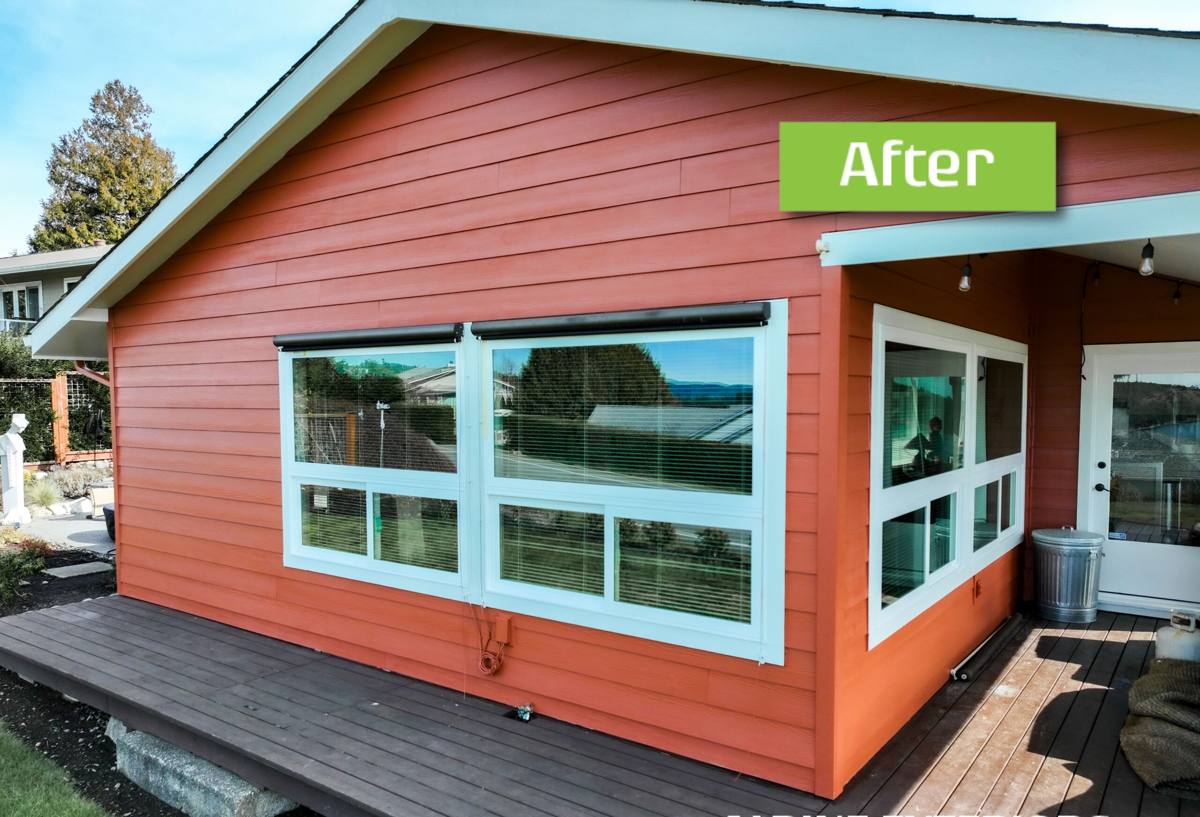
What Local Homes Actually Need From Their Siding
Moisture Tolerance, Not Just Water Resistance
There's a real difference between siding that sheds rain when it's brand new and siding that stays stable after fifteen years of cycling wet and dry in a moss-friendly climate. Wood-based products can swell, crack at the edges, or start absorbing water at cut ends and fastener holes if the finish isn't perfect and maintained. In a climate like this one, that maintenance window is shorter than homeowners expect.
Resistance to Moss and Organic Growth
Moss doesn't just grow on roofs. Given shade, moisture, and a rough or porous surface, it will colonize siding too — especially on north-facing walls and anywhere tree cover keeps a wall from drying out between rains. Surface texture and paint quality both affect how much moss and algae actually take hold, and how easily they scrub off without damaging the finish underneath.
A Finish That Doesn't Need Repainting Every Few Years
Repainting siding on a two-story lake-area home isn't cheap or easy, and in a climate with this much annual rainfall, a factory finish that's engineered to hold color and resist moisture beats field-applied paint that starts breaking down at the first hairline crack.
Why We Install Only James Hardie Fiber Cement
We don't install LP SmartSide, vinyl, Cemplank, Allura, primed spruce, or cedar. That's a standard we hold across every job, not just here in Silver Beach, and it's worth explaining rather than just stating.
Fiber cement is fundamentally a different material than wood-based or vinyl siding. It's made from cellulose fiber, sand, and cement, which means it doesn't absorb and swell with moisture the way engineered wood products can, and it doesn't soften, warp, or become brittle the way vinyl can under UV exposure and temperature swings. It's also non-combustible, which matters more every year as wildfire smoke and ember exposure become a bigger part of Pacific Northwest summers.
Within fiber cement, James Hardie is what we use because of three specific things:
- ColorPlus Technology — a factory-applied, baked-on finish that resists fading and chipping far better than field-applied paint, and that carries its own finish warranty separate from the substrate warranty.
- Climate-engineered HZ product lines — Hardie's HZ5 and HZ10 formulations are engineered for specific moisture and freeze-thaw zones rather than one generic recipe for the whole country, which matters in a wet Pacific Northwest climate.
- A strong, transferable limited warranty — backed by a manufacturer with a long track record, which matters if you sell the home down the road.
We're not going to tell you competing products are junk — LP SmartSide and vinyl both have legitimate uses and loyal installers. But we've made a professional call that for the moisture load and moss pressure a Silver Beach home deals with, fiber cement installed correctly is the better long-term bet, and we'd rather install one product exceptionally well than spread ourselves across five and do all of them adequately.
What "Installed to Spec" Actually Means
Fiber cement siding is only as good as its installation. Even the best material fails early if it's hung wrong, and this is where a lot of siding jobs — with any brand — go sideways.
Water Management Behind the Siding
Correct installation starts with a weather-resistive barrier and, on most jobs, a drainage plane or rain screen gap that lets any moisture that does get behind the siding drain and dry out instead of sitting against the sheathing. In a climate that sees this much annual rain, that drainage detail is not optional — it's the difference between siding that lasts decades and siding that hides rot behind it for years before anyone notices.
Flashing at Every Penetration
Windows, doors, deck ledgers, hose bibs, vents — every penetration through the siding plane is a place water can find its way in if it's not flashed correctly. This is detail work, not a place to move fast.
Fastening and Clearances
James Hardie specifies fastener type, spacing, and placement precisely, and also specifies minimum clearances from grade, roof lines, and horizontal surfaces like decks and patios. Skipping these clearances is one of the most common ways otherwise-good siding jobs start failing early — moisture wicks up from below and the bottom courses rot or delaminate first.
Cut Edges and Field Painting
Every cut edge on a fiber cement board needs to be sealed with touch-up paint or caulked, because a raw cut exposes the substrate to moisture. It's a small step that's easy to skip and easy to catch if you know to check for it.
Signs Your Siding May Need Replacing
Not every problem means a full replacement — sometimes it's a repair or a caulking refresh. But a few signs point toward replacement being the more honest recommendation:
- Visible warping, buckling, or boards pulling away from the wall
- Soft or spongy spots when you press on the siding, especially near the bottom courses
- Paint that's peeling or bubbling repeatedly in the same spots despite repainting
- Persistent moss or algae staining that comes back within a season of cleaning
- Visible gaps, cracking, or rot at butt joints and corners
- Rising energy bills with no other explanation, which can point to failing insulation behind damaged siding
- Siding that's original to a home built more than 25-30 years ago, nearing the end of its practical service life regardless of visible damage
How Our Process Works
- On-site assessment. We walk the exterior, check for moisture damage, rot, and problem areas — particularly at grade level, deck intersections, and north-facing walls where moss pressure is highest.
- Scope and product selection. We talk through Hardie's plank, panel, and shingle profiles and color options, and recommend the HZ formulation and finish that fits your home and orientation.
- Removal and sheathing check. Old siding comes off and we inspect the sheathing underneath for hidden rot or water damage before anything new goes up — this is often where problems from the old siding are discovered.
- Weather barrier and drainage plane installation. This is the step that protects everything installed after it.
- Flashing at all penetrations — windows, doors, vents, and anywhere else water can find a path in.
- Siding installation to manufacturer spec — correct fastening, clearances, and joint treatment throughout.
- Final detailing — caulking, touch-up paint on cut edges, trim work, and a walkthrough with you before we call the job done.
What Affects the Cost of a Siding Job Here
| Factor | Why It Matters in Silver Beach |
|---|---|
| Home size and wall complexity | More corners, gables, and dormers mean more cutting, flashing, and labor time |
| Extent of hidden damage | Rot found under old siding at removal adds sheathing repair before new siding goes up |
| Siding profile chosen | Lap plank, shingle-style panels, and board-and-batten all price differently in labor and material |
| Trim and accent work | Corner boards, window trim, and accent bands add finish-carpentry time |
| Access and site conditions | Steep lots, tree cover, and lake-view homes with limited staging area can slow installation |
| Removal and disposal | Full tear-off of old siding versus a simpler recover situation changes labor scope |
Why a Crew That Already Works Silver Beach Matters
Siding installation isn't just a set of manufacturer instructions — it's judgment calls made on-site about how a specific house on a specific lot handles water, wind, and sun exposure. A crew that's already worked homes in this neighborhood has seen which walls take the worst of the driving rain, which lots hold shade and moisture long enough to grow moss fast, and which older homes in the area tend to have hidden sheathing issues behind their original siding. That local pattern recognition doesn't replace following spec — it's what tells us where to be extra careful within spec.
There's also a practical side: a local crew is accountable locally. If a question comes up two years after installation, we're not a name from an out-of-area company that did one job here and moved on — we're still working in Whatcom County, still standing behind the work.
After Installation: What Little Maintenance Fiber Cement Actually Needs
One of the real advantages of a correctly installed Hardie system in this climate is how little upkeep it asks for compared to wood-based siding. An occasional gentle rinse to keep moss and pollen from building up, a visual check of caulking at trim and penetrations every year or two, and prompt attention if a fastener backs out or a panel gets damaged is close to the whole list. There's no repainting cycle to plan around and no annual sealing regimen — the ColorPlus finish is doing that work for you.
If you're weighing whether your current siding has more life left in it, or you know it's time for a full replacement, we're happy to take a look and give you a straight answer — including telling you if repair makes more sense than replacement. Reach out for a free, no-pressure estimate using the form below.