 Sudden Valley Siding
 Deck Repair Built for Silver Beach's Lake Whatcom Climate
Homes around Silver Beach sit close to Lake Whatcom, and that proximity to water shapes everything about how a deck ages here. Between lake-effect moisture, salt-tinged air moving up from the Puget Sound region, driving rain off the water, and a moss season that can stretch from October well into spring, decks in this pocket of Whatcom County take a different kind of beating than a deck built inland. We repair decks specifically for this environment, not a generic checklist pulled from a drier climate.
A deck that looks fine from the yard can be hiding real problems underneath. Soft spots near the ledger board, rusted fasteners, and moss-packed gaps between boards are the most common issues we find on Silver Beach service calls, and almost all of them trace back to trapped moisture that never got a chance to dry out between rain events.
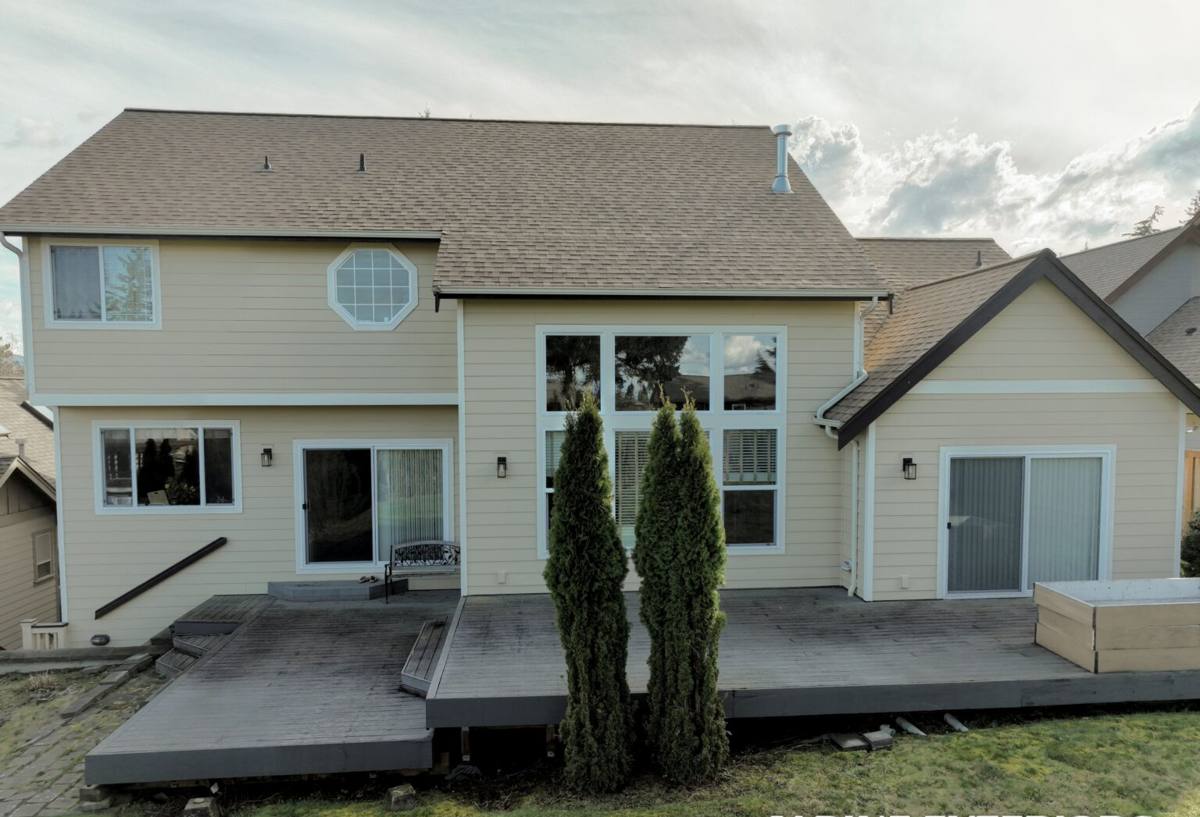
Why Decks Near the Lake Fail Faster
Wood, composite, and even the metal hardware holding a deck together all respond to sustained dampness differently than they do to occasional rain. A few conditions specific to this area accelerate wear:
- Reduced drying time. Lake humidity and shaded tree cover around many Silver Beach lots mean decks stay damp longer after each rain, which is when rot organisms do their damage.
- Moss and algae buildup. A long moss season means organic growth has more months to establish itself in board gaps, fastener heads, and stair treads — and moss holds moisture directly against the wood.
- Fastener corrosion. Salt-influenced air moving through the region speeds up rust on older or incorrectly rated screws and joist hangers, weakening connections you can't see from the surface.
- Ledger board stress. The board that attaches your deck to the house is the single most safety-critical component, and it's also the one most exposed to water runoff from the roofline above it.
None of this means a deck near Silver Beach is doomed — it means it needs the right materials, the right fasteners, and periodic attention that accounts for the climate instead of ignoring it.
What a Correct Deck Repair Actually Involves
Structural Inspection First
Before we replace a single board, we check the parts of the deck that actually keep people safe: the ledger board connection to the house, the posts and footings, joist hangers, and any load-bearing beam. Cosmetic damage on the surface boards is common and usually easy to fix. Structural damage underneath is the part that actually matters, and it's the part a purely cosmetic repair — like just swapping out a few visibly rotted boards — will miss entirely.
Moisture and Rot Assessment
We probe suspect areas, particularly around the ledger, stair stringers, and any spot where two pieces of wood meet without a gap for water to escape. Soft, spongy wood or a screwdriver that sinks in easily is a sign of active rot that needs to be cut out and replaced, not just resurfaced.
Fastener and Hardware Condition
Corroded screws, nails, and hangers are a quiet failure point. We check hardware for rust and confirm it's rated for exterior, corrosion-resistant use — the wrong grade of fastener is one of the more common shortcuts we find on older or previously patched decks in this area.
Railing and Stair Safety
Loose railings and wobbly stair stringers are a liability issue as much as a repair issue. We test railings for lateral movement and confirm posts are still solidly anchored, since railing failures are one of the more preventable causes of deck injuries.
Common Repairs We Handle on Silver Beach Decks
| Issue | What It Looks Like | Typical Fix |
|---|---|---|
| Rotted ledger board | Soft wood where deck meets house, staining on siding | Cut out and replace ledger, add or correct flashing |
| Failing deck boards | Splintering, cupping, soft spots, moss in gaps | Spot replacement of individual boards or full resurfacing |
| Rusted fasteners/hangers | Rust streaks, loose connections, visible corrosion | Replace with corrosion-resistant, code-rated hardware |
| Loose railings or posts | Movement when pushed, gaps at post base | Re-anchor posts, replace damaged blocking |
| Undersized or rotted joists | Bounce or flex when walking, visible sagging | Sister new joists alongside damaged ones or replace |
| Moss and algae staining | Green/black film, slick surface, especially in shade | Clean, treat, and improve airflow/drainage where possible |
Repair or Rebuild? How We Help You Decide
Not every deck problem calls for a full rebuild, and not every deck can be saved with a partial repair. The honest answer depends on how much of the structural framework is still sound.
- Repair usually makes sense when the framing, posts, and footings are solid and the damage is limited to surface boards, railings, or isolated rot at one connection point.
- Rebuild usually makes sense when rot has reached the ledger board and adjacent framing, when multiple structural members show damage, or when the deck was built without proper flashing and the same failure will just recur.
- A hybrid approach — rebuilding the structural core while reusing sound surface material or hardware — is sometimes the most cost-effective path, and we'll tell you plainly when that's an option versus when it isn't.
We'd rather walk you through the real condition of your deck and let you make an informed call than push either option by default.
Materials That Hold Up Near Lake Whatcom
Material choice matters more here than in a drier inland setting. Pressure-treated lumber remains a solid, budget-conscious option when it's properly maintained and sealed on a regular schedule, since treated wood still needs upkeep to perform well in a wet climate. Composite decking trades that maintenance burden for a higher upfront cost, and in our experience it handles the region's moss and moisture exposure with less seasonal attention — though it still needs proper airflow underneath to perform as designed, and not every composite product handles standing moisture the same way.
Whatever material is already on your deck, or whatever you choose for a repair, the fasteners and flashing matter just as much as the boards. We use fasteners rated for exterior, corrosion-prone environments and proper flashing at the ledger, because that single detail is responsible for a large share of the structural failures we see on older decks in this area.
Quick Homeowner Checklist: Signs Your Deck Needs Attention
- Boards that feel spongy, springy, or soft underfoot
- Visible gaps, cracking, or splintering along board edges
- Rust stains streaking down from screws or hardware
- Railings or posts that move when pushed firmly
- Persistent moss, algae, or dark staining that returns after cleaning
- Water pooling on the surface instead of draining off
- Staining or discoloration on the siding where the deck attaches to the house
- A stair stringer that flexes or feels less solid than the rest of the deck
Our Process for a Silver Beach Deck Repair
- On-site inspection. We walk the full deck — surface, framing, ledger, and railings — and identify every issue, not just the ones you called about.
- Honest scope and estimate. You get a clear picture of what's cosmetic, what's structural, and what your realistic options are, with no pressure toward the more expensive path.
- Repair work. We replace damaged framing and boards, correct flashing and drainage issues, and upgrade hardware to corrosion-resistant fasteners where needed.
- Final safety check. Railings, stairs, and structural connections get tested before we consider the job done.
- Maintenance guidance. We'll tell you what to watch for and how often your specific deck and material should be cleaned, sealed, or inspected given this climate.
Why It Matters to Hire a Crew That Already Works This Area
A deck repair crew that mostly works drier, inland jobs can miss what's routine knowledge for anyone working around Lake Whatcom and the Sudden Valley area regularly: where moss and moisture concentrate first, which fastener grades actually hold up here, and how to flash a ledger correctly against sustained damp conditions. We work on homes in this part of Whatcom County regularly, and that familiarity shows up in fewer callbacks and repairs that are built to handle another wet Pacific Northwest winter, not just pass inspection today.
Maintenance That Extends Your Repair
A good repair buys you time, but a little seasonal upkeep buys you a lot more of it in this climate. Clear leaves and debris from between boards before they trap moisture through the fall and winter. Rinse off moss and algae buildup before it has a chance to establish, especially on shaded sections of the deck. If your deck is sealed or stained wood, plan on reapplying protection on the schedule the product calls for — in a climate this wet, skipping a cycle shows up faster than it would somewhere drier. And after any major storm, a quick visual check of the ledger area and railings is worth the five minutes it takes.
If your deck near Silver Beach has soft boards, a shaky railing, rust streaks, or you're just not sure what condition it's really in, we're happy to take a look. We offer free, no-pressure estimates — use the form below to get started.