 Sudden Valley Siding
 Asphalt Shingle Roofing Built for Deming's Climate
Deming sits close enough to Sudden Valley and the Nooksack River corridor that homes here take a specific kind of weather beating: damp air moving in off the water, driving rain that comes sideways more often than straight down, and a moss season that can run eight months out of the year under the tree cover common to this part of Whatcom County. Asphalt shingle roofing is still the right choice for most homes in this area — it's proven, repairable, and reasonably priced — but only when it's installed with this exact climate in mind. A shingle roof installed the same way you'd install one in a dry inland town will underperform here, sometimes badly, within five to seven years.
We work in Deming and the surrounding Sudden Valley area regularly, which means we're not guessing at what fails first on local roofs. We know which slopes hold moss longest, which valleys and low-slope sections need extra underlayment attention, and which fastening habits actually hold up against the wind gusts that funnel through this part of the county in winter storms.
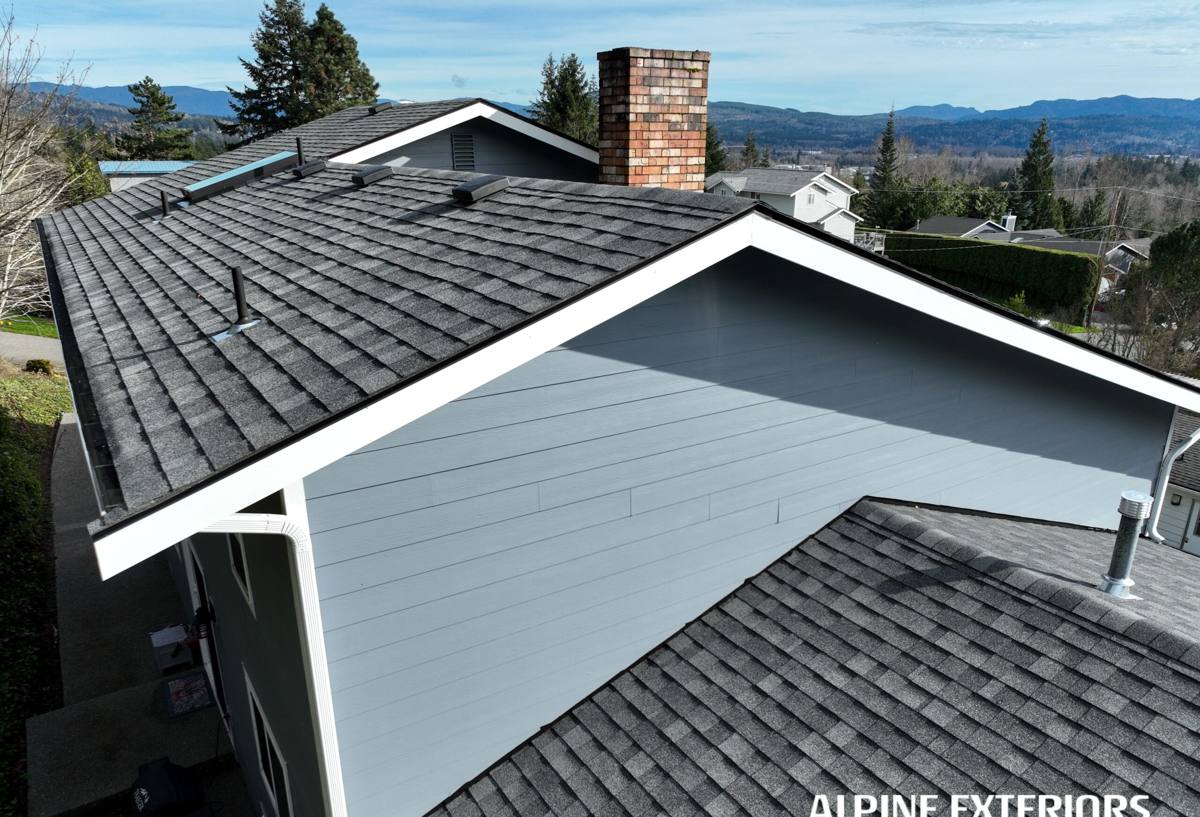
What Deming's Weather Actually Does to a Shingle Roof
Salt Air and Moisture
Homes closer to the water pick up airborne salt and moisture that accelerates corrosion on exposed metal — nail heads, flashing edges, gutter hardware. Over time this shows up as rust streaking, loosened fasteners, and flashing that fails quietly at the seams long before the shingles themselves look worn out.
Driving Rain
Wind-driven rain doesn't just fall on a roof, it pushes sideways and upward at eaves, valleys, and anywhere two roof planes meet. If underlayment laps and flashing details aren't done correctly, water finds its way under the shingle field instead of running off the surface. This is one of the most common causes of hidden leaks we find on roofs that "look fine" from the ground.
Moss and Shade
Deming's tree cover keeps a lot of roofs shaded and slow to dry between storms. Moss and algae take hold in those damp, shaded sections first — usually the north-facing slopes and anywhere debris collects. Moss doesn't just look bad; its root structure lifts shingle edges and holds water against the roof deck, which shortens the life of the roofing system underneath it.
What a Correct Installation Involves Here
A shingle roof that's going to hold up in this climate needs more attention paid to the layers homeowners never see than to the shingle brand itself. The shingle is the finish; the system underneath it is what actually keeps water out.
- Ice-and-water shield or equivalent self-adhering membrane at eaves, valleys, and around every penetration — not just where code minimums require it
- Synthetic underlayment across the full field, lapped and fastened to shed water even if a shingle is ever lifted by wind
- Properly sized and balanced ridge and soffit ventilation, so moisture from inside the attic isn't adding to what's already coming from outside
- Metal flashing — not just cut shingle or caulk — at all valleys, wall intersections, chimneys, and skylights
- Corrosion-resistant fasteners, sized and placed to manufacturer spec, driven correctly (not overdriven, not underdriven)
- Starter strip and edge treatment that actually resists wind uplift at eaves and rakes, where storm damage most often begins
Ventilation Deserves Its Own Mention
We bring this up separately because it's the detail most often skipped on lower-cost reroofs, and it's the one that causes premature failure from the inside out. A roof deck that can't breathe traps moisture, which softens sheathing, promotes rot, and can void a shingle manufacturer's warranty even when the shingles themselves were installed correctly. In a climate as damp as Deming's, balanced intake and exhaust ventilation isn't optional — it's part of what makes the whole system last.
Shingle Options: What We Recommend and Why
| Shingle Type | Typical Lifespan Here | Best Fit | Trade-Offs |
|---|---|---|---|
| 3-Tab Asphalt | 15-20 years | Budget reroofs, rentals, outbuildings | Lower wind resistance, shows moss and wear faster |
| Architectural (Laminate) Shingle | 25-30 years | Most Deming homes | Higher upfront cost than 3-tab, but far better wind and moisture performance |
| Impact-Resistant Architectural | 25-30+ years | Homes under heavy tree cover or exposed to storm debris | Added material cost, often offset by insurance discounts |
| Algae-Resistant (AR) Shingle | Same as base line, better appearance retention | Shaded, north-facing, or heavily treed lots | Slightly higher cost; doesn't eliminate moss, reduces staining |
For most homes in this area, we point people toward a laminate architectural shingle with algae-resistant granules. It's a mid-range cost that performs well against both wind and moss, and it holds its appearance longer under tree cover than a standard 3-tab. We'll talk through your specific roof — slope, sun exposure, tree coverage — before recommending a product, rather than defaulting to one line for every job.
How We Approach a Deming Roofing Project
1. On-Site Inspection
We walk the roof and the attic, not just the roof. Deck condition, existing ventilation, moss patterns, flashing condition, and any signs of past leaks all factor into the plan before we quote anything.
2. Honest Scope and Written Estimate
You get a written estimate that spells out tear-off, deck repair (if needed), underlayment, flashing, ventilation, and shingle product — not a vague lump-sum number. If we find deck rot once tear-off starts, we show you before doing the work, not after it's on the invoice.
3. Tear-Off and Deck Check
Old roofing comes off down to the deck so we can actually see what's underneath. Soft or rotted sheathing gets replaced — this is the single most important step for a roof that's going to hold up under Deming's rain patterns.
4. Underlayment, Flashing, and Ventilation Install
This is the part of the job that determines whether the roof lasts 15 years or 30. We install the full moisture barrier system before a single shingle goes down, and we set ventilation to work as a balanced system, not an afterthought.
5. Shingle Installation
Shingles go down to manufacturer spec — correct nailing pattern, correct exposure, correct starter and ridge detail. This is also where wind resistance is won or lost; a shingle roof is only as strong as its weakest fastening detail.
6. Final Walkthrough
We walk the finished roof and the gutters with you, point out anything you should keep an eye on seasonally, and make sure you understand what your warranty actually covers.
Maintenance That Matters in This Climate
A new roof still needs some seasonal attention here, especially with the moss pressure and tree cover common around Deming. None of this is complicated, but skipping it shortens the roof's life.
- Keep gutters and valleys clear of needles and leaf debris, especially heading into fall storm season
- Have moss treated or gently removed before it builds up a root mat — don't pressure wash shingles, it strips granules and shortens shingle life
- Trim back overhanging branches to cut down on shade, debris, and physical abrasion during wind
- After any major windstorm, a quick visual check (or a call to us) for lifted or missing shingles catches small problems before they become leaks
- Check attic ventilation isn't blocked by insulation, especially after any attic work or insulation upgrades
Signs Your Roof Needs Attention Sooner Rather Than Later
| Sign | What It Usually Means |
|---|---|
| Granules collecting in gutters | Shingle surface is wearing down, especially common with age or past pressure washing |
| Dark streaking or thick moss patches | Algae/moss growth holding moisture against shingles and roof deck |
| Curling or lifted shingle edges | Wind exposure, aging shingles, or ventilation problems underneath |
| Staining on interior ceilings | Active or past leak — flashing or underlayment failure is a common cause |
| Sagging roof deck | Possible sheathing rot from long-term moisture intrusion, needs prompt inspection |
Why Local Experience Matters for This Job
Roofing crews who don't regularly work in this part of Whatcom County sometimes underbuild for the conditions — lighter underlayment, fewer flashing details, ventilation sized for a drier climate. It's not usually intentional; it's just not what they're used to accounting for. A crew that already works Deming and Sudden Valley knows to plan for salt air near the water, driving rain off the storms that roll through the county, and moss pressure under heavy tree cover, because we see the results of skipping those steps on other people's reroofs. That local pattern recognition is worth more than any brand name on the shingle wrapper.
We also know that a lot of homes in this area were roofed years ago with less attention to ventilation and flashing than current best practice calls for. Part of what we do on a reroof is quietly correct those older shortcuts as we go, so you're not just getting new shingles on the same underlying problems.
Get a Straightforward Estimate
If your roof is showing moss buildup, granule loss, or you just want an honest read on how much life it has left, we're glad to take a look. Reach out for a free, no-pressure estimate — we'll walk the roof, tell you what we actually see, and give you options that fit both your home and your budget.