 Sudden Valley Siding
 Building Decks That Actually Hold Up in Silver Beach
Silver Beach sits close enough to open water that homes here deal with a combination most inland Whatcom County neighborhoods don't: salt-laden air, wind-driven rain coming off the water, and long stretches of shade and dampness that keep moss and algae established for most of the year. A deck built to a generic spec sheet — the kind used on a dry-side project or a subdivision three towns over — will show its age fast here. Fastener corrosion, soft spots under railings, and green film on the walking surface show up years earlier than they should when the build didn't account for where the house actually sits.
We build custom decks for homes in and around Sudden Valley and Silver Beach regularly, and the difference between a deck that lasts 25 years and one that needs major repair at year eight almost always comes down to decisions made before the first board goes down: material selection, fastener grade, drainage detailing, and how the structure ties into the house.
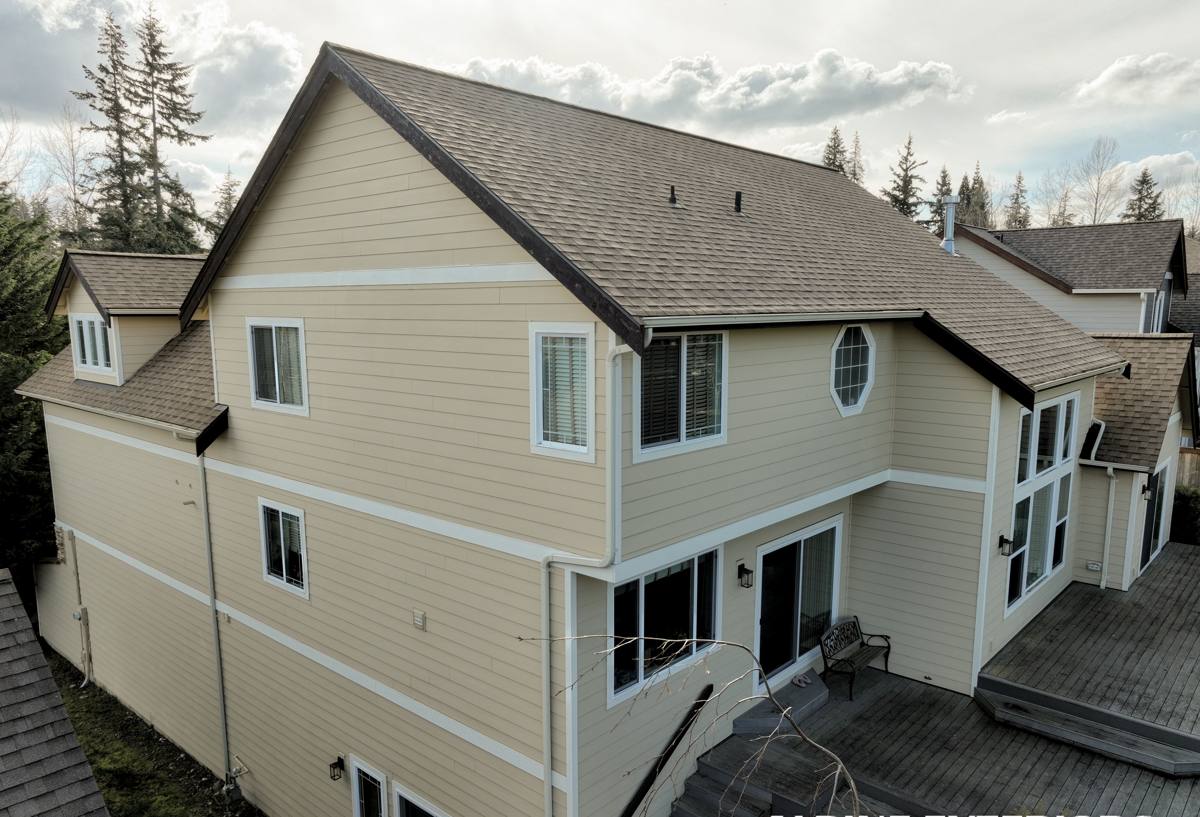
What the Local Climate Actually Does to a Deck
It helps to be specific about the failure modes, because "the weather's rough here" doesn't tell you what to build differently.
Salt Air and Metal Fasteners
Standard electro-galvanized screws and joist hangers corrode faster in salt-influenced air than most homeowners expect. Corrosion doesn't just stain the wood around the fastener head — it weakens the connection itself over time, which matters most at structural points like ledger boards, beam-to-post connections, and stair stringers.
Driving Rain and Water Intrusion
Rain that comes in sideways off the water finds every gap in flashing, every unsealed end cut, and every spot where a ledger board wasn't properly separated from the house wall. Once water gets behind a ledger or under a post base, rot starts somewhere you can't see it until the deck is already failing.
Moss, Algae, and Shade
Decks tucked under mature trees or on the shaded side of a house stay damp longer after every rain. That moisture supports moss and algae growth on horizontal surfaces, which is more than cosmetic — a mossy deck surface is slick and dangerous underfoot, and moss holds moisture against the decking material, accelerating whatever decay process that material is prone to.
Decking Material Choices for a Marine-Influenced Site
There's no single "best" decking material — the right call depends on budget, how much upkeep you want to do, and how much shade and moisture exposure the deck will actually see.
| Material | Upfront Cost | Maintenance | Best Fit |
|---|---|---|---|
| Pressure-treated lumber | Lowest | Annual cleaning, re-sealing every 1-2 years | Budget-conscious owners willing to stay on top of upkeep |
| Cedar | Moderate | Regular sealing; needs attention in shaded/damp spots | Owners who want natural wood look and don't mind maintenance |
| Capped composite | Higher | Occasional washing, no sealing or staining | Owners who want low upkeep and consistent performance in wet shade |
| PVC decking | Highest | Minimal — periodic rinse | Maximum moisture resistance, fully shaded or high-splash areas |
For Silver Beach properties specifically, we tend to steer conversations toward capped composite or PVC on decks that sit in significant shade or close to grade, simply because those materials don't give moss and algae the organic surface they need to take hold the way untreated or lightly-sealed wood does. That's a maintenance-burden and moisture-behavior tradeoff we explain honestly during the estimate — it's not that wood is a bad choice, it's that it asks more of the owner in this specific setting.
Why We're Cautious About Certain Wood-Alternative Products
Some lower-tier composite products on the market use a design that leaves the core material exposed at cut ends or in board-to-board gaps. In a dry climate that's a minor cosmetic issue. In a location with this much sustained moisture exposure, an exposed core can absorb water at those points and swell or degrade well before the rest of the board shows wear. Our standard is to use fully capped or solid-profile products on projects with heavy rain and shade exposure, and to detail every cut end and fastener penetration so water isn't finding an entry point the manufacturer's warranty doesn't cover.
What a Correctly Built Deck Substructure Looks Like Here
The decking surface is what you see, but the substructure is what determines whether the deck is still safe in fifteen years.
- Footings sized and set below frost depth and appropriate for the soil conditions on the lot, not just poured to a generic minimum.
- Ledger board separated from the house with proper flashing and a drainage gap, so water shed off the house wall doesn't wick directly into the connection point.
- Stainless or heavy hot-dip galvanized fasteners and hardware at every structural connection, rated for the corrosion exposure of a near-water site — not the cheapest code-minimum hardware.
- Joist tape or a sealed cap on top of every joist to keep water from sitting in end grain under the decking boards, which is one of the most common hidden rot points on older PNW decks.
- Post bases that keep wood off concrete and off standing water, with proper drainage away from the base.
- Consistent airflow underneath the deck where possible, since stagnant damp air under a low deck accelerates both wood decay and moss growth on the surface above.
None of this is visible once the project is finished, which is exactly why it's worth asking a contractor to walk you through it before they start.
Railings, Stairs, and Code Requirements
Any deck built at a walking-surface height above 30 inches from grade needs a code-compliant guardrail, and Whatcom County follows the Washington State building code requirements for guardrail height, baluster spacing, and stair rail continuity. These aren't just inspection checkboxes — the spacing rules exist because they keep small children from squeezing through, and the height and load requirements exist because a railing that looks fine but wasn't fastened into real structure won't hold up under a person leaning on it. On a site with more wind exposure and rain-softened ground than average, railing post attachment deserves extra attention: posts need to be through-bolted into blocking, not just toe-screwed to the rim joist.
If your project is a repair or rebuild rather than new construction, we'll flag anywhere the existing structure doesn't meet current code and give you a straight answer on what needs to be brought up to standard versus what's optional.
Our Process, Start to Finish
- On-site walkthrough — we look at grade, drainage, sun/shade exposure, and how the deck will tie into the house before we talk materials.
- Design and material conversation — we lay out the honest tradeoffs for your specific site, including which decking materials make sense given the shade and moisture pattern.
- Written estimate — clear scope, materials, and price, no vague allowances.
- Permitting — we handle the Whatcom County permit application and inspections where required.
- Build — footings and framing first, with every structural connection using corrosion-appropriate hardware, then decking, then railings and stairs.
- Final walkthrough — we go over the finished deck with you, including what maintenance it actually needs going forward.
Keeping a Silver Beach Deck Looking and Performing Well
Maintenance needs depend heavily on material choice, but a few habits matter regardless of what your deck is built from:
- Sweep debris and standing leaves off the deck regularly — trapped organic matter holds moisture and feeds moss growth.
- Rinse or lightly scrub shaded areas a couple times a year where moss tends to establish first.
- Check that gaps between boards stay clear so water can drain through rather than pooling.
- Inspect ledger flashing and railing post connections annually for any sign of water staining or movement.
- Re-seal wood decking on the schedule the product actually requires — skipping a cycle in this climate costs more than the sealing job itself.
Cost Factors to Expect
| Factor | How It Affects Price |
|---|---|
| Decking material | Pressure-treated is lowest cost; PVC and premium composite run highest |
| Deck size and shape | More linear footage of framing, railing, and fascia raises cost |
| Height and stairs | Taller decks need more framing, footings, and railing; stairs add labor and material |
| Site access and grade | Sloped or hard-to-access lots increase excavation and footing labor |
| Hardware grade | Corrosion-rated stainless/galvanized hardware costs more than code-minimum but pays off in longevity here |
| Railing style | Custom or cable railing costs more than standard baluster railing |
We give a firm, itemized number after the site walkthrough rather than a phone-quote estimate — too much of the real cost on a Silver Beach lot depends on grade, existing structure condition, and access that you can't judge accurately without seeing the site.
Why It Matters to Hire a Crew That Already Works This Neighborhood
A contractor who's worked other decks in Silver Beach and greater Sudden Valley already knows what the salt-air and moss exposure does to hardware and decking over time, because they've seen the callbacks and repair jobs on decks that were built to a generic spec. That experience shows up in small decisions — which fastener grade to spec, how much drainage gap to leave under a ledger, whether a shaded section needs a different material than the sunny half of the same deck — that a crew unfamiliar with the area might not think to make. It also means realistic timelines that account for local weather windows, and a straight answer about which upgrades are worth the money on your specific site versus which ones are optional.
If you're planning a new deck or need to replace one that's showing its age, we're happy to walk the site with you and put together a clear, no-pressure estimate — just fill out the form below to get started.