 Sudden Valley Siding
 Why Silver Beach Homes Wear Out Siding Faster Than You'd Expect
Silver Beach sits in one of the more exposed pockets of the greater Sudden Valley area, and that exposure shows up on siding long before it shows up anywhere else on a house. Homes here take a steady combination of moisture-laden air, wind-driven rain off the water, and shaded, tree-lined lots that never fully dry out between storms. That's a tough combination for any exterior material, and it's why we see so many early siding failures in this part of Whatcom County that homeowners in drier inland neighborhoods simply don't deal with.
The damage rarely shows up as a dramatic failure. It's slower than that — a soft spot near a downspout, a paint film that keeps chalking and peeling no matter how often it's recoated, a green-black cast creeping up from the bottom courses. By the time most homeowners call us, the siding has usually been quietly losing the fight for a few years already.
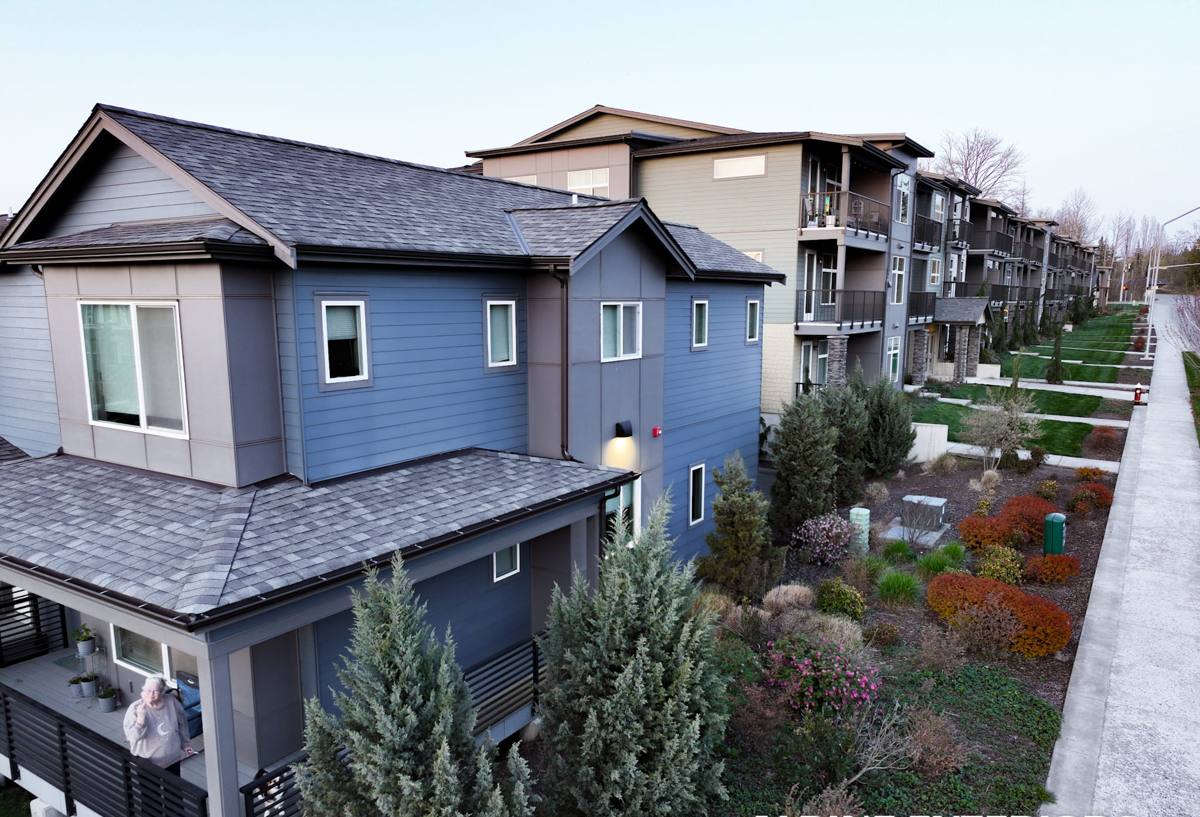
The Local Climate Factors That Matter Most
Salt Air and Persistent Moisture
Salt-laden air accelerates corrosion on fasteners, flashing, and any metal trim tied into the siding system, and it also keeps wall surfaces slightly damp longer than a dry-climate home would ever experience. Materials that rely on paint film or factory primer alone to keep moisture out are working overtime here, and any gap in that film becomes an entry point.
Driving Rain
Wind off the water doesn't just wet a wall — it drives water sideways and upward into laps, seams, and butt joints that a calm rain would never reach. Siding installed with generous lap coverage, correctly sequenced flashing, and tight, properly caulked joints handles this without issue. Siding installed to a bare-minimum spec often doesn't, and the first sign of trouble is usually water staining on interior trim or sheathing long after the exterior already failed.
A Long Moss and Algae Season
Shaded lots, tree cover, and consistent moisture add up to a moss and algae season that runs much longer here than in open, sunny neighborhoods. North-facing walls and anything under overhangs or big conifers stay damp for extended stretches, which is exactly the environment moss and mildew need to take hold. Siding that can't shed that moisture, or that has a painted or coated surface prone to breaking down, ends up needing pressure washing and repainting on a cycle that gets old fast.
What "Correct" Siding Replacement Actually Involves
A siding replacement is not just swapping old panels for new ones. Done right, it's a full envelope job, and skipping any of these steps is where most premature failures start.
- Tear-off and inspection. Remove the old siding and inspect the sheathing and framing underneath for rot, soft spots, or prior water intrusion. Anything compromised gets repaired before anything new goes up.
- Weather-resistive barrier. A continuous, correctly lapped water-resistive barrier goes over the sheathing, with special attention at seams, corners, and penetrations — this is the layer that actually stops bulk water, not the siding itself.
- Flashing at every penetration. Windows, doors, hose bibs, light fixtures, deck ledgers — every place something breaks the plane of the wall needs flashing that sheds water down and out, not into the wall cavity.
- Rainscreen or drainage gap where appropriate. A small air gap between the barrier and the siding lets any moisture that does get in drain and dry out instead of sitting against the wall.
- Correct fastening and lap coverage. Fastener spacing, embedment, and lap dimensions all follow the manufacturer's installation spec — not a shortcut version of it.
- Trim, caulking, and paint or factory finish. The last line of defense, and the one most likely to be rushed on a fast, low-bid job.
Every one of those steps matters more in a wet, salt-influenced, tree-shaded climate than it does somewhere dry. That's the honest reason a proper replacement here costs more and takes longer than a quick re-side — the extra time is going into the parts of the job nobody sees once it's finished.
Why We Install James Hardie — and Nothing Else
We stopped installing vinyl, LP SmartSide, primed wood, and other fiber cement brands years ago, and the decision came directly from what we kept seeing on Whatcom County homes, including plenty around the Lake Whatcom corridor. It's not that those products are worthless — vinyl is inexpensive and easy to install, engineered wood has real strength advantages, and other fiber cement brands can be reasonable products on paper. The problem is how they hold up specifically in a marine, high-moisture, moss-heavy environment over fifteen or twenty years, which is the timeframe that actually matters to a homeowner.
James Hardie fiber cement is non-combustible, dimensionally stable in wet-dry cycling, and doesn't feed moss and algae the way some wood-based and vinyl products can once a film of dirt and organic matter builds up. The ColorPlus factory finish is baked on under controlled conditions rather than field-applied, which gives it far more consistent coverage and weather resistance than a job-site paint job — and that matters enormously in a climate that gives paint film so little rest between storms. Hardie's HZ5 product line is engineered specifically for harsher, wetter climate zones like ours, and the transferable warranty backs it accordingly.
We only install one product because we'd rather be genuinely expert in one system — its flashing details, its fastening spec, its trim compatibility — than mediocre across five. In a climate this demanding, that specialization is what keeps a siding job looking right at year fifteen instead of year five.
Comparing Siding Options for Silver Beach's Climate
| Factor | Vinyl | Engineered Wood (e.g. LP SmartSide) | James Hardie Fiber Cement |
|---|---|---|---|
| Moisture tolerance | Doesn't rot, but can warp and gap, letting water behind it | Vulnerable at cut edges and joints if moisture gets in | Dimensionally stable wet or dry; won't rot |
| Moss/algae resistance | Textured surface can hold organic growth | Wood-based substrate is a food source if coating fails | Cementitious surface resists organic growth |
| Fire rating | Combustible | Combustible | Non-combustible |
| Finish durability | Can fade and chalk; not repaintable easily in some colors | Field or factory finish, coating-dependent | Factory-baked ColorPlus finish, long fade resistance |
| Typical service life (correctly installed) | 20–30 years | 20–30 years with strict maintenance | 30–50+ years |
This table reflects general industry-known trade-offs, not a claim that other products fail on every home — plenty are installed and maintained well. It's simply the reasoning behind why we standardized on one system for this climate.
Our Process for a Silver Beach Siding Replacement
We keep the process straightforward because a well-run job doesn't need to be complicated for the homeowner:
- Free on-site walk-through. We assess the existing siding, look for hidden moisture damage, and talk through what your home actually needs — not a generic package.
- Written estimate with real specs. You'll see the Hardie product line, the barrier and flashing approach, and the timeline in writing, not just a total price.
- Scheduling around the weather. Rain doesn't stop every phase of the job, but we sequence tear-off and barrier installation to minimize the window your walls are exposed.
- Daily site cleanup. Crews clear debris and fasteners each day the job is active — important with kids, pets, or neighbors nearby.
- Final walk-through. We go over the finished job with you before calling it done, including trim, caulking lines, and touch-up.
Signs Your Silver Beach Home May Need Siding Replacement Soon
Not every siding problem needs a full replacement — sometimes a repair or a repaint buys real time. But certain signs point to failure below the surface that a fresh coat of paint won't fix:
- Soft or spongy spots when you press on the siding, especially near the bottom courses or under windows
- Paint that keeps failing within a year or two of repainting, even on a properly prepped surface
- Persistent moss or algae staining that returns within months of cleaning
- Visible gaps, warping, or buckling panels, particularly after a windy, wet stretch
- Interior signs — peeling paint, musty smell, or discoloration on walls that back up to exterior siding
- Siding that's original to a home built more than 20–25 years ago with no major upgrade since
If you're seeing more than one of these, it's worth having someone look at what's underneath, not just what's on the surface.
What Drives the Cost of a Job Like This
Every home is different, and we don't quote sight-unseen, but a few factors consistently move the price on Silver Beach and Sudden Valley homes:
| Cost Factor | Why It Matters Here |
|---|---|
| Extent of hidden damage | Wet climates hide more rot behind old siding; more sheathing repair means more labor and material |
| Home access and site slope | Lake-adjacent lots often have steeper grades or limited staging space, affecting equipment and labor time |
| Trim and detail complexity | Multiple gables, dormers, or trim styles multiply flashing and cutting time |
| Siding profile chosen | Lap width, shingle-style panels, and board-and-batten each have different material and labor costs |
| Tear-off scope | Full removal to bare sheathing versus a simpler re-side changes both time and dump fees |
Why a Crew That Already Works This Area Matters
A contractor who regularly works Silver Beach and the broader Sudden Valley community already knows what to expect before they show up — the moisture patterns on shaded, tree-covered lots, how wind off the water hits certain elevations harder than others, and which older homes in the area tend to have specific sheathing or flashing issues from how they were originally built. That local pattern recognition shortens the inspection phase and helps catch problems before they become surprises mid-job. It also means we're not learning Whatcom County's climate on your home — we're applying what we've already seen on homes like yours nearby.
If your siding is showing its age, or you just want a straight answer about what's really going on underneath it, we're happy to come take a look. The estimate is free, there's no pressure, and you'll get a plain-English explanation of what we find — fill out the form below to get started.