 Sudden Valley Siding
 Siding Installation in Fairhaven: Built for a Coastline, Not a Catalog
Fairhaven sits close enough to the water that homes here take on weather most inland Whatcom County properties never see. Salt-laden air off Bellingham Bay, wind-driven rain that hits siding sideways instead of straight down, and a long, damp moss season that can run from fall through spring all put steady pressure on exterior cladding. Siding installation in this pocket of the county isn't a one-size-fits-all job — it's a job that has to account for how water moves, where salt settles, and how much shade a lot gets before the crew ever picks up a nail gun.
We install James Hardie fiber cement siding, and only James Hardie. That's not a marketing line — it's a standard we hold because we've seen what marine-adjacent climates like Fairhaven's do to siding materials that weren't engineered for sustained moisture exposure and salt cycling. This page covers what that means for a Fairhaven home specifically, and what a correctly done installation actually involves.
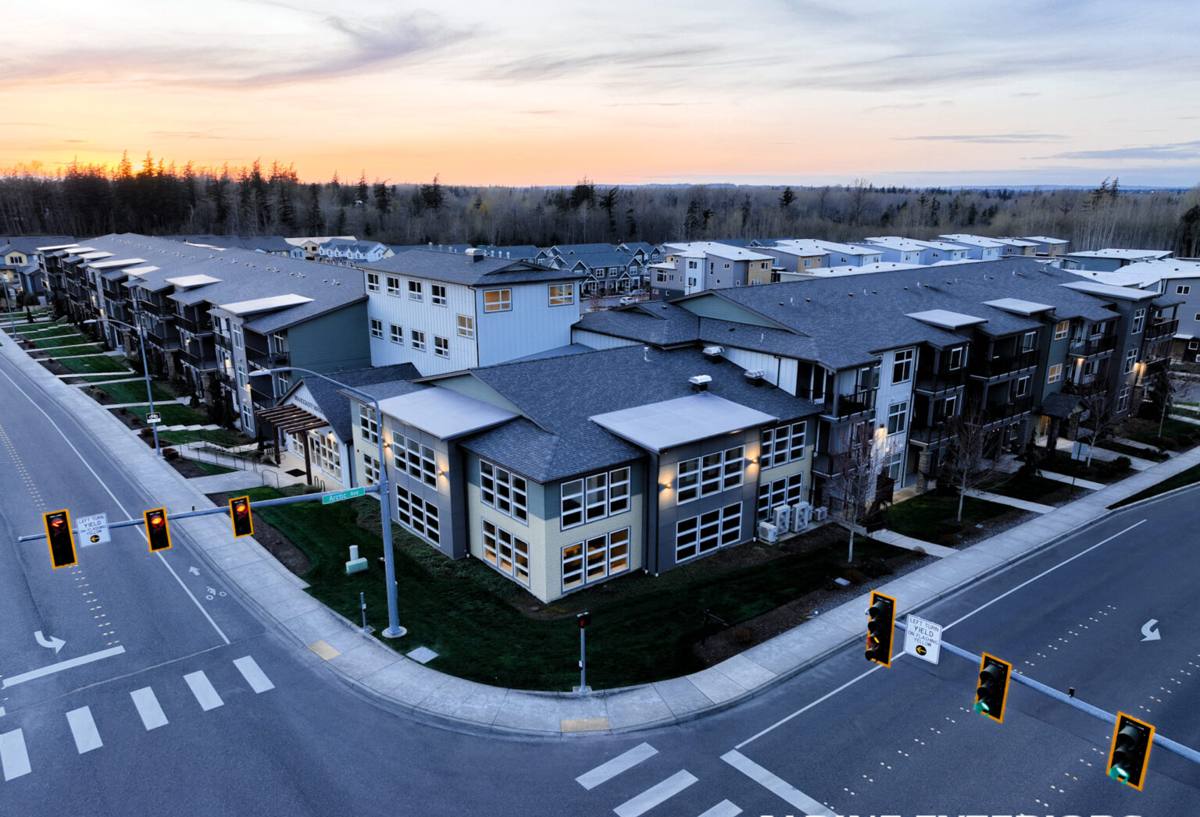
Why Fairhaven's Climate Is Harder on Siding Than People Expect
Salt Air
Properties near Bellingham Bay get a steady, low-grade dose of airborne salt. Over years, salt exposure accelerates the breakdown of fasteners, coatings, and caulk joints that weren't specified for coastal use. It doesn't destroy siding overnight — it just shortens the life of every component that isn't rated for it, which is why fastener choice and finish quality matter more here than on a home twenty miles inland.
Driving Rain
Wind off the water doesn't let rain fall straight down — it pushes it sideways and up under laps, trim, and penetrations. Siding that relies on caulk and paint alone to stay watertight will eventually let moisture behind the cladding. The assembly behind the siding — the weather-resistive barrier, the flashing, the drainage plane — has to do the real work, because on a wind-driven-rain site the siding itself is the second line of defense, not the first.
Moss and Prolonged Dampness
Western Whatcom County's shaded, moisture-holding conditions mean moss and algae can colonize any siding surface that stays damp too long, especially on north-facing walls and under tree canopy. Wood-based products absorb that moisture and can start to soften or delaminate underneath the growth. A material that doesn't absorb water in the first place removes that failure path entirely.
What a Correct Installation Involves
A siding job in a climate like Fairhaven's is won or lost in the parts you can't see once it's finished. We treat the following as non-negotiable, not upsells.
Weather-Resistive Barrier and Rain Screen
Every installation starts with a continuous weather-resistive barrier, properly lapped and sealed at every seam and penetration. On sites exposed to driving rain, we install a rain screen gap behind the siding so any moisture that does get past the cladding can drain and dry instead of sitting against the wall assembly.
Flashing at Every Transition
Windows, doors, deck ledgers, roof-to-wall intersections, and any other place two building elements meet are where water intrusion actually starts. Correct flashing detail at each of these transitions matters more than the siding product itself — the best cladding in the world can't compensate for a poorly flashed window head.
Fasteners and Hardware Rated for Coastal Exposure
We use corrosion-resistant fasteners specified for the exposure level of the site, not whatever is cheapest by the box. On a property this close to salt air, standard fasteners can start showing surface corrosion well before the siding itself shows any wear — and a rusting fastener head telegraphs staining through even a good finish.
Manufacturer-Spec Fastening and Joint Treatment
James Hardie publishes specific nailing patterns, fastener spacing, and joint-treatment requirements for a reason — deviating from them is the single biggest cause of premature siding failure and voided warranty claims industry-wide. We install to spec, every time, because it's the only way the product performs and warranties the way it's supposed to.
Our Process, Start to Finish
- On-site assessment — we walk the exterior, check for existing moisture damage, and evaluate exposure (sun, shade, prevailing wind, roof runoff patterns).
- Written estimate — a clear scope covering removal, any sheathing repair, weather barrier, rain screen (where applicable), James Hardie product line and profile, color, and trim.
- Tear-off and inspection — old siding comes off and the sheathing underneath gets inspected for rot or moisture damage before anything new goes up. Problems found here get addressed, not covered.
- Weather barrier and flashing — the drainage plane and flashing details go in first, correctly lapped, before a single piece of visible siding is installed.
- Siding installation to manufacturer spec — proper fastener spacing, clearances, and joint treatment throughout.
- Final walkthrough — we go over the finished job with the homeowner and address anything that isn't right before we call it done.
James Hardie Compared to Other Siding Choices
| Factor | James Hardie Fiber Cement | Vinyl | Wood / Primed Spruce |
|---|---|---|---|
| Moisture absorption | Very low | Low, but can warp/buckle | High — absorbs and swells |
| Salt air / coastal durability | Engineered for high-exposure zones (HZ product lines) | Can become brittle over time | Prone to accelerated rot near salt exposure |
| Moss/algae resistance | Factory finish resists staining; doesn't feed growth | Resists moisture but shows dirt/algae film | Absorbs moisture, feeds moss and rot |
| Fire resistance | Non-combustible | Combustible, can melt/deform | Combustible |
| Finish longevity | ColorPlus factory finish, long warranty | Color baked into material but can fade/chalk | Requires repainting on a recurring cycle |
We don't install vinyl, LP SmartSide, Cemplank, Allura, primed spruce, or cedar. Each has legitimate uses elsewhere, but for the moisture and salt exposure a Fairhaven property deals with, James Hardie's fiber cement is the product we're willing to stand behind with our own installation.
What Drives Cost on a Fairhaven Siding Job
| Factor | Why It Matters |
|---|---|
| Existing sheathing condition | Rot or moisture damage found during tear-off adds repair scope before new siding goes on |
| Home size and wall complexity | More corners, gables, and trim details mean more labor and material cuts |
| Product line and profile | James Hardie offers multiple plank widths, textures, and panel styles at different price points |
| Rain screen inclusion | Adds a drainage layer behind the siding, recommended on wind-exposed sites |
| Access and site conditions | Steep lots, limited staging area, or extensive landscaping protection affect labor time |
We give a written, itemized estimate before any work starts — no ballpark verbal numbers that change once the crew shows up.
Signs a Fairhaven Home Needs New Siding
- Persistent moss or algae growth that returns shortly after cleaning
- Soft or spongy spots when you press on wood-based siding
- Visible cracking, warping, or buckling panels
- Paint that's peeling, bubbling, or failing faster than a normal repaint cycle would suggest
- Staining streaks below fasteners or seams, often a sign of moisture or corroding hardware
- Rising energy bills that point to a compromised weather envelope
- Visible daylight or drafts around siding edges near windows and doors
Why Hiring a Crew That Already Works Fairhaven Matters
A crew that regularly works this stretch of Whatcom County has already seen how salt air, driving rain, and moss-season dampness play out on real homes here — not in a training manual, but on jobs down the street. That experience shows up in small decisions: where to add extra flashing attention, which walls need a rain screen even when it's not strictly required, and how to sequence a tear-off around this region's wet stretches so sheathing doesn't sit exposed longer than it has to. It also means a company that's still around and reachable if a warranty question comes up years down the line, not a crew that worked the coast for one season and moved on.
Caring for James Hardie Siding After Installation
One advantage of fiber cement over wood-based alternatives is how little ongoing maintenance it needs. A rinse with a garden hose once or twice a year removes salt residue and surface dirt before it can build up. Keep an eye on caulk joints around windows, doors, and trim, and have any cracked or missing caulk replaced promptly — that's the one component that does age faster than the siding itself. Trim back vegetation and tree limbs that keep walls shaded and damp, since reducing moss growth starts with reducing the conditions moss needs.
If your Fairhaven home's siding is showing its age, or you're planning ahead rather than waiting for a problem, we're happy to walk the exterior with you and give you a straight, no-pressure estimate. Use the form below to get started.