 Sudden Valley Siding
 Why Fairhaven Siding Wears Out Differently
Fairhaven sits close enough to the water that salt-laden air is a constant, low-grade stressor on exterior materials — not a once-a-year event but a daily condition. Combine that with Whatcom County's long wet season, where driving rain comes in sideways off the water for days at a stretch, and you get a climate that's genuinely harder on siding than most of the country deals with. Add a moss season that can run eight or nine months out of the year on north-facing and shaded walls, and it's easy to see why siding here fails faster than the manufacturer's brochure numbers suggest.
None of this is exotic. It's the same combination of salt, moisture, and organic growth that coastal Pacific Northwest homes have always dealt with. The difference is what the siding is made of and how it was installed. Some materials shrug off decades of this. Others start showing problems in five to ten years — swelling at the edges, soft spots at the bottom courses, streaking and moss staining that no amount of pressure washing fully removes.
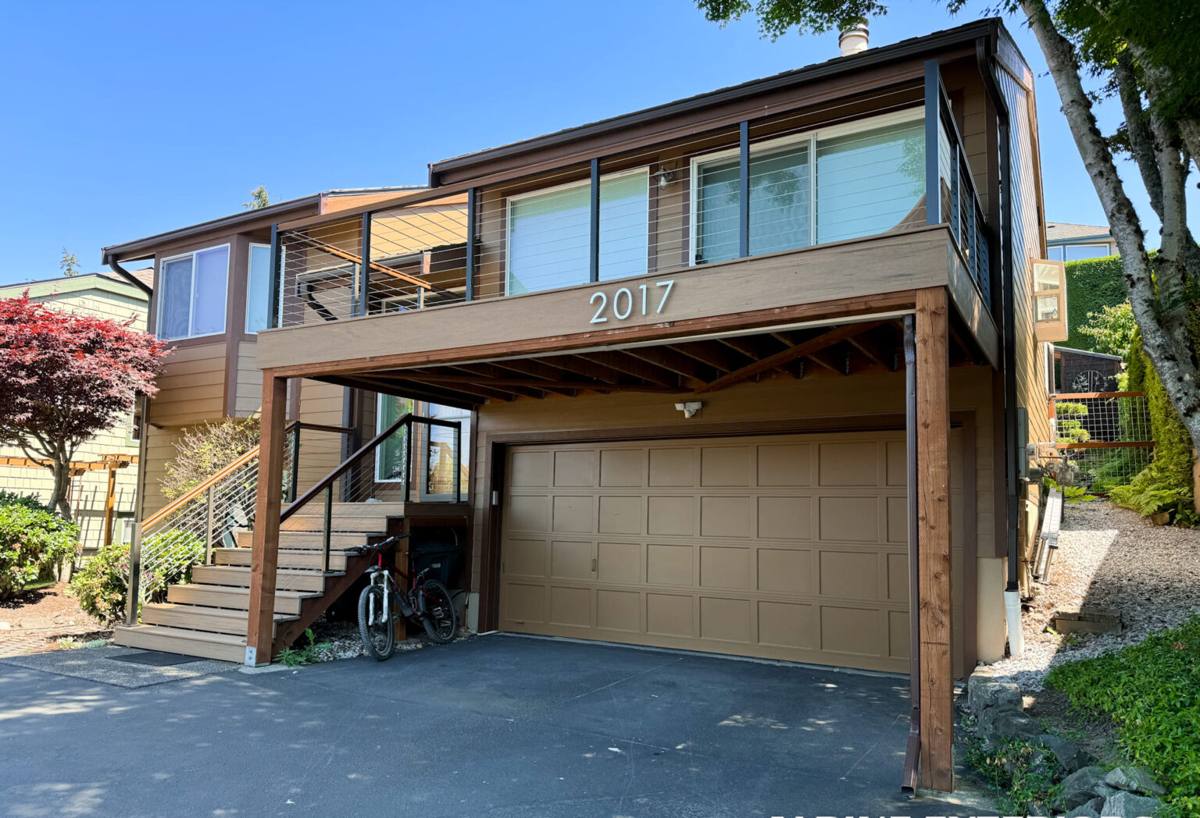
What Fairhaven's Climate Actually Does to a Wall System
Salt Air
Airborne salt accelerates corrosion on fasteners, flashing, and any exposed metal trim. It also settles into porous or wood-based siding surfaces, holding moisture against the material longer than it would hold on an inland home. Over years, that moisture cycling is what breaks down paint film, glue lines, and wood fiber.
Driving Rain
Wind-driven rain doesn't just wet the surface of a wall — it tests every seam, joint, and fastener penetration. A siding system with weak water management (poor flashing details, insufficient overlap, gaps at trim) will let water behind the cladding eventually. Once water gets behind siding and can't dry out between storms, rot and mold follow.
Moss and Organic Growth
Constant dampness plus shade equals moss, algae, and mildew on north and west-facing walls especially. Moss holds water against the siding surface far longer than open air would, which compounds every other problem above. It also tends to work into seams and butt joints, prying them open over time.
Signs a Fairhaven Home Needs Siding Replacement Now
- Soft or spongy spots when you press on the siding, especially near the bottom of walls or below windows
- Paint that won't hold — blistering, peeling, or needing repainting every few years instead of every decade-plus
- Visible warping, cupping, or gaps opening up at seams and corners
- Persistent moss or algae staining that returns within a season of cleaning
- Musty smell or visible mold on interior walls that back up to exterior siding
- Siding that's original to a home built before fiber cement became standard in this area
Any one of these can be a localized repair. Several together, especially on a home that's had multiple wet seasons of unaddressed moisture, usually means it's time to talk about full replacement rather than another round of patching.
What a Correct Siding Replacement Actually Involves
Replacement siding is only as good as what's underneath it. A rushed tear-off and reinstall over hidden problems just buries those problems under new material for a few years. A correct job includes:
Tear-Off and Inspection
Full removal of the old siding, not overlay. This is the point where sheathing, framing, and any hidden water damage get exposed and addressed — not discovered five years later when the new siding starts failing in the same spots as the old.
Water-Resistive Barrier
A properly lapped, correctly installed weather-resistive barrier behind the siding is what actually keeps wind-driven rain from reaching the sheathing. This layer matters as much as the siding itself in a climate like Fairhaven's.
Flashing at Every Penetration
Windows, doors, hose bibs, light fixtures, and any other wall penetration need proper flashing and sealant details. This is where most water intrusion problems actually start — not through the siding face itself, but around what interrupts it.
Manufacturer-Spec Installation
Fastener type, spacing, clearance from grade and roof lines, and joint treatment all need to follow the manufacturer's installation instructions exactly. This isn't a formality — it's what the product warranty is conditioned on, and it's what determines whether the siding actually performs the way it's engineered to in wet, salty conditions.
Why We Install Only James Hardie Fiber Cement
We standardized on James Hardie fiber cement siding and don't install vinyl, LP SmartSide, primed wood, cedar, or other fiber cement brands. That's a deliberate choice, not a default. Here's the honest reasoning:
- Non-combustible core. Fiber cement is made from cement, sand, and cellulose fiber — it doesn't burn, warp from heat, or contribute fuel in a wildfire-adjacent exposure the way some wood-based or engineered wood products can.
- Engineered for this climate. Hardie's HZ5 product line is specifically formulated for wetter, harsher climate zones like the Pacific Northwest, addressing moisture and freeze-thaw performance rather than treating every region the same.
- Factory-applied ColorPlus finish. The finish is baked on at the factory under controlled conditions, which gives it more consistent durability against fading, chipping, and moisture intrusion than field-applied paint on other materials — a real advantage where repainting every few years isn't realistic to expect homeowners to keep up with.
- Doesn't feed moss and mildew the way organic materials can. As a cement-based product, it doesn't provide the same organic food source that wood-based sidings do, which matters directly in Fairhaven's long moss season.
- Warranty structure. A strong, transferable manufacturer warranty backed by correct installation gives homeowners real protection, not just a marketing claim.
We're not going to tell you every other siding product is worthless — vinyl and engineered wood sidings have legitimate use cases and price points, and other contractors install them well. Our position is narrower: given what we see happen to siding in salt air, driving rain, and heavy moss exposure specifically, we don't think those products hold up as well here over the long run, and we'd rather install one product correctly than several products at varying quality. That's the whole reason we only do Hardie.
Our Fairhaven Replacement Process
- On-site assessment — we walk the exterior, check for soft spots, moisture damage, and problem areas around windows, doors, and roof lines
- Written estimate — scope, product selection (siding profile, color, trim), and timeline laid out clearly before any work starts
- Tear-off — full removal of existing siding and inspection of sheathing and framing underneath
- Repair as needed — any rotted sheathing, framing, or hidden damage gets addressed before new material goes up, not covered over
- Water-resistive barrier and flashing — installed and lapped correctly at every seam and penetration
- Hardie installation — installed to manufacturer spec for fastening, clearance, and joint treatment
- Final walkthrough — we go over the finished work with you before calling the job done
Cost Factors in Fairhaven Siding Replacement
| Factor | Why It Affects Cost |
|---|---|
| Home size and wall complexity | More square footage and more corners, gables, and dormers mean more material and labor time |
| Extent of hidden damage | Rot or moisture damage found during tear-off adds sheathing or framing repair before new siding goes up |
| Siding profile and trim detail | Lap width, shingle-style panels, and trim boards vary in material and labor cost |
| Access and site conditions | Slopes, tight lot lines, and landscaping near the home can affect staging and labor time |
| Removal and disposal | Tear-off and haul-away of old siding is part of a full replacement, not an add-on |
We don't quote ballpark numbers on a page like this because every home is different — a small single-story with straightforward walls and a large two-story with lots of trim detail are not comparable jobs. A walkthrough is the only honest way to give you a real number.
Why It Matters That We Already Work Fairhaven
A crew that regularly works this stretch of Whatcom County already understands the specific water and salt exposure patterns on Fairhaven homes — which walls take the worst of the driving rain, where moss builds up fastest, and what flashing details actually hold up here versus what looks fine on paper. That local pattern recognition shows up in the details: where we pay extra attention during tear-off, how we handle penetrations on the weather-facing walls, and what maintenance advice we give you once the job is done. It's a different level of judgment than a crew seeing this climate for the first time.
Maintenance After Replacement
Correctly installed Hardie siding is low-maintenance, not no-maintenance. In Fairhaven's climate, that means:
- Rinsing off salt residue and grime periodically, especially on walls facing the water
- Keeping vegetation and irrigation trimmed back from siding to allow airflow and drying
- Checking caulking around windows and trim annually and re-sealing if it's cracked or pulling away
- Addressing any moss buildup gently — soft washing rather than aggressive pressure washing that can damage the finish
Questions to Ask Before Hiring a Contractor
- Are they James Hardie certified installers, and can they explain why they chose the product line they're recommending for your specific walls?
- Do they include full tear-off and sheathing inspection in their scope, or just an overlay?
- What's their approach to flashing at windows, doors, and other penetrations?
- Can they walk you through what happens if they find hidden moisture damage during tear-off?
- Do they have experience specifically in coastal Whatcom County conditions, not just siding in general?
If your Fairhaven home's siding is showing its age or you're just planning ahead, we're happy to take a look and give you a straightforward, no-pressure estimate — no obligation, just an honest read on what your home actually needs. The form below gets you started.