 Sudden Valley Siding
 Why Fairhaven Homes Need Siding Built for This Climate
Fairhaven sits close enough to the water that salt air is a daily fact of life, not an occasional nuisance. Add Whatcom County's long wet season, driving rain that comes in sideways off Bellingham Bay, and a moss season that can stretch from fall through spring, and you've got a climate that is genuinely hard on exterior building materials. Siding here doesn't just need to look good — it needs to shed water fast, resist moisture intrusion at every seam, and hold its finish without chalking, swelling, or feeding mold and algae growth year after year.
We install James Hardie fiber cement siding exclusively, and Fairhaven is exactly the kind of neighborhood that shows why. This page walks through what this climate actually does to siding, what a correct James Hardie installation looks like for homes in this area, and how our process works from first call to final walkthrough.
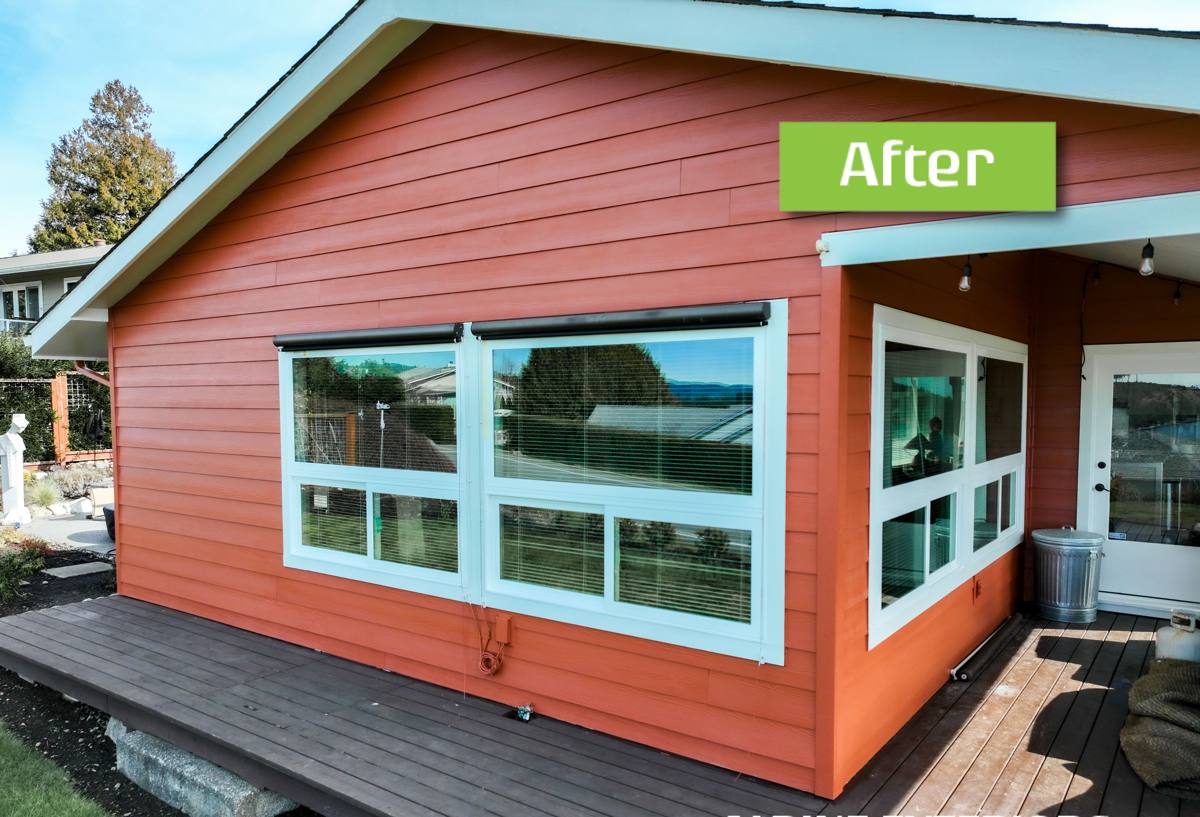
What Salt Air, Rain, and Moss Actually Do to Siding
Salt Air
Airborne salt is corrosive and it doesn't stay near the shoreline — wind carries it well inland, especially in a place with as much marine exposure as this stretch of Whatcom County. Salt accelerates the breakdown of many painted and coated surfaces, pits and corrodes exposed metal fasteners and trim, and speeds up fading on lower-quality paint finishes. Materials that rely on a thin surface coating for weather protection are the most vulnerable, because once that coating is compromised, the substrate underneath is exposed directly to salt-laden moisture.
Driving Rain
Rain that falls straight down is one problem. Rain that gets pushed sideways by coastal wind is a different, harder problem — it finds horizontal laps, butt joints, and trim intersections that would stay dry in a calmer climate. Any siding system with weak seams, poor flashing details, or a material that absorbs water at the edges is going to take on moisture over time, even if it looks fine from the curb.
Moss and Algae Season
Western Washington's combination of moisture, shade, and mild temperatures is close to ideal for moss and algae growth on north-facing and shaded exterior walls. Organic growth isn't just cosmetic — it holds moisture against the siding surface for extended periods, which is exactly the condition that causes rot in wood-based products and accelerates finish failure in lower-grade materials.
Why We Standardized on James Hardie for Coastal Whatcom County Homes
James Hardie fiber cement is engineered from cement, sand, and cellulose fibers — it's non-combustible, dimensionally stable, and doesn't absorb and swell with moisture the way wood-based or wood-composite sidings can. For a neighborhood like Fairhaven, three things about the Hardie system matter most:
- ColorPlus factory finish: baked-on, not brushed-on, so the finish resists fading, chalking, and chipping far better than field-applied paint — which matters when salt air is working against the finish every day.
- HZ5 engineered formulation: Hardie makes climate-specific product lines, and the HZ5 formulation is built for wetter, harsher climate zones — better suited to sustained damp conditions than a generic one-size-fits-all product.
- Dimensional stability: fiber cement doesn't expand and contract with moisture the way wood does, so seams stay tighter and paint lines don't telegraph cracks the way they can on wood or composite siding.
This is also why we don't install vinyl, LP SmartSide, cedar, primed spruce, Cemplank, or Allura. Vinyl can warp and become brittle with UV and temperature swings, and its seams rely on overlap rather than a sealed system. Wood-based products, even engineered ones, are more susceptible to moisture absorption at cut edges and fastener penetrations — a real liability in a climate where wall assemblies stay damp for months at a time. Cemplank and Allura are fiber cement products too, and they're not bad materials, but we've standardized on one system, one warranty structure, and one set of installation specs so every crew member trains on the same product and every homeowner gets the same accountability. That consistency is worth more to us — and to the homes we work on — than offering five different products and mastering none of them.
What Correct Installation Looks Like Here
Fiber cement siding is only as good as the installation behind it. In a high-moisture, wind-driven-rain environment, the details that get skipped on a rushed job are exactly the details that cause callbacks two or three years later. A correct install for a Fairhaven-area home includes:
- A properly detailed water-resistive barrier (weather wrap) installed shingle-style so every layer sheds water downward and outward
- Rain screen or drainage gap where the wall assembly calls for it, so moisture that does get behind the siding has somewhere to drain and dry
- Correct nailing pattern and fastener spacing per Hardie's published specs — over-driven or under-driven nails are one of the most common causes of early siding failure
- Proper flush-mount or blocked butt joints with sealant only where Hardie specifies it, not as a substitute for correct flashing
- Z-flashing above every horizontal trim board and window head, so water is directed out and away instead of down into the wall
- Minimum clearance from grade, roof lines, and decks per Hardie's installation manual — tight clearances trap moisture against the bottom courses
- Caulking and touch-up only at manufacturer-approved locations, using compatible sealants that won't degrade the ColorPlus finish
Skipping any one of these doesn't usually cause a visible problem right away. It shows up as a soft spot near a window two winters later, or a streak of moss and staining where water has been sitting instead of draining. That's the gap between siding that's installed and siding that's installed correctly.
Our Process for Fairhaven Jobs
1. On-Site Assessment
We walk the exterior, check the condition of the existing siding and sheathing, look at drainage and grading around the foundation, and identify any areas with existing moisture damage or moss buildup that need attention before new siding goes on.
2. Product and Color Selection
We help you choose the right Hardie plank profile, texture, and ColorPlus color for the home, factoring in sun exposure and how much shade the walls get — shaded, north-facing walls are the areas most prone to moss and algae, and that affects both color choice and maintenance expectations.
3. Prep and Removal
Old siding comes off, sheathing is inspected and repaired as needed, and the water-resistive barrier is installed correctly — this step is where most long-term siding failures actually originate, so we don't rush it.
4. Installation to Manufacturer Spec
Every course, fastener, and flashing detail follows Hardie's published installation guidelines, not shortcuts. This is also what keeps the manufacturer's warranty valid — improperly installed Hardie siding can void warranty coverage even though the material itself is sound.
5. Final Walkthrough
We review the finished work with you, cover basic maintenance expectations for this climate, and make sure you know what normal weathering looks like versus something that would need attention.
Cost Factors for a Fairhaven James Hardie Project
Every home is different, so we don't quote pricing without seeing the job, but these are the factors that typically move the number:
| Factor | Why It Matters |
|---|---|
| Home size and wall complexity | More corners, dormers, and trim details mean more labor and material |
| Condition of existing sheathing | Rot or moisture damage found during removal adds repair scope |
| Siding profile and texture | Lap width, shingle-style panels, and board-and-batten each price differently |
| Trim and accessory scope | Fascia, soffit, and trim replacement alongside siding changes total cost |
| Access and site conditions | Slopes, tight lot lines, and landscaping affect staging and labor time |
Maintenance in a Marine, Moss-Prone Climate
James Hardie siding is low-maintenance compared to wood, but "low-maintenance" isn't "no-maintenance" in this climate. A quick annual check matters:
- Rinse dirt, pollen, and salt residue off with a garden hose or low-pressure wash — avoid high-pressure washing directly at seams and edges
- Check shaded, north-facing walls for early moss or algae growth and address it before it spreads or holds moisture
- Inspect caulking at trim and window intersections annually and touch up if it's cracked or pulling away
- Keep vegetation and sprinkler spray trimmed back from the siding to reduce constant moisture contact
- Watch gutters and downspouts near siding — overflow during heavy rain events is a common source of localized water damage
Why a Crew That Already Works This Area Matters
Whatcom County's coastal microclimates aren't uniform — a shaded lot near the water behaves differently than an open lot a mile inland. A crew that's installed siding across this area knows which walls need extra attention to drainage detailing, how local moss patterns behave through the wet season, and what wind-driven rain actually does to flashing details in this specific environment. That local pattern recognition is the difference between a technically correct install on paper and one that's actually built for the conditions the home will face for the next thirty-plus years.
If you're considering new siding for a Fairhaven-area home, we're happy to walk the property, look at what's there now, and give you a straightforward, no-pressure estimate for James Hardie siding done right. There's a form below — reach out and we'll get you scheduled.