 Sudden Valley Siding
 Deck Repair Built for Fairhaven's Coastal Climate
Decks in the Fairhaven area take a different kind of beating than decks on the dry side of the state. Between the salt-laden air rolling in off the water, the driving rain that Whatcom County sees for months at a stretch, and a moss season that seems to start earlier every year, a deck out here ages faster than most homeowners expect. We repair decks for families in and around Sudden Valley and the greater Bellingham area, and the calls we get from this corner of Whatcom County tend to have a common thread: soft spots near the house, slick moss-covered boards, and hardware that's rusted out well before the wood around it gave up.
This page is about deck repair specifically — not replacement, not new builds. If your deck has good bones but is showing its age in specific spots, repair is very often the right call, and it's almost always the more honest recommendation than telling every homeowner they need a full teardown.
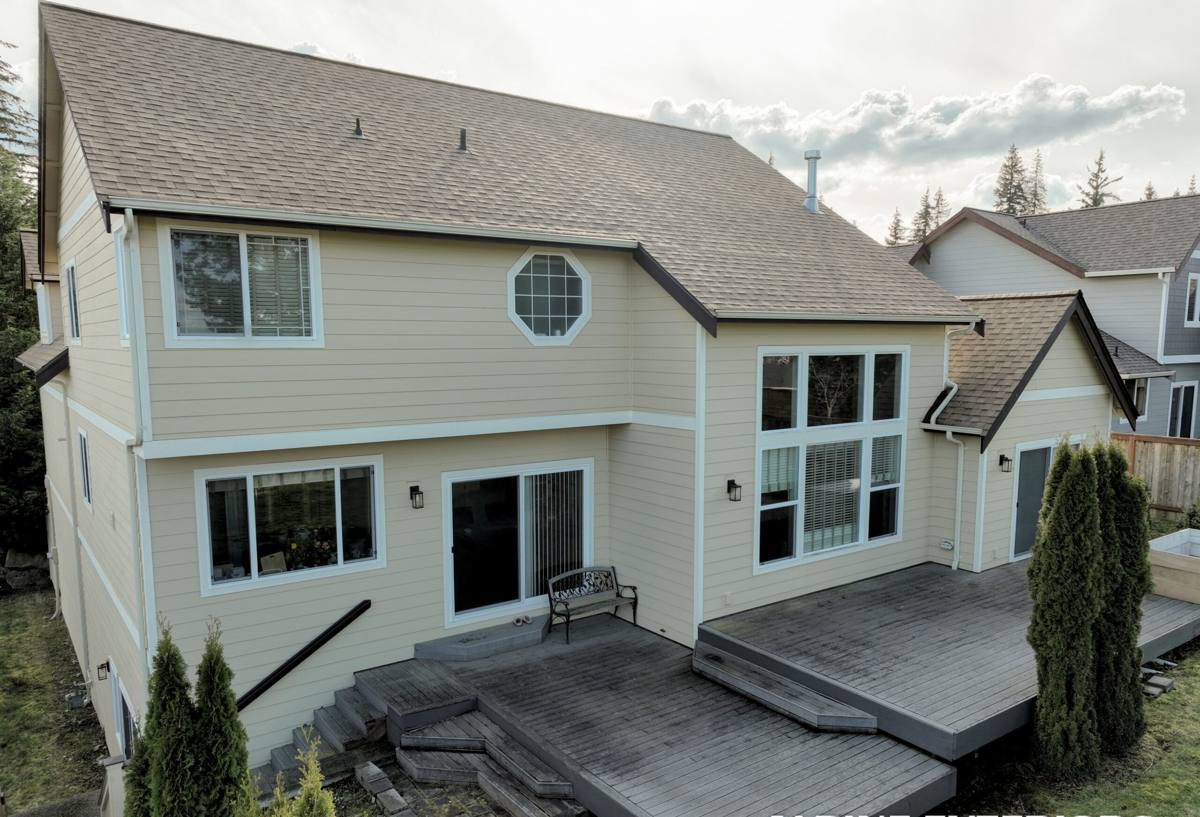
What Whatcom County Weather Does to a Deck
Understanding the damage pattern is half the battle. Out here, three things work against a deck at the same time, and they compound each other.
Moisture that never fully lets go
Long stretches of drizzle followed by short bursts of sun mean deck boards rarely get a real chance to dry out completely. Moisture wicks into end grain, settles in ledger board connections, and sits under anything that traps debris. Wood that's constantly damp but never fully saturated is actually worse for rot fungus than wood that dries out between rains — it's the ideal condition for decay to set in slowly and invisibly.
Salt air and hardware corrosion
Proximity to Bellingham Bay and the Puget Sound air means fasteners, joist hangers, and structural screws corrode faster than they would inland. Galvanized coatings that would last decades in a dry climate can start showing rust bloom in half that time here. Corroded hardware is one of the most common things we find when we open up a deck that looks fine from the top.
Moss, algae, and the traction problem
Moss doesn't just look bad — it holds water against the board surface, breaks down the wood fibers underneath it, and turns stairs and landings into a slip hazard for a good chunk of the year. A deck that's shaded by trees or sits on the north side of the house will grow moss noticeably faster than one in open sun, which is why moss patterns are rarely uniform across a single deck.
Signs Your Fairhaven-Area Deck Needs Repair
Most deck failures don't happen all at once. They show up as small warning signs first, usually in predictable places — near the house, near the stairs, and at ground contact points.
- Soft or spongy boards, especially near the ledger board where the deck meets the house
- Visible gaps opening up between the ledger and the house siding or trim
- Railings or posts that flex or wobble more than they used to
- Rust streaks bleeding out from screw heads or joist hangers
- Persistent moss or dark staining that keeps coming back within weeks of cleaning
- Stair stringers that feel spongy or show splitting at the cut ends
- A musty smell coming from underneath the deck
- Boards that have cupped, crowned, or checked (long surface cracks) more than a little
Any one of these on its own might just mean a board swap. Several of them together, especially clustered near the ledger or stairs, usually means it's time for a closer structural look.
What a Correct Repair Actually Involves
A deck repair that's done right isn't just pulling a bad board and dropping in a new one. It starts with figuring out why that board failed, because if the cause is still there — a flashing gap, a drainage problem, a hardware issue — the replacement board will fail the same way in a few years.
A proper repair sequence generally looks like this:
- Inspect the full structure from underneath, not just the walking surface — joists, beams, posts, and footings
- Check the ledger board connection and flashing, since this is the single most common source of hidden rot on an attached deck
- Test hardware for corrosion, not just visible rust — a fastener can look intact on the surface and still be compromised
- Identify and fix the moisture source before replacing any decking, whether that's poor flashing, missing drainage, or plant growth trapping water against the structure
- Replace failed boards, framing members, or hardware with materials matched to the load and exposure of that specific area
- Re-check fastening patterns and railing attachment for current structural standards, since older decks were often built to lighter specs than are advisable today
Skipping the diagnostic step is the most common shortcut in this trade, and it's the reason some homeowners end up paying for the same repair twice.
Repair vs. Replacement: How We Decide
| Condition | Repair usually makes sense | Replacement usually makes sense |
|---|---|---|
| Framing (joists, beams, posts) | Isolated soft spots, otherwise solid | Widespread rot or undersized framing throughout |
| Ledger connection | Flashing issue, framing behind it is sound | Rot has spread into the house rim joist |
| Decking boards | Scattered bad boards, rest holding up | Most boards cupped, splitting, or soft |
| Railings and stairs | Loose posts, worn balusters | Structural stringers compromised |
| Footings | Solid, level, adequate size | Undersized, heaving, or below current code depth |
Our Process for Fairhaven and Sudden Valley Homes
We work this stretch of Whatcom County regularly, which matters more than it might seem. A crew that's already familiar with how deck damage tends to show up on this side of the county — the moss patterns, the corrosion timelines, the drainage quirks of hillside and lakeside lots near Sudden Valley — spends less time guessing and more time fixing the actual problem.
Our repair visits follow a straightforward process:
- On-site inspection: we walk the deck top and bottom, checking framing, hardware, and drainage before recommending anything
- Honest scope: we tell you what's actually failing versus what's just cosmetic, and we won't push a full rebuild when a targeted repair will hold up
- Clear plan and range: you get a straightforward explanation of what needs to happen and a realistic cost range before work starts
- Repair work: framing, hardware, decking, or railing work performed to hold up against this region's rain and salt-air exposure
- Walkthrough: we show you what was fixed and what to keep an eye on going forward
Materials We Use and Why
Material choice on a repair matters just as much as it does on a full build, because mixing incompatible materials or under-spec'd hardware into an existing structure creates new weak points.
Framing and structural repairs
For joists, beams, and posts, we use pressure-treated lumber rated for ground contact where it's called for, and we match or upgrade fastener hardware to stainless or heavy-duty coated options in areas exposed to salt air. Mixing old, corroded hardware with new lumber is a common mistake we specifically avoid.
Decking surface options
Depending on the deck and the homeowner's priorities, we'll repair with matching wood decking, or discuss composite as a replacement option for boards that keep failing. Composite carries a higher upfront cost but resists moisture absorption and moss staining better than wood over the long run — it's a maintenance trade-off worth talking through, not an automatic upgrade for every deck.
Fasteners and connectors
Given the corrosion rate we see in this climate, we lean toward stainless steel or high-grade coated fasteners for anything structural, even when it costs a bit more upfront. Cheaper fasteners are the single most common repeat-failure point we find on decks we're asked to look at a second time.
Maintenance That Actually Slows Down the Next Repair
No deck repair is truly "done" once and forever in this climate — but the right upkeep habits stretch the time between repairs considerably.
- Clear moss and debris from board surfaces and gaps before it has a chance to hold moisture through the winter
- Keep gutters and downspouts directing water away from the deck structure, not onto it
- Trim back vegetation that shades the deck and keeps it damp longer than the rest of the yard
- Check railing and stair connections once a year for looseness before it becomes a safety issue
- Reseal or refinish wood decking on the schedule the product calls for, not just when it visibly looks dry
Why Hiring a Crew That Already Works This Area Matters
Deck repair advice that works for a dry inland climate doesn't always hold up out here. A crew unfamiliar with Whatcom County's rain patterns and salt-air exposure might spec the wrong hardware, miss a flashing detail that's obvious to anyone who's seen it fail before, or underestimate how fast moss returns without the right prep work. Working regularly in and around Sudden Valley and Fairhaven means we've already seen how these specific conditions play out on real decks, not just in a manual.
It also means straightforward logistics — someone who knows the area can get to your property, take an honest look, and give you a clear scope without the guesswork that comes from a crew working outside their usual territory.
Get an Honest Look at Your Deck
If your deck has soft spots, rust streaks, stubborn moss, or a rail that's started to wobble, it's worth getting a professional opinion before those small issues turn into a bigger, more expensive fix. We offer free, no-pressure estimates for deck repair in the Fairhaven and Sudden Valley area — fill out the form below and we'll take a look.