 Sudden Valley Siding
 What Yew Street Homes Need From a Metal Roof
Homes along Yew Street sit in a part of Sudden Valley where the roof does more work than most homeowners realize. Between the humidity that rolls off Lake Whatcom, the wind-driven rain that comes through in fall and winter, and the tree cover that keeps roofs shaded and damp for long stretches of the year, a roofing system here has to handle moisture management, wind uplift resistance, and moss resistance all at once. A metal roof, installed correctly, is one of the better answers to that combination — but "installed correctly" is doing a lot of work in that sentence, and it's where a lot of jobs in this area go wrong.
This page is specifically about metal roofing for Yew Street properties, not a general overview of metal roofing everywhere. The panel choice, fastener spacing, underlayment strategy, and maintenance plan that make sense on a dry, open lot in eastern Washington are not the same choices that make sense on a shaded, moisture-heavy lot in Whatcom County.
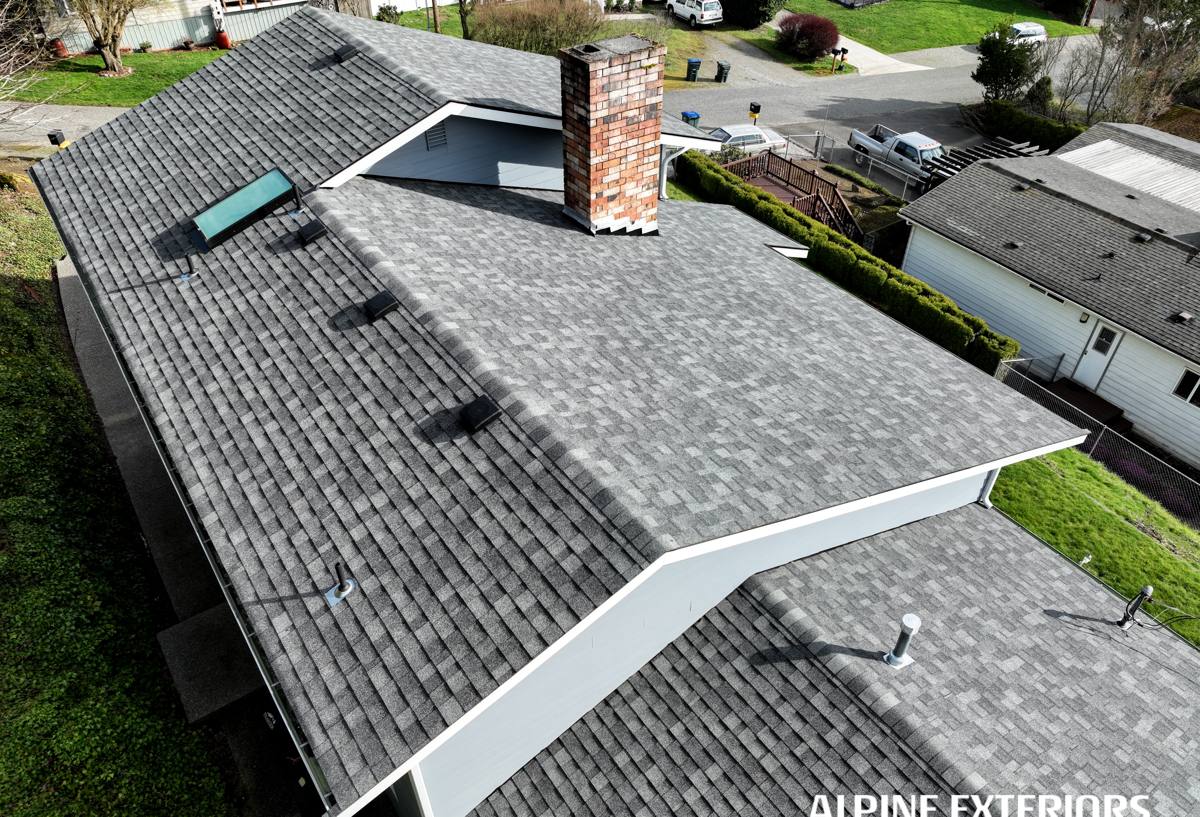
Whatcom County Weather and What It Does to a Roof
Three regional factors drive almost every roofing decision we make for homes in this part of Sudden Valley:
- Persistent moisture and shade. Tree canopy and lake-effect humidity keep roof surfaces damp longer after rain than they would stay in a more open, sun-exposed location. That extended dampness is exactly what moss, lichen, and algae need to establish.
- Driving rain and wind. Storms coming off the water can push rain sideways under poorly lapped flashing or through underdriven fasteners. A roof that only sheds water straight down isn't enough here — every transition, valley, and penetration has to be detailed for wind-driven water.
- A long moss season. In much of Western Washington, moss growth is seasonal. In shaded, moisture-retentive spots around Whatcom County lakes and forests, it can be closer to year-round, which changes how often a roof needs attention and how much that neglect costs if it's ignored.
None of these factors make metal roofing a bad choice — in several ways metal handles them better than composition shingle. But they do mean the installation details matter more here than they would in a drier climate, and a roof that was designed for a different region will underperform on a Yew Street lot.
Why Metal Holds Up Well in This Climate
Metal roofing doesn't provide organic material for moss to root into the way shingle granules do, its steep-slope panel profiles shed water and debris faster than a flatter shingle surface, and a correctly fastened metal roof resists wind uplift better than most other roofing types. That's the upside. The downside only shows up when the installation cuts corners — and in a wet, wind-exposed area, cut corners show up faster and cost more to fix.
What a Correct Metal Roof Installation Actually Involves
A metal roof is a system, not just a set of panels. Every layer underneath the metal matters as much as the metal itself, especially in a climate where moisture is present most of the year.
Panel and Fastener Choice
Panel gauge, seam type, and fastening method all affect how the roof performs against wind and rain. Standing seam panels use concealed clips rather than exposed screws, which removes one of the most common long-term leak points on a metal roof — the rubber washers under exposed fasteners that eventually harden and crack. Exposed-fastener panels can still be a sound, budget-conscious choice, but they need a maintenance conversation up front so the homeowner knows what to expect over the life of the roof.
Underlayment and Moisture Barrier
In a climate with this much sustained moisture, we treat the underlayment as a second line of defense, not an afterthought. A synthetic, high-temperature underlayment rated for metal roofing — with self-adhering membrane at eaves, valleys, and penetrations — is what stands between a small flashing imperfection and an actual leak into the attic. This layer is invisible once the job is done, which is exactly why it's the layer most likely to get shorted on a rushed installation.
Ventilation
Metal roofs perform best with balanced intake and exhaust ventilation. Poor attic ventilation under a metal roof in a humid climate can lead to condensation on the underside of the panels, which looks like a roof leak but is actually a ventilation problem. Getting this right at install avoids a callback that has nothing to do with the roofing material itself.
Choosing the Right Metal Roofing System
Not every metal roofing product is the right fit for every home. Here's how the common options compare for a shaded, moisture-heavy lot like the ones on Yew Street:
| System | Best For | Moss/Moisture Resistance | Maintenance Consideration |
|---|---|---|---|
| Standing seam (concealed fastener) | Long-term, low-maintenance ownership | Excellent — few horizontal surfaces for debris to sit on | Minimal; occasional debris clearing |
| Exposed-fastener metal panel | Budget-conscious projects, outbuildings, accessory structures | Good, if fasteners are properly torqued and inspected | Washer/fastener inspection every few years |
| Metal shingle/shake profile | Homes wanting a traditional look with metal durability | Good, though more seams than standing seam | Periodic seam and lap inspection |
For most Yew Street homes with tree cover and lake-effect moisture, we lean toward standing seam because it minimizes the horizontal ledges and exposed fasteners where debris and moisture collect. That said, the right answer depends on the roof's slope, the home's style, and the budget — which is exactly what we walk through on site rather than over the phone.
Our Process for Yew Street Metal Roofing Projects
The steps below are the same order we follow on every metal roofing project in this neighborhood, adjusted for the specific roof in front of us:
- On-site assessment. We look at slope, existing decking condition, ventilation, tree exposure, and any current moss or moisture staining before recommending a system.
- Tear-off and deck inspection. Metal roofing only performs as well as the deck underneath it. Soft or water-damaged decking gets identified and repaired before anything new goes down.
- Underlayment and flashing detail. Self-adhering membrane at vulnerable points, synthetic underlayment across the field, and flashing sized and lapped for wind-driven rain, not just straight-down runoff.
- Panel installation. Correct panel overlap, clip spacing, and fastener torque for the specific product and roof geometry — this is where most of the long-term performance difference between a good and mediocre metal roof shows up.
- Ventilation check. Intake and exhaust are verified and corrected if the existing system is inadequate for the new roof assembly.
- Final walkthrough. We review the completed work with the homeowner, including what routine maintenance looks like going forward.
What Affects Metal Roofing Cost in Sudden Valley
Metal roofing costs more up front than composition shingle, and the total depends on more than just square footage. The factors below are the ones that most commonly move the number on a Yew Street property:
| Cost Factor | Why It Matters Here |
|---|---|
| Roof slope and complexity | Steeper, cut-up roofs with valleys and dormers take more labor and flashing detail |
| Panel system chosen | Standing seam typically costs more than exposed-fastener panel, reflecting fewer future maintenance needs |
| Deck condition | Moisture-damaged decking found during tear-off adds repair cost but is essential to address |
| Tree cover and access | Heavily wooded lots can add time for staging, debris management, and careful material handling |
| Ventilation upgrades | Older homes often need intake or exhaust vent additions to perform well under a new metal roof |
We give firm numbers only after seeing the roof in person — anyone quoting a full metal roof price over the phone for a Whatcom County property is guessing, and that guess tends to change once the tear-off starts.
Keeping Moss and Salt Air From Shortening Your Roof's Life
Metal roofing needs far less maintenance than shingle, but "far less" isn't "none." A short seasonal routine keeps a metal roof performing the way it's supposed to in this climate:
- Clear leaves, needles, and debris from valleys and low-slope sections at least once a year, ideally after peak leaf drop.
- Check that gutters and downspouts are flowing freely — a metal roof shedding water fast into a clogged gutter just moves the water problem, not fixes it.
- Look for early moss or algae growth in shaded valleys and north-facing slopes, and address it before it spreads.
- Inspect flashing around chimneys, vents, and skylights for movement or gaps after major wind events.
- On exposed-fastener systems, have fasteners checked periodically for backing out or washer wear.
- Trim back overhanging branches that keep sections of the roof shaded and damp longer than necessary.
None of this requires a specialist visit every few months. It's a once- or twice-a-year routine, and it's the difference between a metal roof that looks and performs the same in twenty years and one that develops avoidable problems in five.
Why Local Experience on Yew Street Matters
A roofing crew that has already worked on Yew Street and elsewhere around Sudden Valley knows the tree cover patterns, the typical roof pitches in the area, and how the local weather actually behaves on these specific lots — not just what a regional average says. That local knowledge shapes real decisions: how much underlayment overlap to build in at the eaves, where moss tends to establish first on a given roof orientation, and which ventilation setups have worked well on similar homes nearby.
It also means fewer surprises during the job. A crew unfamiliar with the area might not anticipate how much a shaded, moisture-heavy lot changes the timeline or the prep work needed before panels go on. We'd rather set that expectation up front than discover it mid-project.
Get a Straight Answer on Your Roof
If you're weighing a metal roof for a Yew Street property — whether you're dealing with an aging shingle roof, ongoing moss problems, or just want a roofing system built for what this climate actually does — we're happy to take a look and give you an honest assessment. There's no pressure and no obligation. Use the form below to request a free estimate, and we'll walk the roof with you and talk through what it actually needs.