 Sudden Valley Siding
 Storm Damage in Happy Valley Isn't Like Storm Damage Everywhere Else
Happy Valley sits close enough to Lake Whatcom and the surrounding hillsides that roofs here take a specific kind of beating. It's not just wind — it's wind combined with driving rain that comes in sideways during a front, followed by long stretches of damp, shaded weather that keeps moss and moisture working on a roof long after the storm has passed. In Whatcom County, that combination matters more than the storm event itself. A roof that loses a few shingles in a windstorm in a drier climate might sit fine for a season. Here, that same gap is an open door for moss spores, standing moisture, and slow rot that spreads underneath the surface before anyone notices a leak.
We treat storm damage repair on Happy Valley homes as two jobs in one: fixing what the wind and rain broke, and undoing the head start that damage gave to moss and rot. Skip the second part and you're back on the roof within a year or two, patching the same spot again.
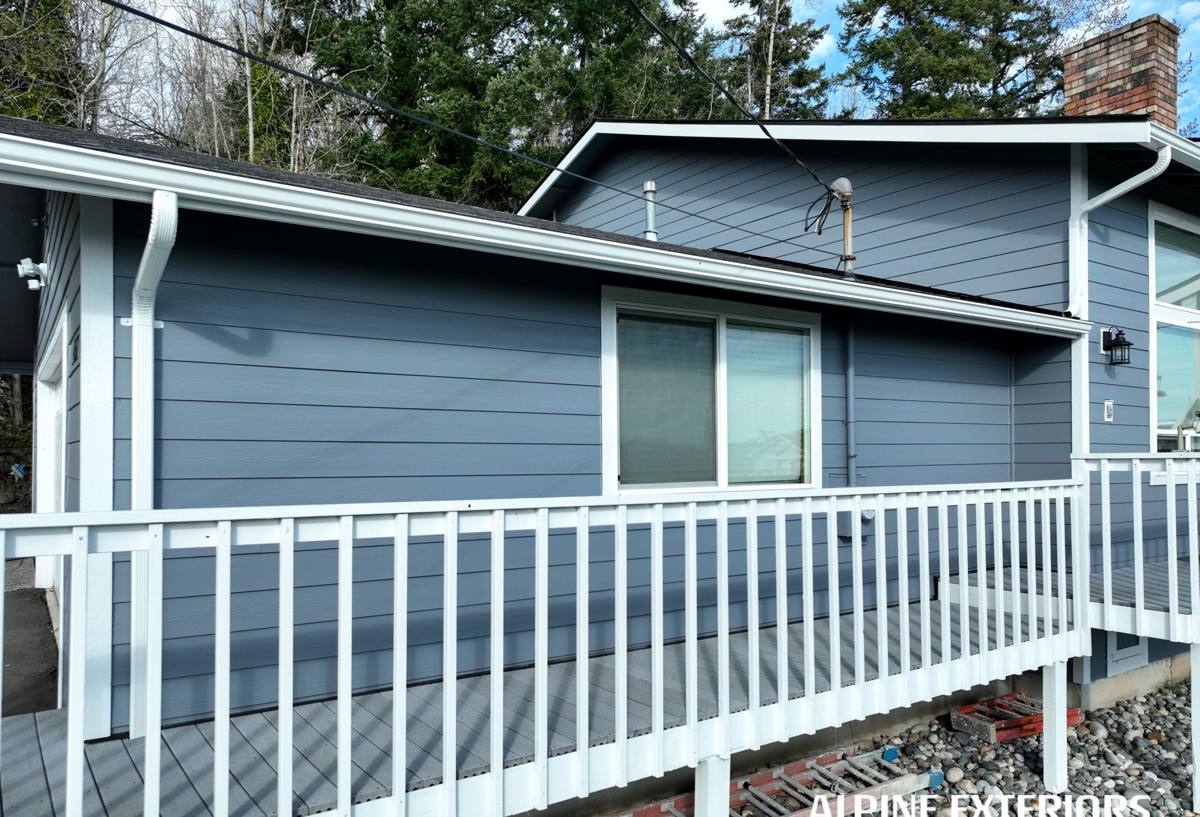
What We Typically Find After a Storm Out Here
No two roofs come through a storm the same way, but in this area a handful of failure points show up again and again.
Wind-Lifted or Missing Shingles
Gusts funneling through the valley and off the lake tend to catch roof edges, ridge caps, and any section where shingles were already loosened by age or old moss growth. Once a shingle lifts, the seal underneath is broken even if it lays back down — it won't reseal itself, and it'll lift again in the next blow.
Flashing Failures
Flashing around chimneys, vents, skylights, and roof-to-wall junctions takes the brunt of driving rain because water gets pushed sideways into gaps that would otherwise stay dry. Storm damage here often isn't a dramatic hole — it's a flashing seam that opened up just enough to let water track behind it.
Moss-Weakened Decking
This is the one that's easy to miss. A storm can knock loose shingles or granules off a section of roof that was already softened underneath by months of moss holding moisture against the deck. When we pull damaged shingles, we're checking the wood underneath, not just replacing what's visibly broken.
Gutter and Downspout Damage
Wind-driven debris and heavy runoff during a storm regularly pull gutters loose or clog downspouts. A gutter that's sagging or overflowing isn't just a gutter problem — it pushes water back up under the roof edge, which turns a minor storm event into a slower, harder-to-spot leak.
What a Correct Repair Actually Involves
A storm repair that's done right isn't just "replace the shingles you can see are missing." It's a sequence, and skipping steps is exactly how the same spot ends up leaking again next season.
- Full inspection, not just the reported problem area. Storms rarely damage just one spot — we check the whole roof plane, valleys, and penetrations.
- Deck evaluation. Any section with visible damage gets checked underneath for soft spots, moisture staining, or rot before new material goes down.
- Underlayment repair or replacement in the affected area, not just a surface patch over old underlayment that may already be compromised.
- Flashing correction where water intrusion patterns suggest a seal failure rather than a shingle failure.
- Matching materials as closely as possible so the repair doesn't stand out or create a mismatched wear pattern down the line.
- Moss and debris clearing across the roof, not just the repaired section, since moss nearby will keep threatening the new work if it's left in place.
Our Process for Happy Valley Storm Calls
When we get a call after a storm, we move through the same process every time so nothing gets missed under pressure.
1. Prompt Inspection
We get eyes on the roof as soon as reasonably possible after a storm. The longer damaged sections sit exposed, the more water finds its way into decking and insulation.
2. Honest Documentation
We document what we find — photos, notes on affected areas, and a plain-English explanation of what's storm damage versus what's pre-existing wear (moss buildup, aging shingles, prior minor leaks). This distinction matters for insurance conversations, and we won't tell you something is storm-related if it isn't.
3. A Written Repair Plan
You get a scope of work and a price range before anything is touched, including what happens if we find deck damage once we open up the area.
4. The Repair Itself
We work the area methodically: strip damaged material, inspect and repair the deck, install new underlayment and flashing where needed, and match shingles as closely as the existing roof allows.
5. Cleanup and Walkthrough
Debris and old material get hauled off, gutters get checked and cleared if they were part of the problem, and we walk the repair with you before we call it done.
Insurance and Storm Damage: What We Can and Can't Promise
Many storm repairs in this area are covered in part by homeowners insurance, but coverage depends on your policy, the cause of loss, and your insurer's own assessment — we're not in a position to guarantee an outcome. What we can do is provide clear, factual documentation of the damage we find, distinguish storm-caused damage from pre-existing conditions as honestly as we can, and work from the same documentation whether you're paying out of pocket or filing a claim. We'd rather under-promise on the insurance side and over-deliver on the actual repair.
Repair vs. Replacement: Factors That Actually Matter
Not every storm-damaged roof needs full replacement, and not every roof that "looks fine" from the ground is actually fine underneath. Here's how we think through it.
| Factor | Leans Toward Repair | Leans Toward Replacement |
|---|---|---|
| Extent of damage | Isolated to one section or slope | Multiple sections or spread across the roof |
| Roof age | Under roughly two-thirds of expected lifespan | Already near or past typical service life |
| Deck condition | Solid, dry decking under damaged shingles | Soft, stained, or moss-softened decking found in multiple areas |
| Moss history | Light, surface-level moss with no prior leaks | Long-term moss growth with a history of leaks or repairs |
| Material availability | Shingles can be closely matched | Discontinued or badly weathered material that won't match |
We'll always tell you honestly which side of that table your roof falls on, including when a repair is the right call even if replacement would be the bigger job for us.
Checklist: What to Look For After a Storm
You don't need to get on the roof yourself — and we'd rather you didn't, especially on wet or mossy surfaces. But there are signs worth checking from the ground or from inside the house.
- Shingle pieces or granules in the yard or gutters after wind or heavy rain
- Visible gaps, lifted edges, or discoloration on roof slopes
- Sagging or detached gutters and downspouts
- New water stains on ceilings or upper interior walls
- Musty smell in an attic or upper closet that wasn't there before
- Debris — branches, needles, moss clumps — piled against the roofline or in valleys
- Daylight visible through attic boards near vents or the roof edge
If you notice any of these, it's worth getting a look sooner rather than later. Small storm damage left through another rainy stretch tends to get bigger, not smaller.
Why It Matters That We Already Work This Area
A roof repair crew that hasn't worked Happy Valley or the broader Sudden Valley area before is guessing at things a local crew already knows: which roof lines take the worst of the wind off the lake, how fast moss builds back in shaded, damp yards, and which flashing details tend to fail first on the housing styles common here. That local knowledge shortens the inspection, sharpens the repair plan, and means we're not learning the neighborhood's climate on your dime. It also means faster response after a storm — we're not driving in from across the county to get a first look at your roof.
After the Repair: Keeping It From Happening Again
A storm repair is a good moment to get ahead of the next one. Clearing moss and debris from valleys and roof edges before the wet season sets in, keeping gutters flowing so water doesn't back up under the roofline, and having a roof looked at after any major wind event — even if nothing looks obviously wrong — are the habits that keep small storm damage from turning into deck rot down the line. We're happy to point out anything we notice during a repair visit that's worth keeping an eye on, storm-related or not.
If a recent storm left your Happy Valley roof looking rough — or you're just not sure whether what you're seeing needs attention — we're glad to come take an honest look. The estimate is free, there's no pressure attached to it, and you'll get a straight answer about what's actually going on up there.