 Sudden Valley Siding
 Why Silver Beach Homes Need a Roof Built for This Climate
Homes in the Silver Beach area near Sudden Valley sit close enough to the water — both Lake Whatcom and the broader Whatcom County coastline — that roofing materials take a different kind of beating than they would twenty miles inland. Salt-tinged air off the county's coastal waters travels further than most homeowners expect, driving rain comes in sideways for months at a stretch, and the tree cover that makes this area attractive also means shade, damp debris, and a moss season that can run from October through May. A roof that holds up fine in a drier part of the state can start showing granule loss, rust streaking, or moss colonies within a few years here. Metal roofing, installed correctly for this specific environment, handles all three of those stresses better than most alternatives — but "installed correctly for this environment" is doing a lot of work in that sentence, and it's where a lot of roofs in this area go wrong.
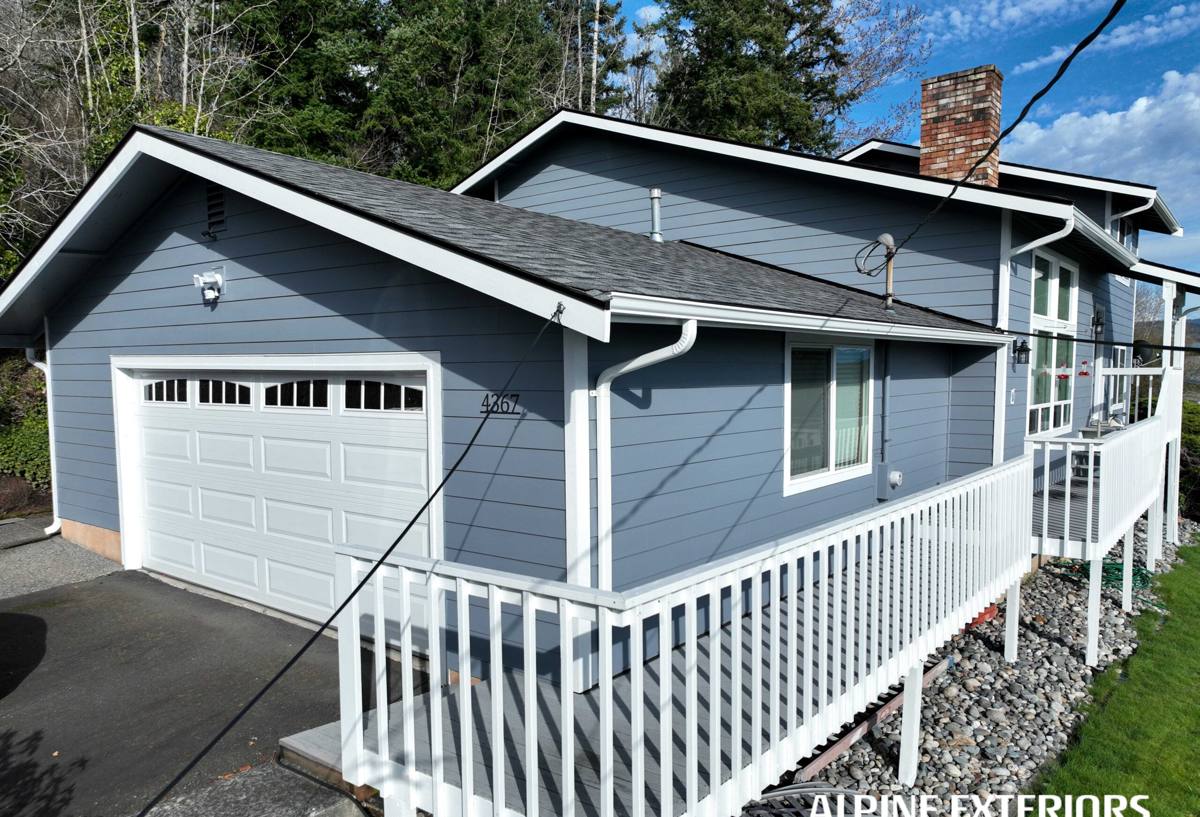
This is also why so many metal roofing calls we get in Silver Beach come from homeowners planning other exterior work at the same time, such as new siding, gutters, or trim, since coordinating a roof and siding project together avoids double staging, double scaffolding, and mismatched flashing details where the two systems meet.
What "Correct" Metal Roofing Installation Actually Involves
Metal roofing is a forgiving material in some ways and completely unforgiving in others. The panels themselves rarely fail outright. What fails is everything underneath and around them when a roof is built for a drier climate than ours, or built in a hurry.
Underlayment and Moisture Barrier
In a high-rainfall area like this, underlayment isn't an afterthought. A synthetic, high-temp underlayment — with a self-adhered membrane at eaves, valleys, and penetrations — gives the roof a real second line of defense if wind-driven rain ever works past the panels, which it eventually will at some point over a roof's lifetime during a hard storm off the water. Skipping this step, or using a lightweight felt because it's cheaper, is one of the most common shortcuts we find on older re-roofs in this area.
Fastening and Flashing Details
Every seam, valley, chimney, vent pipe, and wall transition is a place water can find its way in. Flashing has to be sized, lapped, and sealed for the way water actually moves on a steep, wet roof, not just caulked and called finished. On exposed-fastener panels, fastener placement and torque matter more here than in a dry climate, because seasonal temperature swings and near-constant moisture work loose fasteners into leak points within a few winters if they're set wrong the first time.
Ventilation
A metal roof over a poorly ventilated attic traps moisture underneath the deck, which leads to condensation, rot, and mold — problems that show up inside the house long before anyone notices anything wrong on the roof itself. Ridge and soffit ventilation sized correctly for the attic volume is part of a proper metal roofing job, not an optional upgrade.
Choosing the Right Metal Roofing System for Silver Beach
Not all metal roofing is the same product wearing different colors. The three systems homeowners in this area typically weigh handle moisture, moss, and salt air differently.
| Panel Type | Fastening | How It Handles This Climate | Trade-offs |
|---|---|---|---|
| Standing Seam | Concealed clips, no exposed fasteners | Best performer in driving rain and salt air; fewer penetration points to fail over time | Higher material and labor cost; requires more precise installation |
| Exposed-Fastener (Ag Panel) | Screws through the panel face | Functional when fasteners are correctly placed and periodically checked | Every fastener is a future maintenance point; gaskets degrade faster under constant damp |
| Stone-Coated Steel | Concealed or semi-concealed, depending on profile | Good moss resistance from a textured surface that sheds debris; heavier profile handles wind-driven rain well | Costs more than exposed-fastener; fewer installers have real experience with it |
For most Silver Beach homes, we lean toward standing seam or a quality stone-coated system because both minimize the number of places water and moss can gain a foothold. Exposed-fastener panels aren't a bad product — they're a higher-maintenance one in a climate that already asks a lot of a roof, and we say that plainly instead of upselling a system a given home doesn't need.
Color, Finish, and Coastal Fading
Finish quality matters as much as panel type. A higher-grade paint system holds color and chalk resistance longer under UV and salt exposure than a basic coating, which matters on a roof that faces direct sun off the water for part of the year and damp shade the rest of it. Darker colors tend to show fading and chalking faster than lighter or mid-tone colors under this kind of exposure, which is worth factoring in if long-term appearance matters to you as much as performance does.
Moss, Moisture, and Salt Air: The Ongoing Maintenance Reality
Metal roofing resists moss far better than composition shingles, but resistant isn't the same as immune. Moss and organic debris still need somewhere to land and stay damp — usually valleys, low-slope sections, and areas shaded by overhanging trees, which describes a lot of rooflines around Sudden Valley and Silver Beach. Left alone for a few seasons, moss holds moisture against the panel finish, and on exposed-fastener roofs, against the fasteners themselves.
Salt air's effect is slower but steadier: it accelerates finish breakdown over time and, on lower-quality or poorly cut panels, promotes edge corrosion where the protective coating has been compromised. This is why panel gauge, coating quality, and clean factory-cut edges matter more here than in an inland climate, and why none of the three is a place we cut corners to win a lower bid.
Our Process, Start to Finish
We keep the process straightforward because a roof replacement is disruptive enough without added confusion.
- On-site assessment — we look at the existing roof, deck condition, ventilation, and any moisture or moss history specific to the home before quoting anything.
- Honest system recommendation — based on the roof's slope, exposure, and your budget, not a one-size-fits-all pitch.
- Tear-off and deck inspection — we don't cover up soft or rotten decking; if we find it, we show you before closing it back up.
- Underlayment and flashing installation — built for this rainfall and wind pattern, not a statewide minimum spec.
- Panel installation — fastened and seamed to the manufacturer's specification for our wind and moisture exposure.
- Final walk-through — we go over the finished roof and the ventilation with you before calling the job done.
Cost Factors Homeowners Should Understand
Metal roofing costs more up front than asphalt shingles, and the final number depends on more than square footage. We won't put a meaningless number here that ignores your actual roof, but we will walk through every line item on your estimate so nothing shows up as a surprise later.
| Cost Factor | What Drives It | Typical Impact |
|---|---|---|
| Panel system chosen | Standing seam costs more in material and labor than exposed-fastener | Medium–High |
| Roof complexity | More valleys, dormers, and penetrations mean more flashing work | Medium–High |
| Deck condition | Moisture-damaged decking found during tear-off adds repair cost | Variable |
| Underlayment upgrade | Self-adhered membrane at critical areas costs more than basic felt but lowers leak risk | Low–Medium |
| Ventilation work | Adding or correcting ridge/soffit venting if the attic needs it | Low–Medium |
| Access and pitch | Steep or hard-to-access rooflines take longer and require more safety setup | Low–Medium |
We break these out in every estimate so you can see what you're actually paying for, rather than one lump number with no explanation behind it.
Why a Crew That Already Works This Area Matters
A metal roof installed by a crew unfamiliar with Whatcom County's rain patterns and moss cycles can still look fine on the day it's finished. The problems that show up are seasonal — a valley that doesn't shed water fast enough in a February downpour, a flashing detail that was fine in a drier climate but wasn't built for months of standing moisture, ventilation that wasn't sized for how damp the attic gets here. Working in Sudden Valley and the surrounding Silver Beach area consistently means we've already watched these roofs behave through a full wet season and into the next one, not just on install day.
It also means we're not guessing at exposure. A roofline facing open water gets different treatment than one tucked under tree cover, and knowing which properties in this area fall into which category comes from doing the work locally, not from a general specification sheet.
For homeowners already having siding replaced or repaired, having one crew handle both the roof and the exterior walls means flashing, trim, and drainage details at the roofline get built to work together, instead of two separate contractors each assuming the other handled a transition detail.
Maintenance Checklist for Metal Roof Owners
A metal roof still needs periodic attention, especially in a climate this wet. We recommend homeowners keep an eye on:
- Valleys and low-slope sections for moss or debris buildup, especially after fall leaf drop
- Fastener condition on exposed-fastener panels every year or two, tightening or replacing gaskets as needed
- Flashing around chimneys, vents, and skylights for gaps or sealant breakdown
- Gutters and downspouts kept clear so water isn't backing up under the eave edge
- Overhanging branches trimmed back to reduce shade, debris, and moss pressure on the roof
- Any interior ceiling stains or musty attic smell, which can signal a leak or ventilation problem before it's visible from outside
None of this is heavy maintenance — it's the kind of once-or-twice-a-year check that keeps a well-installed metal roof performing the way it's supposed to for decades.
If you're weighing metal roofing for a home in Silver Beach or elsewhere around Sudden Valley, we're glad to take a look and give you a straight answer on what your roof actually needs — no pressure, no inflated scope. Use the form below to request a free estimate.