 Sudden Valley Siding
 Why Board & Batten Needs to Be Built for This Climate, Not Just Installed
Board & batten has a strong following in Barkley and around Sudden Valley for good reason — the vertical lines and deep shadow lines read as more custom than plain lap siding, and it pairs well with the mix of cabin-style and newer builds you see through this part of Whatcom County. But the same design that makes it attractive also gives water more places to try to get in. Every batten strip is another seam, another set of fastener penetrations, another spot where a small gap can turn into a slow, hidden problem.
That matters more here than in a lot of places. This area sees long stretches of steady, driving rain rather than short heavy downpours, which pushes water sideways into walls instead of just down them. Add in a marine-influenced climate that keeps humidity high enough to grow moss on roofs, fences, and siding for months at a time, and periods of salt-carrying air moving in off the coast that speeds up corrosion on anything metal and exposed, and you've got a climate that will find every shortcut in a board & batten job within a few winters. A correct install shrugs this off for decades. A rushed one shows staining, cupping, and soft spots well before that.
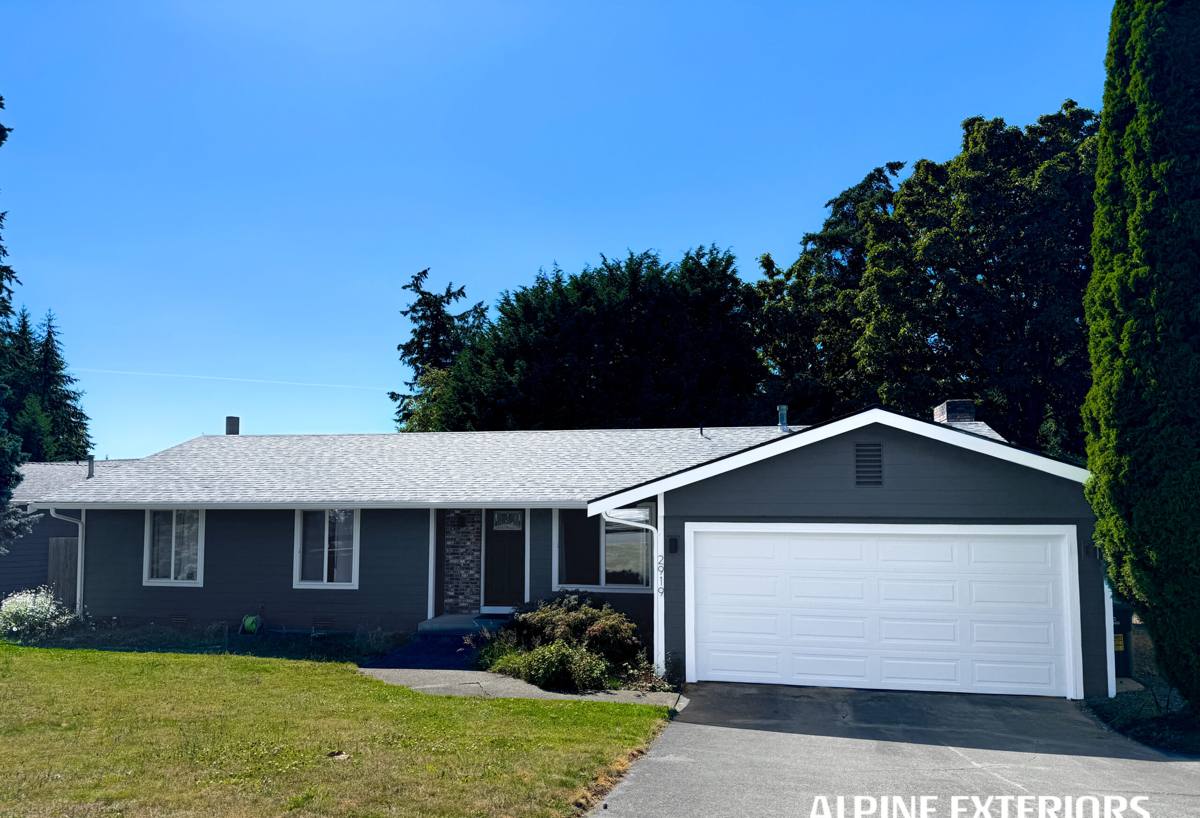
What a Correct Board & Batten Install Actually Involves
The Layers Nobody Sees
The visible battens and panels are the last five percent of the job. Underneath, there should be a properly lapped weather-resistive barrier, flashing integrated at every window, door, and roofline intersection, and — on a wall that's going to take real driving rain — a drainage gap behind the siding so any moisture that does get past the outer layer has somewhere to go and can dry out instead of sitting against the sheathing. Skipping the drainage gap is one of the most common corners cut on board & batten specifically, because furring strips add labor and material cost that doesn't show up in a photo.
Fastening and Spacing
Fiber cement panels and battens expand and contract with temperature and moisture differently than the framing behind them. Fastener placement, panel gaps, and batten spacing all need to follow the manufacturer's engineered specifications — not "close enough." Get the nailing schedule wrong and you either split panels over time or leave fasteners loose enough to work free, both of which open a path for water.
Board & Batten Material Options — and Why We Only Install One
We get asked fairly often why we don't offer board & batten in cedar, engineered wood, or vinyl. All three have a place in the market. We just don't think any of them hold up to this specific climate as well as factory-finished fiber cement does, and we'd rather say that plainly than sell something we don't believe in.
| Material | Moisture / Moss Behavior | Maintenance Load | Coastal Air Durability |
|---|---|---|---|
| James Hardie fiber cement | Non-combustible, dimensionally stable, resists moisture-driven swelling | Low — factory ColorPlus finish, occasional rinse | Good with correct fastener spec |
| Cedar board & batten | Absorbs moisture, prone to cupping and moss growth in shade | High — refinishing every few years | Fasteners and finish both need upkeep |
| Engineered wood (LP-style) | Wood-based core sensitive to sustained moisture exposure | Moderate — finish maintenance matters | Edge sealing is critical near salt air |
| Vinyl vertical panel | Doesn't rot, but can warp/rattle; seams rely on interlock, not caulk | Low, but limited repairability | UV and temperature swings affect fit over time |
The trade-off we made is upfront cost and installation precision in exchange for a material that doesn't feed moss the way raw or engineered wood can, doesn't need refinishing on a cycle, and holds its factory finish through the wet season after wet season this area delivers.
Where Board & Batten Siding Actually Fails on Homes Around Barkley and Sudden Valley
Most of the board & batten problems we get called out to look at trace back to one of a handful of causes, and they're rarely the material itself:
- No drainage gap behind the panels, so moisture that gets past a seam has nowhere to dry and sits against the sheathing
- Battens caulked at every joint instead of properly flashed and lapped — caulk is a maintenance item, not a waterproofing system
- Horizontal trim ledges and butt joints that catch falling debris and hold moss and organic buildup against the wall
- Fasteners that weren't rated or spaced for coastal-air exposure, leading to early rust staining and loosened boards
- Panels installed tight to the ground or a deck surface with no clearance, wicking moisture up from below
Our Process for a Board & Batten Project in Barkley
- Walk the exterior and check for moisture intrusion, soft sheathing, or rot before quoting anything
- Remove the existing siding and inspect the wall assembly underneath
- Repair or replace any compromised sheathing or framing before covering it back up
- Install a continuous weather-resistive barrier with correct flashing at every penetration
- Add furring strips to create a drainage gap on walls exposed to driving rain
- Install James Hardie panels and battens to the manufacturer's fastening and spacing specification
- Detail trim, corners, and transitions so water sheds outward at every level, not just at the surface
- Final walk-through so you know exactly what was done and what to expect from the finish over time
None of these steps are unique to Barkley — but the order we prioritize them in is shaped by having done this work on homes in this specific climate long enough to know which shortcuts show up first.
Living With Board & Batten Through a Long Moss Season
Even a correctly installed system benefits from a little seasonal attention here. A soft rinse once a year keeps moss and organic buildup from getting a foothold, especially on north-facing walls or sections shaded by trees. Keeping gutters clear reduces the amount of water running down the face of the siding instead of off the roofline. Trimming back vegetation that's crowding a wall gives it airflow and sun exposure, which matters more for moss control than most people expect. Because factory-applied ColorPlus finish doesn't rely on field-applied paint, you're not on a repainting clock the way you would be with cedar or engineered wood — but "low maintenance" still means "some," not "none."
Cost Factors for a Board & Batten Replacement
We don't quote sight-unseen, but these are the factors that actually move the number on a job like this:
| Factor | Why It Matters |
|---|---|
| Total wall area and home shape | More corners and cutouts mean more trim detail and labor time |
| Condition of existing siding | Tear-off complexity and any hidden sheathing repair add time before install even starts |
| Number of exposures needing a drainage gap | Walls taking direct driving rain often warrant furring strips others don't need |
| Trim and window detail | Board & batten's clean look depends on precise trim work around every opening |
| Access and site conditions | Slopes, decks, and multi-story sections common around the lake add setup time |
Why a Crew That Already Works Barkley and Sudden Valley Is Worth Something
A lot of what makes a board & batten job hold up here isn't exotic — it's knowing which walls in this area take the worst of the weather, which exposures grow moss fastest, and which details tend to get skipped by crews passing through on a one-off job. A crew that's already working in this community also has a shorter feedback loop: if something needs a warranty look or a punch-list item gets missed, we're not driving in from somewhere unrelated to check on it.
Homes in planned communities around the lake sometimes have architectural or color guidelines to work within, and it helps to have done that paperwork before rather than learning it mid-project. None of this replaces a careful install — it just means fewer surprises along the way.
Signs Your Board & Batten Siding May Need a Closer Look
- Visible moss or dark staining building up along battens or trim ledges
- Panels that feel soft or spongy when pressed, especially near the bottom courses
- Battens that have cupped, bowed, or pulled away from the wall
- Paint or finish peeling specifically along seams and joints rather than the whole panel
- Rust streaking below fasteners or trim
- Gaps opening up at butt joints that weren't there when the siding was new
If you're weighing a board & batten replacement or repair in Barkley or elsewhere around Sudden Valley, we're glad to take a look and give you a straight, no-pressure estimate — use the form below to get started.