 Sudden Valley Siding
 Why Cordata Siding Takes a Different Kind of Beating
Cordata sits close enough to Bellingham Bay that homes here deal with a mix of weather that's harder on exterior siding than most homeowners realize. Salt-tinged air moves inland on a regular basis, driving rain comes sideways off the water for months at a stretch, and the shaded, damp stretches of the neighborhood grow moss on north-facing walls almost year-round. None of that is dramatic on its own. It's the combination, repeated every winter for years, that eventually shows up as soft spots, staining, and boards that no longer sit flush against the wall.
A siding repair job in this part of Whatcom County has to account for all three of those stressors at once, not just patch the visible damage. That's the difference between a repair that lasts and one that fails again in eighteen months.
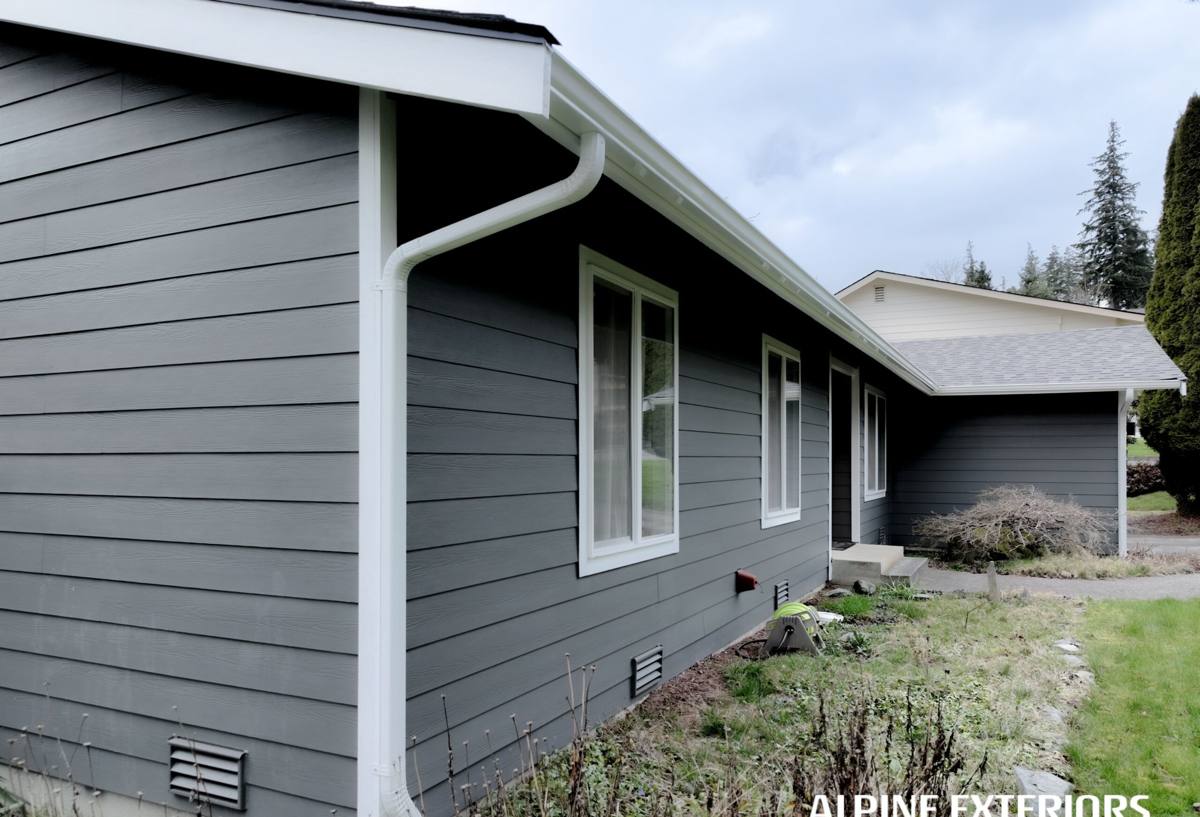
Signs a Cordata Home Needs Siding Repair
Moisture Staining and Discoloration
Dark streaking below seams, brownish halos around nail heads, or a persistent damp smell near an exterior wall usually means water is getting behind the siding, not just sitting on top of it. By the time staining is visible from the outside, there's a good chance the sheathing or framing behind that section has already absorbed moisture.
Cracked, Warped, or Separating Boards
Wood-based and composite sidings expand and contract with the wet-dry cycle common to this climate. Over enough seasons, that movement opens up seams, pops fasteners, and warps boards enough that they no longer lie flat. Once a board is warped, it usually can't be pushed back into place — it needs to come off.
Moss, Algae, and Persistent Green Growth
Some moss on a fence or a roof is cosmetic. Moss that's established itself directly on siding, especially in the shaded, moisture-holding corners common in this neighborhood, is a sign the siding surface is staying wet longer than it should. On paint-grade or unsealed materials, that constant dampness accelerates rot underneath the growth, even when the surface still looks intact.
Soft Spots and Visible Gaps at Seams
Press gently on suspect siding. If it gives under light pressure, or if you can see daylight or a visible gap at a seam or corner, water has a direct path behind the cladding. This is the kind of damage that gets worse every rainy season it goes unaddressed.
What a Correct Repair Actually Involves
A siding repair that's done right is diagnostic work first and carpentry second. Cutting out a bad board and nailing up a new one without figuring out why it failed just guarantees the same failure returns.
Finding the Actual Moisture Source
Damaged siding is often a symptom, not the root cause. Failed caulking at a window, a gap in flashing, a downspout dumping water against a wall, or a grade issue that keeps splashback hitting the lower courses — any of these can cause siding damage that looks identical from the outside. Repairing the siding without correcting the source just resets the clock on the same problem.
Matching Profile, Reveal, and Color
Patched-in siding that doesn't match the board width, reveal, or finish of the surrounding wall is visually obvious, even from the street. A repair crew needs to either source a matching product or, when that's not possible, plan the repair boundary at a natural break point — a corner, a trim line — so the transition doesn't stand out.
Flashing, Sealant, and Fastening Details
The visible board is the last step. Proper house wrap or building paper integration, correctly lapped flashing at penetrations and horizontal joints, and fasteners driven to the right depth and pattern all matter more to how long the repair lasts than the siding material itself. Skipping these details is the most common reason repairs fail early in wet climates like this one.
Why We Repair and Replace With James Hardie, Not Whatever's Already on the Wall
Most of the older siding we find failing in Cordata is cedar, primed wood, or vinyl — all reasonable choices when they were installed, but all of them have real weaknesses in a climate defined by driving rain and a long moss season. Cedar and primed wood absorb moisture at cut edges and fastener holes, which is exactly where we see the rot concentrated. Vinyl doesn't rot, but it cracks in cold snaps, fades unevenly over time, and can't be color-matched once it's a few years old because the color has weathered off the batch.
We install James Hardie fiber cement exclusively, including for repair sections, for practical reasons: it's non-combustible, it doesn't absorb water the way wood does, and the ColorPlus factory finish holds its color far more consistently than field-applied paint on patched wood siding. When we repair a Hardie-clad home, we can match the existing product almost exactly because Hardie's lines and colors are consistent and available long-term. When we're repairing a home currently sided in something else, we'll patch it correctly if that's what the budget calls for, but we'll also be honest that a full transition to Hardie is usually the better long-term move once damage is widespread rather than isolated.
What This Means for Small Repairs on Non-Hardie Homes
If your home has a handful of damaged boards on an otherwise sound wall, we'll repair with the closest reasonable match and won't push a full re-side you don't need. If the damage is spread across multiple walls or keeps recurring, we'll say so plainly and explain why patching the same failure points repeatedly stops making financial sense.
Our Process for Cordata Repair Calls
- Inspection: We walk the exterior, probe suspect areas, and check flashing, grading, and drainage around the home — not just the damaged section itself.
- Diagnosis: We identify the moisture source and explain it in plain terms, including whether the cause is a siding issue or something else, like gutters or grading, that's driving water into the wall.
- Written scope: You get a clear description of what's being repaired, what material is being used, and what it costs before any work starts.
- Repair: Damaged material is removed back to sound substrate, the underlying moisture barrier and flashing are corrected, and new siding is installed and finished to match.
- Walkthrough: We show you the completed repair and point out anything worth monitoring going forward.
Repair or Replace? How We Help You Decide
Not every damaged section needs a full re-side, and not every repair is worth doing on its own. The honest answer depends on how much of the wall is affected and how the existing material has held up overall.
| Factor | Leans Toward Repair | Leans Toward Full Replacement |
|---|---|---|
| Extent of damage | Isolated to one or two areas | Spread across multiple walls |
| Age of existing siding | Under 10-15 years, otherwise sound | Original siding is decades old |
| Cause of damage | One-time event (impact, isolated leak) | Systemic moisture or material failure |
| Material match available | Yes, close visual match possible | No, discontinued or badly faded |
| Rough cost range | A few hundred to a few thousand dollars | Full-wall or whole-house pricing |
We'll always quote the repair honestly, even when a full replacement would be more profitable for us. If a repair is the right call, that's what we'll recommend.
Why Local Experience in Cordata Matters
A crew that regularly works this part of Whatcom County already knows which wall orientations take the worst weather, how the moss season behaves through a typical winter, and what the housing stock in this area tends to be sided with. That saves time during diagnosis and means fewer surprises once a wall is opened up. It also means we're not learning the local climate on your home — we're applying what years of repair calls in this exact area have already taught us.
Keeping Repaired Siding in Good Shape
A correct repair buys you years, but a little routine attention stretches that further, especially given how long the wet season runs here.
- Rinse moss and algae off shaded, north-facing walls before it takes hold, rather than after it's established
- Keep gutters clear so overflow doesn't run down the wall behind the siding
- Check caulking at windows, doors, and trim annually and re-seal as it dries out or cracks
- Keep sprinklers and plantings from spraying or pressing directly against siding
- Walk the exterior each fall and spring looking for new staining, soft spots, or gaps at seams
Get an Honest Look at Your Siding
If you're seeing staining, soft spots, or moss creeping across your siding, it's worth getting a straight answer on what's actually going on before it spreads further. We offer free, no-pressure estimates for Cordata homeowners — we'll tell you plainly whether you need a repair, a partial replacement, or nothing at all yet. Use the form below to get started.