 Sudden Valley Siding
 New-Construction Windows for Cordata Homes
Cordata sits in one of the wetter, greyer corners of Whatcom County, close enough to Bellingham Bay that salt-laden air is a real factor and far enough into the marine climate belt that driving rain and long stretches of overcast, moss-friendly weather are just part of the year. When a home is being built new, or when a wall is opened up to the studs for a full window replacement, the windows going into those rough openings need to be installed as part of the building envelope — not just set into a hole and trimmed out. That's what "new-construction windows" means: windows with a nailing fin that gets integrated directly into the wall's weather-resistive barrier (WRB), flashed in a specific sequence, and sealed so water has nowhere to go but down and out.
This page covers what that job actually involves, what local conditions demand of it, and how we handle new-construction window installation for homes and builds in the Cordata area.
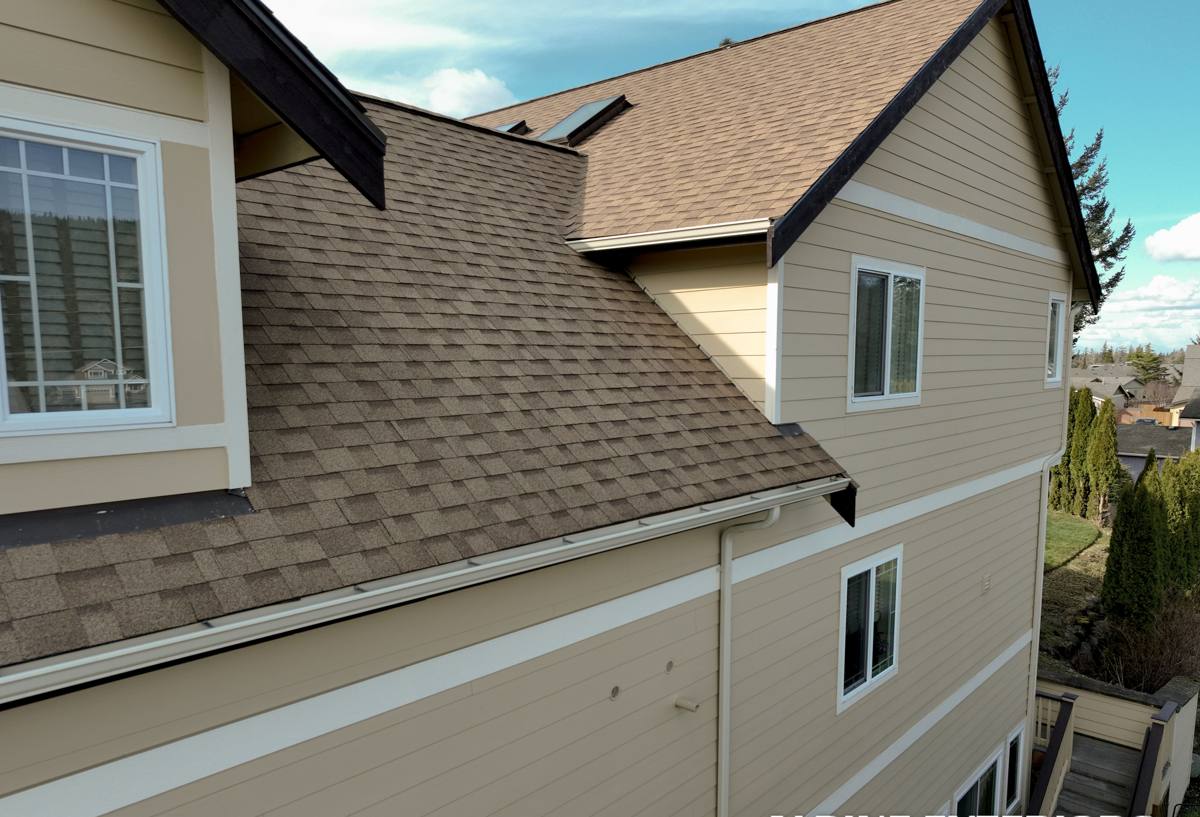
Why New-Construction Windows Are a Different Job Than Replacement Windows
Most "replacement window" work in an existing home uses insert (pocket) windows — the new unit gets set inside the old frame, which stays in the wall. That's a fine approach when the existing frame is sound and the siding around it isn't being disturbed. New-construction windows are different: the entire opening is exposed down to the framing and the WRB, giving the installer full access to the sill, jambs, and header before the window ever goes in.
That access is an advantage, but it also means there's more that can go wrong if the sequencing isn't followed correctly. Every layer — sill pan, WRB, flashing tape, the window's nailing fin, and the final flashing over the top — has to overlap the one below it like shingles on a roof, so water draining down the wall always moves outward, never behind the barrier. Skip a step or reverse the lap order, and you've built a path for water to get into the wall cavity where it won't be visible until there's already damage.
What Cordata's Climate Demands From a Window Install
Driving Rain and Wind-Driven Moisture
Whatcom County gets a lot of rain, and a good share of it doesn't fall straight down — wind off the bay and the Strait pushes it sideways into west- and south-facing walls. A window that's sealed but not properly flashed can look fine for years and still let water track in around the frame during a hard blow. Sill pan flashing with a back dam, so any water that does get past the glazing has a built-in path back outside instead of into the framing, is not optional here.
Moss and Sustained Dampness
Shaded elevations and north-facing walls in this area stay damp for long stretches, which is exactly the condition moss and mildew need. That's mostly a siding and trim maintenance issue, but it matters for windows too — trim and casing details that trap moisture against wood surfaces will grow moss and rot faster than details that let water shed and surfaces dry. Drip caps, correctly pitched sills, and gapped or back-primed trim all help.
Salt Air Near the Bay
Homes closer to Bellingham Bay deal with a low but steady level of airborne salt, which accelerates corrosion on unprotected fasteners, hinges, and hardware. It's not a reason to avoid any particular window line, but it is a reason to pay attention to cladding and hardware specifications — and to make sure exposed fasteners are corrosion-resistant, not just whatever came in the box.
What a Correct New-Construction Window Install Involves
- Rough opening check — verify the opening is square, level, and sized correctly for the window unit before anything else happens.
- Sill pan flashing — a sloped, back-dammed pan at the sill so any water that gets past the window has a way out.
- WRB integration — the housewrap or building paper is cut and prepped so flashing tape can tie into it correctly at the sides and top.
- Flashing tape sequencing — sill, then jambs, then head flashing, each one lapping over the layer below in true shingle fashion.
- Setting the window — shimmed level and plumb, fastened through the nailing fin per the manufacturer's schedule, not just wherever's convenient.
- Head flashing — installed over the top fin and integrated with the WRB above it, so the wall sheds water past the window rather than into it.
- Interior air sealing and insulation — low-expansion foam or backer rod and sealant around the frame to control air leakage without bowing the frame.
- Exterior trim and sealant — casing, sealant joints, and any drip cap details finished so the whole assembly sheds water correctly.
Every one of those steps is inspectable while the wall is open. That's the real value of doing this right during new construction or a full-opening replacement — once the siding goes back on, most of this work is hidden for the life of the house.
Choosing Window Materials for This Climate
There's no single "correct" frame material for Whatcom County — vinyl, fiberglass, and wood-clad units all perform well here when they're installed correctly and specified with a glass package suited to a marine climate. The differences come down to maintenance, longevity, and budget.
| Frame Material | Moisture Behavior | Maintenance | General Cost |
|---|---|---|---|
| Vinyl | Won't rot; performs well in wet climates | Low — occasional cleaning | Lower |
| Fiberglass | Very stable, minimal expansion/contraction | Low | Mid to higher |
| Wood-clad | Good if cladding and interior wood are properly sealed and maintained | Higher — exterior cladding and interior wood need upkeep | Higher |
| Aluminum-clad | Durable exterior, but check hardware for salt-air corrosion resistance near the bay | Low to moderate | Mid to higher |
For glass, look for a U-factor and solar heat gain coefficient (SHGC) matched to a Pacific Northwest climate — low U-factor for heat retention through our long grey stretches, and an SHGC that doesn't over-restrict useful winter sun. Argon-filled, low-E double or triple glazing is standard for new construction in this region and helps limit interior condensation on cold, damp days.
Our Process for Cordata Projects
For new builds, we typically coordinate directly with the general contractor or builder, working from the framing schedule so windows go in at the right point in the build sequence — after the WRB is up, before siding starts. For full-opening replacements on existing homes, we handle opening up the wall, removing the old unit and any compromised sheathing or framing, and rebuilding the opening correctly before the new window goes in.
Either way, the sequence is the same: inspect the opening, flash it correctly, set and fasten the window to spec, flash the head, and finish the exterior details so the whole assembly is weather-tight before the siding closes it back up. We check our own flashing work before it gets covered — that's the point where mistakes are cheap to fix and expensive to ignore.
What to Ask Before You Hire
- Do you install a sill pan with a back dam on every new-construction window, or only when asked?
- How do you sequence flashing tape relative to the WRB — sill, jambs, then head?
- What's your fastening schedule for the nailing fin, and does it follow the window manufacturer's instructions?
- Will the flashing and sealing be visible for inspection before the wall is closed up?
- What warranty covers the installation itself, separate from the window manufacturer's product warranty?
- Have you worked on homes in the Cordata or greater Bellingham area before, and do you know the local permitting process?
A contractor who can answer these without hesitation has done this enough times to get it right. Vague answers, or an installer who wants to skip straight to trim and paint without describing the flashing sequence, is worth a second look.
Why Local Experience Matters
Window installation standards are largely universal, but the conditions they're being installed to withstand aren't. A crew that regularly works in Cordata and the surrounding Whatcom County area has a working sense of which elevations on a given lot take the worst of the wind-driven rain, where salt air is enough of a factor to matter for hardware choices, and which shaded, damp corners of a property are prone to moss and slow drying. That's not something you get from a general install manual — it comes from doing the work here, on homes dealing with the same weather your home deals with.
It also means we're a known quantity to local builders and familiar with how permitting and inspections typically go in this area, which keeps a new-construction project moving instead of stalling on avoidable back-and-forth.
Get a Free Estimate
If you're building new in Cordata or planning a full window replacement that opens the wall down to the framing, we're happy to walk the project with you, talk through window options for your home's exposure, and give you a straightforward, no-pressure estimate. Use the form below to get started.