 Sudden Valley Siding
 Bellingham Siding Has to Answer to the Weather, Not to a Brochure
Bellingham sits where marine air off the Salish Sea meets the wet, gray stretch of a Pacific Northwest winter. That combination is harder on exterior siding than most homeowners realize until they've lived through a decade or two of it. Salt-tinged air corrodes fasteners and finishes that weren't built for it. Driving rain, pushed sideways by wind off the water, finds every gap in flashing and caulk that a calmer climate would never expose. And the long, damp stretch from fall through spring gives moss and algae months to establish themselves on anything that holds moisture. A siding product and installation that would be perfectly fine in a dry inland town can fail here in ways that show up as soft spots, streaking, and premature repainting.
We install James Hardie fiber cement siding exclusively, and this page is about what that product needs to look like, and be installed like, specifically for homes in the Bellingham area of Whatcom County. Not a generic overview — the actual local considerations.
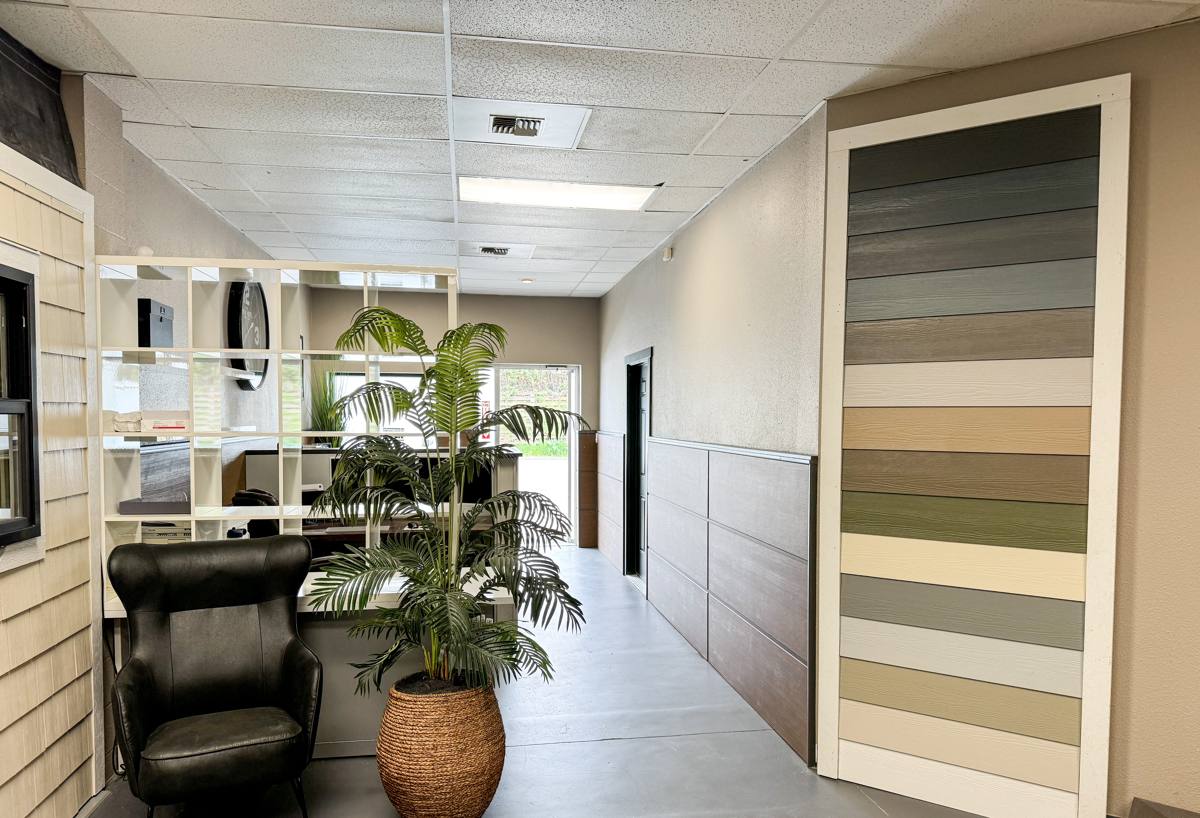
What Salt Air, Driving Rain, and Moss Season Actually Do
Each of these three factors stresses siding in a different way, and a correct installation has to address all three at once, not just one.
Salt Air
Homes closer to Bellingham Bay and the surrounding shoreline take on airborne salt that accelerates corrosion of exposed metal — nail heads, trim flashing, hose bibs, and any fastener that isn't rated for it. Over years, corroding fasteners can streak the siding face and eventually loosen their hold. This is a bigger factor near the water than it is further inland, but Whatcom County's overall marine climate means even homes set back from the shoreline see more of this than a dry-climate house ever would.
Driving Rain
Wind-driven rain off the Sound doesn't just wet a wall's surface — it pushes water sideways and upward into laps, seams, and penetrations that vertical rain would never reach. Siding systems depend on correct overlap, properly bedded flashing, and a functioning water-resistive barrier behind the panels to manage this. When any one of those is done wrong, water gets behind the siding instead of running off it, and the damage happens where you can't see it until it's advanced.
Moss and Algae Season
Whatcom County's wet season often runs eight months or more of the year with regular damp, low-light conditions — exactly what moss and algae need to take hold. North-facing walls, areas under tree cover, and anything shaded by roof overhangs are especially prone. Siding that holds surface moisture, or that has a painted finish prone to chalking and losing its sheen, gives moss more to grip onto and shows staining faster.
Why We Standardized on James Hardie for This Climate
We don't install LP SmartSide, vinyl, Cemplank, Allura, primed spruce, or cedar. That's a deliberate standard, not a sales pitch, and it comes down to how each material actually behaves over years in a wet marine climate like Bellingham's.
James Hardie's fiber cement is non-combustible and dimensionally stable — it doesn't swell, warp, or rot the way wood-based products can when they take on repeated moisture exposure. Hardie also engineers regional product lines specifically for climate: their HZ5 formulation is built for wetter, colder regions like ours, with a resistance to moisture-related freeze-thaw and moss/mildew growth that a one-size-fits-all product line doesn't offer. Combined with a factory-applied ColorPlus finish — baked on rather than field-painted — you get a top coat that resists fading, chipping, and the chalking that gives algae something to hold onto, backed by a substantial transferable warranty on both the substrate and the finish.
None of that makes James Hardie maintenance-free. It's a material that performs very well when installed to spec, in a climate it was engineered for — which is exactly why installation quality matters as much as the product choice itself.
What a Correct Bellingham Installation Actually Involves
The single biggest reason siding fails early in this climate isn't the material — it's installation shortcuts that a drier region might get away with and Bellingham won't. A correct job includes:
- A continuous, correctly lapped water-resistive barrier behind the siding, with all seams and penetrations sealed before the first board goes up
- Properly flashed and back-caulked window and door openings, since these are the highest-risk spots for wind-driven rain intrusion
- Stainless steel or hot-dip galvanized fasteners rated for coastal/marine exposure, not standard interior-grade fasteners that corrode faster in salt air
- Correct minimum clearance between the bottom of the siding and the ground, decks, and roof lines, so splash-back and standing moisture don't sit against the board edge
- Factory-cut and factory-primed board ends used wherever possible, with any field cuts sealed per Hardie's installation instructions
- Proper joint and butt-seam treatment so water sheds outward instead of wicking into the seam
Any one of these done wrong can undercut the whole system, even with premium material. A beautiful ColorPlus finish over an improperly flashed window will still let water in — the failure just shows up behind the wall instead of on the surface.
Our Process on a Bellingham-Area Home
| Step | What Happens | Why It Matters Here |
|---|---|---|
| Assessment | Walk the home, check current siding, trim, flashing, and moisture points | Identifies existing moisture damage or moss buildup before covering it up |
| Prep & barrier | Remove old siding, inspect sheathing, install continuous water-resistive barrier | This layer is what actually stops wind-driven rain from reaching the framing |
| Flashing | Install and integrate window, door, and penetration flashing with the barrier | The most common failure point in wet marine climates |
| Hardie installation | Install panels/lap siding per Hardie spec, marine-rated fasteners, correct clearances | Matches the product's engineering to the conditions it's built for |
| Trim & sealant | Finish trim, caulk joints with exterior-rated sealant | Keeps water moving outward at every seam |
| Final walkthrough | Inspect the finished job against the original assessment | Confirms nothing was missed before we consider it done |
ColorPlus Finish and Why It Matters More Here Than Elsewhere
James Hardie's ColorPlus technology applies the topcoat in a controlled factory setting with multiple baked-on coats, rather than a single field-sprayed coat applied on site after installation. In a climate like Bellingham's, where the finish is fighting UV, salt exposure, and constant damp cycling, that difference shows up over time. Field-applied paint on any siding material is more prone to early fading, chalking, and touch-up mismatches — and a chalky, dulled finish is exactly the kind of surface moss spores and algae find easiest to colonize. ColorPlus isn't just a cosmetic upgrade; it's part of what keeps the surface resistant to the exact biological growth this climate produces.
Living With Moss and Algae After Installation
No siding is moss-proof, and it's honest to say so. What a correct Hardie installation does is reduce how much moss and algae have to work with: less surface texture for spores to catch on, less moisture retention at the board edges because of proper clearances, and a finish that sheds rather than absorbs. Homeowners in shaded or north-facing sections of a Bellingham lot should still expect to do periodic gentle cleaning — a soft wash, not a pressure blast that can drive water behind panels or strip finish. Keeping gutters clear and trimming back vegetation that shades the wall also goes a long way toward keeping moss from establishing in the first place.
What Drives Cost on a Bellingham Siding Job
| Factor | Why It Changes the Price |
|---|---|
| Home size and wall complexity | More corners, gables, and dormers mean more cutting, flashing, and labor time |
| Existing siding removal and sheathing condition | Moisture-damaged sheathing found underneath needs repair before new siding goes on |
| Product line and profile | Lap siding, shingle-style panels, and board-and-batten carry different material and labor costs |
| Trim and finish detail | More trim work and color transitions add labor time |
| Site access and exposure | Homes closer to the shoreline or on tighter lots can take longer to stage and protect during work |
We won't quote a number without walking the specific home, but these are the honest variables that move a bid up or down, and we'll explain each one that applies to your house before you sign anything.
Why a Crew That Already Works This Area Matters
Whatcom County's building conditions aren't identical from block to block. A crew that regularly works Bellingham and the surrounding Sudden Valley area already understands where moisture problems tend to originate on local homes, which sides of a house typically need the most flashing attention given prevailing wind and rain direction, and how long a moss-prone wall can realistically go between cleanings. That familiarity shows up in fewer surprises during tear-off, fewer callbacks, and a finished job that's actually built for the weather it's going to face — not a generic install dropped into a climate it wasn't planned around.
What to Ask Any Contractor Bidding This Job
- What fastener type and rating will be used, and is it appropriate for marine/salt air exposure
- How window and door flashing will be integrated with the water-resistive barrier
- What happens if moisture damage is found in the sheathing once old siding comes off
- Whether the crew is Hardie-trained and familiar with the specific installation spec for your siding profile
- What the warranty covers — both the manufacturer's material/finish warranty and the contractor's labor warranty
Ready When You Are
If your Bellingham-area home is due for new siding, or you're seeing early signs of moss, staining, or moisture trouble on what you have now, we're happy to take a look and give you a straightforward assessment — no pressure, no inflated first number to negotiate down from. Fill out the form below for a free estimate.