 Sudden Valley Siding
 Why Ferndale Decks Work Harder Than the Ones Inland
A deck in Ferndale sits in a different environment than one built forty miles inland, even though the plans might look identical on paper. The combination of salt-laden air off the water, driving rain that comes in sideways during winter storms, and a moss season that can stretch from October into May puts real, measurable stress on every part of a deck: the fasteners, the framing, the decking surface, and the connection point where the deck meets the house. None of that shows up on a lumberyard cut list. It shows up two or three years later, in the form of rust streaks on hardware, soft spots where water sat too long, or a deck surface that turns into a skating rink every time the temperature drops below freezing.
We're not saying this to scare anyone off building a deck here — a well-built deck in Whatcom County will outlast a poorly built one by decades. The point is that "correct" in this climate means something more specific than "meets the minimum code." It means choosing materials and details that account for the coast, not just the span tables.
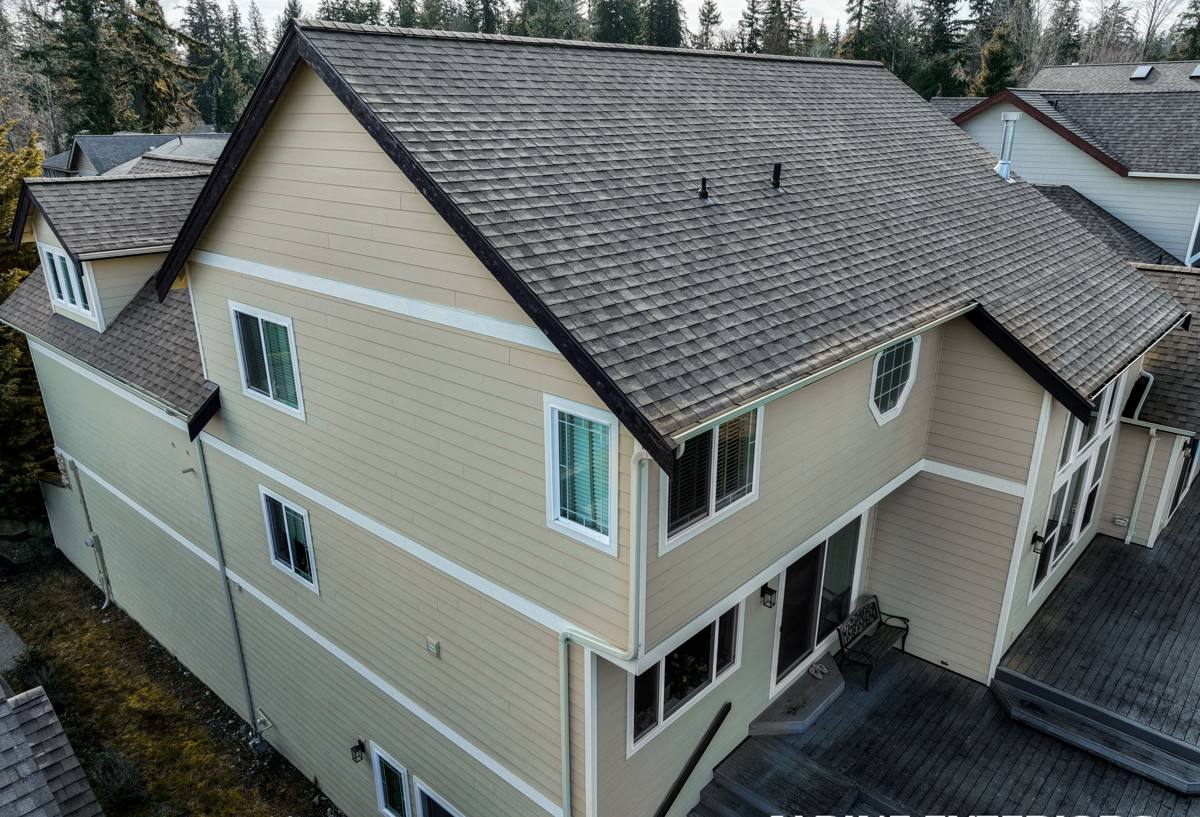
What a Correctly Built Deck Looks Like Here
Footings That Won't Heave or Settle
Everything above ground depends on what's below it. Footings need to be sized for the actual load of the deck and set below the frost line, in soil that's been checked for bearing capacity rather than assumed. Ferndale's mix of clay-heavy and low-lying soils in some areas means we don't treat footing depth as a formality — a footing poured too shallow, or into soil that wasn't compacted properly, is the reason some older decks in this area develop a noticeable lean or bounce within a few years.
The Ledger Board: Where Most Deck Failures Start
If a deck is attached to the house, the ledger board — the piece bolted to the wall that the joists hang from — is the single most important detail on the whole project. It's also the most common place for rot to start, because it sits right where two structures meet and water wants to collect. A correct ledger installation means proper flashing integrated with the house's water-resistive barrier (not just caulk smeared over the gap), a small gap or flashing detail that lets water drain away from the wall rather than behind it, and structural bolts or lag screws rated for the load, spaced correctly, and set into solid framing. Because we do siding and exterior moisture management as our core trade, this is a detail we take more seriously than a framing crew that only builds decks. A ledger board is a siding and water-management problem before it's a carpentry problem.
Fasteners and Hardware
Salt air corrodes ordinary fasteners faster than most homeowners expect, especially on a deck facing open water or exposed to prevailing wind. Standard galvanized screws and joist hangers can start showing rust streaks in a few seasons in a coastal-influenced climate like this one. We use stainless steel or high-grade coated fasteners and connectors rated for coastal exposure, and we match the hardware to the type of lumber or composite being used — some newer treated lumber chemicals actively corrode the wrong grade of hardware, which is a detail that's easy to miss if it's not part of your everyday routine.
Decking Material: What Holds Up to Salt Air and Moss Season
There's no single "best" decking material — there's a best material for a given budget, sun exposure, and tolerance for maintenance. Here's how the common options actually perform in a climate with salt air, near-constant winter dampness, and shaded, moss-prone areas.
| Material | Moisture Behavior | Moss/Algae Resistance | Maintenance | Typical Lifespan |
|---|---|---|---|---|
| Cedar / pressure-treated wood | Absorbs and releases moisture; prone to cupping and splitting if not sealed regularly | Low — needs regular cleaning and treatment in shaded, damp areas | Annual cleaning, periodic sealing/staining | 10–20 years with upkeep |
| Capped composite | Very low absorption; stable in wet conditions | Moderate — surface texture and shade still allow growth, but doesn't rot underneath | Periodic washing, no sealing | 25–30+ years |
| PVC decking | Essentially non-absorbent; unaffected by standing moisture | Moderate — same surface cleaning needs as composite | Periodic washing, no sealing | 25–30+ years |
Wood is still a fine choice for homeowners who like the look and don't mind the upkeep — the trade-off is honest maintenance, not failure. Composite and PVC cost more up front but remove the sealing/staining cycle entirely, which matters a lot in a climate where a deck can stay damp for days at a time. Where composite and PVC still need attention is the same place wood does: shaded, low-airflow spots where moss and algae get a foothold regardless of material, because that growth feeds on organic debris and moisture sitting on the surface, not on the decking itself.
Guardrails, Stairs, and Local Code
Most decks attached to a house, elevated more than a couple of feet off grade, or above a certain size trigger a building permit in Ferndale and unincorporated Whatcom County alike, along with inspections at the footing and framing stages. Guardrail height, baluster spacing, and stair rise/run are all governed by code for good reason — these are the details that cause injuries when they're skipped. We pull permits and build to the current adopted code rather than "how the last deck around here was built," because code requirements do get updated, and a deck that doesn't pass inspection has to be reopened and redone, which costs more than doing it right the first time.
Moss, Algae, and Keeping the Surface Safe to Walk On
A long moss season is one of the defining features of building anything outdoors in this part of Washington. On a deck, the risk isn't just cosmetic — a mossy or algae-covered surface gets genuinely slick, especially on stairs. A few structural and design choices make a real difference:
- Proper board spacing so water drains through instead of pooling on the surface
- Joist tape or a drainage detail under the decking to keep the framing dry even when the surface stays wet
- Avoiding dead-flat sections with no slope — even a slight pitch away from the house helps water shed
- Grooved or textured board profiles in heavily shaded areas, which shed moss buildup more easily than smooth-face boards
- Keeping nearby vegetation trimmed back so shaded, damp pockets don't form on one side of the deck
None of this eliminates the need for occasional cleaning — nothing does in this climate — but it reduces how often it's needed and how bad the buildup gets between cleanings.
What Drives the Cost of a Ferndale Deck
Every deck estimate is different, but the factors that actually move the price are consistent. Rather than quote a number that won't mean much without seeing the site, here's what to expect will factor into any honest bid:
| Cost Factor | Why It Matters |
|---|---|
| Decking material (wood vs. composite vs. PVC) | Material cost per square foot varies significantly, and composite/PVC carry a higher upfront cost offset by lower maintenance |
| Height and footing requirements | A tall deck needs deeper footings, more bracing, and often engineered connections |
| Ledger vs. free-standing structure | Free-standing decks need their own posts and footings on every side, adding framing and concrete |
| Stairs and guardrails | More linear feet of railing and stair complexity add labor and hardware |
| Site access and grading | Sloped or hard-to-access lots increase excavation and material handling time |
| Permit and inspection requirements | Larger or higher decks require more inspection steps built into the schedule |
Our Deck Building Process
- On-site visit to assess the grade, drainage, sun/shade exposure, and how the deck will connect to the house
- Design and material discussion, including honest trade-offs between wood, composite, and PVC for your specific site
- Permit drawings and submission to the local building department
- Footing excavation and inspection before any framing goes up
- Framing, ledger flashing, and structural connections, built to hold up to coastal moisture rather than just pass inspection
- Decking installation with attention to drainage, board spacing, and fastener choice
- Guardrails, stairs, and final details
- Final inspection and walkthrough with the homeowner
Why a Crew That Already Works Ferndale Matters
A deck builder who works all over the state will build to the same generic spec everywhere. A crew that already works Ferndale and the rest of Whatcom County knows which details actually matter here — the flashing behind the ledger, the hardware grade that won't rust out in five years, the framing gap that lets a deck drain instead of trapping moisture through a wet winter. We also already know the local permitting process and inspection expectations, which keeps a project moving instead of stalling on paperwork. Because deck building isn't our only trade — siding and exterior water management is — we look at a deck's connection to your home the same way we look at flashing and drainage on the wall itself, because structurally, that's exactly what it is.
What to Ask Before You Hire a Deck Builder
- Are you licensed and insured to build in Whatcom County, and can you provide proof?
- Will you pull the permit, or is that left to me?
- What fastener and hardware grade do you use, and is it rated for coastal/salt-air exposure?
- How is the ledger board flashed, and how does it tie into my home's existing siding and water barrier?
- What decking material do you recommend for my specific site's sun and shade exposure, and why?
- What does the footing depth and inspection schedule look like for my property?
If you're planning a new deck or replacing an aging one in Ferndale, we're happy to take a look and give you a straightforward, no-pressure estimate — just fill out the form below and we'll set up a time to walk the site with you.