 Sudden Valley Siding
 Why Edgemoor Roofs Wear Differently Than Roofs Inland
Homes in the Edgemoor area sit close enough to open water and marine air that a roof here takes a different kind of beating than a roof twenty miles inland. It's not one big event that wears a roof out — it's the daily grind of salt-laden air, wind-driven rain that gets pushed sideways under standard flashing details, and a moss season that runs longer than most homeowners realize. A roof designed and installed without those three factors in mind will look fine for a few years and then fail early, usually right where the moisture had the easiest path in.
Salt Air and Slow Metal Fatigue
Salt air doesn't destroy a roof overnight. It works slowly on exposed fasteners, flashing, and metal roofing panels, accelerating corrosion at seams, screw heads, and cut edges. On a standard asphalt roof this mostly shows up in the metal components — valley flashing, drip edge, vent boots, and any exposed nail heads. On a metal roof, it means fastener quality and coating type matter more here than they would on a house set back from the water. We don't treat this as an afterthought; it's a starting assumption for every Edgemoor job.
Moss, Moisture, and a Longer Growing Season
Whatcom County's damp, shaded conditions give moss a long window to establish itself, and Edgemoor's tree cover only extends that window. Moss isn't just cosmetic. It holds moisture against the roofing material, lifts shingle edges as it grows, and channels water backward under courses instead of letting it shed downhill the way the roof was designed to work. A roof replacement that doesn't account for this — through ventilation, material choice, and detailing at valleys and eaves — is set up to grow moss again within a couple of seasons.
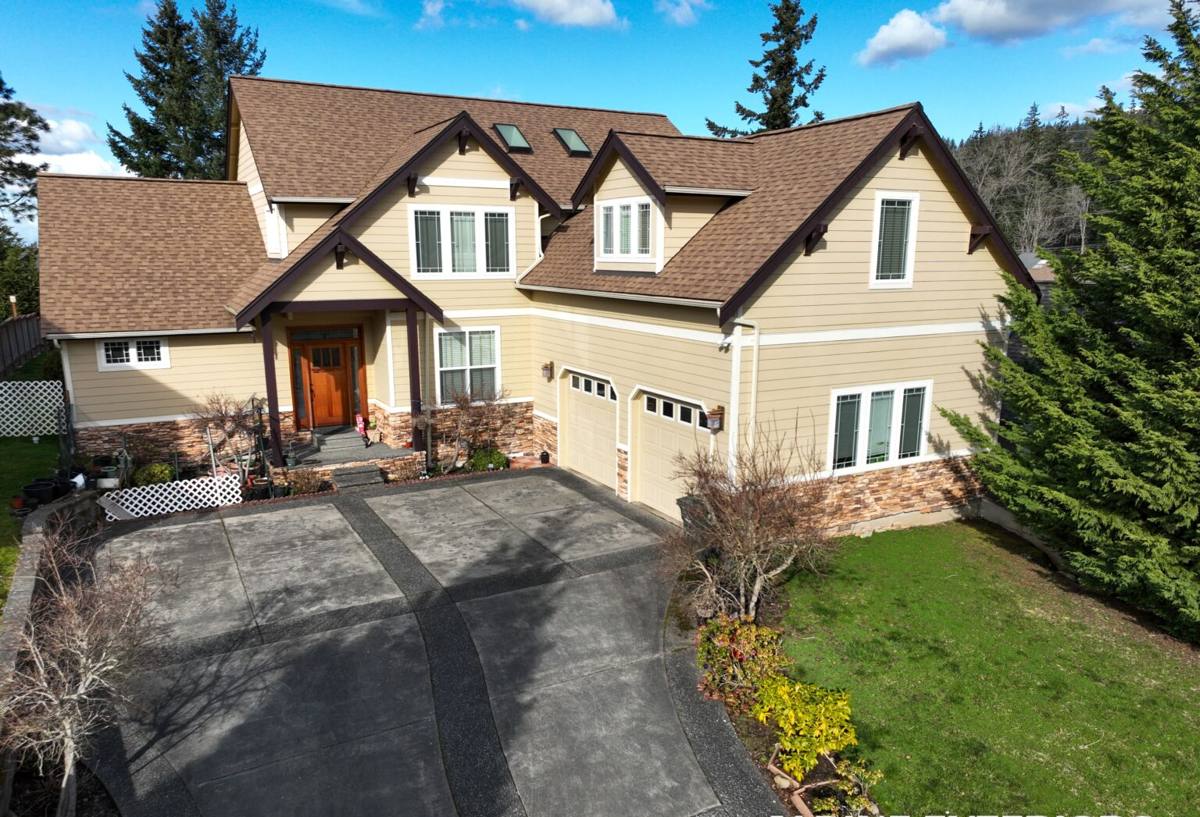
Signs an Edgemoor Roof Needs Full Replacement, Not Another Repair
Repair makes sense when the damage is isolated and the roof underneath is still sound. Replacement makes sense once the underlying materials — deck, underlayment, flashing system — have been compromised by years of moisture exposure. Here's what tends to tip a roof from "repair" into "replace" territory in this area:
- Granule loss heavy enough that you can see bare fiberglass mat on multiple slopes, not just one weathered spot
- Moss or algae staining that returns within a year of cleaning, especially on north-facing or shaded slopes
- Soft or spongy decking felt underfoot in the attic, particularly near valleys and eaves
- Daylight visible through the roof deck at any point, even a pinhole
- Curling, cupping, or cracked shingles across more than one section of roof, not isolated to one repair area
- Rusted or failing flashing at chimneys, skylights, and wall-to-roof transitions
- Interior staining on ceilings or in attic insulation that shows up after wind-driven rain specifically, not just heavy rain
- A roof already past 20–25 years old for asphalt, or showing coating failure on an older metal roof
If you're only seeing one or two of these and the roof is under 15 years old, a targeted repair is usually the honest recommendation. We'll tell you that directly rather than push a full tear-off you don't need yet.
What a Correct Roof Replacement Involves Here
Tear-Off and Deck Inspection
Every job starts with full tear-off down to the deck — we don't install a second layer over old roofing, even when code technically allows it in some cases. Layering traps moisture and hides deck damage that needs to be caught now, not discovered as a leak two years later. Once the deck is exposed, we inspect for soft spots, delamination, and any prior water damage, and replace only what actually needs it. Sheathing repair is priced as a separate, itemized cost so you're never guessing what you're paying for.
Underlayment Built for Driving Rain
Standard felt underlayment is fine in a lot of climates. In an area where wind pushes rain sideways under shingle courses, we lean toward synthetic underlayment with better tear resistance and water-shedding performance, plus self-adhered ice-and-water membrane at the eaves, valleys, and any roof-to-wall transitions — the exact spots where wind-driven rain finds a way in first.
Ventilation Sized to the Moisture Load
A roof that traps warm, moist attic air against a cold deck is a roof that grows moss and rots sheathing from the inside out. We check intake and exhaust ventilation as part of every replacement, not as an upsell — balanced airflow is one of the cheapest ways to add years to a roof's life in a damp climate, and it's often the difference between a roof that stays moss-free and one that doesn't.
Flashing Details That Account for Salt Air
Flashing is where most roof leaks actually start, and it's where salt air does the most damage over time. We use corrosion-resistant flashing material and fastener specs suited to marine-influenced air, with extra attention to valleys, chimney saddles, and any penetration where two roof planes or materials meet.
Material Options for Edgemoor Homes
There's no single "right" material for every roof — it depends on your home's exposure, roof pitch, and how much moss and moisture resistance you're prioritizing versus upfront cost. Here's how the common options stack up for this specific climate:
| Material | Moss Resistance | Salt Air Durability | Typical Lifespan |
|---|---|---|---|
| Architectural asphalt shingle | Moderate — depends on ventilation and slope | Good, with corrosion-resistant flashing and fasteners | 20–30 years |
| Standing seam metal | Very good — sheds moisture fast | Good with marine-grade coatings; fastener quality matters | 40–50+ years |
| Synthetic shake/slate | Good | Good — non-corroding material | 30–50 years |
| Natural cedar shake | Poor without diligent maintenance | Fair — needs regular treatment | 15–25 years, highly maintenance-dependent |
We don't install natural cedar shake as our standard recommendation in this area. It's not that cedar is a bad material everywhere — it's that in a long moss season with regular moisture exposure, it demands a maintenance schedule most homeowners can't keep up with, and the failure mode (rot, moss colonization) is gradual and easy to miss until it's expensive. If you want the look, synthetic shake products get you close without that maintenance burden.
Our Process From Estimate to Cleanup
- On-site inspection. We walk the roof and attic, check for soft decking, ventilation issues, and existing moisture damage before quoting anything.
- Written estimate. You get an itemized quote covering tear-off, materials, any deck repair contingency, and disposal — no vague lump-sum guessing.
- Material selection. We walk through the trade-offs for your roof specifically, not a generic pitch — pitch, tree cover, and sun exposure all factor in.
- Tear-off and haul-away. Old roofing comes off completely, decking gets inspected in daylight, and debris is cleared as we go, not left for a final cleanup day.
- Underlayment and flashing installation. This is where the driving-rain and salt-air detailing happens — it's the part of the job that doesn't show but matters most.
- Roofing material installation. Installed to manufacturer spec, with attention to ventilation components as they go in, not added as an afterthought.
- Final walkthrough and cleanup. Magnetic sweep for nails, gutter check, and a walkthrough so you know exactly what was done and why.
What Actually Drives Cost on an Edgemoor Roof
Roof replacement pricing in this area typically runs in a broad range — often somewhere between $10,000 and $25,000+ for a full asphalt replacement on an average single-family home, with metal roofing running higher. The final number depends on a handful of factors specific to your property:
| Factor | Why It Matters Here |
|---|---|
| Roof pitch and complexity | Steeper, more cut-up roofs take longer and need more flashing detail |
| Number of existing layers | Multiple old layers mean more tear-off labor and disposal cost |
| Deck condition | Moisture damage from prior moss or leaks may require sheathing replacement |
| Material choice | Asphalt, metal, and synthetic shake carry different material and labor costs |
| Tree canopy and access | Heavier tree cover can mean more cleanup and careful staging around landscaping |
| Ventilation upgrades | Adding or correcting intake/exhaust venting adds modest cost but pays off in roof life |
We'd rather walk you through these factors on-site than quote a number over the phone that doesn't hold up once we're actually on the roof.
Why a Crew That Already Works Edgemoor Matters
A roofing crew that mostly works dry, inland neighborhoods can still do competent work — but they're often applying general-purpose details in a spot that punishes shortcuts around moisture and salt exposure. A crew that regularly works Edgemoor and the broader Sudden Valley area already knows which flashing specs hold up to the wind-driven rain patterns here, which fastener and coating choices actually resist the salt air over a decade instead of five years, and how aggressively to plan for moss given the tree cover typical of the neighborhood. That's not a marketing point — it shows up in fewer callbacks and a roof that still looks and performs the way it should ten years in.
Keeping a New Roof Performing Through Moss Season
Replacement is the reset button, but a little upkeep keeps you from needing another one early. A few habits go a long way in this climate:
- Keep gutters and valleys clear of needles and debris, especially heading into fall
- Trim back overhanging branches to cut down on shade and debris buildup that feeds moss growth
- Have moss growth treated early rather than letting it establish for a full season
- Check attic ventilation isn't blocked by insulation after any attic work
- Schedule a visual roof check every year or two, particularly after major windstorms
If your Edgemoor roof is showing its age or you just want an honest read on whether repair or replacement makes sense, we're happy to take a look. Fill out the form below for a free, no-pressure estimate — we'll tell you what we actually see, not what's easiest to sell.