 Sudden Valley Siding
 Why Decks in Deming Wear Out Faster Than You'd Expect
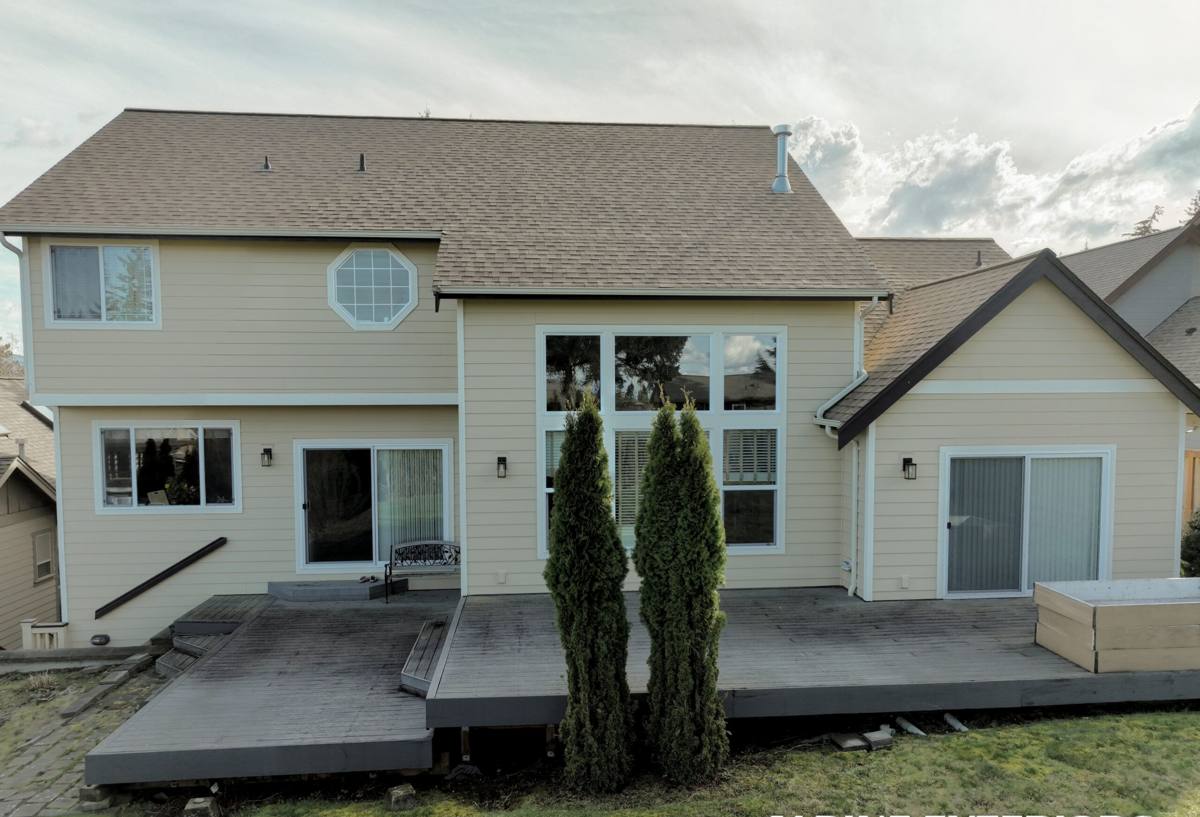
A deck in Deming does its work in a tougher environment than most homeowners realize. Whatcom County's marine-influenced climate sends salt-tinged air, long stretches of driving rain, and months of low, damp shade rolling through the valley almost every year. That combination doesn't just make a deck look tired — it actively breaks it down from the inside. Moisture works into fastener holes and ledger connections, moss and algae take hold on any surface that doesn't dry out quickly, and wood that isn't properly treated or detailed starts to soften long before it looks obviously bad.
We see the same pattern on deck after deck out here: the boards look mostly fine from a distance, but the structure underneath — the ledger, the joists, the post bases — has been quietly absorbing water for years. A deck replacement done right for this area isn't just about swapping old boards for new ones. It's about correcting the moisture path so the next deck doesn't fail the same way the last one did.
Signs a Deck Needs Replacement, Not Just Repair
Not every tired-looking deck needs to come out. But there's a point where patching individual boards is throwing money at a structure that's already compromised. Here's what tells us a full replacement is the honest recommendation rather than another round of spot repairs:
- Boards that feel spongy, soft, or spring underfoot, especially near the house or in shaded corners
- Visible rot or dark staining where the deck attaches to the house (the ledger board)
- Rusted, popping, or backed-out fasteners across multiple boards
- A noticeable sag, bounce, or twist anywhere in the deck surface or stairs
- Railings or guardrails that wobble, or baluster spacing that looks wider than modern code allows
- More than roughly a fifth of the decking boards showing rot, splitting, or delamination
- Missing or failed ledger flashing, which lets water run directly into the house rim joist
If you're only seeing one or two of these, a repair may genuinely be enough. If you're seeing several at once, that's usually a sign the deck's structural life is behind it, not just its cosmetic life.
What a Correct Deck Replacement Actually Involves
Tear-Off and What's Underneath
Pulling the old decking is where the real inspection starts. We check the ledger board attachment, the condition of the joists, the post bases, and the footings once everything is exposed. This is the point where a rushed job and a correct one part ways — you can't properly assess framing condition, let alone code compliance, until the old boards are off and the structure is visible.
Ledger Board and Structural Framing
The ledger connection is the single most common failure point on decks in wet climates like ours, because it's the one spot where the deck is bolted directly into the house. We install proper ledger flashing that sheds water away from the rim joist, use lag bolts or through-bolts rated for the load rather than deck screws, and size joists and spacing to current span tables rather than matching whatever was there before if it was undersized.
Decking Material and Fasteners
Whatever surface material is chosen, it's fastened with corrosion-resistant or hidden fastener systems and gapped correctly to allow for wood movement and drainage. Blocking is added where boards butt together so the seams don't trap water and become the first spot to rot or grow moss.
Railings, Stairs, and Code Compliance
Older decks in this area were often built to standards that have since changed. We bring guardrail height, baluster spacing, and stair rise-and-run into line with current code, and make sure the guardrail posts are attached with hardware rated to resist a lateral load — not just toe-screwed into the rim joist, which is a common shortcut on older builds.
Choosing the Right Decking Material for This Climate
Material choice matters more here than in a drier region, because everything on this list will spend a good part of the year wet or shaded. There's no single right answer — it depends on your budget, how much upkeep you want to take on, and how long you plan to stay in the house.
| Material | Upfront Cost | Maintenance in This Climate | Typical Lifespan |
|---|---|---|---|
| Pressure-treated lumber | Lowest | Annual cleaning and resealing to resist moss and rot | 10–15 years with upkeep |
| Cedar | Moderate | Regular sealing; naturally more rot-resistant but still needs care | 15–20 years with upkeep |
| Capped composite | Highest | Occasional washing; no sealing or staining required | 25+ years, manufacturer-warrantied |
Composite carries a higher price tag, but the maintenance difference is real in a climate that grows moss on anything that stays damp. Wood decks that don't get cleaned and resealed on schedule out here tend to show it within a couple of seasons — dark streaking, soft spots, and a slick, mossy surface that's genuinely a slip hazard on stairs. If you go with wood, we'll be straightforward that the lower upfront cost comes with a maintenance commitment attached.
Our Deck Replacement Process
- Site visit and assessment — we look at the existing deck's structure, ledger condition, and how the site drains, not just its surface appearance.
- Written scope and material selection — you get a clear breakdown of what's being replaced, what material options fit your budget, and what's included.
- Permitting — we handle or confirm any required permit before work starts, based on the deck's size, height, and scope of work.
- Tear-off and structural repair — old decking, railings, and any compromised framing come out; joists, posts, and footings are repaired or replaced as needed.
- Framing and decking installation — ledger flashing, joists, and decking go in to current span and fastening standards.
- Railings, stairs, and finish work — code-compliant guardrails and stairs are installed and checked for solid attachment.
- Walk-through and cleanup — we go over the finished deck with you and clear the site of debris and old material.
Permits and Whatcom County Considerations
Whether a deck replacement needs a permit generally comes down to the deck's height, size, and whether you're changing the footprint or the structural attachment points versus doing a like-for-like rebuild. A straightforward replacement at the same footprint and height often has a simpler path than a redesign or an expansion, but requirements can shift, so we confirm current rules with the county before work starts rather than assume last year's answer still applies. For homes on sloped lots or near the water — not uncommon around Sudden Valley and the surrounding Whatcom County shoreline areas — setback and grading questions can also come into play, which is another reason to get this checked before demolition, not after.
Why a Crew That Already Works This Area Matters
Deck replacement isn't identical everywhere, and a crew that mainly works drier or flatter regions doesn't always plan for what this valley throws at a project. We already know to schedule around the wettest stretches of the year, how to detail a ledger connection so it doesn't just meet code but actually sheds water the way this climate demands, and what condition to expect when we pull decking off a house that's been standing through a few decades of Deming winters. That familiarity shows up in fewer surprises mid-project and a deck that's built for the conditions it will actually face, not generic conditions on a spec sheet.
Protecting Your New Deck After Installation
A correctly built deck still needs some ongoing attention in this climate to get its full lifespan. A few habits make a real difference:
- Sweep off leaves and debris regularly so damp organic matter doesn't sit on the boards
- Keep nearby gutters clear so roof runoff isn't draining directly onto the deck surface
- Trim back overhanging branches and vegetation to let the deck get more sun and airflow
- Clean moss and algae off the surface each season, especially on stairs
- If you chose wood, stay on a sealing schedule rather than waiting until it visibly needs it
None of this is complicated, but skipping it is exactly how a well-built deck ends up needing early repairs anyway.
Get a Straight Answer on Your Deck
If your deck is showing any of the signs above, or you just want an honest read on whether repair or replacement makes more sense for your home, we're glad to take a look. The estimate is free, there's no pressure attached to it, and you'll get a clear explanation of what we find — you can request one using the form below.