 Sudden Valley Siding
 Building a Deck in Edgemoor That Actually Holds Up
Edgemoor sits close enough to Bellingham Bay that salt-laden air is a fact of life for anything built outdoors, and that changes how a deck should be designed and fastened. Add in Whatcom County's long wet season, driving rain off the water, and months of low sun that keep shaded corners damp, and you've got a climate that's genuinely harder on decks than most of the country. A deck built with generic, big-box specs will show fastener corrosion, soft spots, and slick moss growth well before it should. A deck built for this specific area, with the right hardware, drainage details, and material choices, will still be solid and safe a couple of decades later.
This page covers what we actually do differently when we build a deck for a home in Edgemoor, and what you should expect from any contractor working in this part of Whatcom County.
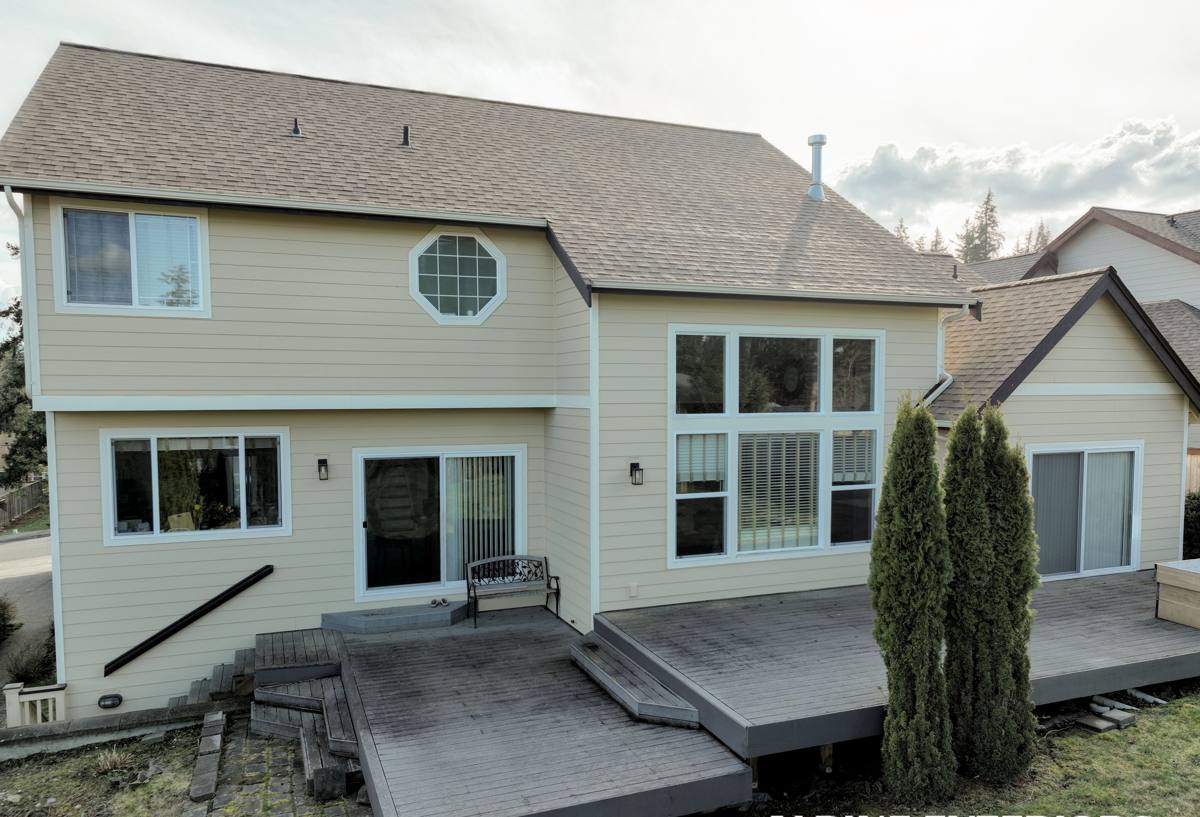
What Edgemoor's Climate Does to a Deck
Three things drive almost every deck problem we see out here: salt air, sustained rain, and shade-driven moss. Each one attacks a deck differently, and each one has a specific fix.
Salt Air and Fasteners
Homes closer to the water deal with airborne salt that settles on every exposed surface, including the metal that holds the deck together. Standard galvanized screws, joist hangers, and bolts will pit and rust faster near Bellingham Bay than they would further inland. Once corrosion starts on a fastener, it's not cosmetic — it's a structural connection slowly weakening under load. The fix isn't complicated, it's just consistency: stainless steel or heavy-duty coated fasteners rated for coastal exposure, used everywhere, not just on the visible top surface.
Driving Rain and Water Management
Rain that comes in sideways off the water finds every gap a deck has to offer — behind ledger boards, under railing posts, around post bases. If water gets trapped instead of shedding, you get rot from the inside out, which is the kind of damage you don't see until a board or post is already failing. Flashing, gapping, and slope all matter more here than in a drier climate.
Moss, Shade, and Board Selection
Whatcom County's long gray season means moss and algae get a real foothold on any deck surface that stays damp and shaded, which is most of them for months at a time. Beyond looking bad, a mossy deck surface is a slip hazard, especially on stairs. Board texture, gap spacing, and material choice all affect how fast moss takes hold and how easy it is to keep off.
Decking Material Options for This Climate
There's no single "best" decking material — it's a set of trade-offs between upfront cost, maintenance, and how the material handles constant moisture and salt exposure. Here's how the common options actually perform in an Edgemoor setting.
| Material | Moisture & Salt Performance | Maintenance | Typical Lifespan |
|---|---|---|---|
| Pressure-treated fir/hem-fir | Decent if sealed regularly; end grain and fastener holes are weak points for rot | Annual cleaning and re-sealing recommended | 10-15 years with upkeep |
| Cedar | Naturally rot- and insect-resistant, but surface grays and softens without maintenance | Periodic cleaning, occasional oil/stain | 15-20 years with upkeep |
| Composite decking | Doesn't rot or absorb water into the board itself; some early-generation composites held surface moisture and grew mold/moss more than expected | Low — occasional wash | 25-30 years, manufacturer warranty backed |
| PVC/capped composite | Fully sealed surface, best resistance to salt air and standing moisture | Lowest — soap and water | 25-30+ years, manufacturer warranty backed |
We'll walk you through this trade-off honestly rather than push whatever has the best margin. A shaded, water-facing deck in Edgemoor is exactly the situation where the extra upfront cost of a capped composite or PVC board tends to pay for itself in avoided maintenance and re-decking. A sunnier, more sheltered deck might do perfectly well in cedar if you're willing to keep up with it.
Framing and Structural Details That Matter Here
The decking surface is what you see, but the framing underneath is what determines whether the deck is still safe in fifteen years. This is where corner-cutting shows up years later as a soft spot, a wobbly rail, or worse.
Ledger Board Attachment and Flashing
Where a deck attaches to the house is the single most common source of hidden rot, because it's the one place water can get behind the structure and stay there. Proper flashing — installed so water sheds outward and down, never trapped behind the ledger — is non-negotiable, especially with the rain this area gets. We treat ledger flashing as a structural detail, not a finishing touch.
Joist Protection and Hardware
Joist tape or a comparable protective barrier on top of each joist keeps standing water from soaking into the wood through fastener holes, which is one of the most common rot-starting points on an otherwise sound deck. Combined with corrosion-resistant hangers and fasteners throughout, this is cheap insurance against the exact failure mode salt air and rain create together.
Footings and Post Bases
Post bases should keep wood posts off the concrete and off standing water, not buried in it. In a wet climate, a post base that traps moisture against the wood defeats the purpose of using a durable post material in the first place. We size and set footings to Whatcom County frost and soil conditions, not a generic minimum.
Our Deck Building Process
- On-site assessment — we look at sun exposure, water exposure, existing structure (if replacing a deck), and drainage before recommending anything.
- Design and material selection — sized to your household's actual use, with an honest walkthrough of material trade-offs for your specific spot.
- Permitting — we handle the paperwork so the deck is built to code and won't cause a problem when you sell the house.
- Framing — footings, ledger flashing, joist protection, and corrosion-resistant hardware installed to the standards above, not the minimum code allows.
- Decking and railing installation — proper board spacing for drainage and airflow, railing built to current code height and spacing requirements.
- Final walkthrough — we go over basic care so the deck ages the way it's supposed to.
Permits and Code Considerations
Most new decks and many deck replacements in Whatcom County require a building permit, and requirements can vary depending on deck height, attachment to the house, and whether it's a repair or a full rebuild. Skipping the permit step might save a little time up front, but it can cause real problems later — during a home sale, an insurance claim, or if the deck is ever inspected. We pull the required permits and build to current code as a standard part of the job, not an upsell.
Keeping an Edgemoor Deck in Good Shape
A well-built deck still needs some seasonal attention in this climate. None of it is difficult, but skipping it is how a 25-year composite deck or a well-framed cedar deck ends up looking and performing like a much older one.
- Sweep debris off the deck regularly, especially in fall — trapped leaves hold moisture against the surface and feed moss growth
- Rinse off salt residue after storms if you're close to the water, particularly on railings and hardware
- Check for early moss or algae on shaded boards and stairs and clean it before it builds up and becomes a slip hazard
- Inspect fasteners and hardware yearly for rust or corrosion, especially on older or lower-grade builds
- Confirm gaps between boards stay clear so water can actually drain instead of pooling
- Re-seal or re-stain wood decking on the schedule the product actually needs, not just when it looks faded
Why Hire a Crew That Already Works in Edgemoor
A lot of deck problems we get called to fix started with a design that was fine on paper somewhere drier and less exposed. Fastener grade, flashing details, and material choice all need to account for how close a given property is to the water and how much shade it sits in — and that's local knowledge, not something you get from a spec sheet. A crew that already builds decks around Bellingham Bay and the surrounding Whatcom County shoreline has already seen which details hold up here and which ones fail early, and builds accordingly from the start instead of learning it on your project.
It also matters for the boring-but-important stuff: knowing the local permitting process, understanding typical soil and frost conditions for footings, and being available for the occasional follow-up if something needs adjusting after the first wet season.
Get a Straightforward Estimate
If you're planning a new deck or replacing an aging one in Edgemoor, we're glad to come take a look, talk through what your specific spot needs, and give you a clear, no-pressure estimate. Use the form below to get started.